






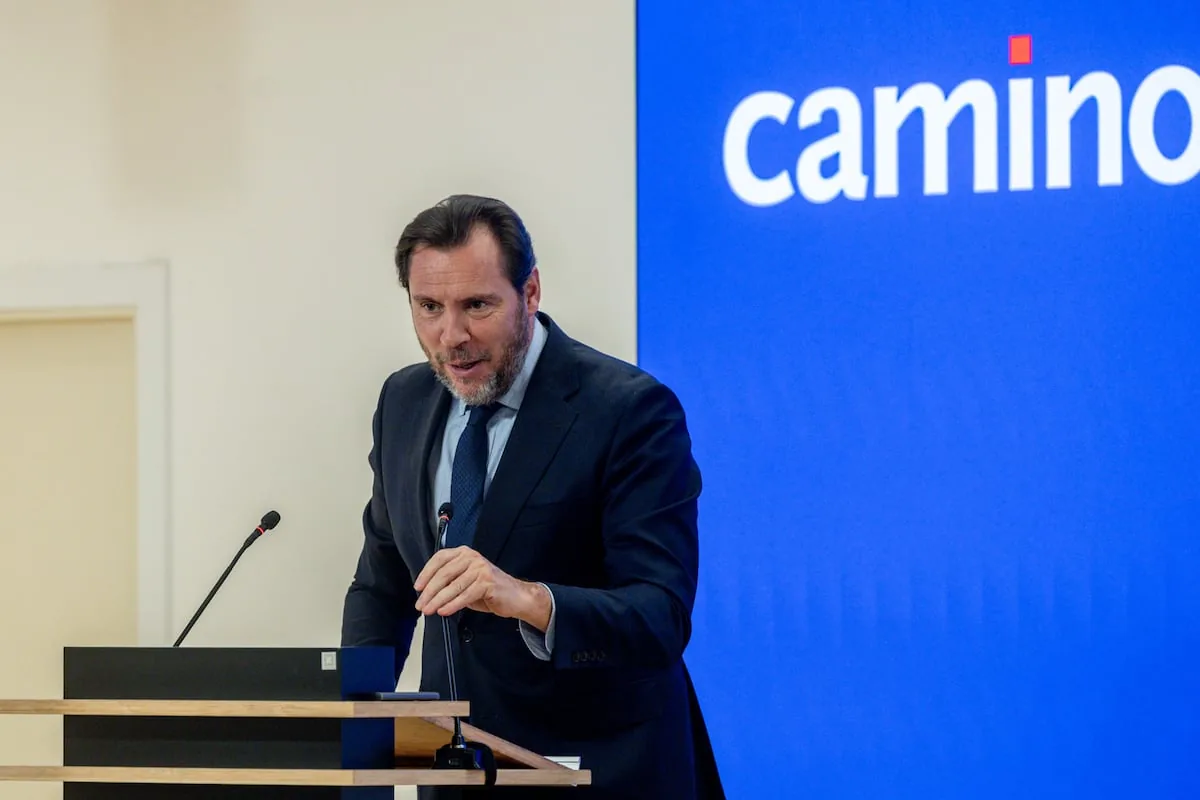
“Spain has an enviable situation in infrastructure. It is indisputable.” The statement was made this afternoon by the Minister of Transport, Óscar Puente, who spoke at a forum organized by the College of Civil Engineers, Canals and Ports on infrastructure investment needs. Puente praised the service of Spanish airports, ports, roads, and railway networks compared to the infrastructure of neighboring countries, but also prioritized greater effort in maintenance. The minister took the opportunity to present an extraordinary plan for the improvement of the pavements of the State road network, which will be executed between 2027 and 2031 with an allocation of 1.629 billion.
Read more Tax Day 2026: what to do if the return is not filed on time and how to avoid last-minute fines
“The diagnosis is done and we have identified where intervention is most needed, with 5,000 kilometers requiring immediate attention,” explained the Transport representative before a large forum of engineers. The program mobilizes 1.629 billion during the period, in addition to the 1.8 billion already dedicated annually to road maintenance. In the starting year, 2027, 185 million euros are already planned, with 2029 being the year with the highest allocation, with 550 million euros. In the front row were listening the president of the College of Engineers, Miguel Ángel Carrillo, the representatives of the construction associations Seopan and Anci, Julián Núñez and Cocha Santos, respectively, and the president of Adif, Luis Pedro Marco de la Peña.
To carry out the plan, Puente announced that the supplements of 374 technical positions will be improved and 143 new technical positions will be created. “This is a strategic issue, but the State network is only 16% of the total, although it absorbs more than 50% of the traffic. Other administrations have important challenges.” Investment in maintenance per kilometer, Óscar Puente admitted, has been insufficient in recent years, leaving a deficit he estimates at 5.6 billion: “It is a structural problem and preventive maintenance avoids a much more complex and costly intervention later. Not investing in maintenance is deferring the cost.”
Puente defended the current Government’s action, with the aforementioned 1.8 billion annual investment in maintenance, “double that before 2018.” He estimated that the pavement improvement plan will create 18,500 jobs, have an impact of 1.2 billion on GDP, and generate more than 400 million in revenue.
Referring to the railway system, the Government representative recalled that the infrastructure manager Adif started from low levels in key networks such as the Rodalíes of Catalonia: “We have been making progress, although we had a very serious setback [referring to the Adamuz accident on January 18], and we continue working.” Óscar Puente closed his speech referring to “the cleaning of the construction sector in Spain, which we must defend,” but describing as inevitable a reform of the contracting of maintenance and public works that seeks to veto any hint of corruption. The weight of subjective evaluation criteria in tenders decreases in favor of the score corresponding to the economic offer.
The period 2027-2031 will be intensive in investment promoted by the Ministry of Transport. The 13 billion in airport expansions planned by Aena are just around the corner; 7 billion are budgeted in State Ports; an investment level of 6 billion annually is expected in railways, and 5 billion per year in roads.
Read more The United States deported 442,000 people in fiscal year 2025
The Adamuz accident, which on January 18 cost the lives of 46 people on the Madrid-Seville high-speed line, overshadowed the day, with the recognition of “a crisis of confidence in the railway system” made by the president of Adif, Luis Pedro Marco de la Peña. “The Adamuz accident was not due to a lack of maintenance, perhaps inspection,” concluded the executive. From Adif it was emphasized that Spain is “well above the European average in maintenance,” despite which a more predictive approach should be pursued, said Marco de la Peña.
Urgent situations
The president of the College of Civil Engineers, Canals and Ports, Miguel Ángel Carrillo, had highlighted at the opening of the forum “the excellence of the transport infrastructure we have in Spain,” and the experience acquired by construction companies in its execution and maintenance. On this last chapter, Carrillo stressed that maintenance “constitutes the basis on which safety, service quality, and useful life rest.” In this context, he urged greater investment effort from the administrations.
Before Puente’s intervention, the engineering representative provided data that speak to the urgency of greater spending on maintenance, such as the 13.5 billion deficit in road maintenance, of which 5.6 billion is due to the aforementioned State road network. Regarding railway infrastructure, Carrillo positively valued the agreement reached between Adif and railway unions to increase the funds dedicated to track maintenance, from 435 million in 2025 to 629 million in 2030, in the case of Adif High Speed (+44%), and from 665 million last year to 1,179 million in 2030 (+77%) in Adif, which manages the conventional railway network. “The Spanish railway system must recover the excellence in service quality it has been offering. It is essential to recover the prestige and confidence that this transport system had in society,” concluded Miguel Ángel Carrillo referring to the effects of the recent high-speed railway tragedy.
The president of the Spanish Road Association (AEC), Juan Lazcano, did not hide his satisfaction with the launch of the paving plan but recalled that across the country “there are 34,000 kilometers awaiting urgent improvements, within a year.”
Julián Núñez highlighted from Seopan the infrastructure sector’s capacity to put infrastructures in perfect condition, but misses a “financing model capable of solving the situation and that does not exist today.” The group of large construction and concession companies has been advocating for years for pay-per-use on highways to alleviate the lack of public budget. And Concha Santos, president of Anci, emphasized that “there is more public investment than in past years, but the activity increasingly exposes companies to risks due to the execution costs of works, which have increased by 28%.” From Anci it is pointed out that the Spanish regulatory framework is more oriented to controlling costs than managing the price shock in contracts. Santos demanded long-term infrastructure planning and conditions that offer stability to contractors.
Read more Rafa Jódar is still on a roll and is already in the quarterfinals of the Conde de Godó