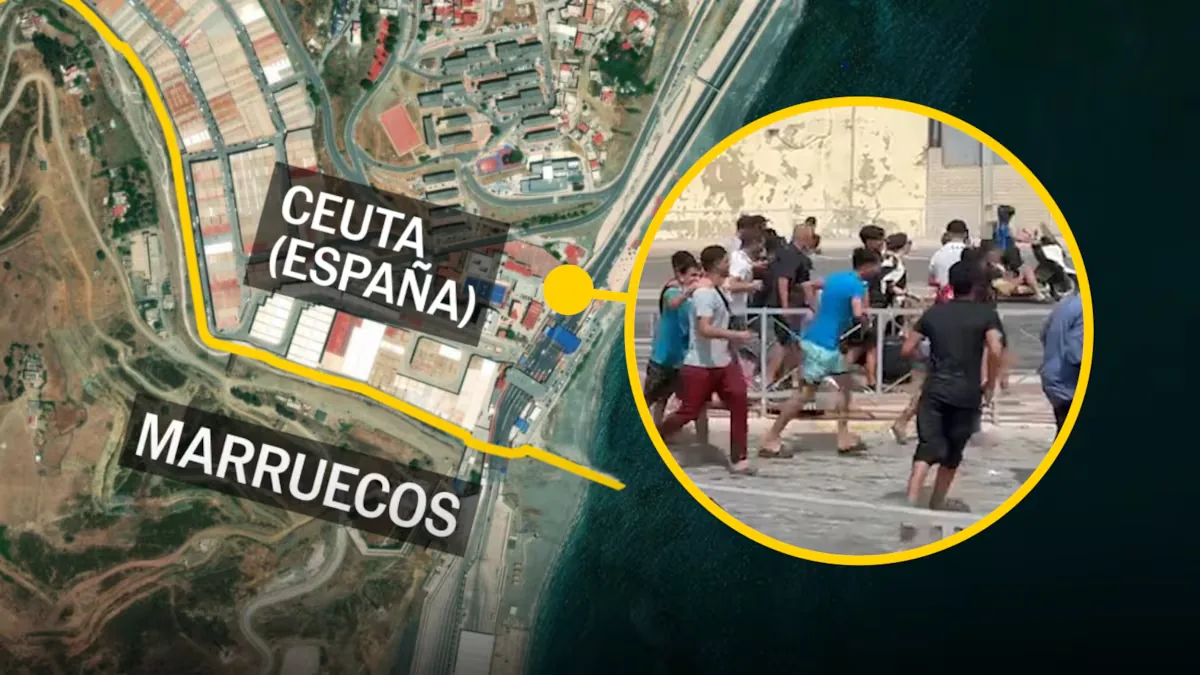









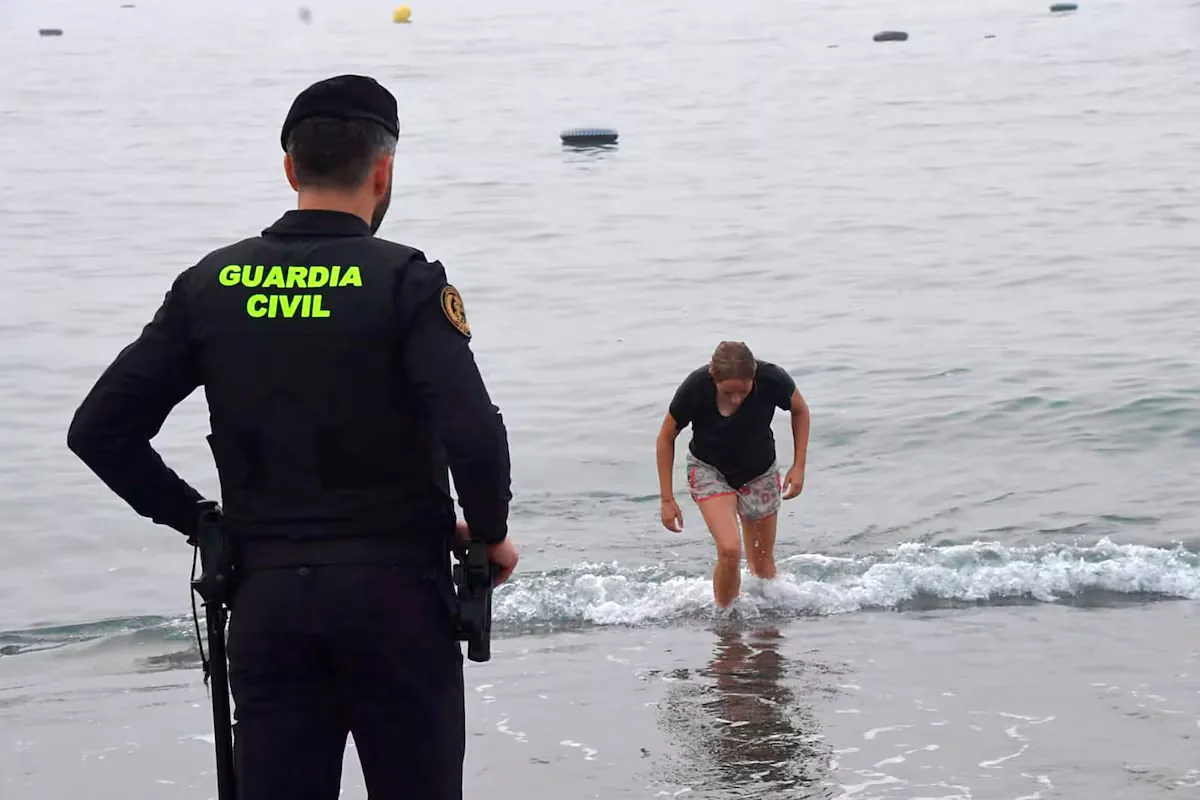
The entry from Morocco to Ceuta of thousands of people in recent hours occurs three weeks after the Supreme Court banned hot returns of migrants intercepted at sea who attempt to swim into the autonomous cities of Ceuta and Melilla. In reality, that ruling has not resulted in any change in the immigration law, which regulates express rejection; what the high court has done is interpret that regulation to determine whether the provision allowing returns at the border in Ceuta and Melilla applies to those intercepted at sea trying to swim into the autonomous cities. And the answer, according to the Contentious-Administrative Chamber, is no.
Read more Barcelona observes a minute of silence in repudiation of the latest gender-based murder in San Martí
The Supreme Court’s decision came after examining the case of a migrant from Algeria who appealed his handover to Moroccan authorities after being intercepted at sea on November 14, 2024, when, along with two others, he was trying to swim into Ceuta. In his appeal, he argued that this return was carried out without any procedure or resolution, nor was he allowed the assistance of a lawyer or the right to international protection. The migrant requested compensation of 6,000 euros for moral damages caused and that the necessary measures be recognized to achieve his return and readmission to Spain.
A court in Ceuta and, subsequently, the Superior Court of Justice of Andalusia, ruled in his favor, except for the compensation request, understanding that those who enter by sea do not overcome a border containment element, so the tenth additional provision of the Immigration Law, which allows immediate expulsions of migrants at the border without the need to initiate a formal expulsion process, was not applicable. The State Attorney General’s Office appealed to the Supreme Court, arguing that express returns in these cases are legal because the law allows this option when foreigners are detected at the border line, regardless of the existence of physical obstacles or not.
After examining the appeal, the Supreme Court considered it necessary to “clarify and complement” its jurisprudence on the application of express returns to avoid that, in similar cases, the authorities or courts that must rule on them give conflicting answers. And, in a ruling authored by Judge Fernando Román, it concluded that the special regime established by law for Ceuta and Melilla, specified in border rejection, “is not contemplated generally” for all foreigners who try to enter those cities irregularly.
Read more Six iconic roles of Manolo Solo: from Gutiérrez Mellado to Santi Triana from ‘Tarde para la ira’
The judges warn that “containment” elements such as fences cannot be “equated” with technological border control devices — such as drones, thermal cameras, or sensors — which, “in principle (and unless proven otherwise), do not perform a material containment function, but rather surveillance, detection, and alert, allowing the detection of the presence of people, but not physically preventing crossing the border line, nor detaining those who try.”
However, the court leaves the door open for the Government to act to extend express returns to those arriving by swimming. According to the Supreme Court, if the Executive wishes, since the law refers to “border containment elements” and not exclusively to land containment elements nor specifically to fences, “nothing would prevent that, if containment elements were established at sea to protect the border line,” express rejection could be applied “to those who attempt to irregularly cross the border by overcoming those maritime containment elements.”
Read more The Mexican economy recovers and grows by 1.5% in the second quarter of the year