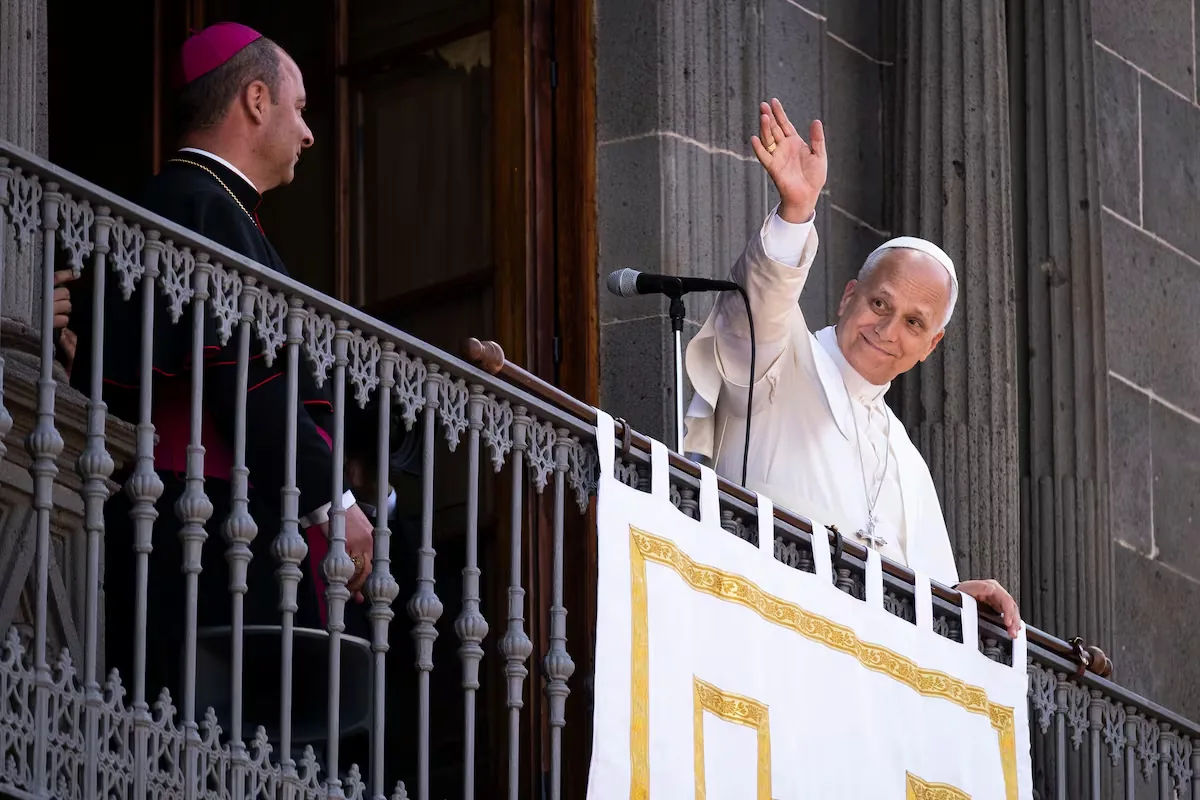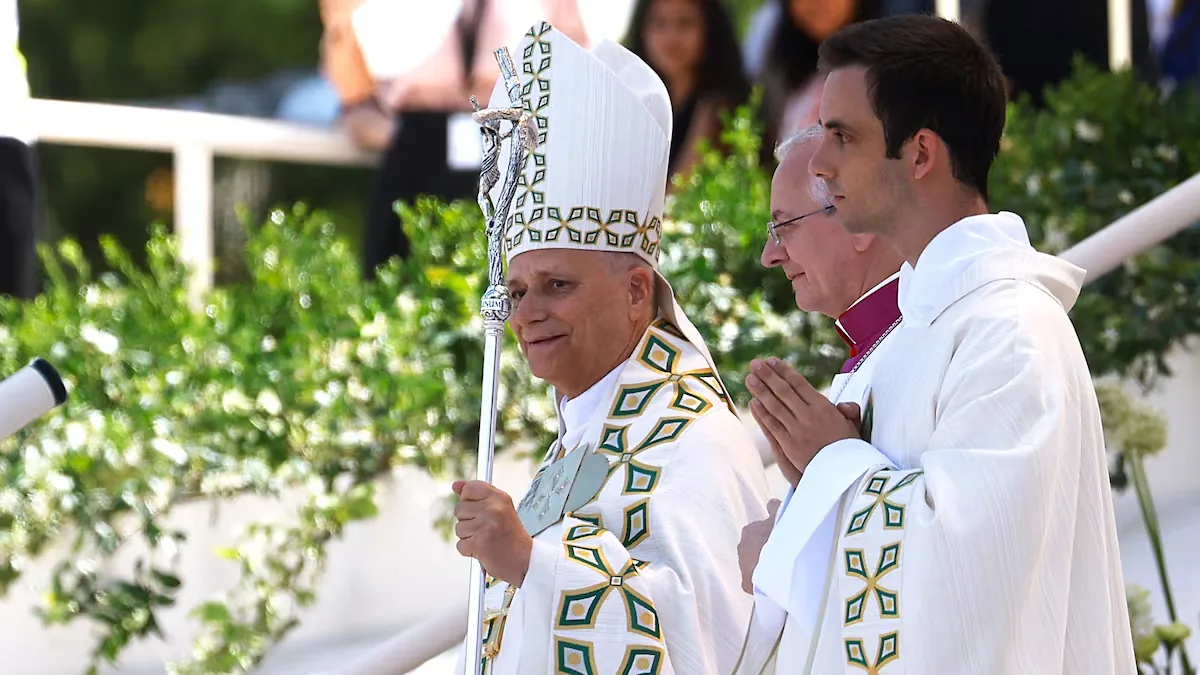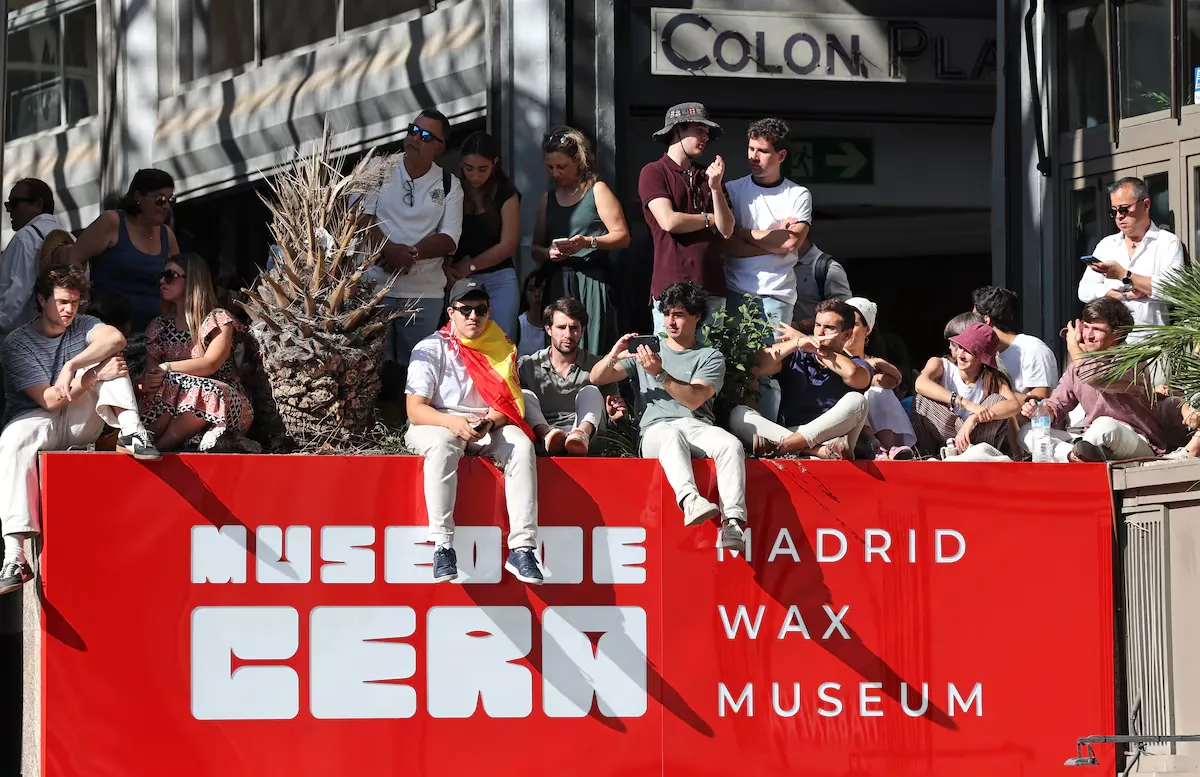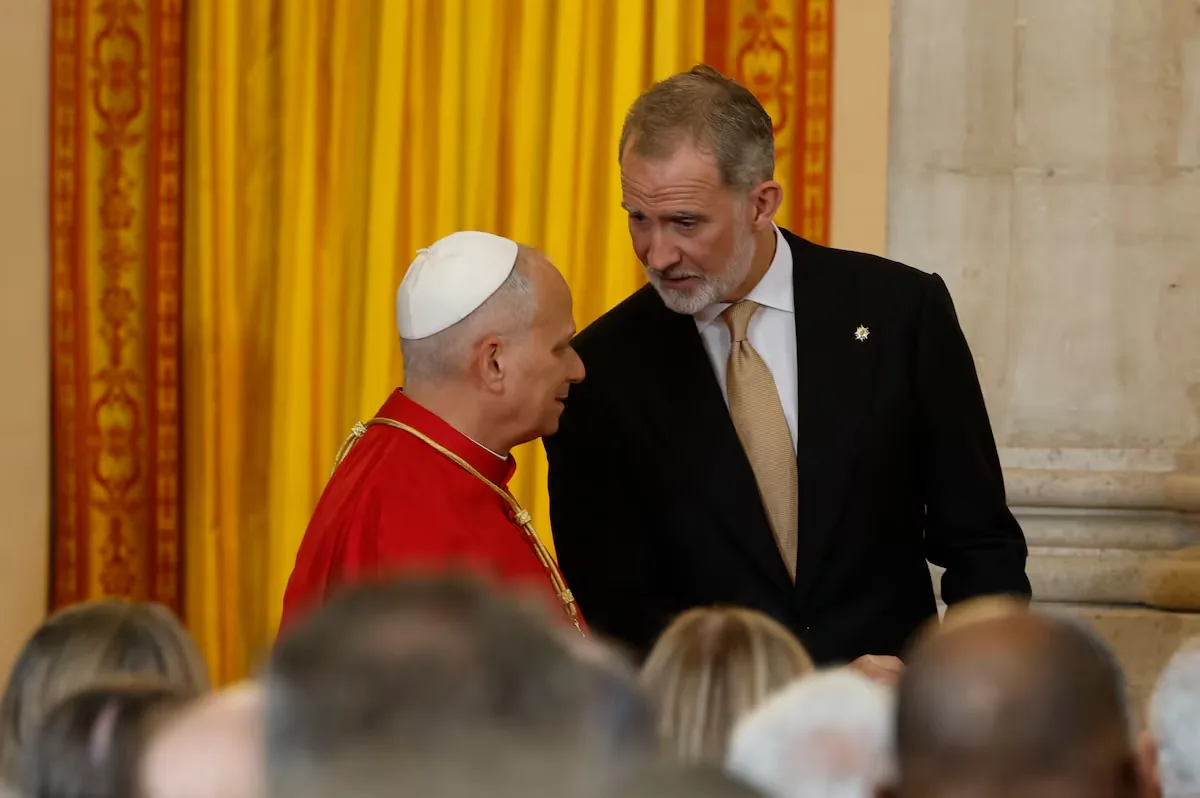

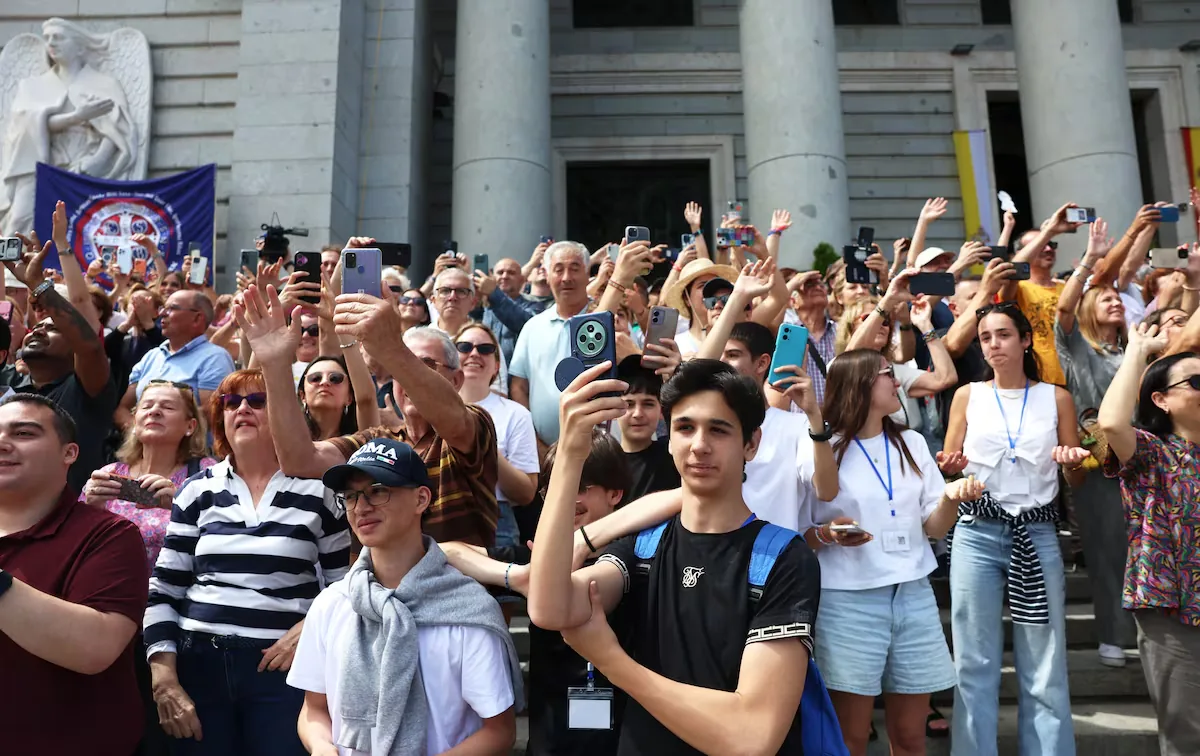
“Oh, the Pope is dressed as the Pope!”, an excited woman shouts from the crowd. She has been waiting for more than two hours in front of the Royal Palace and her reward lasts barely three seconds: just enough time to distinguish Leo XIV behind the window of his official vehicle as he crosses the square on his way to the welcome ceremony with the Kings and other representatives of the State institutions. The roar of the Royal Guard’s cannon fire shakes the parishioners. Many turn around alarmed, but there is no smoke or gunpowder: only a shower of confetti announcing the arrival of the Pontiff on his first visit to Spain. It is also his first contact with the thousands of faithful and curious people who got up early to secure a spot from which to welcome him. According to data from the Government Delegation, 130,000 people followed the Pope on his route between the Royal Palace and the Nunciature.
Read more This is how we told you about Andreeva’s victory in the Roland Garros final against Chwalinska
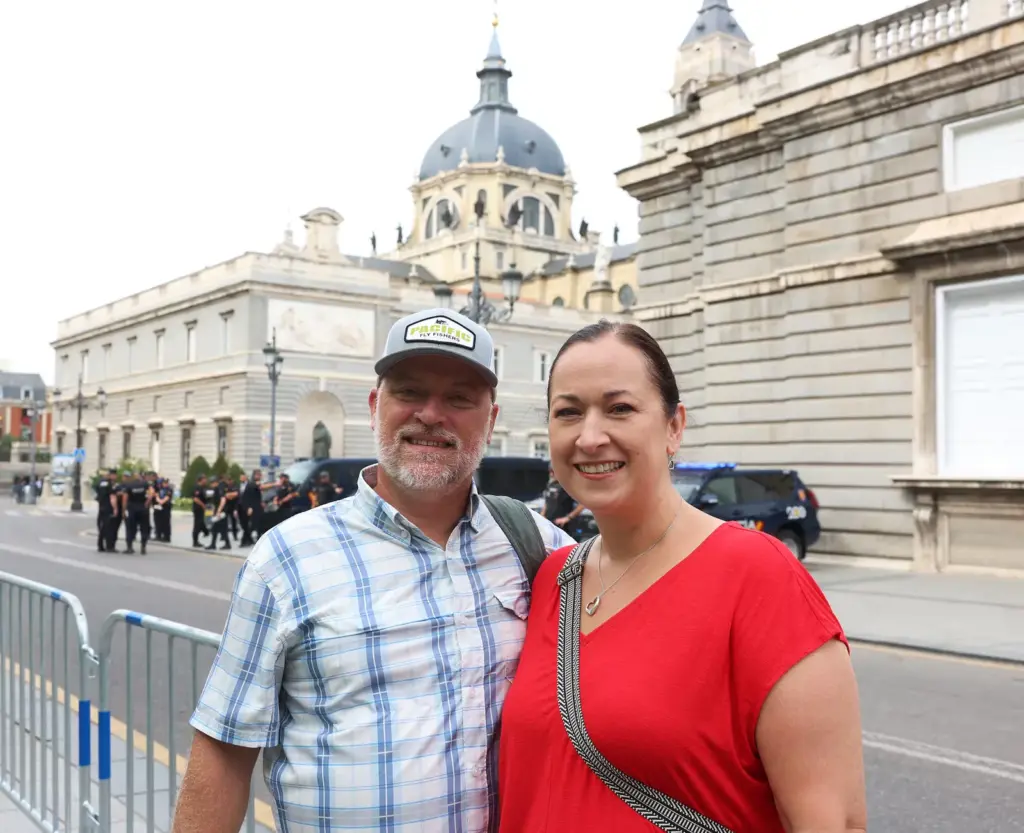
In the front row, American Casey Sledzinski waits with her family. They found out about Leo XIV’s visit just a few hours earlier, upon landing in Madrid on Friday afternoon. Her husband’s family is of Polish origin, and he came to the Spanish capital as a refugee 41 years ago from Poland and had never returned to the city. What interests her most about the Pontiff is his open disagreement with the President of the United States. “Trump is doing terrible things all over the world,” Sledzinski summarizes. Her stance also has a personal dimension because her husband emigrated to the United States as a child, an experience that makes them closely follow the migration debate. That is why she values the Pope maintaining a critical position against the migration policies promoted by the White House.
Next to them, a Peruvian couple who have been living in Madrid for two decades waits. They left home at six in the morning to secure a good spot from which to see him pass. “Leo XIV has lived in Peru and knows firsthand the poverty that exists in our country,” explains Rafael Zuloeta, 56. His wife, Yolanda Gutiérrez, believes that people are getting closer and closer to the Church because “even though there were mistakes and they did some things wrong, now a change has been seen.” While the figure of the Pope is barely distinguishable in the distance, greeting the Kings and the main authorities of the State at the gates of the Royal Palace, a deep voice rises above the murmur of the crowd: “Long live the Pope!” The cry immediately catches on among the attendees, who repeat it in unison. He was the first to cheer the Pontiff since his arrival and, in a matter of seconds, he sweeps the entire square with him.
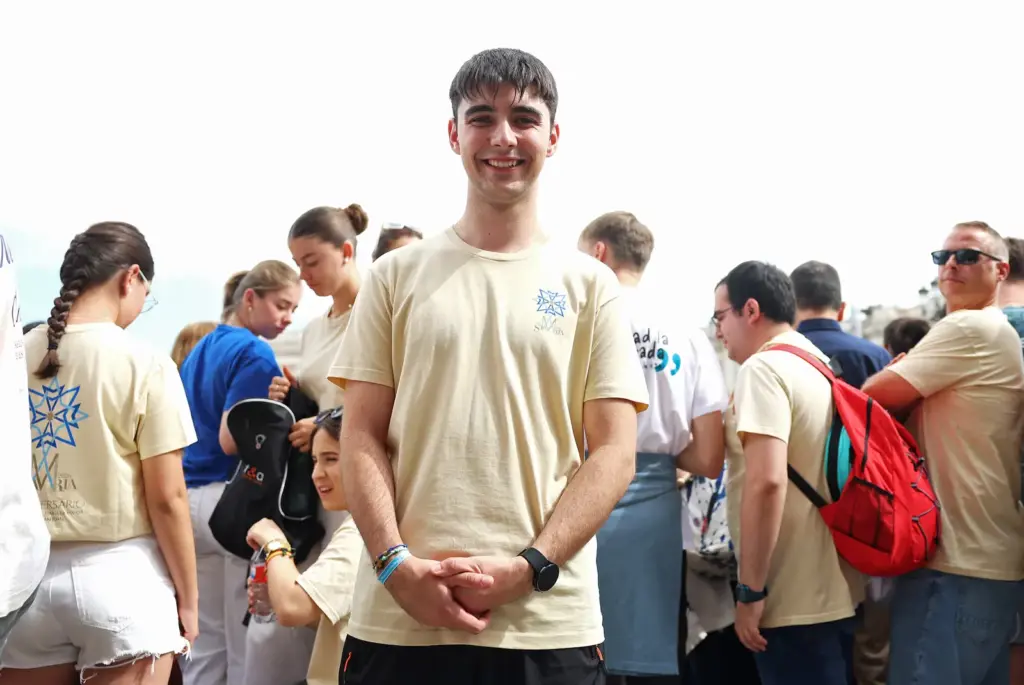
It is the voice of Eduardo Gutiérrez, 24, who comes with his companions belonging to various parishes in Madrid. He says that, upon waking up this morning, he didn’t know that the emotion of seeing the Pope would give him the courage to sing a chant honoring Leo XIV. The young man believes that “seeing the reception he has had, it feels like the Pope connects well with young people.” Many had been planning this trip for months and can’t believe the day has finally arrived. At 19, Javier Díaz Guzmán made the early morning trip with his friends from Alcázar de San Juan, in Ciudad Real. “Seeing him in person is impressive,” says the young man, who believes that the Church has strengthened its connection with youth. “I am very happy to meet so many young people who share the faith like me,” he adds.
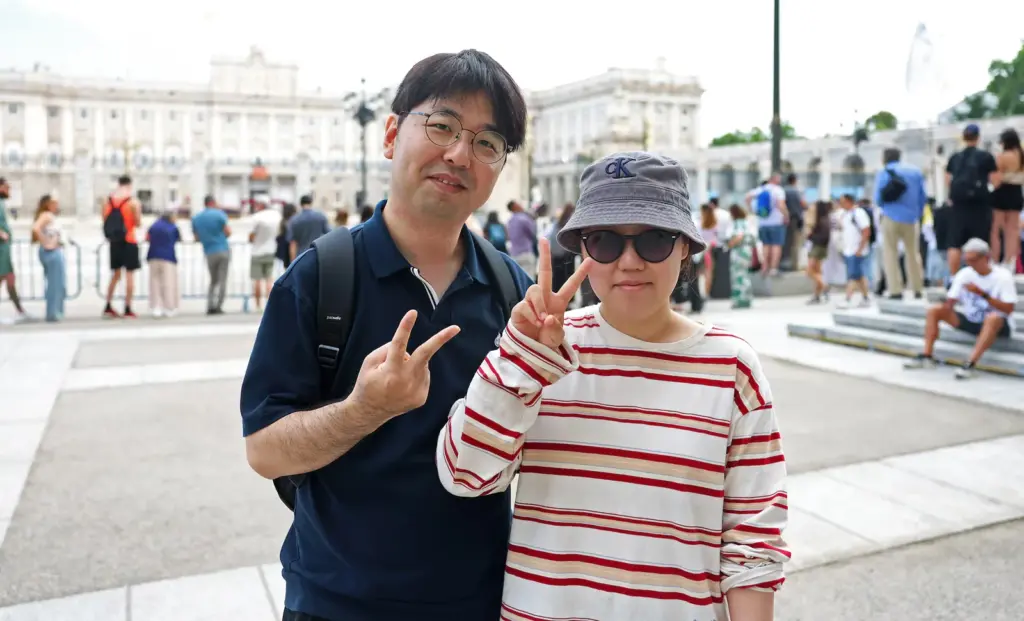
The crowd of people arouses the curiosity of two tourists who try to cross the police cordon to find out what is happening. They decide to ask an officer who, amidst the noise and bustle, tries to dust off his English. “Today is el Papa in Madrid,” he replies with a strong Spanish accent: today the Pope is in Madrid. “But can we see him from here?” they insist. “Yes, yes,” replies the policeman, somewhat overwhelmed by the crowd trying to get closer. Sitting on the steps of the Almudena Cathedral is Sarang Kim, a 33-year-old South Korean woman who curiously observes the emotion of the faithful. “The day after tomorrow we will go to Lisbon because we are going to attend a competition, but we came earlier just to visit Madrid a bit,” she says. She knew nothing about Leo XIV’s visit; she found out on the street while sightseeing. “There were a lot of people and I asked what was happening. They told me the Pope was coming. So we decided to stay to really see him.”
She traveled with her boyfriend, Sub Bae, who flew from Seoul to meet her, and together they improvised this stop even though they are not Catholics. “In South Korea, it’s not common to see something like this. Catholicism is not our national religion.” Kim studies European languages and cultures, which is why the scene is fascinating to her: “I am very interested in European history. It’s incredible to see how so many people want to see the Pope and celebrate his arrival.” For this South Korean, this group of people, the collective devotion, is a real window into something she had only read about in books.
Upon leaving the Royal Palace, the Pope does not want to disappoint and gets into the Popemobile. After just a few more seconds of seeing him wave, the crowd begins to disperse. Some remain still, still looking towards the street where the Pontiff, whom they had waited for a couple of hours, disappeared; others lower their arms after recording with their phones and review the video to make sure the Pope was in focus. Some sit on the curb to rest, some look at their watch again, some send an audio message saying, “Yes, yes, we saw him, he passed by very quickly.” On one side of the street, a woman walks barefoot and asks for money with a scarf tied around her head and a plastic cup in her hand. She moves slowly through the crowd and extends the cup with a timid, almost resigned gesture, murmuring something barely audible amidst the noise. She asks for a coin, but few stop. Several people take photos with the Royal Palace in the background. A group toasts with water bottles, exhausted by the heat and the wait. Further on, a family opens a backpack and distributes sandwiches while commenting on how quickly everything happened.