








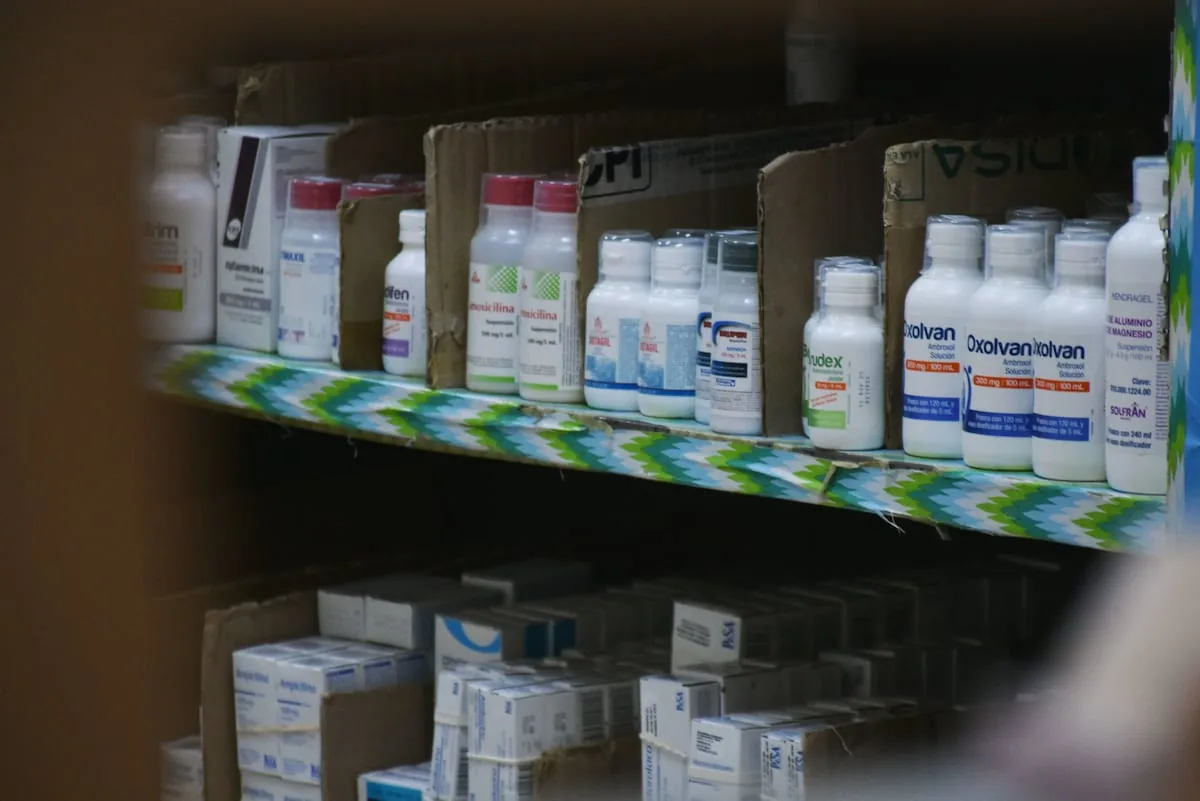
The shortage of medicines in Mexico, one of the major problems inherited from Andrés Manuel López Obrador’s administration to Claudia Sheinbaum’s, remains unresolved. Despite previous statements that the problem had been solved, citizen complaints continue to remind the Government that public hospitals lack medicines. This weekend it was in Hidalgo, a state in the center of the country, where Sheinbaum announced a new health route, a national program aimed at distributing medicines, to solve the 20% shortage that exists in the entity. This comes as the Universal Health Service credentialing project began this April, which has the noble and complex objective that, by the end of the six-year term, every person without social security, a third of the population, can receive care in any of the struggling public health systems.
Read more Grupo México forms a strategic alliance with BlackRock to raise its stake in electric power
It was this Saturday, April 25, in Tenango de Doria, a town in the forested north of Hidalgo, during the president’s weekend tour, where residents took the microphone at an event to complain about the lack of doctors and medicines in the region’s health centers. Sheinbaum visited the Otomí-Tepehua Regional Hospital in San Bartolo Tutotepec immediately after this event. “The problem is that there is a shortage of a medicine that is widely used for high blood pressure, there is another that substitutes it, but of this one there was only one small box,” Sheinbaum said during her daily press conference this Monday. The president has asked Birmex, a Mexican public company in the health sector, “to send that medicine and the ones that are missing, which are 20%,” and announced that Alejandro Svarch Pérez, director of Health Services of the Mexican Social Security Institute for Welfare (IMSS-Bienestar), will visit that medical center this week.
It was another reminder that the lack of medicines in the public health sector, a problem inherited from the administration of López Obrador, Sheinbaum’s mentor and predecessor, is still present in Sheinbaum’s mandate. Although several triumphant statements have been made, assuring that the supply is almost total, hospitals and citizens continue to report medicine shortages due to a combination of failed negotiations, vetoes to distributors, and lack of logistical experience.
Read more Ferran Adrià on Santi Santamaria: “May nothing and no one ever reopen a wound that doesn’t exist”
The problem of medical supplies in Mexico dates back to 2019, when López Obrador’s government, arguing to combat corruption, changed the purchasing system so that an inexperienced Ministry of Finance and Public Credit would take charge instead of the experienced Mexican Social Security Institute. In addition, the three main medicine distributors in the country were vetoed, with accusations of oligopoly. Since then, the country has not managed to have a stable supply, going through various projects to try to solve it, which include a failed intervention by the United Nations Office for Project Services, the inoperative Megafarmacia del Bienestar, and the failed Consolidated Medicine Purchase 2025-2026, which is a return to the model prior to the arrival of the Fourth Transformation.
Read more Moreno avoids detailing his healthcare program and demands Sánchez end the doctors’ strike