






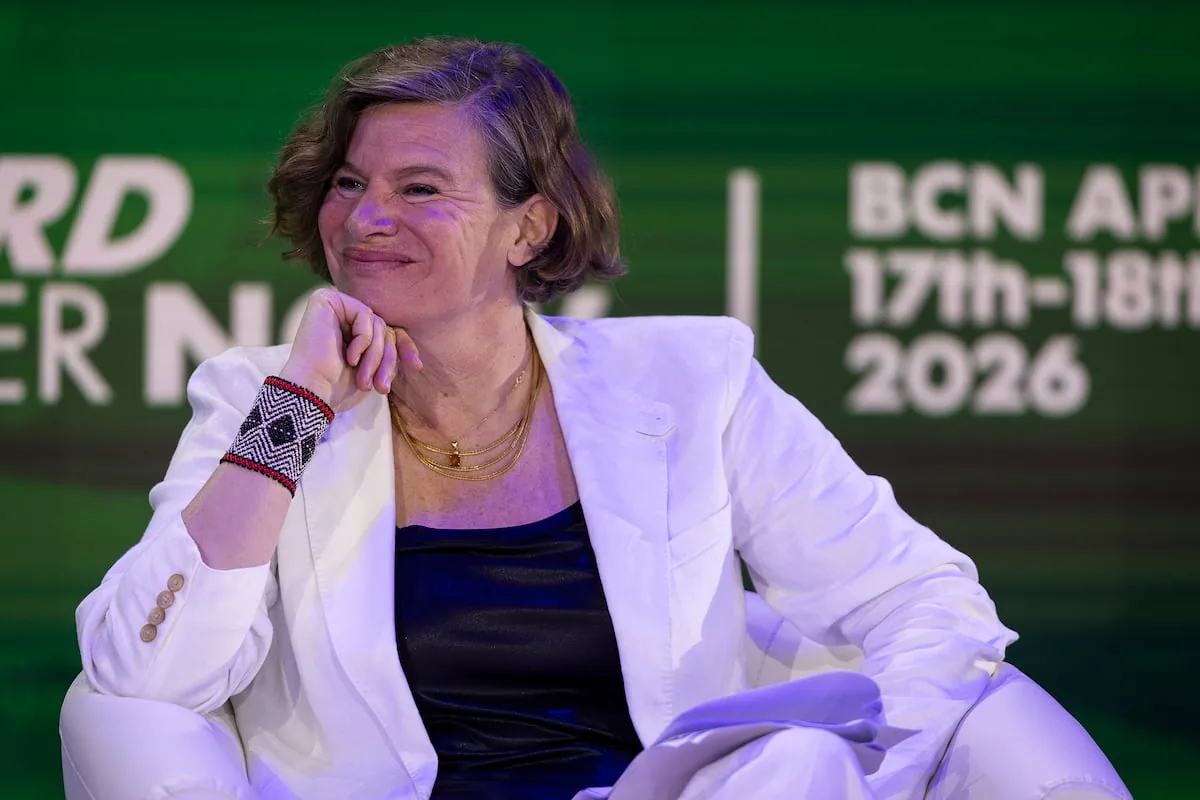
Mariana Mazzucato is a firecracker. The Italian-American economist (born in Rome 57 years ago, raised in the United States and based in London) is part of that group of renowned progressive academics who offer an uninhibited opposition to neoliberalism and subsequent Trumpism, but she does so without affectation or solemnity. She speaks with passion and optimism about another way of doing and seeing economics. Mazzucato, a professor at University College London, defends the innovative role of the public sector and cites the first moon mission conceived by Kennedy, now so topical, as an ideal example of public-private collaboration. Her written work is vibrant, and titles such as The Entrepreneurial State or Mission Economy (published by Taurus in Spain) bear witness to this. In this interview, granted within the framework of the Global Progressive Mobilisation (GPM) in Barcelona, she is exultant about the creation of a Global Council for a Common Good Economy together with the Spanish Government. However, she addresses the structural impact of the Trump era on the global economy with less euphoria.
Read more Trump and his allies use correspondents’ dinner attack to push for ballroom construction
Question. We have been reinventing capitalism since 2008. What makes you think this time is different?
Answer. We haven’t, that’s the problem. In 2008 there was a financial crisis, and the first thing Europe did, and its main mistake, was not understanding where it came from. We imposed austerity when the big problem was private debt. We should have learned and truly reformed finance and opened a big conversation about the way we grow. We grow in a problematic way; many companies weren’t even investing in the real economy, but in finance. I believe the difference, now, is the geopolitical and climatic situation. Although Trump has tried to make talking about the climate unpopular, the conversation of the last six years has generated a sense of urgency to take action that didn’t exist before. The problem is that there isn’t enough leadership. What’s amazing that’s happening in Spain, Brazil, and a bit in South Africa, is that you have leaders who are saying: “Enough is enough.” The current Pope, and Pope Francis too, have also said enough is enough. We need to restructure capitalism and the assumptions about how it works and how it doesn’t work.
Q. You mentioned the geopolitical situation. There’s a war in the Middle East, the one in Ukraine continues, we’re experiencing an energy shock, inflation is rising again, forecasts are being revised downwards… What do you think is the main risk right now?
A. To begin with, let’s not think of all this as inevitable crises. These problems have been man-made. And, in this case, currently, mainly created by the United States. And we need a much stronger coalition between the BRICS and also Spain, countries that resist assuming that crises simply happen. It’s a shame we don’t have more leaders like [Pedro] Sánchez talking about Gaza or Iran. I find the pride in resisting that is emerging in Spain interesting, instead of reacting to every Trump message on social media.
Q. Uncertainty can be that great risk.
A. Remember that every time Trump changes his mind about what he will or won’t do in Iran, there’s market volatility, and with that volatility, people are making a lot of money. So uncertainty is a euphemism; it’s manufactured uncertainty that is benefiting certain companies.
Q. What will Trump mean for the global economy, not in the short term, but in the coming years?
A. I believe the years of American hegemony are over. We are seeing the end of the Roman Empire, and that’s not good news. I don’t want any country to fall because people suffer. But it is good news that there’s a wake-up call about the fact that there’s a certain model of capitalism that has not only failed but has revived imperialism in recent times, as shown by conversations about Venezuela or Greenland. Now we see a reaction against the things Trump has done, especially concerning rising energy prices, but also because of his attacks on the Pope. I believe there will be a global realignment, something that is not necessarily good or bad, but it is certainly far from the United States. There’s China, there are the BRICS countries thinking about new payment systems… The world is turning a new page.
Q. Do you see China potentially taking the space left by the United States as good news?
A. I don’t see it as good or bad news; I see it as news. And if they were taking the place of the US when we had a leader like Roosevelt or even Biden, or even Obama, we would be in a different situation. But now we have a dysfunctional government that harms its own people. Tariffs are hurting American workers the most. Furthermore, there’s a setback in real climate investments. So distancing oneself from the United States is positive. As for where to move closer, I don’t think it should be only China; I think it should be a coalition of willing countries. China is the country spending the most on reducing carbon emissions, and some countries in Europe see this as an opportunity.
Q. You have very good words for Spain’s economic direction, but beyond the big numbers, there’s great frustration among people due to the cost of living and housing access problems. What do you think about that?
A. That discomfort you describe for Spain occurs in most countries; the question is what the government is doing about it. I believe that you, here, at least try to get to the root of the problem, for example, by ensuring that energy prices are limited to what the wholesale gas price should be. Extraordinary profits have been taxed, not profits, which are a good thing, but excesses. This is what I mean by being proactive. As for housing, the issue goes beyond housing itself. It’s about inclusion and sustainability, how we design communities; what we don’t want are the banlieues of France: creating peripheries of people who don’t feel they have access to what a community should be. For that, you need a progressive agenda.