







Key moments
- Marco Rubio, on the peace agreement with Iran: “We should receive a response today”
- Hezbollah fires rockets at northern Israel in response to the assassination of the head of its elite force
- Israeli attacks kill three people in southern Lebanon
The President of the United States, Donald Trump, stated early Friday that his country is maintaining negotiations with Iran and that the ceasefire remains in effect, despite a new exchange of attacks between the two countries last night that has raised tensions in the Strait of Hormuz. U.S. forces attacked Iranian “command centers” late Thursday in response after Iranian forces launched missiles, drones, and fast boats against U.S. destroyers transiting the corridor. Iranian Foreign Minister Abbas Araqchi stated that every time a diplomatic solution to the war approaches, the United States carries out a military action. These renewed tensions in the Middle East have revived concerns about energy supply, and oil has again surpassed $100. Meanwhile, Hezbollah has launched several rockets at northern Israel in response to the assassination two days earlier of Ahmed Ali Balout, commander of the elite force of its armed wing, in a bombing in Beirut.
EL PAÍS offers the latest on the US and Israel attack against Iran for free. If you want to support our journalism, subscribe.
Marco Rubio, on the peace agreement with Iran: “We should receive a response today”
U.S. Secretary of State Marco Rubio has stated that “we should receive a response from Iran today” regarding the proposal to end the conflict between the two countries.
Rubio added that he hopes the offer “is serious” and allows negotiations to be channeled, but noted that if Iran “fires its missiles at us, we will respond.”
The Republican also commented on the situation in Lebanon, explaining that the intention of the U.S. is to negotiate “with the Lebanese government, not with Hezbollah.” (Reuters)

UAE air defenses have intercepted more than 550 missiles and 2,200 drones since the start of the war
The United Arab Emirates (UAE) Ministry of Defense has intercepted 551 ballistic missiles, 29 cruise missiles, and 2,263 drones launched by Iran since the start of the war; these add to the new attacks reported early this morning, which left two injured. Thus, the total number of injured in the UAE rises to 230, with at least 13 dead.
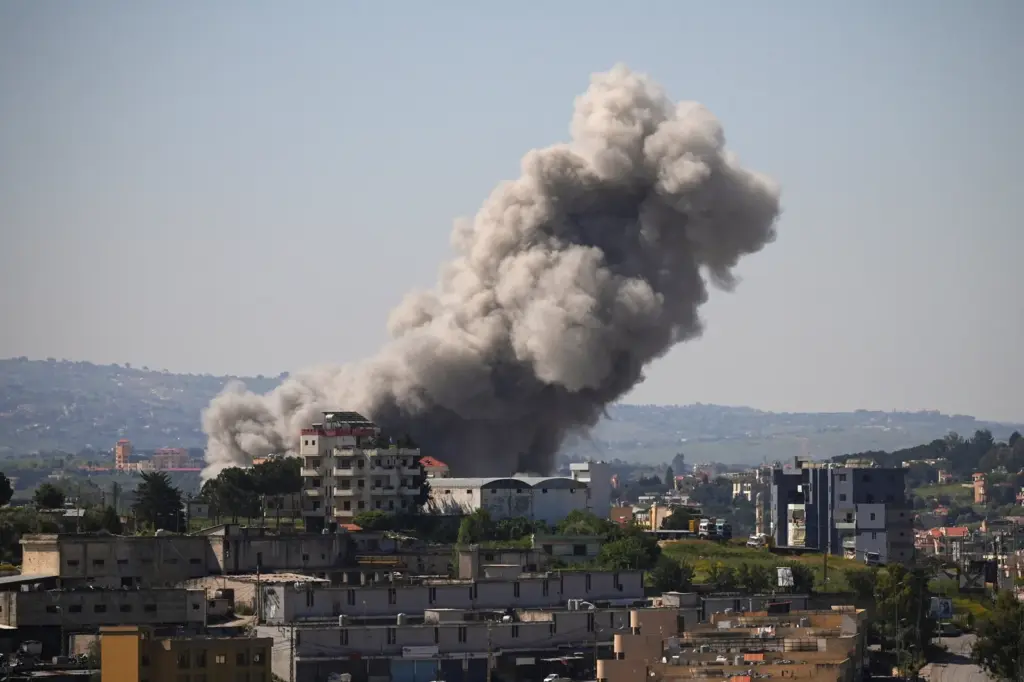
Smoke rises following an Israeli strike on Nabatieh, southern Lebanon. / Stringer / REUTERS
What has happened in the last hours
These are the main news of the day in the Middle East war at 14:00 this Friday, May 8:
– Trump states that the US is negotiating with Iran after a new exchange of fire. “Maybe it won’t materialize, but it could happen any day. I think they want the deal more than I do,” the Republican said. Iran says that every time a negotiated solution to the conflict approaches, the US carries out a military action.
– Israel orders the evacuation of several Lebanese localities. At least 2,727 Lebanese have died in Israeli attacks against their country, and more than 8,430 have been injured since March 2, when Israel began its offensive against Hezbollah, according to figures from the Lebanese Ministry of Health. Hezbollah fires rockets at northern Israel in response to the assassination of the head of its elite force.
– Beijing confirms an attack against a tanker with a Chinese crew in the Strait of Hormuz. The Foreign Ministry spokesperson detailed that no casualties were reported among the crew of the vessel, which flies the flag of the Marshall Islands.
– Stock markets fall and oil surpasses $100 amid renewed tensions in the Middle East. After hopes for a peace agreement in recent days, the MSCI All Country World index, the broadest global equity indicator, falls 0.3%. Iranian television states that “the Emirates is no longer a neighboring country, but a hostile base.”

Hezbollah fires rockets at northern Israel in response to the assassination of the head of its elite force
Hezbollah has launched several rockets at northern Israel in response to the assassination two days earlier of Ahmed Ali Balout, commander of the elite force of its armed wing, in a bombing in Beirut. Just as Tuesday’s attack in the Lebanese capital was unprecedented in the three weeks of truce, the rockets launched by Hezbollah have brought back air raid sirens to cities like Haifa and Acre, which had been exempt during the ceasefire.
Emergency services have not reported casualties, and it was not a large wave of rockets, according to the Israeli army, which said one was intercepted and the rest fell in open areas. Deaths in Lebanon from Israeli fire during the truce exceed ten daily, in a basically nominal ceasefire in which, since Wednesday, the capital is also not excluded.
Iran says that every time a negotiated solution to the conflict approaches, the US carries out a military action
Iranian Foreign Minister Abbas Araqchi stated this Friday that every time a diplomatic solution to the war approaches, the United States carries out “a reckless military adventure,” in the first official Iranian reaction to last night’s exchange of attacks between Tehran and Washington.
“Every time a diplomatic solution is proposed, the US opts for a reckless military adventure,” the politician said on X. Araqchi wondered if it is “a crude pressure tactic” or if “once again, a saboteur has deceived the US president into getting into another quagmire,” apparently referring to Israeli Prime Minister Benjamin Netanyahu. (Efe)
Israeli attacks kill three people in southern Lebanon
An Israeli attack killed two people in the town of Toura, located in southern Lebanon, and five others were injured. In another bombing in the south, Israel killed a Lebanese civil protection worker, according to the Lebanese National News Agency.
At the same time, three Israeli soldiers were injured, one seriously, in Hezbollah attacks on both sides of the Lebanese border.
The US still awaits an Iranian response on the proposal to end the war
The United States is still waiting for a response from Iran on a possible agreement to end the war, Italian Foreign Minister Antonio Tajani explained this Friday after meeting in Rome with his US counterpart, Marco Rubio. “The secretary said they are waiting for an Iranian response and we have encouraged dialogue,” Tajani said in a statement to the media after the meeting.
The war between the United States and Iran, which broke out on February 28, has today reached one month of a fragile ceasefire reached by the parties, although tensions increased the day before with a series of reciprocal attacks in the Strait of Hormuz. In this context, Washington still expects Tehran to respond to a proposal to end the war and reopen the strait.
Tajani told Rubio that Italy “is in favor of any initiative that could lead to a permanent ceasefire.” He also offered the US secretary the availability of the Italian Navy to clear mines from the strait and guarantee navigation once the area is completely pacified. (Efe)
Iran captures a tanker for “obstructing Iranian oil exports”
The Navy of the Islamic Republic of Iran has captured a tanker for “obstructing oil exports and the interests of the Iranian nation,” reports the Tasnim agency this Friday.
“The naval commandos of the Islamic Republic of Iran’s army detained, during a special operation, the tanker Ocean Koi, which had violated regulations and was trying to obstruct oil exports and the interests of the Iranian nation,” Tasnim states. The agency, linked to the Revolutionary Guard, does not provide details on when the ship was captured or its location, nor its flag. The maritime traffic specialist website Marine Traffic indicates that the vessel flies the flag of Barbados.
The capture of the tanker comes after Iran and the United States exchanged attacks in the Strait of Hormuz last night, the most serious incident since the truce began on April 8. Both sides blame the other for starting the aggression; in attacks that contradict the supposed advances in peace talks. At the end of April, Iran captured two ships for “operating without the necessary permits” and took them to its coast.
Iran has established a new body to manage transit through the Strait of Hormuz, the Persian Gulf Strait Authority (PGSA), which will coordinate the transit of ships wishing to cross Hormuz. (Efe)
The EU denounces that more than half of the Lebanese population depends on humanitarian aid
The European Union has denounced the critical situation in Lebanon, where more than half of the population depends on humanitarian aid, according to the European Commissioner for Equality and Crisis Management, Hadja Lahbib.
Lahbib says that “more than three million,” out of a total of 5.8 million people, are in a critical situation, after her meeting with Lebanese President Joseph Aoun. “The EU stands with the Lebanese people as a strong and reliable partner,” the commissioner said in a message on X.
On this same European commitment to the region, the Spanish Ministry of Foreign Affairs announced this Friday that they have mobilized an initial package of seven million euros in humanitarian aid for Lebanon, as well as Palestine, Mali, and Niger.
Israel war in Gaza
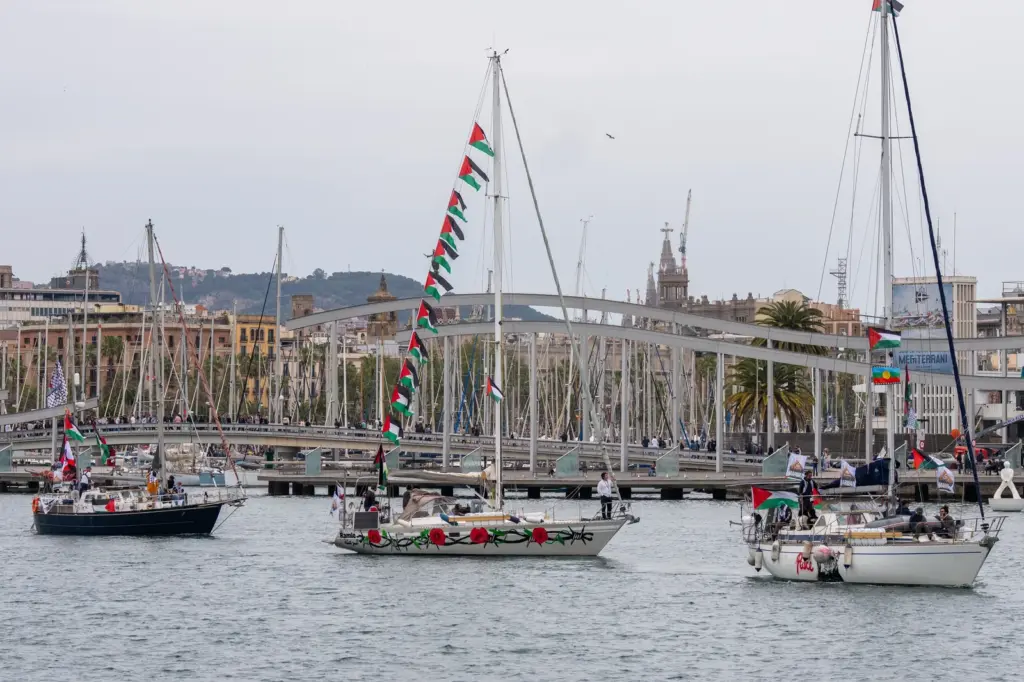
Expansion | The flotilla resumes its journey to Gaza while two of its members remain imprisoned in Israel
The Global Sumud Flotilla sets sail again. Less than a week after Israel intercepted 22 vessels and detained 180 activists in international waters off Crete, part of the convoy has resumed navigation through the eastern Mediterranean Sea heading to Marmaris, Turkey, where it plans to regroup before continuing its mission to Gaza. “We stay, like the Palestinians on their land, not like the Israelis who flee at the first opportunity,” says Yassine Benjelloun, a Canadian of Moroccan origin participating for the second time in the flotilla and collaborating in the organization. Two of the detained activists, the Spanish-Palestinian Saif Abukeshek and the Brazilian Thiago Ávila, remain imprisoned in Israel, where they were forcibly transferred by Israeli military.
You can read the full information here

Iranian television states that “the Emirates is no longer a neighboring country, but a hostile base”
Ali Jezrian, member of the National Security Commission of the Iranian Parliament, stated on a program of the state channel Canal 3 that the United Arab Emirates played important military and intelligence roles during the war against Iran. He said that there are even “serious suspicions that UAE planes, after erasing their insignia, directly attacked Iranian territory.”
Jezrian assured that “the security equation of the Islamic Republic regarding Iraqi Kurdistan now also applies to the Emirates,” and warned that the country “must be prepared so that, just as enemy bases in Erbil are attacked, hostile bases in the Emirates can also become targets.”
According to his statements, “the Islamic Republic no longer considers the United Arab Emirates a neighboring country, but a hostile base.”
Since the start of the war more than two months ago, Iran has repeatedly attacked bases and other areas of the Emirates with drones and missiles, accusing the country of collaborating with Israel and the United States in actions against Tehran.
Israel orders another evacuation in southern Lebanon
In his second message of the day, Israeli army spokesperson Avichay Adraee called on the population of Al-Abbasiyah, a village located south of the Litani River in Lebanon, to leave their homes before the army begins its bombings. “For your safety, you must move at least a thousand meters to open areas,” says the message published on X.
At least 2,727 Lebanese have died in Israeli attacks against their country, and more than 8,430 have been injured since March 2, when Israel began its offensive against Hezbollah, according to figures from the Lebanese Ministry of Health.
Beijing confirms an attack against a tanker with a Chinese crew in the Strait of Hormuz
The Chinese Ministry of Foreign Affairs confirmed this Friday that a tanker with a Chinese crew was attacked in the Strait of Hormuz.
Foreign Ministry spokesperson Lin Jian detailed during a press conference that no casualties were reported among the crew of the vessel, which flies the flag of the Marshall Islands.
The private digital newspaper Caixin reported on Thursday the first attack against a tanker linked to China since the beginning of the crisis in the Strait of Hormuz, in an incident that occurred on May 4 near the entrance to that strategic maritime route. According to that outlet, citing unidentified sources from the maritime sector, the attack took place off the Emirati port of Al Jir and affected a refined products tanker on whose deck a fire broke out. (Agencies)

The Flotilla restarts its journey to Gaza from Greece
The Global Sumud Flotilla sets sail again this Friday from Greece heading to Turkey, in an attempt to reorganize the convoy and continue to Gaza. After several days of rest, internal meetings, review of security protocols, and medical attention to activists injured in last week’s Israeli interception, the vessels resumed navigation under a new strategy: advancing by day and close to national waters to hinder another early interception and drone attack.
New sailboats will join the convoy from the island of Syros, Greece, and four vessels from the Freedom Flotilla Coalition are joining after avoiding a “near interception” days ago. Greenpeace’s ship, which participated as an observer, said goodbye by radio before separating from the mission: “All fleet, all fleet, all fleet, good luck on this peaceful mission to Gaza.” The organization says it expects to regroup at least 57 vessels in Turkish territory before attempting again to advance towards the Strip.
Israel orders the evacuation of six Lebanese localities
Israel has again ordered the evacuation of at least six villages in southern Lebanon, according to the military spokesperson in Arabic, Avichay Adraee, in a message published on X. Adraee claims that the evacuation order is sent due to “violations of the ceasefire” by Hezbollah.
The localities affected by the announcement are: Nmairiyeh, Tayr Felsay, Hallousiyeh, Hallousiyeh El Faouqa, Toura, and Maarakeh.
Emirates denounces new drone and missile attacks
The United Arab Emirates Ministry of Defense has denounced new drone and missile attacks against its territory early this Friday.

Stock markets fall and oil surpasses $100 amid renewed tensions in the Middle East
The United States and Iran have again raised tensions in the Middle East with an exchange of attacks in the Strait of Hormuz just hours before the one-month mark of the ceasefire between the parties, reviving concerns about energy supply. U.S. President Donald Trump assures that his forces were unharmed, while Tehran denounces a violation of the truce decreed 29 days ago by the Republican leader himself. After the exchange of fire, Trump defended to ABC that the ceasefire “remains in effect” and that it was only a “love tap.” However, the president, on his Truth Social account, threatened to attack Tehran with greater military force and violence if Iran does not sign an agreement soon.
In this unstable context, after hopes for a peace agreement in recent days, the MSCI All Country World index, the broadest global equity indicator, falls 0.3%. Asian stock markets register declines, more than 1% in the case of Hong Kong’s Hang Seng. The Shanghai index falls 0.4%, while Japan’s Nikkei drops 0.6%. However, Taiwan, Japan, and South Korea are heading for strong weekly gains, as AI demand has boosted chip manufacturers. Meanwhile, U.S. futures hold steady with slight gains, while the EuroStoxx 50 anticipates declines of more than 0.5% at the European session opening.
Renewed hostilities in the Middle East push oil up more than 1% to $101 a barrel for Brent, fueling speculation that rising energy costs would hamper economic growth. Despite the rise, oil has fallen more than 6% this week.
Trump states that the US is negotiating with Iran after a new exchange of fire
United States President Donald Trump stated this Thursday that his country is maintaining negotiations with Iran, despite a new exchange of attacks between the two countries that has raised tensions in the Strait of Hormuz and affects the fragile ceasefire in effect for almost a month.
Trump assured – to journalists at the White House – that after the exchange of fire in Hormuz they are negotiating an agreement with Iran. “Maybe it won’t materialize, but it could happen any day. I think they want the deal more than I do,” said the Republican, who has repeated for weeks that Tehran “wants a deal,” despite the Islamic Republic condemning the requests and violations of the truce by Washington.
The U.S. leader added that the ceasefire remains in effect despite the attacks: “Yes, that’s right. Today they mocked us. We annihilated them. They mocked us. I call it a mockery.” The U.S. Central Command reported that it responded to Iranian fire in the Strait of Hormuz when ballistic missiles and drones were launched against its three military ships, which are responsible for the naval blockade deployed in the area for three weeks.
Trump denied that the confrontation is an “escalation” despite Iran considering what happened a violation of the ceasefire that will mark one month this Friday since it was decreed. (Efe)
WAR AGAINST IRAN
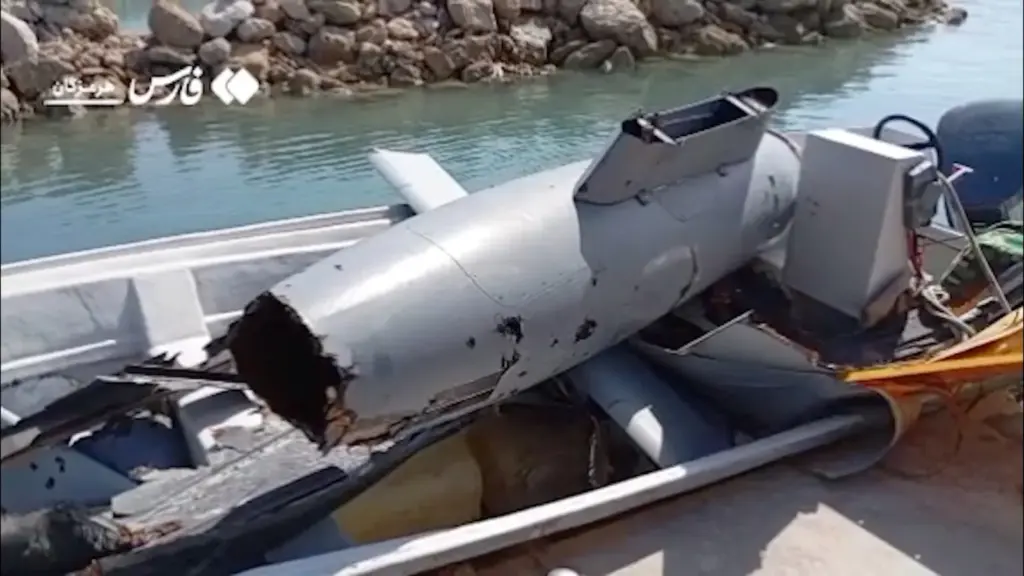
United States and Iran exchange fire in Hormuz in one of the most serious incidents after the truce
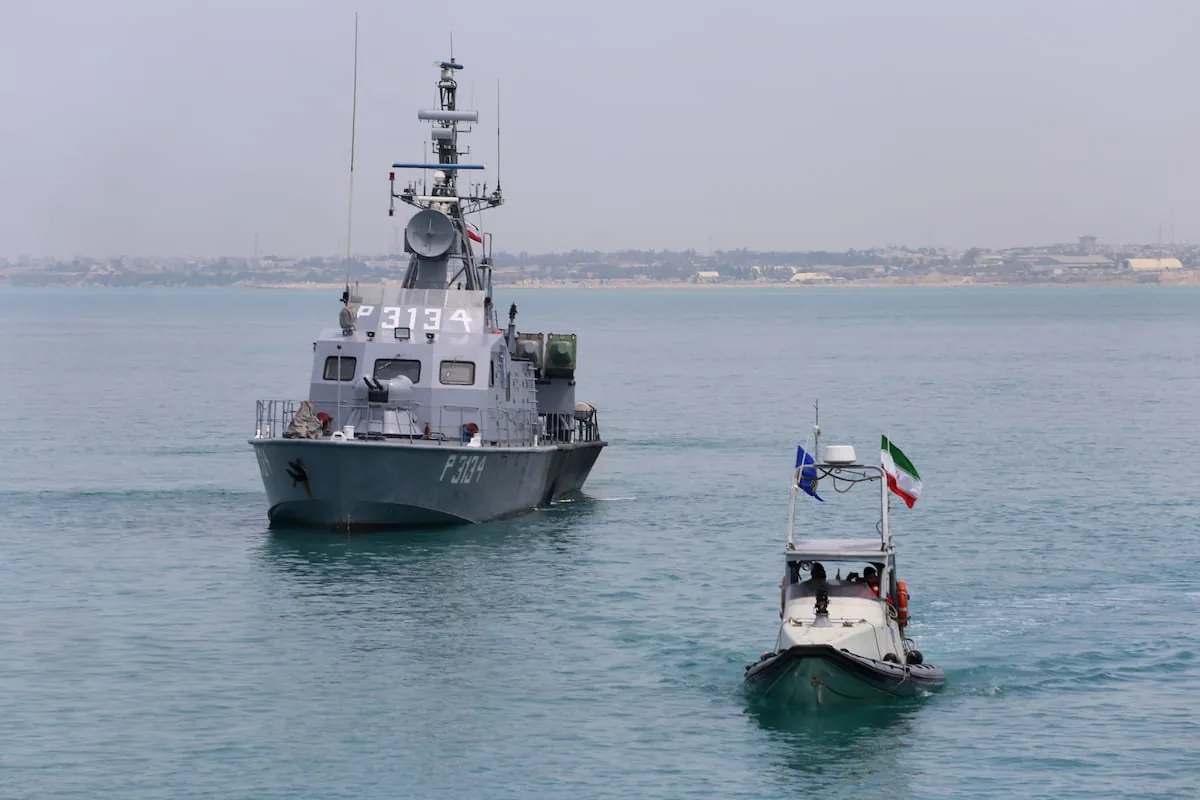
United States forces have attacked Iranian “command centers” in response after Iranian forces launched missiles, drones, and fast boats against U.S. destroyers transiting the Strait of Hormuz. This was reported by Central Command, responsible for the U.S. military deployment in the Middle East, about what appears to be one of the most serious incidents between the two adversary countries since the ceasefire came into effect on April 8. Iran, in turn, has accused the United States of violating the truce, one day before the 48-hour deadline in which Washington expects Iran to respond to the new memorandum on the possible end of the conflict.
You can read the full information here
Good morning. We begin the live narration of the latest on the conflict in the Middle East, this Friday, May 8. Last night, U.S. forces attacked Iranian “command centers” in response after Iranian forces launched missiles, drones, and fast boats against U.S. destroyers transiting the Strait of Hormuz. U.S. President Donald Trump has stated that his country continues negotiating with Iran despite the exchange of attacks and that the ceasefire remains in effect.