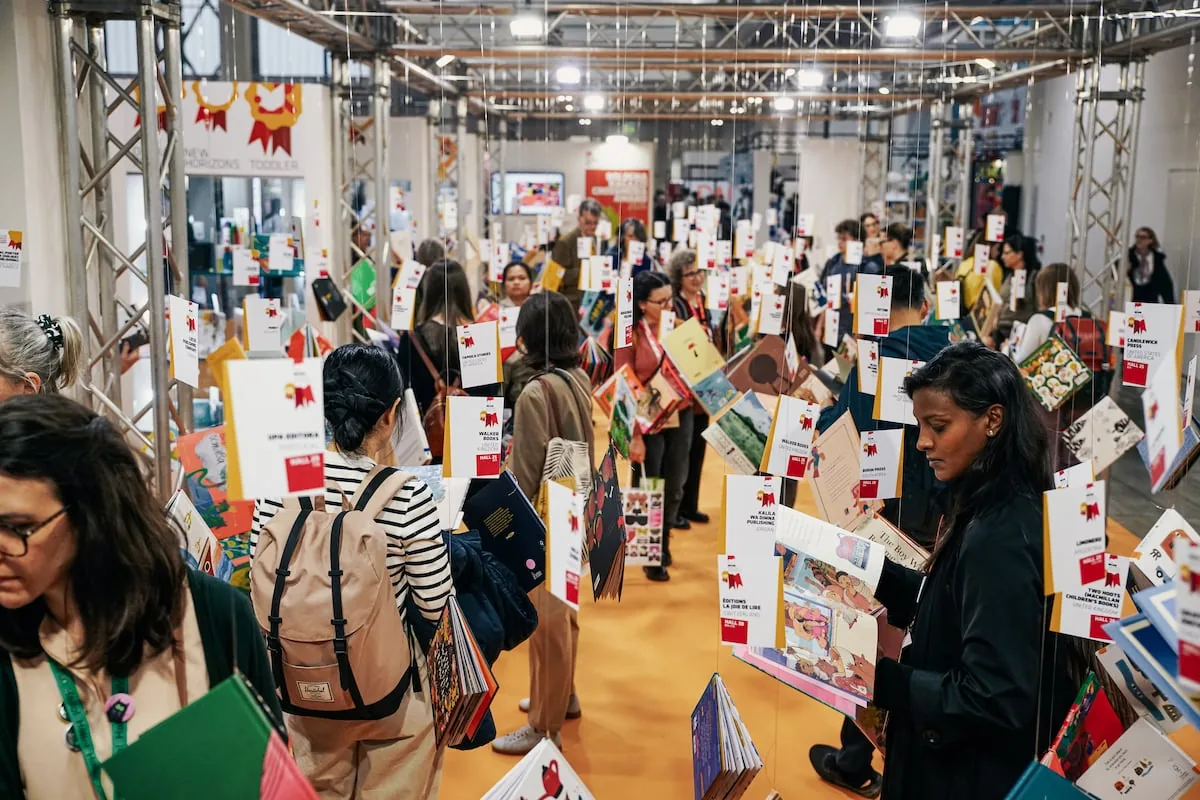
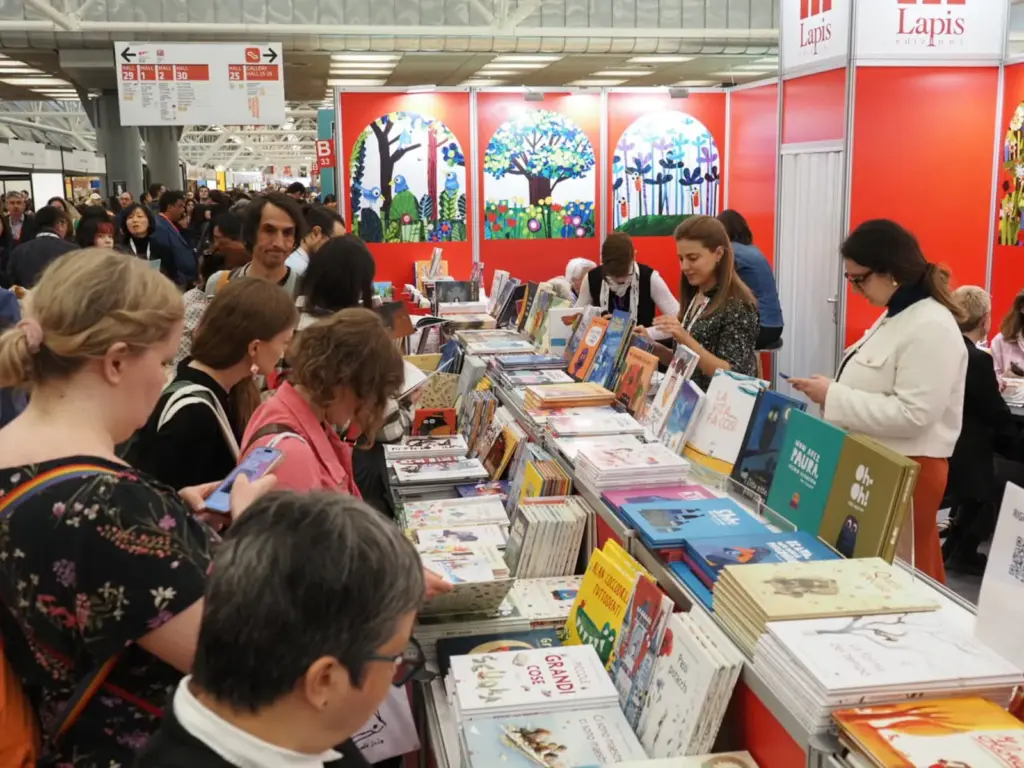
At the Bologna fair, there are books and colors on every corner, except one. Everywhere stories about unicorns, mysterious schools, and any other topic sprout. But the only empty stand at the main event dedicated to children’s and young adult literature tells a very different story. Two plastic tapes cordon off the space, which barely shows a table with a small paper on top: it certifies that the company in charge completed the cleaning. Cruel irony: the Iranian publisher Kanoon has not been able to come due to the US and Israeli military offensive sweeping the Asian country. “They tried until the end to attend, but it was not possible,” the fair reports. Right opposite is the little house of the Tamer Institute, which tries to continue spreading books in Palestine devastated by Netanyahu. Throughout the Bologna venue, thousands of authors, editors, and agents feed a universe where whales hug, little mice serve tea, and everything is possible. But the real world, lately, is no less full of surprises. It is inevitable that wars, crises, and frenzy also affect literature for children. Not even adults understand this chaos anymore.
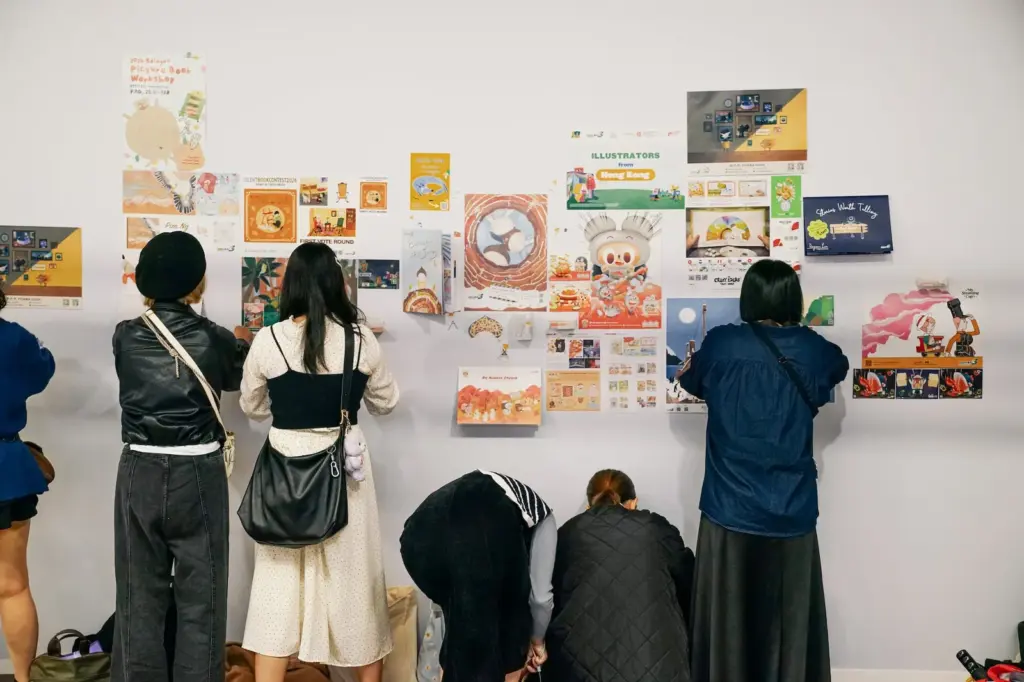
“We are here talking about peace, love, and beautiful things for children, while in several areas they are being killed,” reflects Rury Lee, head of the South Korean label Yrurybooks. Menna Allah Awad expressed it with a spiral: the young Palestinian painted a blue whirlwind, dragging a girl and a plane. Her drawing is exhibited in Bologna, but a sign next to it informs that the spiral even swallowed its author: she was hit by a bullet while sleeping in her tent. “It is important to tell children that it is the adults who have failed them. They had the duty to protect them,” denounces Nadia Shafik, a fictitious name used by the person responsible for the Tamer stand, for fear of complications. “I’m sorry, a thousand apologies for my country’s role,” an American editor approaches to say. The Palestinian booth offers books about donkeys, songs, and happy families. Or Follow the thread, a visual metaphor about displacement. Alongside, yes, with the drawing by Menna Allah Awad and other young people raised under the bombs. Reen Al-Aklouk has designed one, which falls on the head of a smiling girl.
“Some believe images should be softened. But what they want is not to feel uncomfortable. There are also more symbolic ways to tell it, but it is important not to remove the context, nor romanticize it. It cannot not be political,” adds Shafik. At the Latvia stand, art teacher Rūta Briede teaches Outspoken, stories of Ukrainian children: she asked her students to talk with displaced youth and portray it with words and drawings. Thus, a pleasant train trip in 2021 transforms, on the page and the following year, into a carriage full of fleeing people. Since 2022, the start of the Russian invasion, the Bologna fair has also taken measures. And now, for the same reason, it has refused to host the National Institute of Hebrew Literature: yes to authors and editors from countries at war, but not to those linked to the governments that started them. “We cannot fail to perceive here also the uncertainty that all these conflicts unleash,” concedes Elena Pasoli, director of the event. Where the reading aloud of the rights of the child has been organized. And the chosen motto is Together we are better.
Indeed, Pasoli confirms that almost all editors have been able to come. Including, for the first time, countries like Uzbekistan, Nepal, or Barbados. But South Korean Lee emphasizes that it is increasingly expensive and complicated. Here are the other, more subtle impacts of reality. Not so much, according to the dozen sources consulted, in a particular rise of books about the most tragic current events. There are some, of course. In If, the award-winning wordless album by Ann Nadine, a young woman plays, dives into the sea, studies, loves, ages. Until a zoom from her eyes reveals the reality: she is surrounded by rubble, and her dreams will likely end that way too.
However, two days of walks through the fair return the same creative, joyful, and diverse oasis of previous years. Against the planet’s absurd sovereigns, The King of Poop; against the homophobic advance, the rainbow dinosaur; and, in general, a colossal hive of ideas. The My Royal Tree label has converted its stand into an old literary salon; Bluey even appears on Easter eggs now. And the Smurfs have drawn paths on the floor of the venue to reach their village. The drama is not left out, but beauty and wonder are always close. The world, through these books, looks more fun, exciting, inclusive, and accessible. Lately, it even speaks many indigenous languages.
Read more The Government will finance half of the tuition fee for Medicine at the University of Vic
“From little readers come the citizens of tomorrow. Fortunately, it is already a consolidated conviction that the book is an indispensable tool to develop critical thinking, grow without stereotypes, or defend democracy,” points out Pasoli. “We have to talk more about these concepts. The world is changing fast, but the basis of what we humans feel is the same, and we must focus on that,” adds Lee. Perhaps children serve as an antidote against the vices of adults. Although the risk is that, on the contrary, they end up catching them. “Children’s books used to have a more relaxed, quality time. And now the pace, even in professional meetings, is super fast. New releases come out at full speed, 80% of what they show us are still sketches,” point out Ricard Peris and Nàdia Revenga, from the Spanish label Andana. “You end up saturated. The purchase and sale of a book used to be negotiated and then followed up. Now they demand to close it immediately because if not, they do it with another. And many works are not even finished, nor can the final cover be seen,” confirms Anna Vicens, from the Éccomi publishing house.
In Spain, children’s and young adult literature released 10,246 titles in 2024 ―the latest data provided by the Federation of Publishers’ Guilds―, with a turnover of 551 million euros, 10.9% more than in 2023. Growth has been steady for a decade. And Italy has also celebrated these days the increase in income from books for the little ones. “We are a guild used to crises, with some resilience,” adds Juana Silva Puerta, at the huge stand that Colombia has presented this year. Perhaps endurance hides another hopeful message: families, in dark times, give up many things, but not books for their children. Although another work at the Colombian booth reminds that privileged or condemned, many times one is born, that it is only The Wheel of Fortune. “Children’s books reflect their time. Children are not unaware of it. And literature is an empathetic way to bring them closer to undeniable phenomena,” adds Silva Puerta. “We should look at children from a perspective of equality with adults, only with different skills,” adds Nadia Shafik.
The illustrated album That Day, by Michael Rosen, believes so much in children’s minds that it even tells them about the Holocaust. And trust in children governs the entire program of Norway, the guest country this year at the fair. “Their project should be the manifesto of children’s and young adult literature. It talks about taking children very seriously,” explains Pasoli. All summarized under the motto: “What if.” A visual exhibition shows illustrated examples: what if an elephant scatters an orchestra with its trunk; what if a child sits down to chat with a crow; what if two teenagers look at each other; what if mom and dad make love. When it comes to fantasizing, another scenario can even be imagined: what if all this chaos ends one day.
Read more Riki Blanco: ‘mise en abyme’ of a pimple and a buttocks