









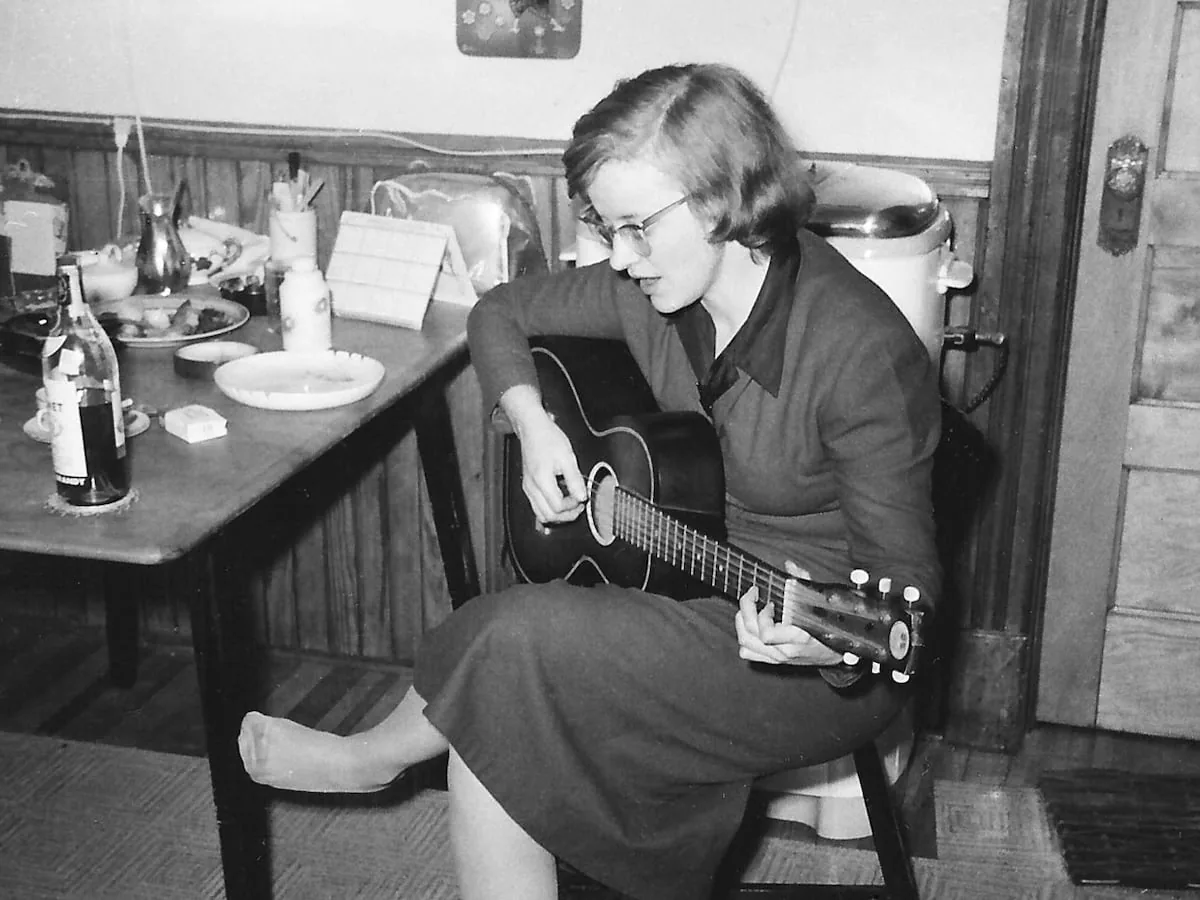
She performed with her guitar in the Greenwich Village dive bars before Bob Dylan and Joan Baez. She looked like a schoolteacher: shoulder-length hair parted to one side, nearsighted glasses, and sober dark-toned dresses with skirts down to the ankle. She was extremely reserved. She was a decade ahead of her time as a folk singer-songwriter, her recordings did not win over the audience, and she left New York disappointed. One day she took her Volkswagen and disappeared. She had just turned 50. Neither the car nor her body was ever found. Her name is Connie Converse. A couple of American music enthusiast students, Dan Dzula and David Herman, researched archives and managed to compile her songs into an album released in 2009. Today, the record label Third Man Records, owned by musician Jack White, former White Stripes, reissues that work, with a title that sums up the mysterious life of the author, How Sad, How Lovely.
Read more The Government will finance half of the tuition fee for Medicine at the University of Vic
Since Connie Converse’s songs came to light, she has continued to gain followers. On Spotify, her song Talkin’ Like You has five million plays; I Have Considered the Lilies, three million; and How Sad, How Lovely, 2.6 million. Several musicians have covered her songs (including Laurie Anderson) and indie singers like Laura Marling, Angel Olsen, or Bill Callahan cite the enigmatic Connie Converse as an influence. She is also passionate in Spain. Christina Rosenvinge discovered her a few years ago and has not stopped listening. “She is another one of those cases where an artist with enormous talent does not find the environment or the necessary support to develop. It makes me think of other singer-songwriters like Molly Drake or Sibylle Baier, who only recorded demos. Connie’s songs are formally perfect. She mixes all styles with taste and courage. The lyrics are sometimes playful, but in the most personal ones there is immense melancholy, which is also in her way of singing,” the Madrid artist tells EL PAÍS. Experts are surprised by how current Converse’s music sounds today. “These are songs that sound as if they were written today,” highlights The New York Times.

Interest in Connie Converse’s figure grows as details emerge of one of those lives wasted by developing her talent in the wrong era. Many consider that she inaugurated the concept of the singer-songwriter. She was certainly there years before Dylan, and her songs, with guitar and voice and a raw framework, delve into feelings such as loneliness, the lightness of life, existential disillusionment, as well as putting feminist concepts unprecedented at the time in the foreground. We are talking about the early 1950s. “It sounds like the missing link that announces the sixties. She picks from here and there, country, parlor song, jazz, hillbilly, and mixes it all, as Bob Dylan and the Velvet Underground would later do. In fact, her song Honeybee recalls Femme Fatale, the track from the Velvet Underground’s first album sung by Nico and released more than ten years after Connie’s piece.”
Converse, born in 1924, grew up in Concord, New Hampshire, in a religious family. She was the best high school student and earned a four-year scholarship to Mount Holyoke College (Massachusetts). She only lasted two years. At 18 she moved to New York, believing it was the perfect city to develop as a writer and poet. She soon bought a guitar and while working at a printing press, she began composing songs. In the early fifties, she got booked to perform in Greenwich Village cafes. Someone saw her and introduced her to Gene Deitch, a popular cartoonist very fond of music who encouraged recording displaced singers. Deitch had already released songs by John Lee Hooker and fell in love with Converse’s songs. “She was a simple girl, wore glasses, and didn’t seem to fit as a singer at all. But when she started to sing, she transformed us!” says Deitch, who died in 2020, in a blog post. He adds: “Most were songs of loneliness, rejection, betrayal, often told with ironic humor. They were melodic beauties. All dealt, in one way or another, with a scorned woman. They were intensely personal and unsettling.”
But those recordings did not captivate people, undoubtedly more receptive at the time (mid-fifties) to lighter compositions. Thanks to Deitch’s contacts, Converse even performed in 1954 on the TV show The Morning Show. But her popularity did not take off. Frustrated by the situation, the singer left New York and moved to Ann Arbor (Michigan), where part of her family lived. There she worked as a secretary and at a newspaper. In the documentary We Lived Alone: The Connie Converse Documentary, her nephew describes that time: “She was clearly depressed because she hadn’t managed to make her music transcend. She stopped composing and started drinking a lot. I think she was alcohol dependent and, besides, she lived isolated: we didn’t know of any personal relationship.” Deitch points out in the same film: “She was extremely reserved about her personal relationships. So we don’t really know what she was like. Seeing her, you could swear she was homosexual, but there was no indication or clue about her personal relationships.”
Read more Riki Blanco: ‘mise en abyme’ of a pimple and a buttocks
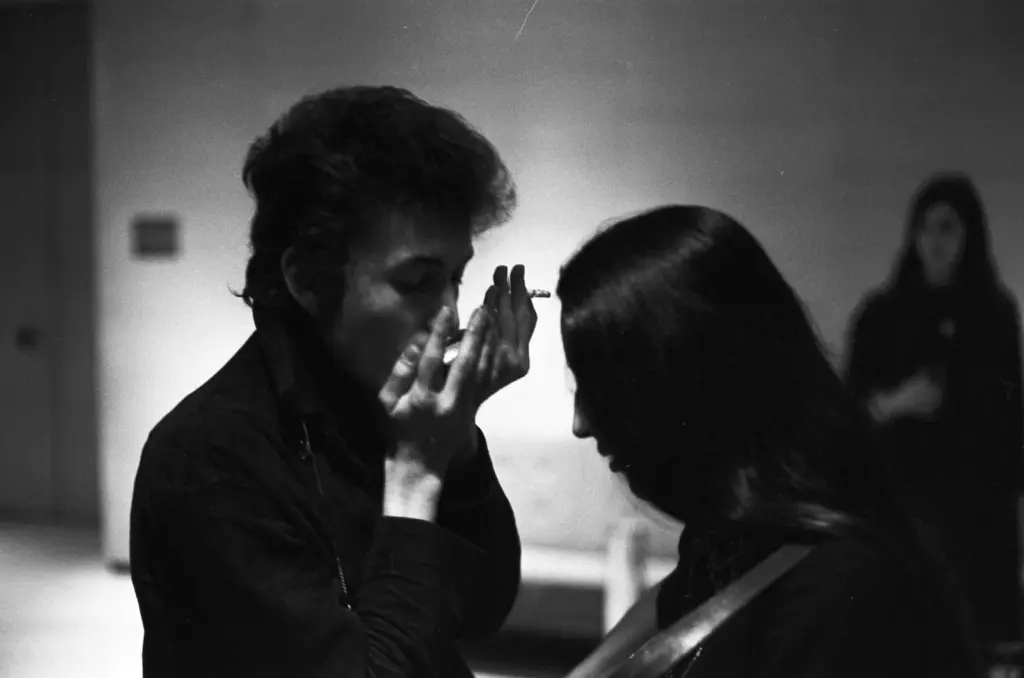
In 1974, shortly after turning 50, she took her car and disappeared forever. She sent some farewell letters to her family indicating she needed to start over. Her nephew hints that she may have taken her own life: “She wrote many farewell notes, which is an indication of what she was thinking. Because if it was a temporary trip, it made no sense to send farewell letters. She wrote me one because we were reading Tolkien, and she said that just like Bilbo [the protagonist of The Hobbit] she had to go far away.” In the same documentary, her sister wonders: “We have always wondered how she got rid of the Volkswagen. She probably put it in a lake.” Connie Converse is listed in the United States National Missing Persons System.
In the lyrics of Talkin’ Like You (Two Tall Mountains), included in the reissue of How Sad, How Lovely, part of Converse’s defining feminist, confessional, and sharp writing can be seen: “Between two tall mountains there is a place they call Solitude. / I don’t see why they call it Solitude because I’m never alone when I go there. / Look at that bird sitting on my window sill. / In this tree there is a kind of squirrel that sounds just like when we used to fight. / In the yard I have one or two pigs that come to dinner like you used to. / I don’t need any more company.”
Christina Rosenvinge can imagine what happened to Converse: “I suppose her way of presenting herself, not sexy at all, was (and still is) a problem when it comes to finding a manager or a talent scout to open the doors of a record label. It makes me very sad to think of the great female talents that have been lost along the way, of whom only a demo or nothing remains. What a great loss for all music lovers.”
Read more Spain faces the final stretch of European funds with 27 billion pending allocation