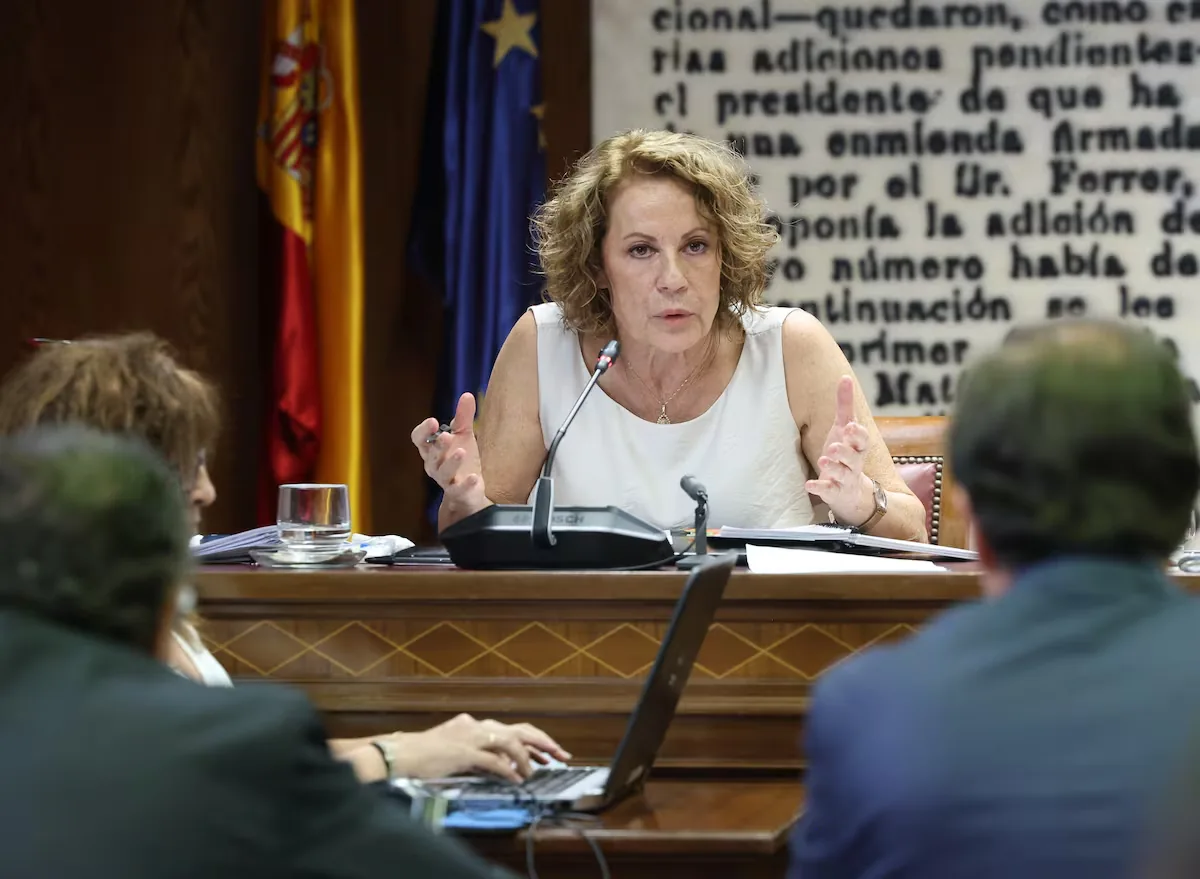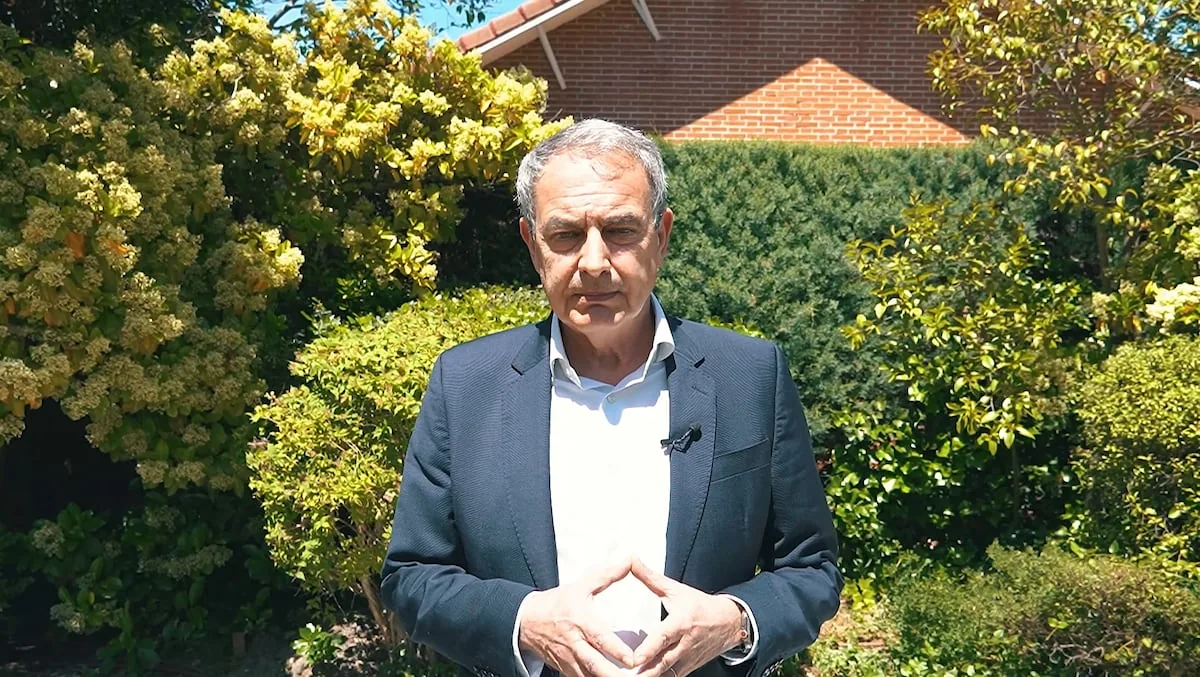








Although with many “cautions” due to the scarce information available during the morning of this Tuesday, the partners of the Executive have come out in cascade to support the former president of the Government José Luis Rodríguez Zapatero after being charged with leading an influence peddling scheme in the framework of the investigation into the public bailout of the airline Plus Ultra. The parties that make up the investiture majority have taken very little time to question the decision of the magistrate of the National Court José Luis Calama, and see in it a possible case of lawfare. “Message to the judges: the PP already wins elections, there is no need for you to do politics,” summarized the ERC spokesperson, Gabriel Rufián, in the corridors of Congress. The voice of Junts in the Parliament, Salvador Vergés, has asked that “the presumption of innocence” of the former president be respected.
Read more More than 100,000 plants and a city covered in yellow to welcome the Pope
Upon leaving the Board of Spokespersons held at noon, Rufián wondered “if all this would be happening” if the former socialist leader — who headed the Executive between 2004 and 2011 — “had not participated in the last electoral campaigns and had not expressed his interest in participating in the next ones.” The leader of the republicans, Oriol Junqueras, also claimed from Barcelona his party’s zero tolerance against corruption, but recalled that “some” accusations ended up being false. “Invent, invent, the Prosecutor’s Office will fine-tune it,” Junqueras recalled, referring to a recorded dialogue, in 2016, between the then Minister of the Interior, Jorge Fernández Díaz, and the former director of the Anti-Fraud Office of Catalonia, Daniel de Alfonso, when they tried to fabricate cases against pro-independence politicians, including the president of Esquerra himself.
The questioning of the decision adopted by Calama has been unanimous among the Sumar deputies. In a press conference, the parliamentary spokesperson of the group, Verónica Barbero, assured that “the way” some of their lordships “behave with some assumptions” may “raise some doubts about this charge.” The Más Madrid representative Tesh Sidi stated that “this is going to become a media case against the Government.” “Judicial persecutions against leaders of our political space ended up being dismissed, but they have caused wear and tear,” she added.
From Compromís, Alberto Ibáñez has advocated reforming the statute that regulates the activity of former presidents to more clearly define what functions and businesses they can perform. “It is not the first time we see judges acting politically,” also charged the first secretary of the Congress Board, Gerardo Pisarello, of Comuns. “Allow me to exercise caution. Let justice act with all guarantees and respecting the presumption of innocence (…), but if there is a person who for certain sectors of the Judiciary is an enemy to be defeated, it is Mr. Zapatero, for having favored a Government supported by the independents or for being a republican. A National Court that showed no interest in finding out who M. Rajoy was. It is not the first time we see judges acting politically,” he added.
The leader of Podemos, Ione Belarra, has also been blunt along the same lines. “The right really has it in for Zapatero,” she said. The deputy compared the socialist with the rest of the former presidents of democracy and argued that “having Mariano Rajoy who set up the political police to protect his corrupts and persecute his adversaries, former president Aznar, who is a war criminal, Felipe González, who led the GAL, and Adolfo Suárez, who turned out to be a sexual aggressor, it is still surprising that the first charged is Zapatero,” she concluded.
Águeda Micó, Compromís parliamentarian in the Mixed Group, has also closed ranks with the former president. “I would be surprised if he had participated in this corruption case,” she defended before the media.
The parliamentary spokesperson of the PNV, Maribel Vaquero, assured that the charges against Zapatero are “serious,” but reiterated that caution must be exercised and the investigation phase must be awaited. The nationalist deputy pointed out that “there is a lot of noise” around Zapatero’s figure, and insisted on the importance of maintaining prudence and observing how the judicial investigations progress.
In the same terms, the spokesperson of EH Bildu in Congress, Mertxe Aizpurua, opined that “nothing has changed” to alter her support for the Government. Aizpurua also called for caution to avoid “hasty assessments” without sufficient evidence.
Read more Ayusismo, the higher phase of catetismo