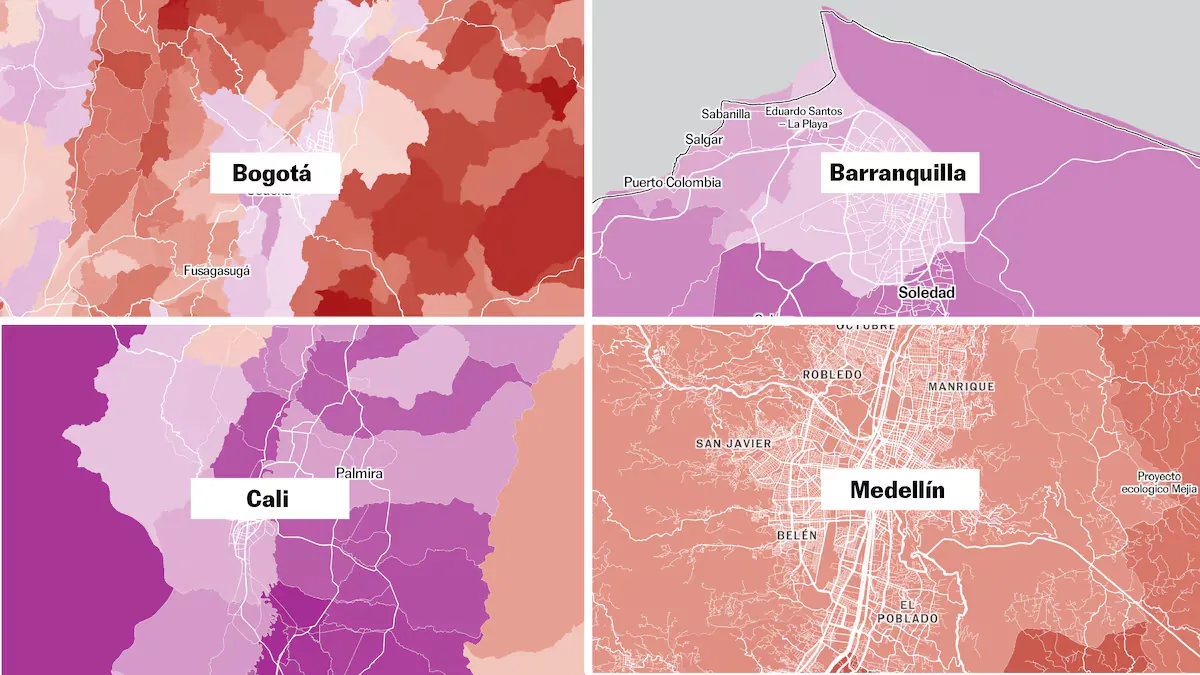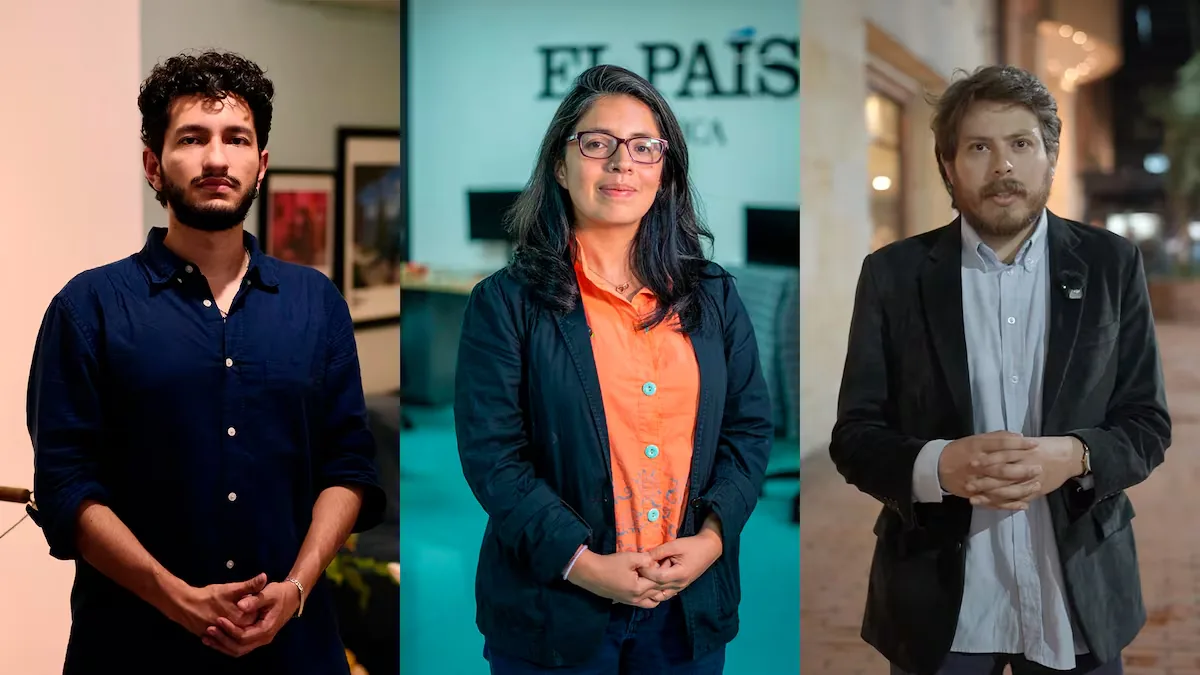







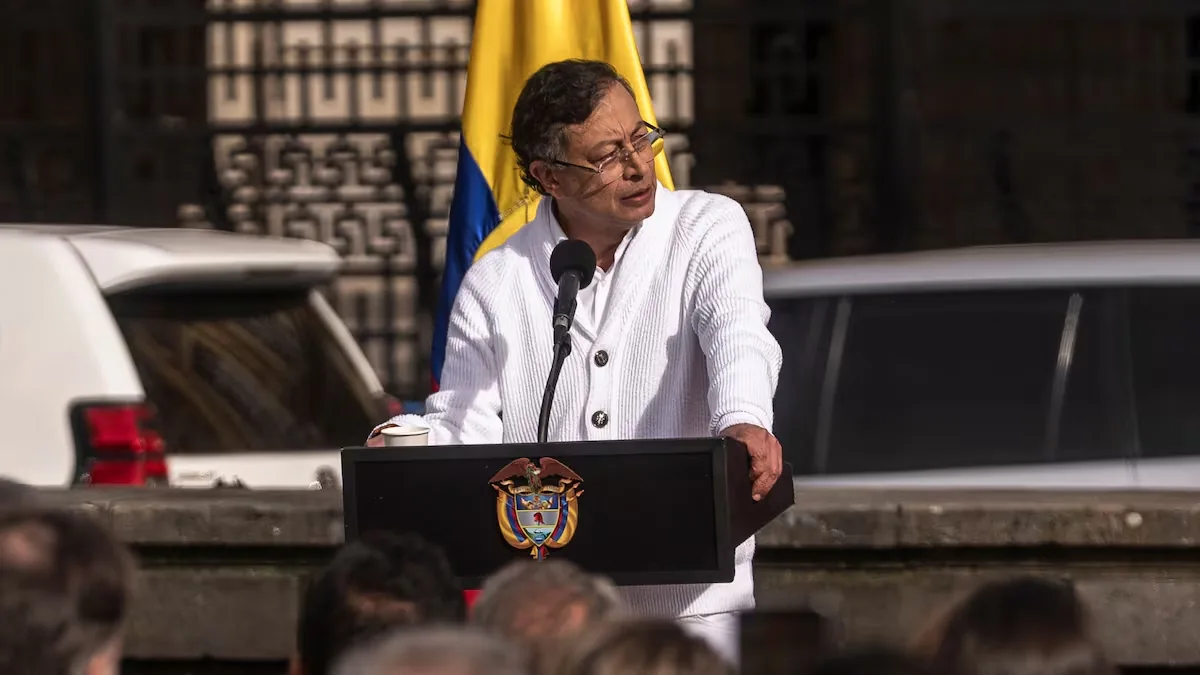
Just two hours after the provisional results of the first round of the presidential elections in Colombia were announced, President Gustavo Petro cast doubt on their accuracy. Contrary to what the polls predicted, the preliminary count gave victory to the far-right candidate Abelardo de la Espriella with 43.7% of the votes. He will face Senator Iván Cepeda, the official candidate, who obtained 40.9%. “As president, I do not accept the results of the preliminary count,” Petro announced on X referring to the quick information published by the National Registry on election night.
“The so-called transmitted count has no binding force. Its data is not public norm,” Petro said in his post. The president is criticizing the vote counting system that governs the country and is sowing doubts, once again, about the reliability of a private company that serves as a contractor for the Registry for all electoral logistics.
In Colombia, the vote is counted twice. First, on election night, a quick count is done, which, as Petro says, has no legal effects, only political ones. This is handled by a company contracted by the Registry for all the logistics of the elections, one that Petro has consistently criticized for years. It is to this company that he dedicates part of his message.
“I do not accept the results of the preliminary count from the private firm of the Bautista brothers, because although the algorithms of the counting and scrutiny software should remain fixed, in the last week they were changed on three occasions and added 800,000 more ID cards of people who are not in the official census presented,” he wrote cryptically, without giving more details or providing evidence. So far, there have been no complaints or allegations of such an increase among Colombians eligible to vote.
However, Petro emphasizes the existence of another procedure, a subsequent one. The Monday following each election, which in Colombia are held on Sundays, scrutiny commissions composed of judges, notaries, and other public officials are installed. They are responsible for the final count, known as the scrutiny. In this recount, irregularities are reviewed table by table in a meticulous and lengthy process that includes lawyers, appeals, and the possible opening of ballot bags. This is the one Petro says he accepts. “The binding results that the president will attend to and accept are those of the scrutiny commissions led by the judges of the Republic,” he said. In other words, Petro does not reject the elections, but the first data revealed this Sunday and their political consequences.
Iván Cepeda has also rejected the provisional data. “We have achieved more than 10 million miscounted votes,” he announced. “The President of the Republic has just spoken about a discrepancy that we want to verify regarding the electoral census. And it is not just any discrepancy. We are talking about 850,000 people. We want that to be clarified,” he said. Cepeda said that “there is information about a certain number of tables,” which they are verifying, where “atypical voting” has occurred. “Only when the scrutiny commissions have completely clarified this matter will we comment on tonight’s results.”
The far-right Abelardo de la Espriella has rejected the statements of President Gustavo Petro and his candidate Cepeda. “Do not dare to insist on disregarding the election results because the people will rise up and punish you. You are a couple of bandits that we will retire,” the far-right leader declared before a crowd at the Barranquilla Malecón.
The far-right leader has “called on the public force, the Army, to activate the constitutional mechanism in case this criminal, drug addict, and miserable person tries to disregard the will of the Colombian people.” He stated that democracy must be maintained “by reason or by force.”
Read more Almería-Castellón and Málaga-Las Palmas, the semifinals for promotion to the First Division