




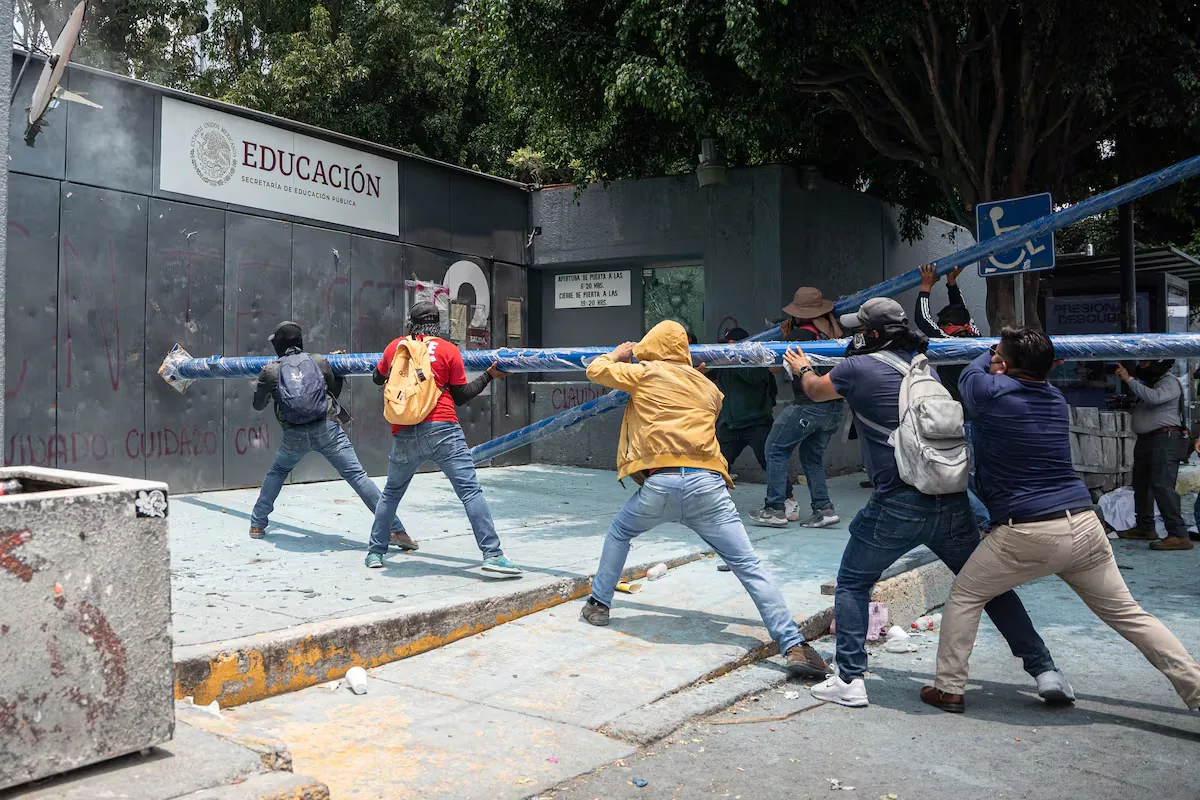
Mexico enters a decisive week to finalize preparations for the World Cup and not only faces unfinished works: the capital has become a powder keg with the arrival of CNTE teachers, whom the Government has failed to appease after five days of indefinite strike. Less than seven days remain until the inauguration of the sporting competition, and the teachers have not only not left but are preparing to gain momentum. The proposals that Claudia Sheinbaum’s Executive has put on the table to sign peace have been of little use, as peace moves two steps away for every two steps taken. “This week is crucial. Starting Monday, we enter the critical path. It’s either the State, or it’s us teachers,” summarized the general secretary of Chiapas, Isael González, this Friday. Everyone has been warned.
Reality is stubborn, and no matter how much the Government tries to show the world the best face of the country, the World Cup is becoming, at times, a great catalyst for some protests, with the teaching profession clearly at the forefront. The teachers of the leftist union ―separated from the institutional and majority SNTE, very close to the Executive― already led the first serious internal challenge for the Mexican president last year, who until then had only had to contend with Donald Trump’s bluster from the United States. The teachers have a fixed objective: the repeal of the 2007 ISSSTE law and the educational reforms of 2013 and 2019, and they are resuming the matter where they left it in the last national sit-in: without an agreement, dissatisfied and tired.
The first two elements remain, but the Coordinator has returned with strength and muscle to deploy in Mexico City, where every day they take their blockades to a different point, from Paseo de la Reforma to the historic center, where they have set up their base camp, just a block from the imposing Zócalo. The objective is clear, and they are taking advantage of the “excellent conjuncture,” in the words of the Chiapas secretary, to accelerate their demands: the return to public and solidarity pensions that the 2007 reform swept away. Since that year, the retirement of public workers has been managed by private administrators known as Afores, with significant consequences for them, as they depend on their own savings and have seen their pensions greatly reduced and their working lives extended. Nor do they have certainty about how much they will receive when they leave their jobs or for how long.
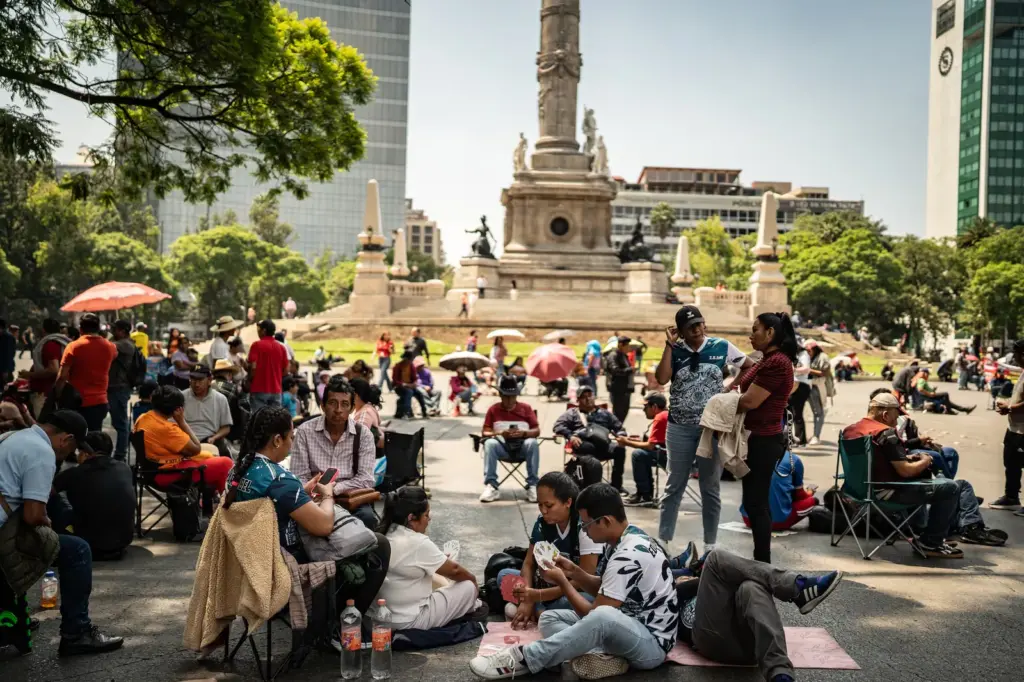
The Mexican president, who once opposed the law, is receptive to the teachers’ demands, which, however, clash with an insurmountable wall: “There is no money.” That is the Executive’s main argument for dismissing the repeal of the norm, and that is why, five days and three meetings later, there is still no sealed agreement to end the dispute. In return, the Morenista governments have been yielding partial reforms of the law that alleviated some of the most harmful aspects.
Former president Andrés Manuel López Obrador created a welfare pension fund to supplement private retirements. Sheinbaum reduced the retirement age (a requirement that did not exist before; only years of service had to be met) for the portion of teachers who were active in 2007 and now proposes, in a new attempt at rapprochement, to strengthen pensions through the only public Afore, Pensionisste. The latest offer also includes creating a public insurer. All measures, however, founder due to their lack of forcefulness. The teaching profession is not willing to accept patches and wants a roadmap that, at its final station, leads to the return of public pensions. Anything else is read as a reinforcement of the current system of individual accounts, not as a fight against it.
What concerns the educational reform raises fewer objections. The proposal of the negotiating delegation, headed by Rosa Icela Rodríguez (Interior), Mario Delgado (Education), and Martí Batres (ISSSTE), sets deadlines for the disappearance of USICAMM, the body that manages the internal promotion system, based on various evaluations. It was Enrique Peña Nieto’s reform in 2013 that introduced this method, which punished those who failed with expulsion from the teaching profession. López Obrador eliminated the punitive factor in 2019 but maintained evaluations as a necessary condition to access horizontal promotions (salary bonuses) or vertical promotions (management positions). Sheinbaum committed to eliminating it in the 100 points she presented at the beginning of her term, but until now, she had not specified when it would be done or by what system it would be replaced. She did eliminate it, in 2025, for accessing changes of center or locality.
The Government’s attempts to unblock negotiations as soon as possible have not been successful, just as they were not last year. Fatigue and inclement weather were more effective in lifting the camp. The Cup that the World Cup winners will lift has already arrived in Mexico, and no clear end is in sight in the coming days. The Coordinator’s assembly method requires decisions to be made by consensus and always bounced back to the grassroots. This caused them to stumble last teachers’ spring, just when they faced the difficult decision of whether or not to boycott the judicial elections. This may become their Achilles’ heel on the eve of June 11, but that scenario is still six days away, an eternity. The union has called for unity and to gather strength over the weekend, during which more reinforcements will arrive from the states, where protests are being replicated. The final countdown has begun: time to regroup and fine-tune the final strategy.
Read more Pope Leo XIV jokes that young people prefer Bad Bunny over him