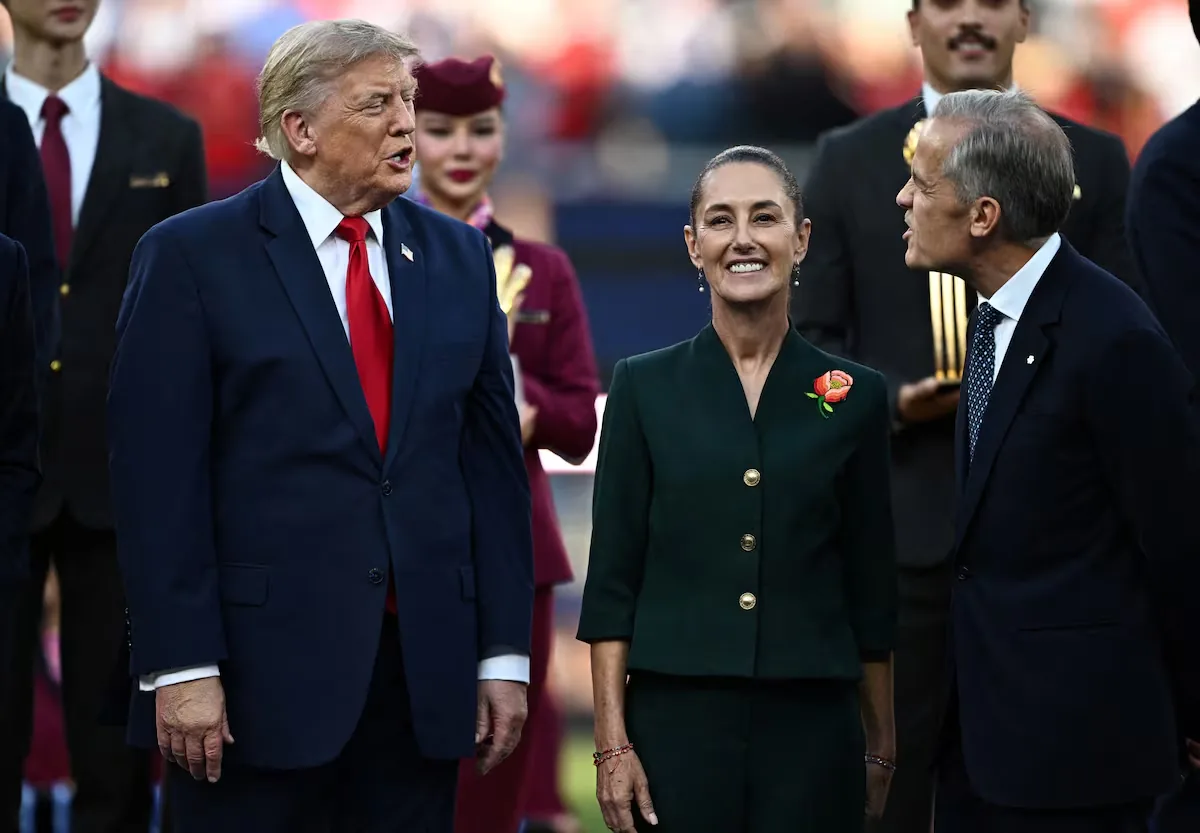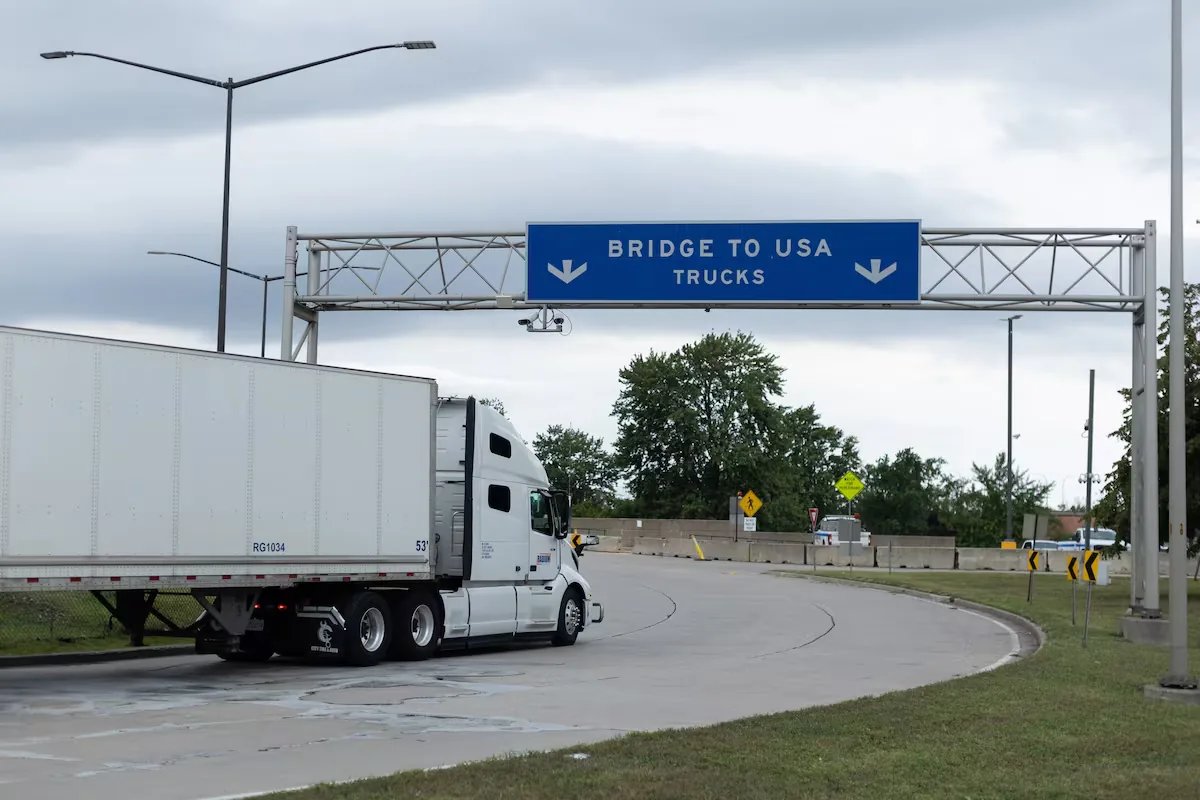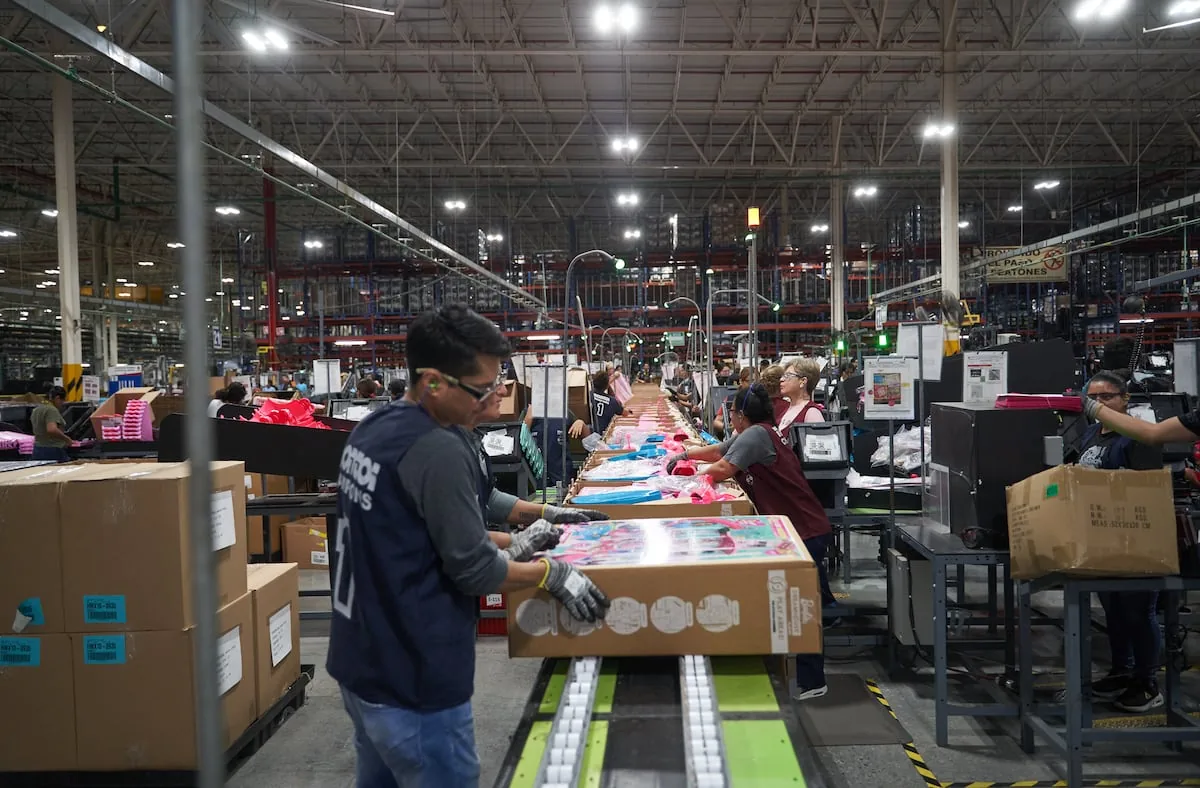









The intersection between artificial intelligence (AI) and USMCA is increasingly strategic and, at the same time, unequal. On the eve of the review of the free trade agreement between Mexico, the United States, and Canada, a new front for integration opens, with the digital economy in focus. While the northern partner comes to the table with billion-dollar investments and technological hegemony, the Latin American country recognizes that it has not developed its own capabilities at the same pace, amidst a global race to attract the capital and talent that will shape development in the coming decades.
Read more The CNTE teachers are preparing to hit the accelerator in the crucial week of the World Cup
Mexican attention is fixed on the agricultural sector, automotive assembly rules, or steel and aluminum tariffs. Few are thinking about electronic integration. Few, besides Donald Trump and his Administration, who have promised to protect their economic, productive, and digital leadership against the competition posed by emerging powers like China. Washington has amalgamated this objective under the concept of shielding its “economic security” – one of the most repeated by the US team in the context of the review – where AI and its supply chains occupy a central place.
The USMCA, signed in 2020, already includes provisions on the prohibition of tariffs on electronically transmitted digital products, free flow of data (the backbone of AI), and the principle of no forced server localization, which means that no partner can require companies to store or process information in data centers located within its territory as a condition of operation.
The Computer & Communications Industry Association (CCIA), which represents powerful bigtechs like Amazon, Meta, or Google, has actively lobbied ahead of this summer’s review, asking the U.S. Trade Representative (USTR) to preserve the digital trade chapter, but to annex new AI-friendly policies they promote. Among their requests are: protecting the cross-border flow of data and exempting AI developers from incurring copyright liabilities when training models with information mined in the three countries, without permissions or payments. Other major US industry groups, such as TechNet and the Technology Trade Regulation Alliance (TTRA), have also requested an AI annex to the treaty. And while these groups do not generate public policies, they have become clear references for the Republican Administration when creating technological guidelines.
Comparing the AI race to the space race – the scientific and geopolitical battle between the United States and the Soviet Union during the Cold War – Trump last year launched his , where he urges his allies to join this effort for tech supremacy. “We need to establish American AI — from our advanced semiconductors to our models and applications — as the global benchmark in AI and ensure that our allies build on American technology,” reads the executive order.
The next bilateral dialogue meeting will be on June 16 in Washington, although the treaty is entering a complex process of annual reviews.
“Mexico is exploring how we align with our northern neighbor,” explains Sissi de la Peña, founder of The Dot Network, an organization that advises governments and companies on cybersecurity and AI. The expert participates as a representative of startups in the efforts initiated by President Claudia Sheinbaum’s Government to establish an incipient AI strategy. This agenda highlights some initial meetings with the US Embassy, official agencies, and industrial chambers. However, nothing is yet written, neither in regulation nor in action plans, at a time of stalled investment.
While venture capital investment in AI in the United States reached a new record of 267 billion dollars in the first quarter, driven by multi-million dollar funding rounds from OpenAI, Anthropic, or xAI, in Mexico the injection of venture capital totaled a moderate 461 million, influenced by commercial uncertainty and weaker growth expectations, according to KPMG’s tracking.
“While we have to diversify, 80% of our trade depends on the US, so the private sector is aware that separating ourselves from that reality is not the best strategy. In Mexico, and regarding the USMCA, the focus is on other factors, but in technology, they are the ones fighting for leadership with China. For better or worse, we have commercial, technological, and knowledge exchange with our neighbor, so we align with that leadership,” adds the expert. In this sense, Plan Mexico aims to strengthen sectors such as electromobility, digital health, semiconductors, chips, and satellites, so that the country functions as a link in the necessary chain for technological production planned from Washington.
In this contrast, the country faces a double challenge: to leverage the industrial capacity that can be driven by this new wave, without being relegated to a low value-added maquila role, in an environment where algorithms are beginning to define competitiveness. The backdrop is an economy that grows less and competes for investment, but carries lags in innovation and specialized human talent training. The question, still unanswered, is whether the USMCA will become a catalyst to close that gap or consolidate greater asymmetry among partners.
While Canada and Mexico have been upfront in their intention to renew the agreement for 16 years, the United States is approaching the process with suspicion, even though it officially recognizes that its exports to Canada and Mexico . Trump claims that Mexico has been the main winner of diversification from Asia and China, capturing about 25% of the reduction of that deficit. Therefore, he will try to establish stricter rules of origin that benefit his local factories. Jamieson Greer, US trade representative, has warned his main partners that the era of tariffs and protectionism is far from over, within the framework of “America First”. “Our imports are now composed of 40% capital goods, and we know that is due to AI and AI hardware, destined for productivity and manufacturing. Factories are using it to multiply workers,” he added in a discussion at the end of May.
Given this, the USMCA review also emerges as a space for Mexico to value its vision for the economy of the future, while facing the challenge of not limiting itself to being a manufacturing link in a chain designed by others. “Mexico built an impressive manufacturing platform in the last 40 years. But we need to take a step forward,” said Economy Secretary Marcelo Ebrard this week. “The new economy is a data-driven one. There will be more and more advanced robotics, drones, and other types of complements linked to AI.” In his call, the official also quantified the probabilities of a Mexican startup raising capital, compared to innovators in India, Indonesia, or the US. “One in 100,000,” he concluded.