







The National Police and the Civil Guard used their electric pistols ―officially called “electric immobilizers” or “electronic control devices”― on 154 occasions in 2025, which represents once every 57 hours. This is detailed by the Ministry of Interior in a parliamentary response to EH Bildu deputy Jon Iñarritu, to which EL PAÍS has had access, and which specifies that in the first 77 days of the year (between January 1 and March 19) they did so on 31 more occasions, a figure that yields a similar frequency.
Read more ‘The Love That Remains’, a surreal and tragicomic portrait of a fractured family
The data comes to light just days after justice has shelved the investigation into the death of Haitam Mejri, a 35-year-old man who died in early December in Torremolinos (Málaga, 71,329 inhabitants) during a police arrest in which officers precisely used these pistols, better known by their commercial name, Taser.
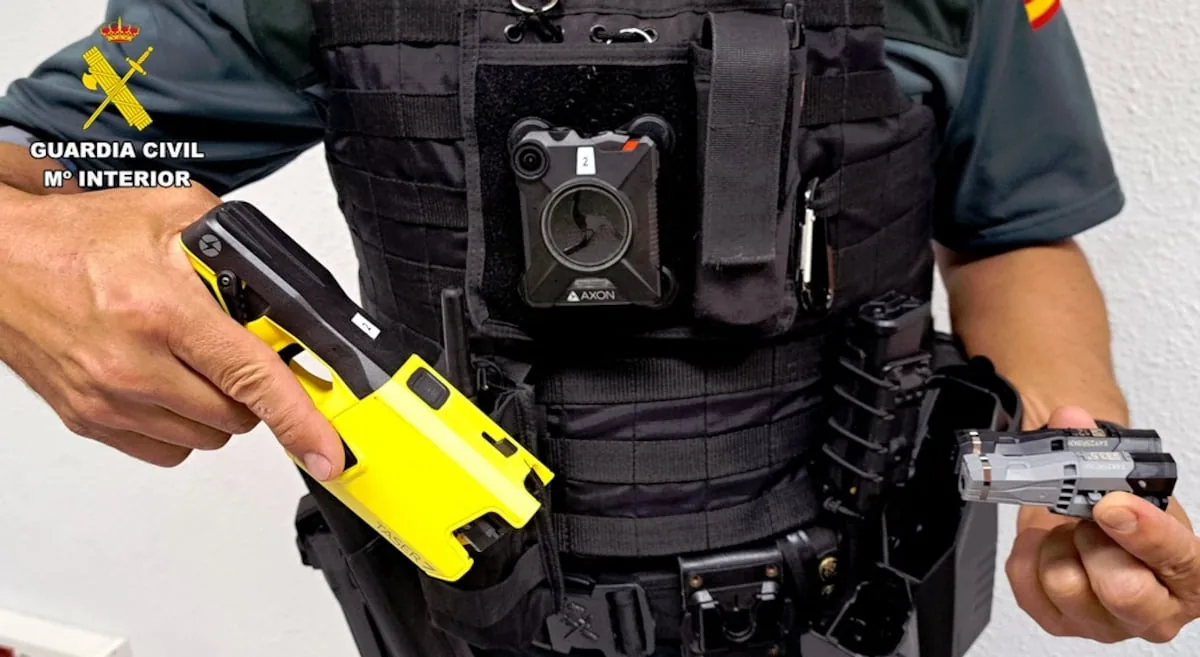
Electric immobilizers launch darts with electrodes attached to the weapon by a cable which, upon reaching the body, cause a discharge that interferes with the signals the brain sends to the muscles and temporarily incapacitates the person receiving the impact. These devices are for exclusive police or military use and cannot be acquired by individuals, according to the arms regulations. Their use has been surrounded by controversy for years due to their association with deaths in different countries, as repeatedly denounced by Amnesty International. The Ombudsman has also warned in its reports about the risk of “abusive use” of this weapon, recalling that “they cause pain and suffering.” The Ministry of Interior details in its response that each time a person receives a charge, the rule governing the use of these pistols requires them to be examined by a doctor.
Currently, the National Police has 3,000 of these immobilizers (it plans to reach a minimum of 3,500 by 2028) and the Civil Guard, 390 (it plans to acquire 800 more in the next four years). This difference in devices between both police forces is also reflected in the number of times each has used them. Thus, the parliamentary response states that the former used them 129 times last year and another 25 so far in 2026. In the case of the armed institute, it was 27 and six, respectively. These weapons are also part of the equipment of agents of the Ertzaintza, the Mossos d’Esquadra, and local police forces in at least 62 municipalities across 13 autonomous communities, according to an Amnesty International report.
In a parliamentary response from a year ago, data indicated that electric pistols are used in half of the cases to deal with crimes against public order, although they were also used to subdue perpetrators of gender violence, assaults on agents of authority, injuries, homicide, crimes against property, and minor threats in the family sphere. The Ministry of Interior now details that “there is no record of any file or sanction being opened” against agents of both forces for the alleged “improper use” of these devices, although it clarifies that this type of internal investigation is only carried out “when any judicial proceedings concerning such cases have concluded.”
The National Police drew up a protocol for their use in 2020, shortly after receiving the first units of these pistols. It specified that they can only be used to “subdue, immobilize, or detain” individuals who resist, have a violent attitude, or threaten agents or third parties with bladed weapons and dangerous objects. It also contemplated their use in cases of attempted suicide.
Conversely, it prohibited their use with children, pregnant women, the elderly, and “people with fragile health.” It also banned them in prisons, except in cases of riots or hostage-taking; in demonstrations; near flammable substances; or when the target is in places where they could fall into a void, as the discharge causes loss of motor capacity. Before being equipped with these pistols, agents receive a specific training course.