







Blindfold chess has always been the most astonishing aspect of chess for non-aficionados. They see it as something close to human limits, or even magic. Certainly, the world record for blindfold simultaneous exhibitions, held by the Uzbek-American Timur Gareyev since 2016, borders on the superhuman: 48 games in 19 hours, with 35 wins, 7 draws, and 6 losses. But it should be clarified that any chess player of a certain technical level and experience – even if not professional – can play a blindfold game with more than acceptable quality. Obviously, the difficulty is much greater if there are several games.
Read more An electric pistol shot every 57 hours
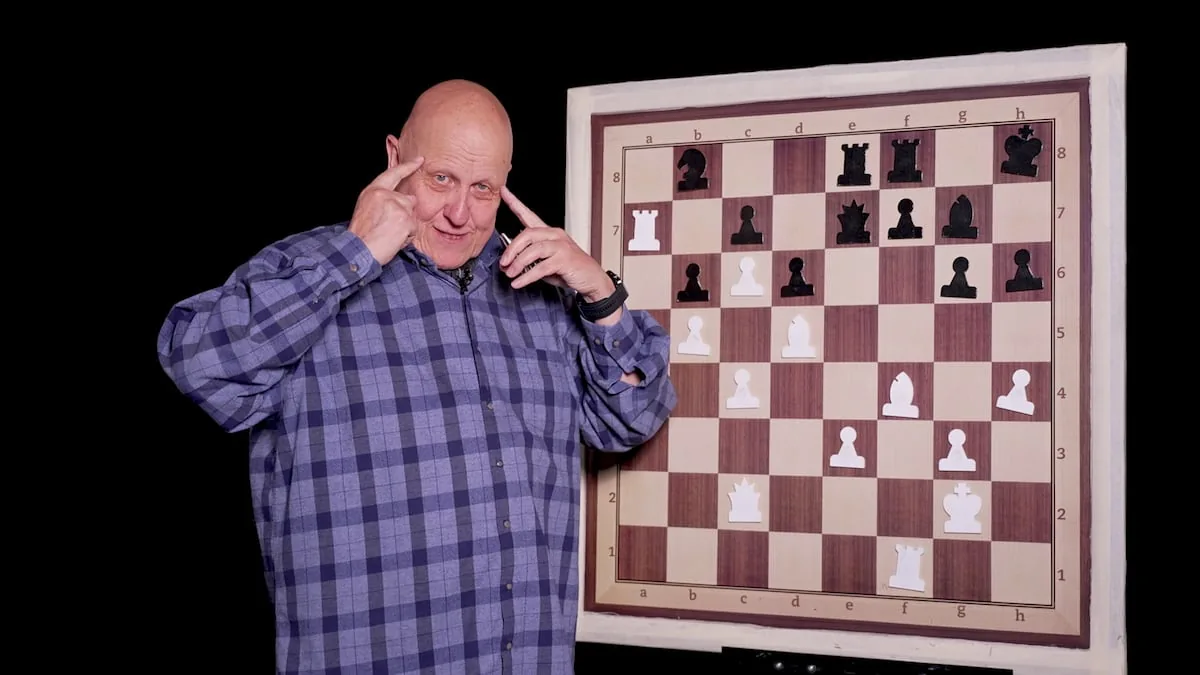
However, the blindfold game in this video has two characteristics that greatly elevate its merit. It was played in a session of 28 simultaneous games, two of which were blindfold (that is, the author of this feat was attending to 27 other games, in which he made a move every few seconds, moving from board to board). The second meritorious factor is the extraordinary beauty and difficulty of the winning combination; it is one thing to memorize where each piece is and make normal moves, and quite another to detect material sacrifices and long combinations of winning moves.
Read more ‘The Love That Remains’, a surreal and tragicomic portrait of a fractured family
The author is none other than Alexander Alekhine (1892-1946), in 1926, during an exhibition in London, shortly before dethroning the Cuban José Raúl Capablanca and becoming world champion, a title he held from 1927 to 1935 and from 1937 until his death. Alekhine, already discussed in several videos in this collection, is one of the most novelistic figures in chess history. And blindfold exhibitions are one of the many striking facets of his biography.