





Despite the world in flames, wars, disruptions, and global isolationist trends, the Chinese locomotive keeps its pace. The Gross Domestic Product of the planet’s second-largest economy increased by 5% year-on-year in the first quarter of 2026, above the expectations of several analysis firms, and in line with the goal set by the Chinese Government to achieve growth of “around 4.5% or 5%” in 2026. The figure improves on the result of the last three months of the year, when China recorded an increase of 4.5%, the weakest in three years.
The start leaves the authorities partially satisfied, barely a month after Beijing approved the 15th five-year plan, the political and economic program for the next five years, with a reinforced commitment to leading technological sectors and self-sufficiency.
“China’s economy had a good start in the first quarter,” said Mao Shengyong, deputy director of the National Bureau of Statistics, in a statement, highlighting “generally stable” employment, the slight rebound in prices that momentarily avoid the deflationary shadow (rising 0.9%), and the good performance of foreign trade.
Exports continued to rise, with an 11.9% year-on-year increase, making it clear that China’s commitment to the export model as a way to offset domestic demand problems will not change. Imports, in any case, rebounded at an even higher rate, 19.6%, which could indicate a slight adjustment of the Asian power’s gigantic trade surplus ―which exceeded one trillion euros in 2025; probably the largest ever recorded in history―, causing huge headaches for a good number of countries.
Senior official Mao Shenyong wanted to highlight “the strong resilience of China’s economy” in a year in which “external instability and uncertainty have increased significantly.” In his opinion, the People’s Republic has managed to dodge the blow thanks to a mix of regulation and sound economic policies, which have supported the industrial supply chain and resolved threats.
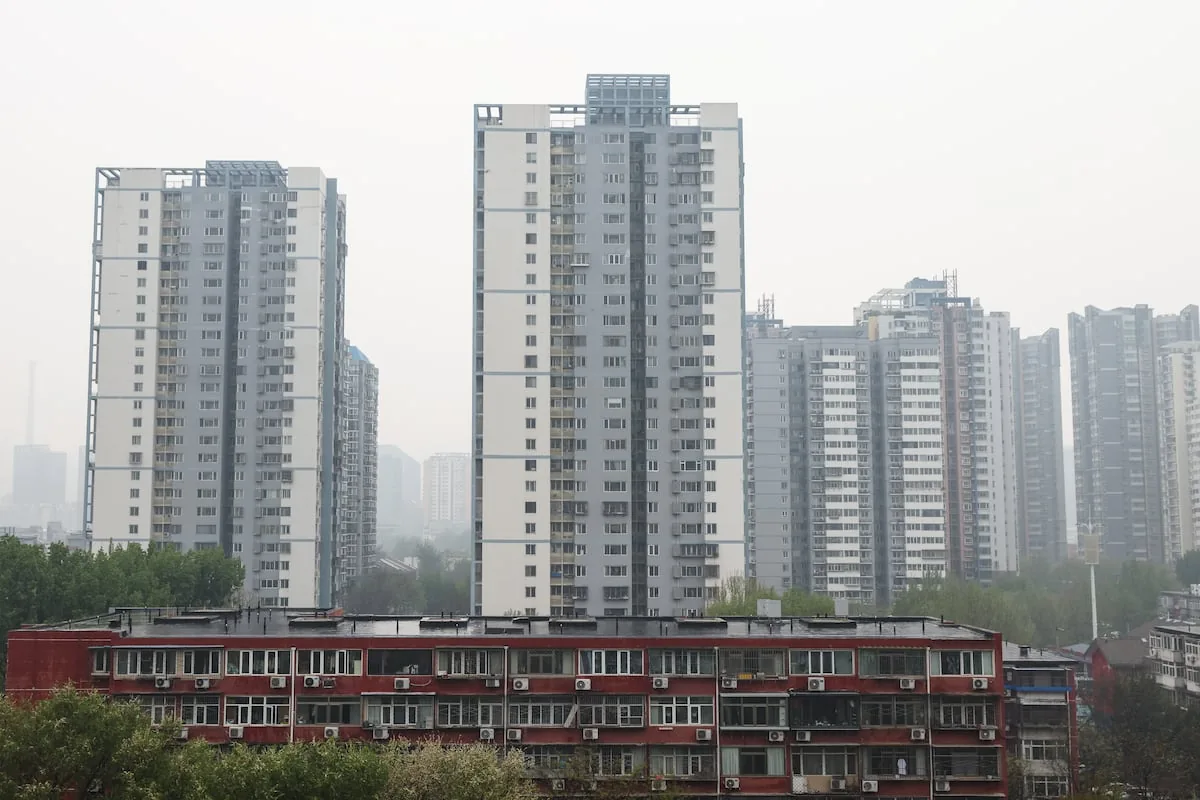
Despite the good words, he also acknowledged that “there is a lot of uncertainty,” and a “volatile” environment, while “geopolitical risks are increasing” and “some problems” persist in the Chinese economy. “The contradiction of strong supply and weak demand still exists,” he expressed the usual rhetoric of Beijing authorities to refer to the consumption stagnation, which has been largely hampered for years by the burst of a gigantic real estate bubble, whose effects are still lingering.
Read more Ivana Rodríguez, sister of Georgina, winner of ‘Top Chef: Sweets and Celebrities’
Retail sales, an indicator of domestic demand, grew a meager 2.4% year-on-year; services performed better, at 5.5% year-on-year. Meanwhile, investment remains very weak: it grew by 1.7%, although private investment decreased by 2.2%, especially affected by real estate promotion-related investment, which fell by 11.2%.
Money flows indicate where Beijing directs its interests: investment in high-tech industries increased by 7.4%. Investment in the manufacture of computer and office equipment, aviation, spacecraft and equipment manufacturing, and the information services industry increased by 28.3%, 19.0%, and 20.9%, respectively, always according to NBS data.
Mao Shenyong boasted of China’s capacity in the face of external world turmoil and the conflict in the Middle East, highlighting “the diversification” of Chinese trade and its ability “to face external risk challenges.” He also made a passionate defense of the “socialist system with Chinese characteristics.” “The more complex and changing the external environment is, the more obvious our institutional advantages are,” he noted.
This week, the International Monetary Fund (IMF) lowered its global economic growth forecast, including China’s, citing the repercussions of the war between the United States and Israel in Iran. In its World Economic Outlook report, published Tuesday, it projected global GDP growth of 3.1% this year, 0.2 percentage points less than its January estimate. China, according to its estimates, will grow by 4.4%, 0.1 percentage points below the January estimate.
The Chinese official, however, defended that while international energy prices have risen sharply in numerous countries, with cases of shortages affecting people’s lives, in China the supply of resources has remained “stable and orderly.” The Government approved temporary price regulation measures for gasoline and diesel in March in response to the international oil price surge. Mao highlighted “the autonomy” of China’s economy, the reduction of oil in the energy mix, and the commitment to new energy sources, such as electricity. “The overall impact of crude oil international market fluctuations on the Chinese market is relatively small,” he asserted.
Read more The court upholds the exclusion of a young man with autism from a competitive exam in Vitoria