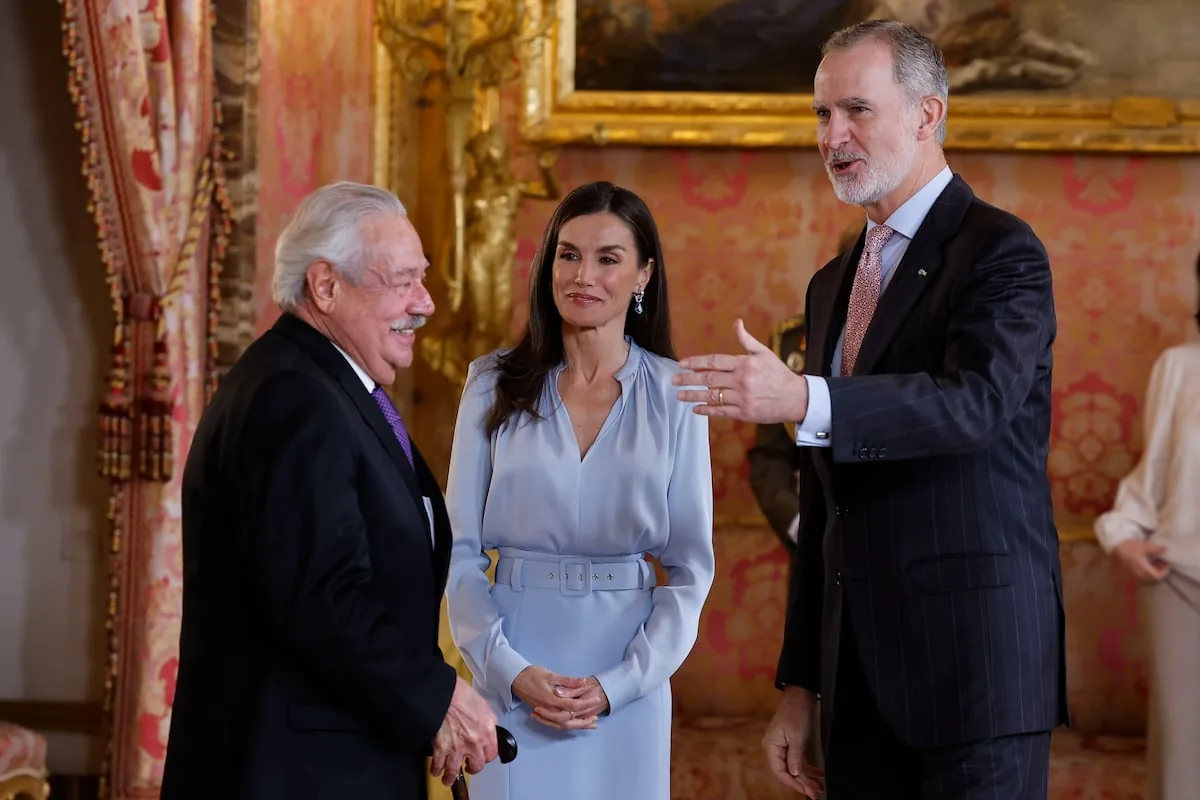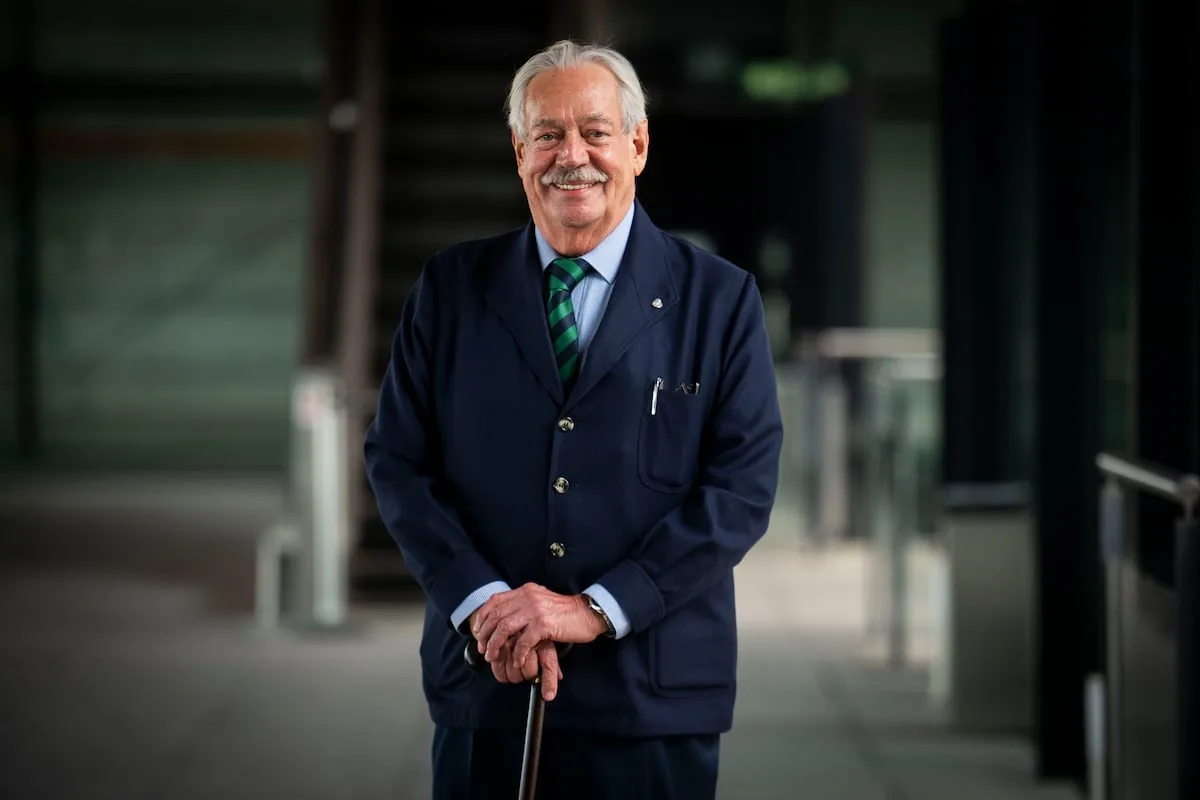





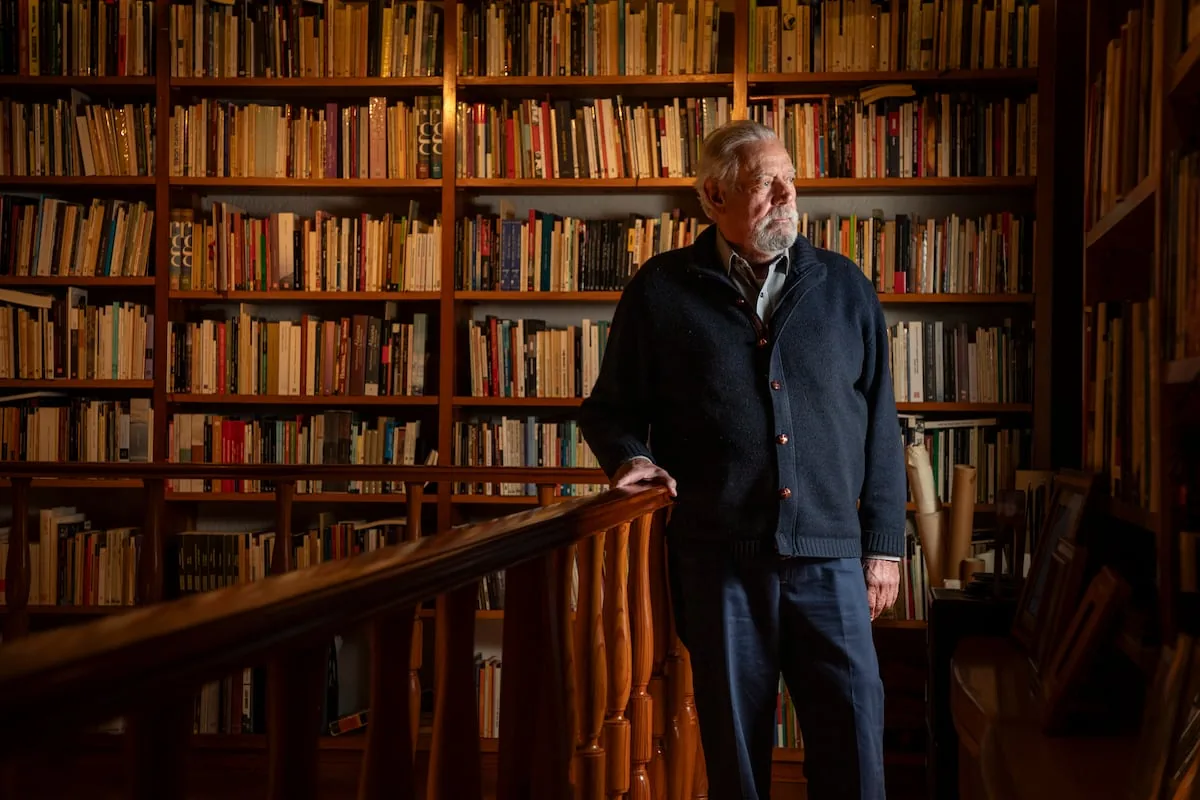
The author Gonzalo Celorio (Mexico City, 78 years old) has received in Spain the Cervantes Prize 2025, the highest award in Castilian language literature granted by the Spanish Ministry of Culture, in a ceremony presided over by King Felipe VI and Queen Letizia. In his speech —in which he mentioned Don Quixote and the figure of Miguel de Cervantes Saavedra—, Celorio reflected on the links between Mexico and Spain, pointing out that Mexican identity cannot be understood without its historical and cultural relationship with this country.
Read more Dissidents use schools as a trench and propaganda tool
Of Asturian and Cuban descent, the writer has established himself as one of the most relevant voices in contemporary Mexican literature. His work is characterized by offering a melancholic look at memory. In his books, Celorio has explored both his family history and the lives of other authors with whom he has been linked throughout his career.
Celorio has also stood out for his experience as a professor at the Faculty of Philosophy and Letters of UNAM, for his management as director of the Fondo de Cultura Económica, and for his current work leading the Mexican Academy of Language. “I feel that I now have, to put it in terms of a Mexican myth, the Pípila syndrome, because I am carrying a large stone which is the entire tradition of these awards given to such important personalities, whom I admire very much, and now I am among this group and I hope to be able to live up to it,” he said in an interview last year with this newspaper, when the recognition was announced.
Below, a review of some of the titles that have marked Gonzalo Celorio’s career:
Self-Love (1992)
Celorio’s first novel recounts the transformations of Ramón Aguilar, Moncho, on his path to adulthood. From fiction, the work offers a look at the 1968 student movement and the disillusionment of maturity, approached with irony, while parties become key moments in the protagonist’s transformation.
And the Earth Trembles in its Centers (1999)
The story introduces Professor Juan Manuel Barrientos, who arrives at the Historic Center of Mexico City to meet his students. Realizing they won’t arrive, he embarks on a tour of several cantinas that becomes a space for introspection and personal search.
Read more Spain experiences the largest increase in sudden death in Europe
The Metal and the Slag (2014)
With this work, the author tries to safeguard the memories of his ancestors. He reviews the family’s migration, from when his grandfather left a small town in Asturias in search of better opportunities to his relatives who, already in Mexico, built a new life. Faced with the imminent threat of oblivion, the grandson decides to reconstruct that legacy.
The Apostates (2020)
Celorio was the youngest of 12 siblings, so his admiration for his elders led him to delve into their past. Miguel and Eduardo were ordained into religious life for different reasons, so in this book the author reconstructs their trajectories based on his childhood memories and present-day questions.
Haunts of Memory (2022)
The text recovers testimonies from the lives of authors with whom Celorio lived, including Juan José Arreola, Julio Cortázar, Juan Rulfo, Gabriel García Márquez, Carlos Fuentes, Augusto Monterroso, Gabriel García Márquez, and Umberto Eco.
That Pile of Broken Mirrors (2025)
After reviewing the lives of those who have marked him, in his most recent work the author turns his gaze back to himself: his literary vocation, his intellectual formation, and his academic career, although he avoids defining this work as an autobiography.
Read more Trump announces a three-week extension of the ceasefire between Israel and Lebanon