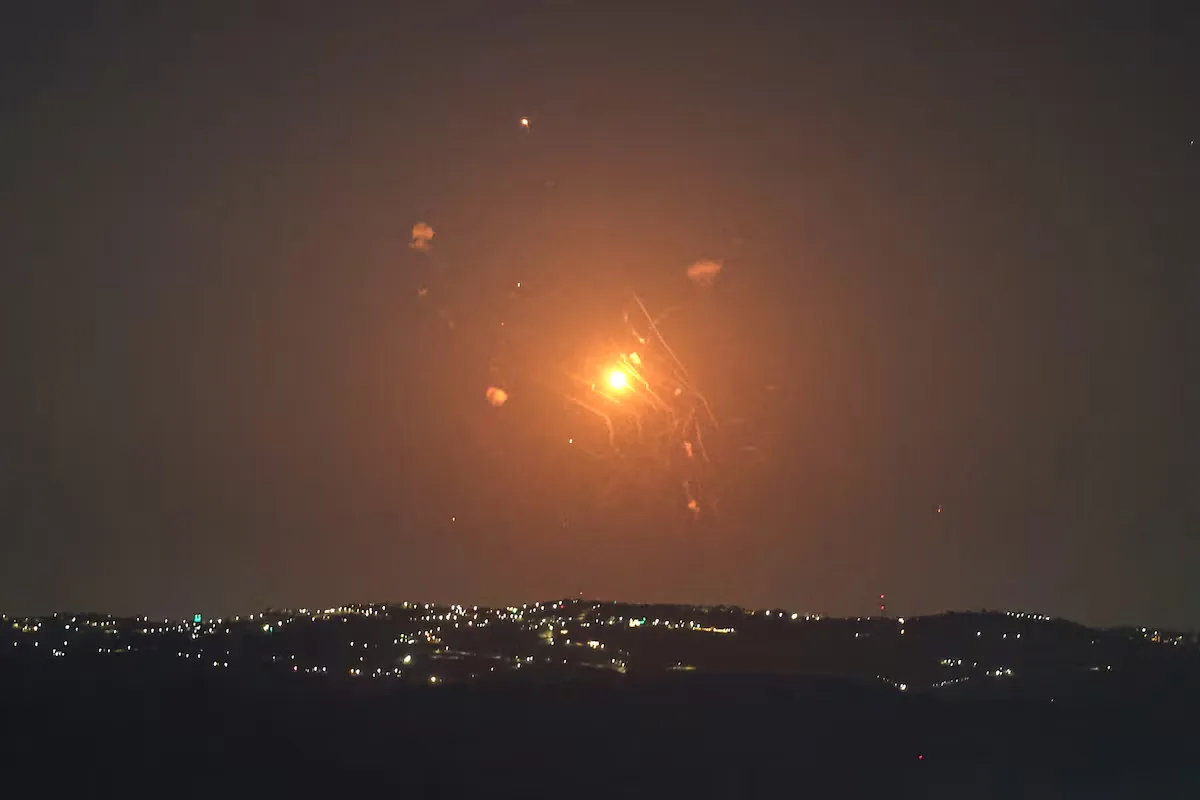








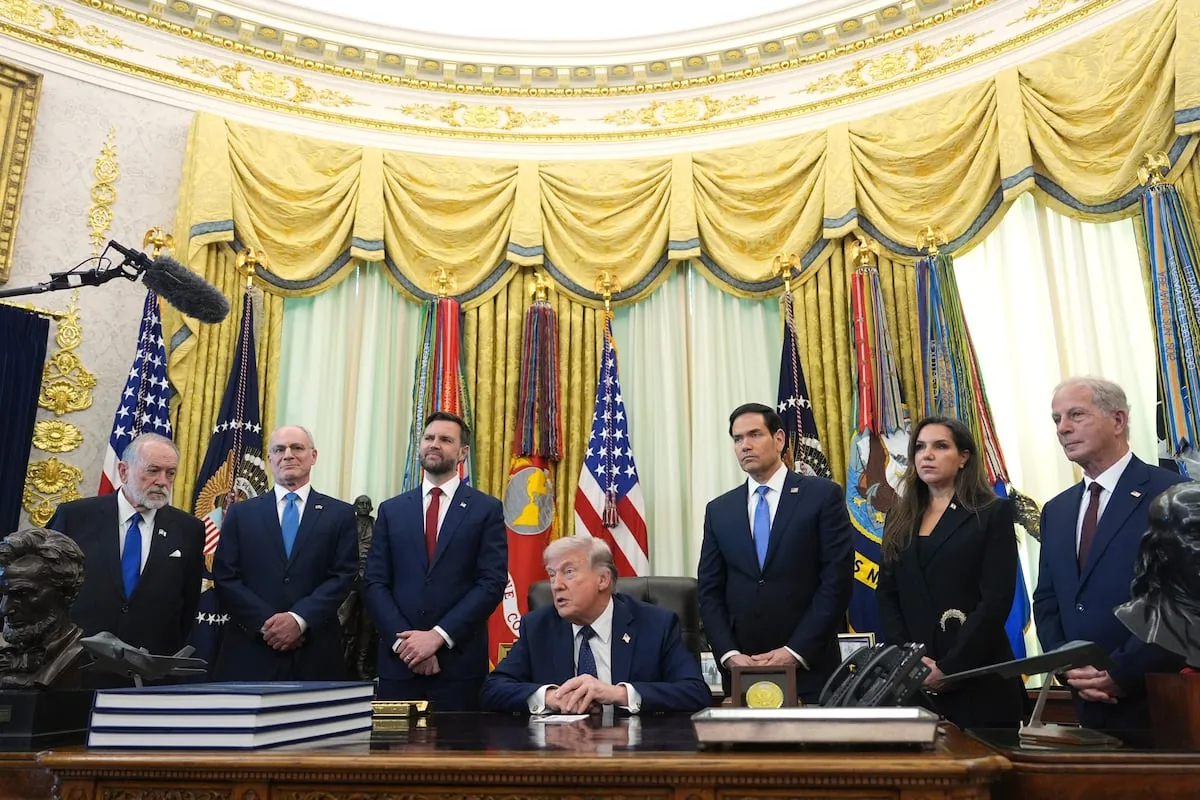
US President Donald Trump announced this Thursday that Israel and Lebanon have agreed to extend the ceasefire for three weeks after meeting with representatives of both countries at the White House, in the second direct bilateral meeting in decades. The first, on April 16 and also mediated by Washington, led to the declaration of a very fragile ten-day ceasefire on the ground. Just hours before today’s meeting, Israeli attacks killed three people in southern Lebanon while, in the middle of the meeting, Hezbollah, which does not participate in the negotiations as it is not a state actor, launched a wave of attacks against northern Israel.
Read more ICE again detains César Duarte’s wife after Mexico’s extradition request
“The Meeting went very well! The United States will work with Lebanon to help it protect itself from Hezbollah. The Ceasefire between Israel and Lebanon will be extended THREE WEEKS. I look forward to receiving Israel’s Prime Minister, Bibi [Benjamin] Netanyahu, and Lebanon’s President, Joseph Aoun, in the near future,” the US president announced on the Truth Social platform with his usual capitalization.
Trump received the Israeli and Lebanese ambassadors in Washington at the White House in a meeting also attended by Vice President J. D. Vance; Secretary of State, Marco Rubio; and the US ambassador to Israel, evangelical Christian Mike Huckabee, as well as his counterpart in Lebanon, Michel Issa. “It was a Great Honor to be a participant in this very Historic Meeting!” concludes President Trump’s post.
The surprisingly expeditious meeting was held at the White House and not at the State Department, where the previous one took place. The announcement hours earlier by a senior official of the Republican Administration that the venue was moving to the official residence, with Trump’s participation, raised hopes of a possible agreement, which, seen in light of the development of the previous truce, seems more like a new patch than a definitive solution. The initial 10-day ceasefire, which came into effect last Friday, was due to expire next Monday.
“The people of Lebanon and the people of Israel are neighbors and want to get along,” said Mike Huckabee, Trump’s ambassador to Israel, who is by no means neutral due to his strong support for Israel and Jewish settlements in the West Bank —the Palestinian territory he always refers to, as the Israeli government does, by its biblical names of Judea and Samaria. “They can get along, but it’s like those neighbors who have a problem child in the neighborhood who keeps throwing stones at everyone’s windows. And if the child stopped throwing stones, the neighbors could get along and actually start working together,” Huckabee said in clear reference to Hezbollah, the Shiite militia-party satellite of Iran whose military might has traditionally overshadowed the regular Lebanese Army.
Read more Arrested in Argentina Fernando Farías Laguna, one of the ringleaders of the Navy’s huachicol network
Therefore, after announcing the ceasefire extension, Trump reiterated that the United States continues to demand as an “indispensable condition” that Iran end its support for proxies, or intermediary groups, in the Middle East, including Hezbollah in Lebanon, as part of any agreement between Washington and Tehran to end the war unilaterally declared by the US and Israel against Iran on February 28, in a precarious truce.
In similar terms to those used by Huckabee, Israel’s ambassador to the United States, Yechiel Leiter, stated that Israel and Lebanon “have never been closer to each other than today.” Leiter welcomed the outcome of a meeting that, he said, had been decades in the making. “We are going to move forward, working for peace. We hope to achieve it as soon as possible,” he emphasized. Lebanon’s ambassador to the United States, Nada Hamadeh Moawad, also thanked Trump for facilitating “this historic moment.” “I believe that, with your help and support, we can make Lebanon great again,” the diplomat said.
The UN had expressed confidence that Thursday’s dialogue in Washington would bear fruit, as the death toll from Israeli attacks in Lebanon rises to nearly 2,500 people, mostly civilians. The temporary armistice will not, however, meet the expectations of Lebanese Prime Minister Nawaf Salam, who warned on the eve of the meeting that his delegation was traveling to Washington with the clear objective of achieving the complete withdrawal of Israeli forces from Lebanon. Israel’s repeated attacks —the penultimate one cost the life of a Lebanese journalist, who died under the rubble after a bombing— as well as Hezbollah’s response do not allow for much optimism.
Read more It’s time for the experts