








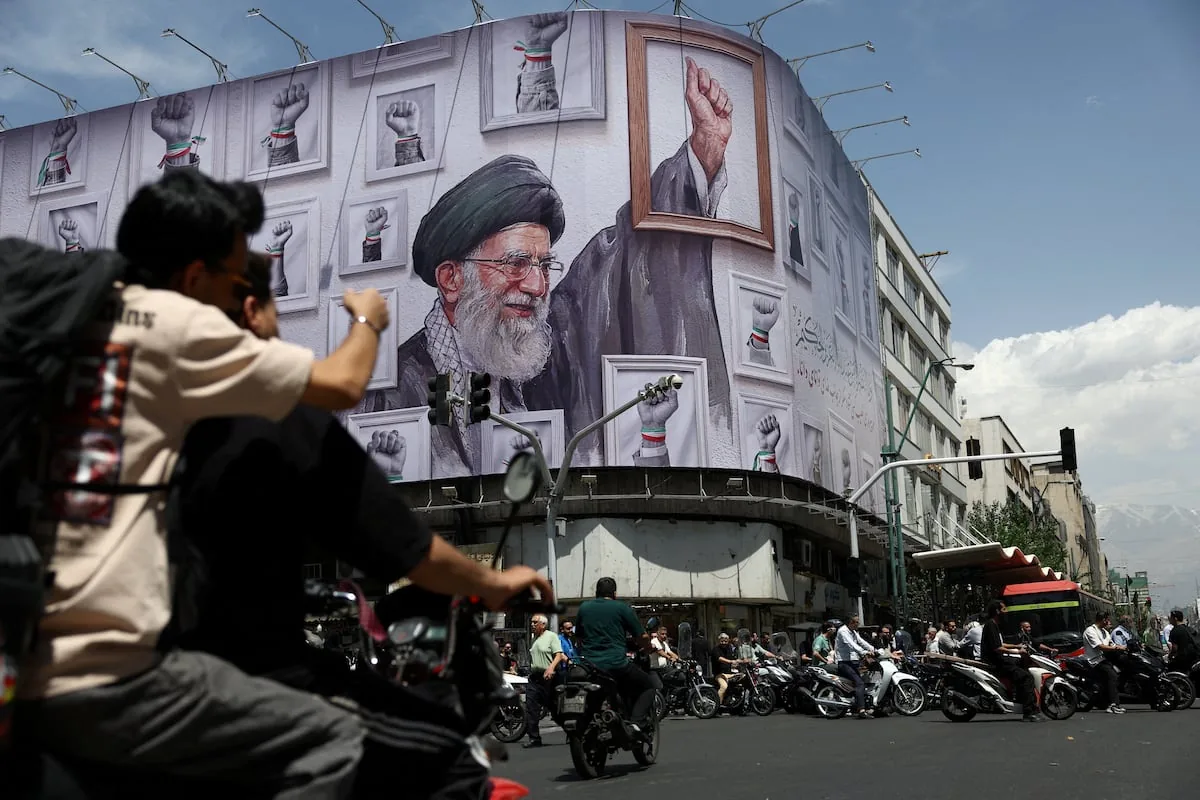
The rollercoaster of tensions and dialogue that the ceasefire between Iran and the US has turned into offers this Wednesday, about to reach one month, a horizon of the end of the war or, at least, progress towards de-escalation after days of tension around Hormuz. Washington and Tehran are “close” to signing a one-page memorandum of understanding that would declare the end of the armed conflict and allow 30 days to negotiate a detailed agreement to reopen the vital strait, limit Iran’s nuclear program, and lift US sanctions, according to the portal Axios citing two US officials and confirmed by a Pakistani source. Tehran is “evaluating” the proposal, whose mere revelation caused oil prices to drop sharply. US President Donald Trump has again mixed hope, threats, and skepticism when talking about the possibility of an agreement.
The sources cited by Axios indicate that the parties had never been so close to reaching a pact since the US and Israel massively attacked Iran and killed its supreme leader, Ali Khamenei, last February 28.
“Assuming Iran agrees to give up what has been agreed, which is perhaps a lot, the already legendary Epic Fury [the name the US has given to its offensive] will have ended, and the very effective blockade will allow the Strait of Hormuz to be OPEN TO ALL, including Iran,” Trump wrote on his social network, Truth. After the lime, he immediately threw a shovel of sand: if Tehran does not accept the proposal, “the bombing will begin and it will, sadly, be at a much higher level and intensity than before.”
It was the umpteenth flip-flop by the Republican in a war that has already lasted much longer than he promised when approving it. Less than 24 hours earlier, he insisted on continuing with the US blockade of Iranian ports and assured that Tehran had no chance and could only fire “birdshot.”
Trump, who throughout the conflict has constantly changed position—sometimes even within the same day—maintains that the US has already achieved its goals in the war: weakening the adversary country so that it cannot pose a threat to its neighbors, changing the regime, and preventing Iran from acquiring a nuclear weapon. But the regime remains standing despite the deaths of many of its leaders in bombings; the Iranian blockade of the strait and attacks against neighboring countries demonstrate it maintains its threat capability, and the Islamic Republic retains its enriched uranium. The other major US goal, reopening Hormuz, was unnecessary before the offensive: the passage was open.
Washington expects Tehran’s response within the next 48 hours on several key points. The pact would imply Tehran’s commitment to a moratorium on nuclear enrichment, something that, in any case, it had already stopped since the previous war launched by Israel in June 2025. The demands in this regard are similar to those raised by the parties last month in the dialogue in Pakistan: the US wants a 20-year moratorium and Iran proposes five, although it is open to another single-digit term. Sources point to an agreement between 12 and 15 years.
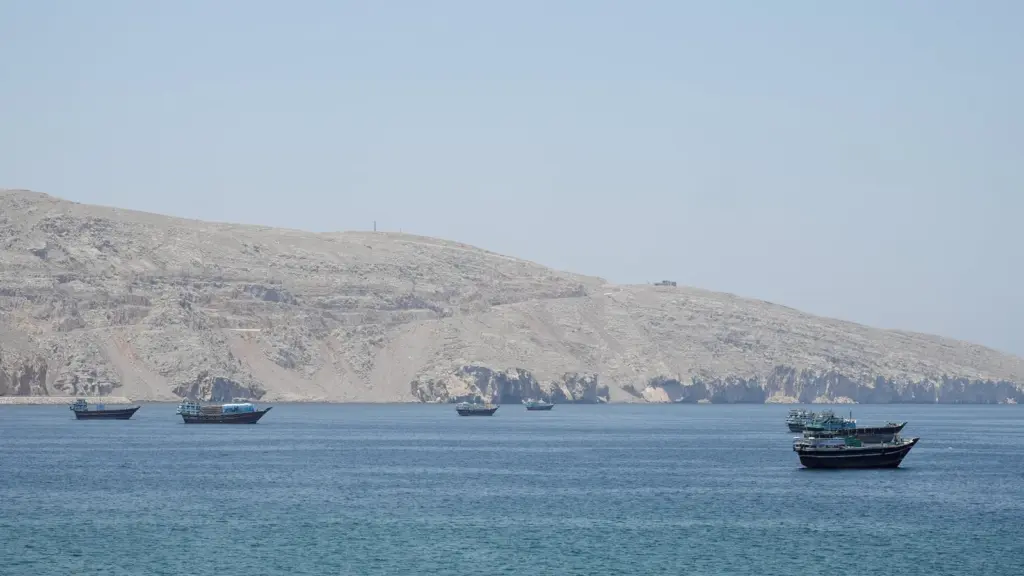
The agreement would also involve lifting sanctions on Iran and releasing billions of dollars in frozen funds, as well as removing restrictions on transit through the Strait of Hormuz. That is, both the blockade with which Iran responded to the massive joint US-Israel attack and the one Washington has tried to apply now, which has led both countries to simultaneously claim control of Hormuz, the strategic route through which usually one-fifth of the volume of oil and liquefied gas moved daily worldwide.
“Wish list”
The spokesperson for Iran’s Ministry of Foreign Affairs, Esmail Bagaei, told the Iranian agency ISNA that his country is “evaluating” Washington’s proposal and, when finished, “will convey its views to the Pakistani side,” which acts as mediator. The deputy Ebrahim Rezaei was harsher, calling the memorandum a “US wish list” and urging Washington to “make the necessary concessions,” since “it will get nothing in a lost war that it has not won in face-to-face negotiations.” Along the same lines, the naval force of the Revolutionary Guard emphasized that transit through Hormuz “will be safe and stable” when “US threats end.”
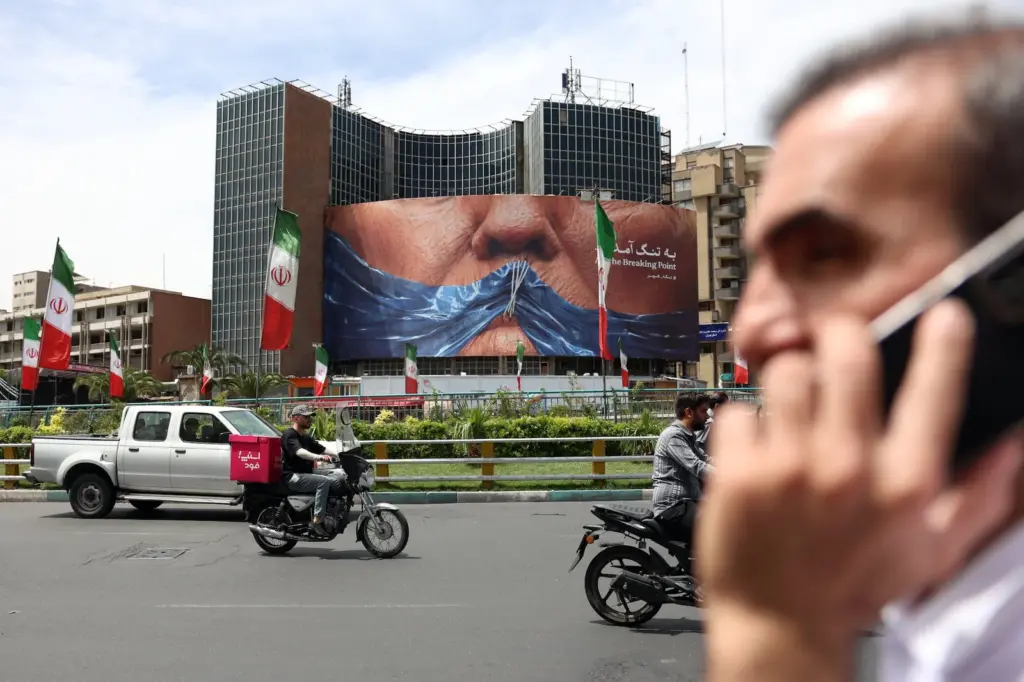
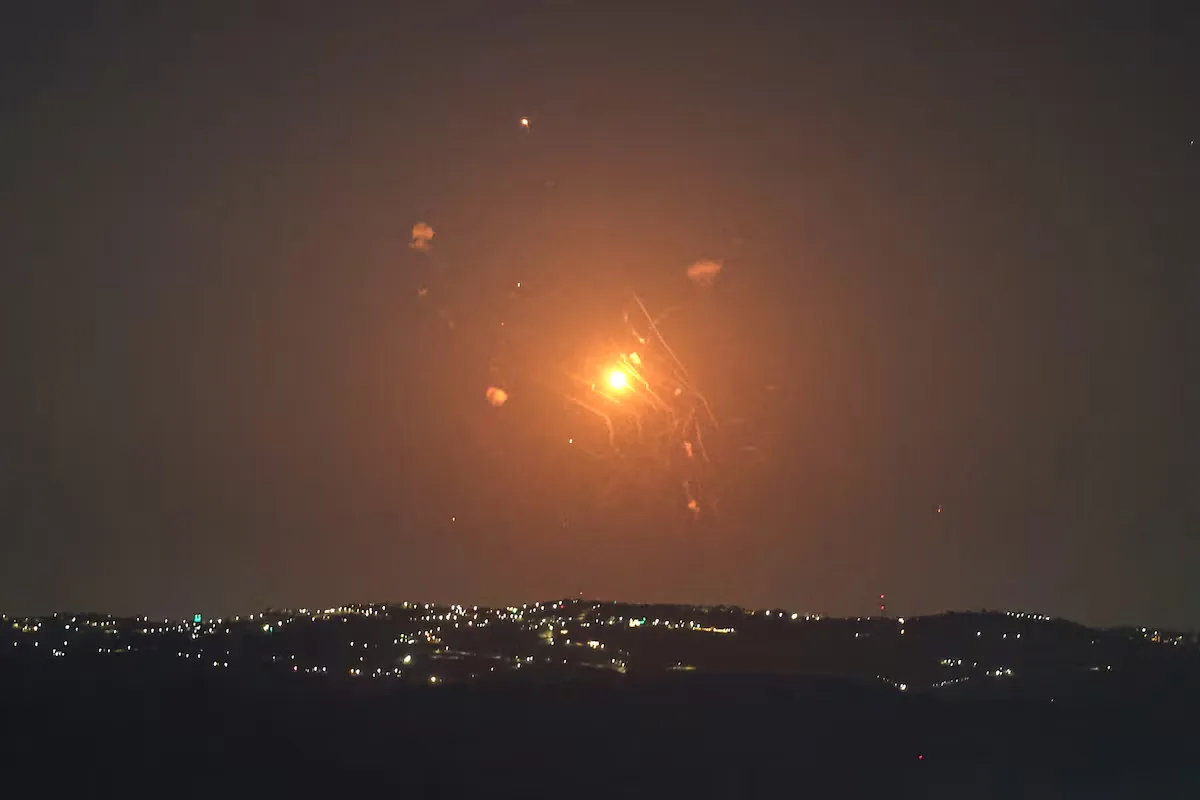
An attempt to unblock Hormuz degenerated in recent days into a US fiasco and the greatest moment of tension in the truce. It is the Freedom Project, aimed at guiding merchant ships through Hormuz and for which the Pentagon mobilized, among others, about a hundred fighter jets, missile-armed destroyer ships, and 15,000 soldiers. Iran responded with attacks and launched missiles and drones against the United Arab Emirates for two consecutive days—for the first time during the truce—where the Israeli army operates air defense systems. One of them set fire to an oil facility.
Read more Sabadell opens a new chapter with Armengol at the helm and after signing peace with BBVA
Meanwhile, the US insists that its own blockade remains intact until an agreement is reached. This Wednesday, its forces intercepted an Iranian oil tanker, the Hasna, in the Gulf of Oman, which was trying to break the siege and reach its country’s port. “US forces issued multiple warnings and informed the Iranian vessel that it was violating the US blockade,” the Central Command statement indicates. When the Hasna ignored those warnings, according to the Pentagon’s version, “US forces disabled the ship’s rudder.”
Amid rising tensions, Trump made a spectacular flip-flop late Monday via social media. Barely 48 hours after announcing it with great fanfare, he put the Freedom Project “on pause,” citing the “great progress” made in negotiations under Pakistani mediation. Hours earlier, his Secretary of State, Marco Rubio, had declared the end of the attack and bombing phase in the war. “Epic Fury has ended,” he stated, considering its objectives “fulfilled.” “Now we are in a new phase,” he added.
Limbo
If the memorandum is signed, negotiations would take place in Islamabad or Geneva, according to Axios. Although the document opens a diplomatic path just as tension in Hormuz was pointing towards escalation, it poses a risk. Being only 14 points on one page, many of its terms are subject to the achievement of a final agreement, leaving open the possibility of a new armed conflict (as Israel would wish) or a prolonged and dangerous limbo of “neither war nor peace” without clashes but with key issues still unresolved.
In Israel, Prime Minister Benjamin Netanyahu has come out to present as coordinated what he does not want. In a video statement, he emphasized “full coordination” and shared goals with Trump, so “there are no surprises.” The most important point is “the removal of all enriched material from Iran and the dismantling of its uranium enrichment capacity,” he said, in contrast to his messages weeks ago, full of calls to overthrow the Iranian regime and warnings about the danger of its ballistic missile system.
Like Defense Minister Israel Katz last week, Chief of Staff Eyal Zamir sent a threatening message from the Lebanon area where his army is advancing by destroying villages, which better expresses his goal: “We have a historic opportunity to change the regional reality in this multi-front operation. In Iran, we have an additional series of targets ready to be attacked. We are on high alert to return to a powerful and broad campaign that allows us to consolidate our achievements and further weaken the regime.” Hours later, Netanyahu and Katz announced a bombing in Beirut (the first in almost a month) to kill a Hezbollah military commander, despite a ceasefire also prevailing there. It is more nominal than real and grants Israel broad powers to bomb.
Weeks of signals
Washington, on the other hand, has been signaling in recent weeks its desire to end a war that already tires the US president and jeopardizes the supremacy of his party, the Republicans, in the midterm elections scheduled for next November, when control of Congress and, with it, the ability to impose limits—or not—on Trump’s decisions will be at stake. Or even for the Democrats to win, organize impeachment trials against the president and members of his administration.
With gasoline prices at their highest since the Russian invasion of Ukraine in 2022, the popularity of the war is at the same level as those of Iraq or Vietnam, and approval of the president’s management is the lowest of his term. Only 37% of Americans give him their approval, according to a poll published this weekend by the newspaper The Washington Post.
This same newspaper published this Wednesday what seems another reason to want to end the war once and for all: according to the Post, Iran’s attacks have caused more damage than acknowledged to US military facilities. Iranian projectiles have damaged or destroyed 228 structures or equipment at US military posts in the Middle East since the start of the war, and have hit hangars, barracks, fuel warehouses, planes, and key communications, radar, and air defense equipment, according to a satellite image analysis conducted by this media outlet.
Read more New life in Ransom Canyon