









A question is gaining more and more strength in Canada: will there be a referendum on Alberta’s independence in October? For decades, such a consultation was associated only with Quebec; however, secessionist desires are now sounding from another part of the country. It is none other than the richest province. In 2025, its GDP per capita was around 72,000 Canadian dollars (about 53,000 US dollars). The source of this prosperity comes from underground: Alberta has abundant oil. At the same time, conservative ideology is a characteristic hallmark among the majority of its inhabitants.
Read more Thatcher, Sheinbaum and making things happen
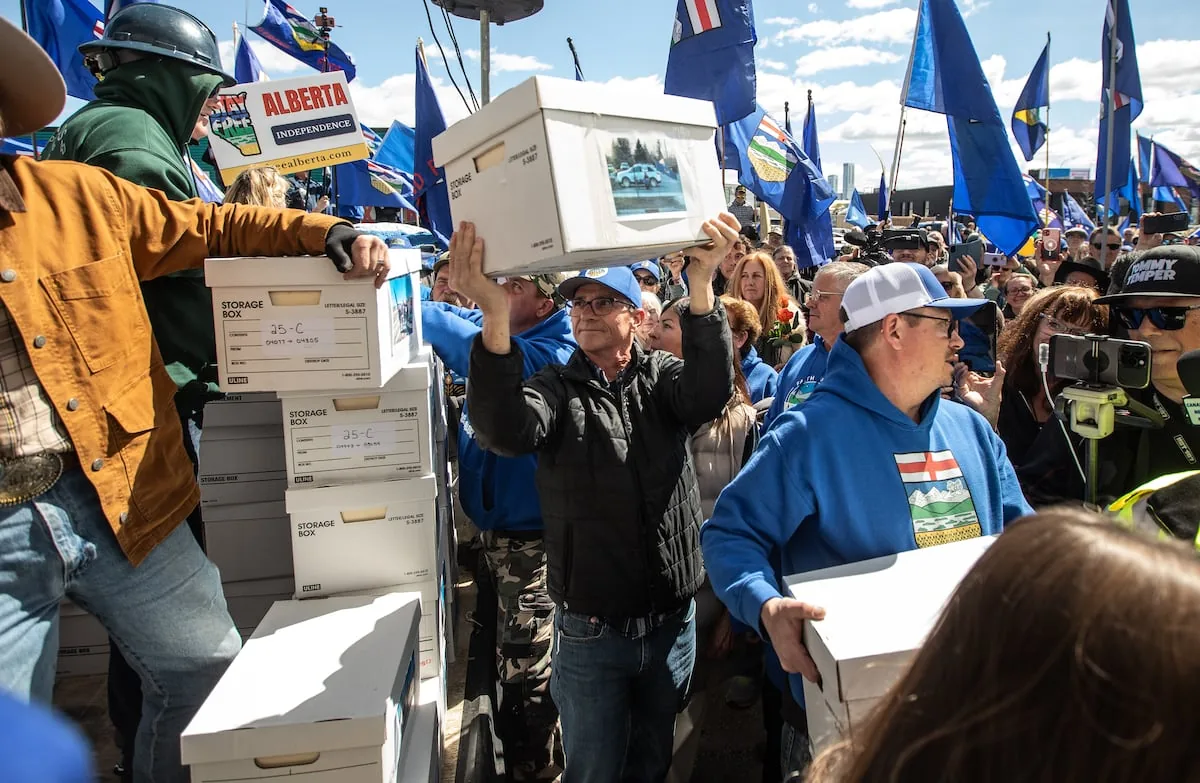
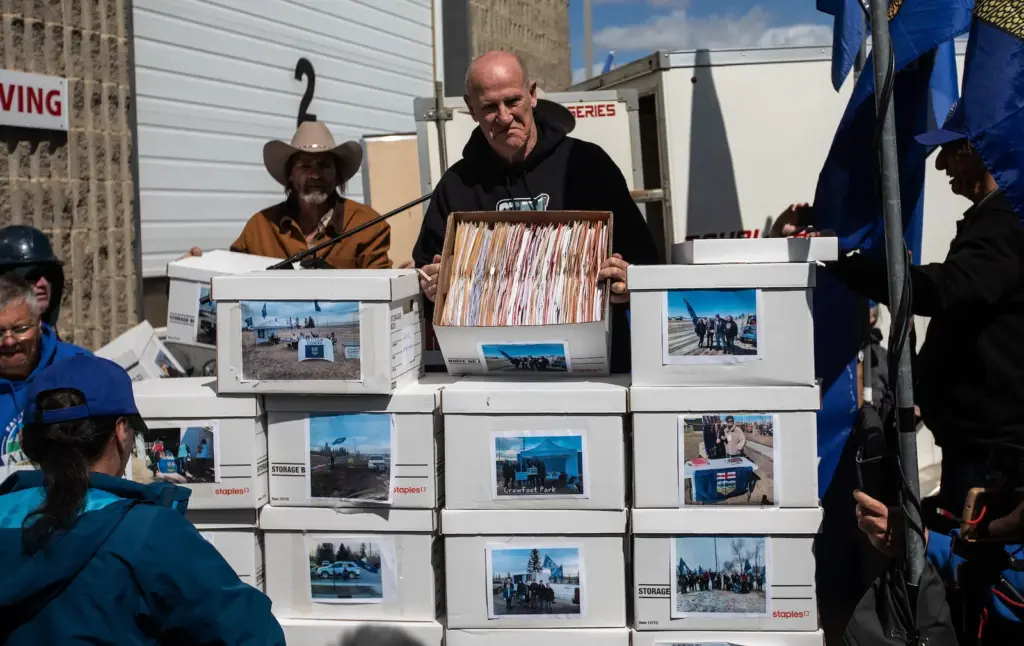
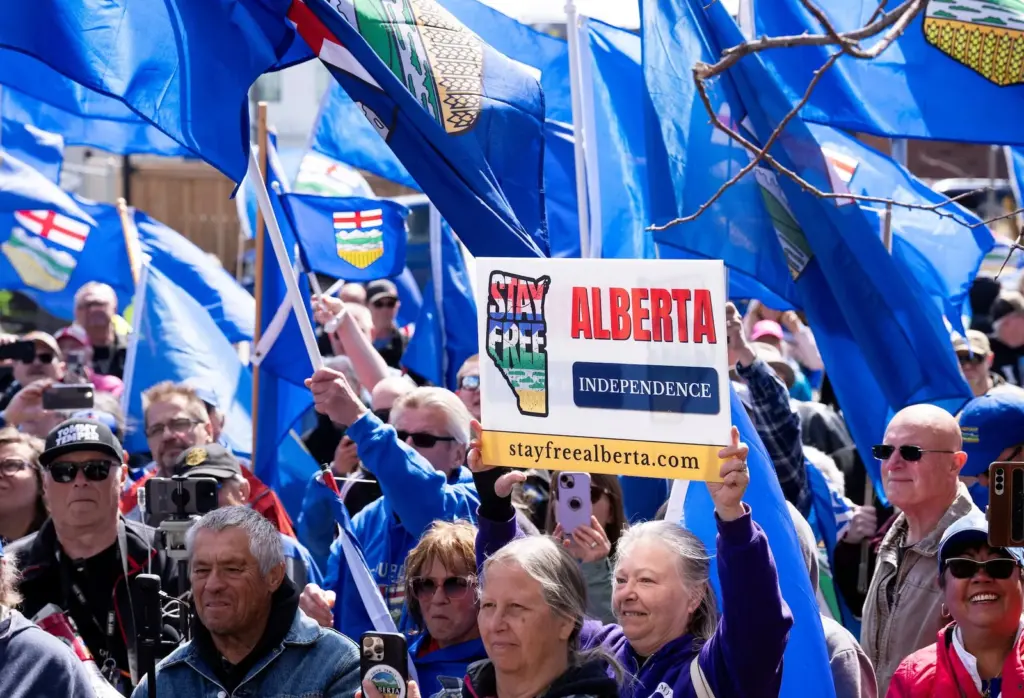
The organization Stay Free Alberta brought boxes containing signatures in support of organizing a referendum on independence to the province’s Elections Department, located in the city of Edmonton, this Monday. According to this group, 301,620 signatures were submitted. Authorities had indicated that the minimum number to consider this exercise would be 177,732. Mitch Sylvestre, leader of this collective, stated that the number of signatures “is a clear signal” for the question about independence “to be included on the October ballot.” The government of Alberta’s premier, Danielle Smith, will carry out a series of consultations that month on a package of issues, such as immigration and social services.
The provincial Parliament approved a law in July to reduce the threshold needed to call a referendum. As a result, the petition requires signatures from 10% of the voters in the last general election. This change explains the number requested from independence activists. Danielle Smith has made it clear that she does not support the separatist venture but will back the organization of the consultation if enough signatures are collected and verified. Smith is not the first political figure noted for wanting to take advantage of the situation: various analysts have commented that she seeks to pressure Ottawa with the independence threat to try to obtain greater concessions.
Friction with the federal government and secessionist desires in this part of the map are not new. Since the 1980s, some voices began to emerge proposing to take the path of a different country, although they were just a low-volume chorus. The arguments have changed little over time: separatists claim that the elites of Ontario and Quebec have an overwhelming weight when making decisions, that federal authorities constantly interfere in provincial competencies, and above all, that Alberta contributes too much to the country’s coffers.
Independence began to gain strength in the last decade due to the conjunction of several elements. Justin Trudeau’s arrival as Canadian prime minister in 2015 marked the beginning of a series of clashes between Alberta and the federal government. An example of this was Trudeau’s desire to regulate more on environmental matters. The pandemic also paved the way; just recall the “truckers’ convoy” — many from Alberta — that blocked downtown Ottawa in early 2022. This contributed to the image of a central authority supposedly limiting freedoms.
Likewise, a weakening of the federal conservatives gave rise to more radical expressions among some of their members. This increase is also explained by events in the neighboring country. The birth and development of the MAGA movement, as well as Donald Trump’s first presidential victory, served as a kind of reference for independence supporters. Trump’s second term, in which he has not stopped using rhetoric against the Canadian state, gave the issue a greater push.
However, it is no longer just about inspiration but suspicions of wanting to intervene in this separatist venture. The Financial Times published in January that leaders of Alberta’s independence movement held at least three meetings in 2025 with members of the United States government. Alberta’s Elections Department reported that it will review each of the signatures submitted by the independence group, but this process has not yet begun for a reason related to the courts: a judge must rule on an appeal filed by indigenous groups from the province, as they argue that organizing the consultation would violate rights obtained through various treaties.
Read more Ayuso’s snub steals the spotlight from Guillermo Francella’s moment at the Platino Awards
In this context, the Elections Department and the Royal Canadian Mounted Police opened investigations because another secessionist group (called Centurion Project) shared online, without authorization, a list with electoral data of nearly three million inhabitants of this province. If the electoral body ultimately validates the signatures, the petition would go to the Alberta Parliament. However, the federal government has already spoken about possible scenarios. This Tuesday, Prime Minister Mark Carney declared: “Any attempt by Alberta to separate from the rest of Canada must comply with the strict rules established by the Clarity Act.”
The premier was referring to the mechanism approved after Quebec’s 1995 referendum so that, in case a province wants to become independent, the Canadian Parliament determines what constitutes a clear question and what would be a sufficient result to achieve separation. Carney added that he will continue working with all provinces in what he called “cooperative federalism.” In fact, the Canadian premier has had various approaches with Alberta. The most important took place in November, when he signed a memorandum of understanding with Premier Smith.
The document includes, among other points, certain exemptions in complying with environmental regulations and the possibility of building a new pipeline to the Pacific coast. Carney has expressed his intention to make Canada an “energy superpower,” a goal in which Alberta plays a fundamental role.
This Friday, the Canadian prime minister received Danielle Smith in Ottawa. Alberta’s premier said that some details of the protocol are still pending but hopes they will be resolved soon. Smith added that both the industry and the inhabitants of her province “are starting to get a little impatient.”
67% of those surveyed in a poll released by CBC News at the end of April said they would vote against a separatist referendum; 27% were in favor, and the remaining 6% declared themselves undecided. The figures are very similar to those of other surveys a year ago, when Carney’s Liberals won the federal elections.
Mark Carney triumphed in the elections by positioning himself as the most competent politician to face the trade hostilities orchestrated from Washington. Besides starting to implement a detailed economic plan, the prime minister has asked Canadians to be more united than ever in these difficult times. Paradoxically, Carney is seeing how the situation in Alberta begins to occupy too many headlines. And, on top of this, the idea of another independence referendum in Quebec is back on the scene. Next October, the French-speaking province will hold general elections. The Parti Québécois (PQ) is fighting for first place in the polls with the Quebec Liberal Party. The PQ leader has stated that he will organize a new secessionist consultation if he wins the elections.