








If you want to receive the Ola Mundial newsletter to your email you can click here.
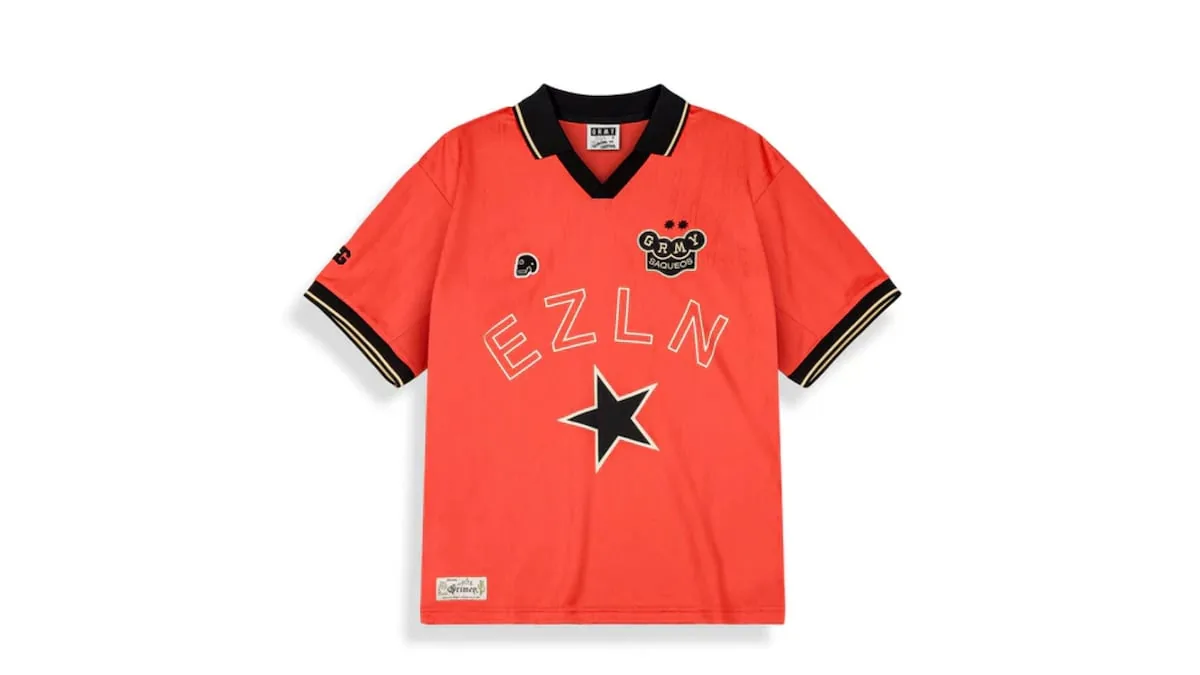
A star and the initials of the Zapatista Army of National Liberation (EZLN). These are the references that the Spanish fashion brand Grimey (GRMY, by its logo) has brought to one of the football shirts in its catalog. The garment is on sale for about 75 euros on its Spain page (around 1,530 pesos) and for about 2,300 pesos on the Mexico page, the country of origin of the indigenous movement. The design name is somewhat generic in the search engine: “Camiseta de fútbol machetazos boxy red [straight cut red]”. Sources close to the EZLN leadership tell EL PAÍS that the Spanish company has not contacted them and that there is no financial arrangement for the references to the movement. The GRMY management, for its part, states that it is “one more design with an allusion to a movement,” something common in the brand.
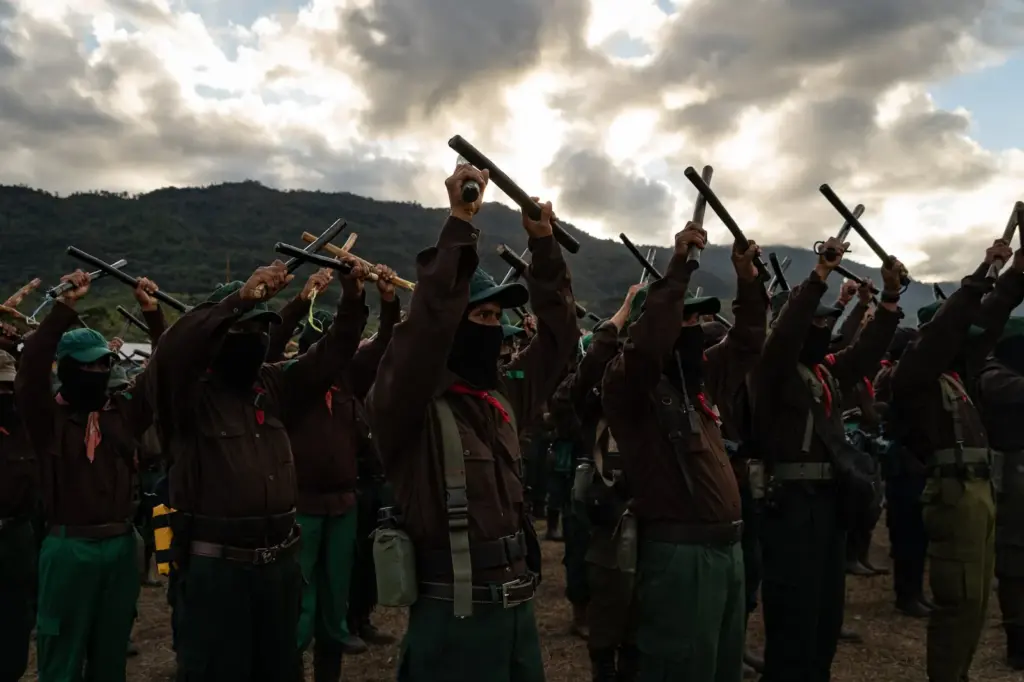
Zapatismo raised its voice and arms against the Mexican government on January 1, 1994. Thousands of indigenous fighters took over five municipalities in Chiapas, southeastern Mexico, in those days to call for insurgency and claim historically denied rights: “Work, land, roof, food, health, education, independence, freedom, democracy, justice, and peace.” Their symbols were clear: a red star and the initials of the EZLN movement. They are the same — except for the color of the star — that the Spanish brand has transferred to a football shirt — which does not correspond to any specific team — 32 years later.
As a social movement, the EZLN is not a registered trademark in the usual sense, but intellectual property lawyer Pablo Carrillo explains that in Mexico the use of a brand or symbolism “grants rights.” “If we say that the initials ‘EZLN’ as a movement have been used since 1994, they obviously have prior use. That use would allow them to initiate [legal] actions,” explains the partner of the Caype Abogados area. Carrillo says that if GRMY only used the logo in Spain, the movement could rely on the notoriety of the initials to demand that they stop using them. But, by using it in Mexico, “there is undoubtedly a very clear action of unfair competition for the use or appropriation of the initials that represent the movement.” “I think it rather goes to a case of bad faith,” he summarizes.
GRMY was born in 2006 in Vicálvaro, a neighborhood on the outskirts of Madrid, with a deep social message. “Since we started almost 20 years ago, we have released many designs with allusions to social and political movements [past and present], involving ourselves to a greater or lesser extent,” they say from their executive management by email. This newspaper has not received a response as to whether the brand will contact the EZLN or if it will allocate part of the shirt sales to the movement.
Read more Thatcher, Sheinbaum and making things happen
The Spanish brand has indeed carried out solidarity acts with other movements on other occasions. The executive cites the GRIMEY x PALESTINA music festival, in which “all the proceeds obtained” go to Pallasos en Rebeldía, an international artistic-solidarity collective that supports indigenous peoples. Last year they managed to gather 14,000 people, according to the company’s figures, and this year they plan to hold a new edition on May 12. Pallasos en Rebeldía points out that, among other issues, it “defends the end of the Zionist occupation in Palestine” and that it “is part of the solidarity movement with the Zapatista revolution in Mexico.”
A quick look at the Mexican Institute of Industrial Property (IMPI) page has shown Carrillo that there was only one attempt to register the EZLN brand. It was in June 2021 and under the name “EZLN Quality Jeans.” The application alluded to the image of Subcomandante Marcos with the movement’s icons superimposed. “It is denied. The registration, which is that of the IMPI, was not granted. It has been since 2001, so it is practically abandoned,” he comments.
The appropriation of characteristic elements has been a sensitive issue in Mexico in the last decade. The country has maintained a strong fight to protect the cultural heritage of indigenous peoples, which has led the government to repeatedly criticize brands such as Carolina Herrera, Adidas, or the Asian textile giant Shein for the use of designs and identity elements. In 2023, the controversy also affected Grupo Xcaret when a group of representatives of the Great Mayan Council filed a complaint against the Mexican tourist company before the National Institute of Copyright (Indautor) for violations of the cultural heritage of indigenous peoples and communities, by using Mayan elements to attract tourists.
Read more Ayuso’s snub steals the spotlight from Guillermo Francella’s moment at the Platino Awards