



When Cyprus assumed the rotating presidency of the EU in January, all eyes were on Greenland due to Donald Trump’s annexation threats. Four months later, attention has shifted much further south, where the war initiated by the United States and Israel against Iran has caused a new regional conflict with global consequences. Especially for a Europe that was never consulted, but is now required to help resolve the chaos of the war, while trying not to be dragged into a crisis that has already sent bills soaring.
Read more Adidas sneakers with Cloudfoam technology that are a hit for their comfort and wide fit
All these issues and equations, both geopolitical and economic, will be on the table at the informal meeting of European leaders who will gather from this Thursday until Friday in Nicosia, the European capital closest to the new powder keg.
It is the first time that the Twenty-Seven —although in reality there will be at most 26, since Hungarian Prime Minister Viktor Orbán has already said he will not attend what should have been his last European summit after his defeat in the April 12 elections— have met face-to-face since the new conflict erupted at the end of March. And they do so in a country that has become the testing ground for a common European defense, after an Iranian drone hit one of the British military bases in Cypriot territory in the early days of the war with Iran.
This led several European partners —France, Greece, Italy, and Spain— to send several military fighter jets, frigates, anti-missile and anti-drone systems, and helicopters to the Mediterranean island.
Therefore, although it is not the central topic, European heads of State and Government are expected to address the issue of the mutual security clause set out in Article 42.7 of the EU Treaty, whose scope, limits, or eventual clashes with Article 5 of NATO, to which most community partners belong, continues to generate many doubts and debates. In fact, this clause has only been invoked once, by France after the attacks in Paris in November 2015. Cyprus, on the other hand, chose not to use it, although it is interested in clarifying its contours and how it could eventually be made more operational. This is the framework in which the still very preliminary discussions will revolve, according to various diplomatic sources.
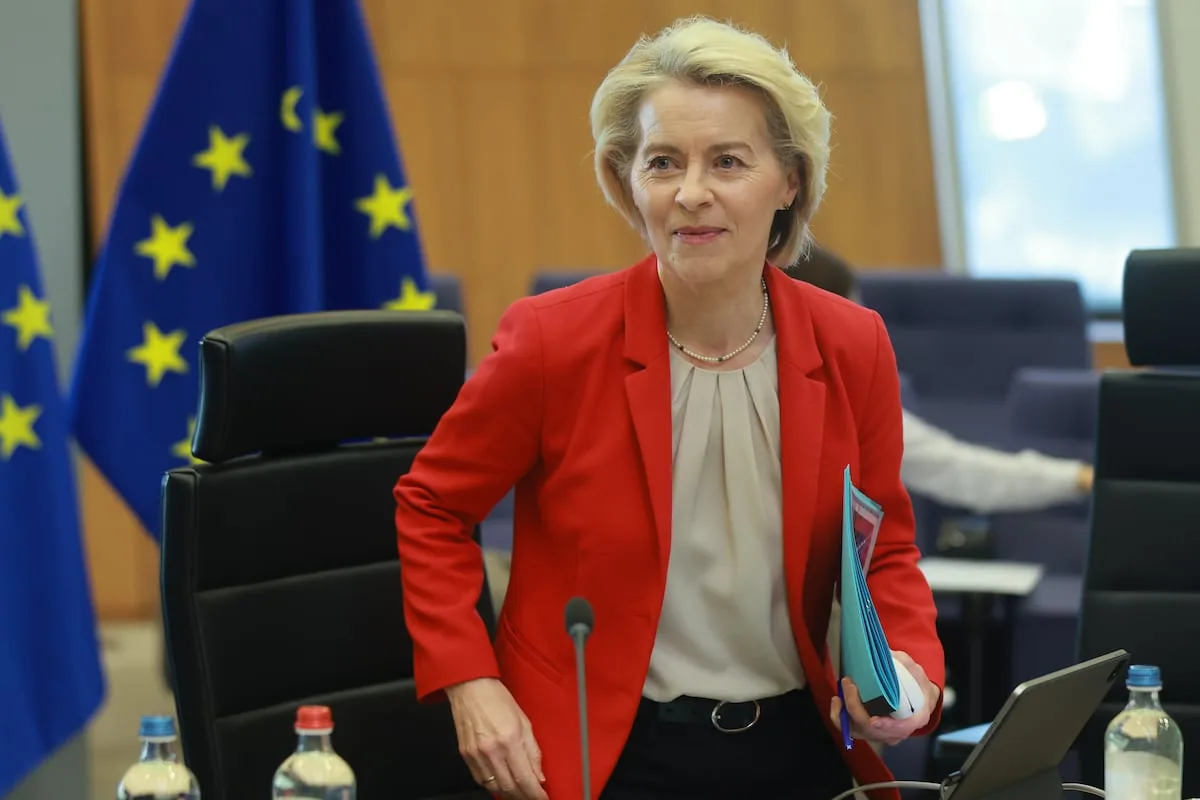
What the leaders will seek more concrete action on are the consequences of the new conflict in the Middle East. In addition to hearing from the President of the European Commission, Ursula von der Leyen, the catalog of measures and recommendations recently presented to address the energy crisis caused by the new war, senior European officials will also discuss the geopolitical framework and “Europe’s contribution to de-escalation and peace in the region, as well as freedom of navigation,” as announced by the President of the European Council, António Costa.
An analysis that will take place in maximum uncertainty, given that the truce announced by Trump with Iran remains more than fragile, as does the one agreed between Israel and Lebanon.
“Strategic error”
For former NATO Secretary General Anders Fogh Rasmussen (2009-2014), the meeting is a good opportunity to correct what he considers a “strategic error” by Europe towards Trump: having told him too quickly that this is not Europe’s war. As he explained in a meeting with a group of journalists in Brussels on the eve of the Cypriot summit, this is the right moment to adopt and replicate the “transactional” diplomacy used by the US president and offer him the support he has requested in the Strait of Hormuz, provided he is willing to do something in return regarding tariffs, guarantees in NATO, or in Ukraine.
“The time has come to play hard, no more flattery, we have to be very direct in our conversations with him and act as he does, use the situation for Europe’s benefit and tell him: You cannot expect our help if you impose tariffs on your allies or launch a war without informing us first, threatening to withdraw or reduce your participation in NATO and support in Ukraine,” argues the political consultant today. In this sense, Rasmussen believes, Cyprus could be ideal to “correct the course” and send a message to Washington: “We will help you reopen the Strait of Hormuz as long as you take tariffs off the table, remain committed to Europe and help Ukraine,” he proposes.
In fact, Kyiv also has its own expectations in Nicosia. By the time European leaders meet for their working dinner this Thursday, the final approval of the 90 billion euro loan should already be in place after the withdrawal of the Hungarian veto. A situation that will allow the leaders to present results to a Zelensky who, during the commemoration of the fourth anniversary of the war in Kyiv alongside many of his European colleagues in February, left empty-handed due to Orbán’s blocking of money and new sanctions against Russia, which are now also underway.
As Zelensky announced after learning of the unblocking of the process on Wednesday, after EU ambassadors gave their preliminary approval to the loan, Ukraine also has more expectations from Europe: “We will also talk with European leaders about opening clusters for Ukraine: the conditions for this have already been met. Likewise, we continue to work to strengthen sanctions against Russia and for the further development of the European energy system in such a way that Russia loses the possibility of manipulating energy supply to Europe,” he announced on X. The Ukrainian president expects a first payment by the end of May or early June.
The Middle East conflict will return to the leaders’ menu on Friday, with a working lunch to which regional leaders from Egypt, Lebanon, Syria —with whom the EU wants to resume its Association Agreement— and Jordan have been invited, as well as the Secretary General of the Gulf Cooperation Council, Jasem Mohamed AlBudaiwi.
Previously, the Europeans will have addressed a discussion on the next multiannual EU budget (2028-34) which they seek to agree on before the end of the year so that it can enter into force on time. A necessary discussion in view of the multiple points of contention both among the States and with the European Parliament, which wants to increase it, but which has been postponed again and again due to continuous crises, from Ukraine to, now, the Middle East. The leaders will dedicate Friday morning to this issue. Provided, of course, that a new crisis does not arise in the meantime in this increasingly unpredictable world.