







Iran has rejected Trump’s criticism of its peace proposal and accused Washington of maintaining “unreasonable and unilateral demands.” The spokesperson for the Iranian Ministry of Foreign Affairs, Esmaeil Baghaei, defended that Tehran’s proposal was “legitimate and generous” and included the end of the war, the lifting of the blockade, and the release of frozen Iranian assets, as well as safe passage through the Strait of Hormuz and security in Lebanon. Trump had described Iran’s response as “totally unacceptable” on Truth Social after learning that Tehran demands the lifting of sanctions, the end of the naval blockade, and Iranian control over the Strait of Hormuz. Meanwhile, Benjamin Netanyahu warned this Sunday that the war “is not over” until Iran’s enriched uranium is removed, and did not rule out resorting to force. Meanwhile, a drone from the Lebanese armed group killed an Israeli soldier in northern Israel, and the Israeli army has ordered the immediate evacuation of several towns in southern Lebanon citing violations of the truce.
EL PAÍS offers free live updates on the US and Israel attack against Iran. If you want to support our journalism, subscribe.

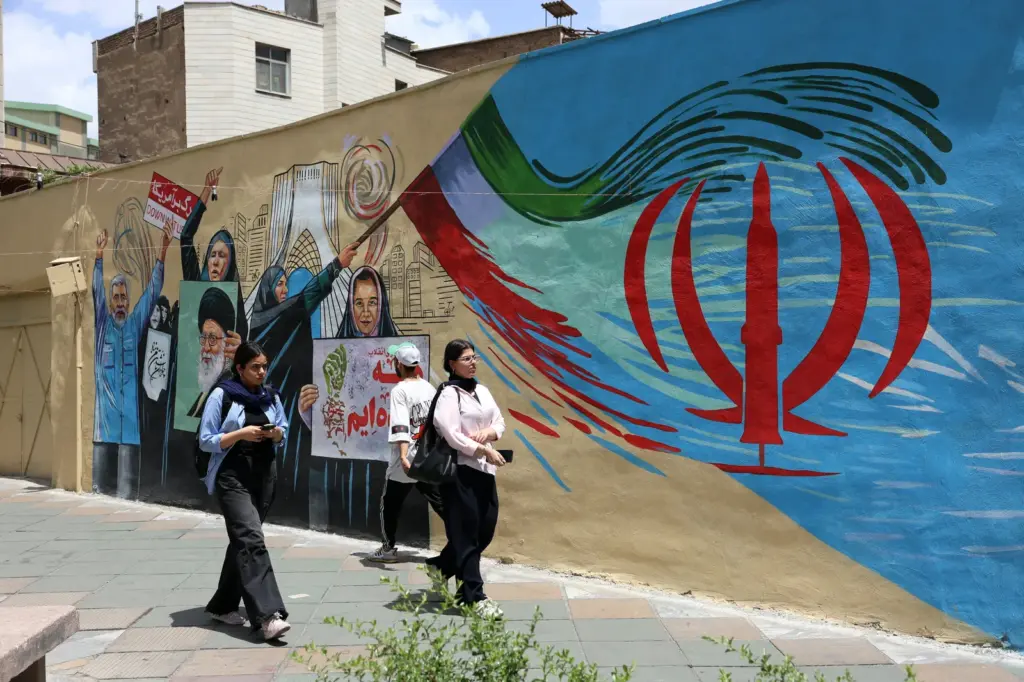
A woman walks in Tehran / Majid-Asgaripour / Reuters
The shadow of Khamenei remains present in the streets of Tehran as Iran faces its biggest crisis in decades
Ayatollah Ali Khamenei, Iran’s supreme leader for over three decades, died during the US and Israeli bombings last February that triggered the war. His figure remains omnipresent in the streets of Tehran through posters and billboards, while Iran faces one of the most critical moments in its recent history: peace negotiations with Washington have broken down, the Strait of Hormuz remains blocked, and the country’s economy bears the weight of sanctions and conflict.
China accuses the US of “defaming” countries by exploiting the war in Iran ahead of Trump’s visit
China has accused the United States of “defaming” other countries “by exploiting the war situation” in Iran, after Washington sanctioned three Chinese satellite companies for allegedly facilitating Iranian military operations. Chinese Foreign Ministry spokesperson Guo Jiakun stated at a press conference that Beijing “strongly opposes” unilateral sanctions “without basis in international law” and assured that China will defend the “legitimate rights and interests” of its companies. The three sanctioned firms, Chang Guang Satellite Technology, The Earth Eye, and MizarVision, are accused of providing satellite images that facilitated Iranian attacks against US forces in the Middle East.
Guo maintained that the priority is to “make every effort to prevent the resumption of conflict” and not to “maliciously link and defame other countries.” Asked whether Trump will pressure Xi on China’s position regarding Iran during his visit, the spokesperson reiterated that Beijing’s stance “has been consistent” and that China will continue to play a “constructive role” in promoting a ceasefire. Trump will begin a state visit to China this Wednesday, the first by a US president to the Asian country in nine years. (Efe)
Iran defends its peace proposal and accuses the US of maintaining “unreasonable demands”
The spokesperson for the Iranian Ministry of Foreign Affairs, Ismail Bagaei, defended this Monday that Tehran’s peace proposal is not “excessive” and described Iran’s demands as “reasonable and responsible.” Bagaei questioned whether it is excessive to demand the release of Iranian assets blocked abroad or the end of the war in Lebanon, and assured that with its proposal Iran only seeks to guarantee safe navigation in the Strait of Hormuz.
The spokesperson went further and accused Washington of continuing to base itself on “perceptions built and promoted by the Zionist regime” and insisting on “unilateral positions and irrational demands.” Iran’s conditions for ending the war include that the United States pay reparations for the conflict, recognize Iranian sovereignty over the Strait of Hormuz, lift sanctions, and release the country’s assets blocked in third countries. (Reuters)
China confirms that Trump and Xi will discuss matters of mutual interest and world peace
The Chinese Ministry of Foreign Affairs has confirmed that Trump’s visit to Beijing will serve to discuss matters concerning both countries and world peace. (Reuters)
In detail | What Iran demands to end the war and why Trump rejects it
The negotiation between the United States and Iran to end the war in the Middle East is experiencing one of its tensest moments this Monday. Iran has delivered its formal response to the US peace proposal through Pakistan, which acts as a mediator, and Trump rejected it outright a few hours later. The disagreement leaves the Strait of Hormuz blocked, oil above $100, and diplomacy at an impasse.
How did it all start? The conflict began on February 28, 2026, with Operation Epic Fury, a joint US-Israeli attack on Iranian nuclear facilities. Iran responded by closing the Strait of Hormuz on March 4, driving the price of crude from $67 to over $126 per barrel and stranding between 1,550 and 2,000 ships. After 39 days of hostilities, a ceasefire mediated by Pakistan came into effect on April 8.
Diplomatic failures. A first round of high-level negotiations was held in Islamabad on April 11 and 12, with participation from JD Vance, Steve Witkoff, and Jared Kushner on the US side, but ended without agreement after more than 20 hours of talks, mainly due to disagreement over Iran’s nuclear program. Since then, naval clashes near the strait have not ceased, and fighting between Israel and Hezbollah continues in southern Lebanon despite the April 16 truce.
What does Iran demand? Tehran demands the lifting of sanctions on Iranian oil sales, the end of the naval blockade, the unfreezing of assets, and Iranian control over the Strait of Hormuz. It also proposes postponing any negotiations on the nuclear program to a later phase and demands war reparations.
Trump’s rejection. “Totally unacceptable,” the president wrote on Truth Social as soon as he learned of the response. The crux is the nuclear program, as Washington demands its dismantling as a non-negotiable condition, something Tehran refuses to negotiate now. US Ambassador to the UN Mike Waltz described it as a “very clear red line.”
The EU debates sanctioning more violent Israeli settlers and studies their role in reopening Hormuz
The EU High Representative for Foreign Policy, Kaja Kallas, has expressed confidence that EU foreign ministers will reach a political agreement today to impose new sanctions on violent Israeli settlers. “I hope a political agreement is reached, hopefully we will achieve it,” she said upon arriving at the Foreign Ministers Council. Kallas recalled that the proposal has been “on the table for quite some time,” blocked so far by the veto of the previous Hungarian government of Viktor Orbán.
In parallel, ministers will debate freedom of navigation in the Strait of Hormuz and whether there is willingness to modify the operational plans of the European naval mission Aspides in the Red Sea to contribute to mine clearance and ship escort. Dutch Foreign Minister Tom Berendsen emphasized that “we only see a diplomatic solution to reopen the Strait of Hormuz” and ruled out any military deployment for now. France and Sweden have also proposed imposing tariffs on products from illegal Israeli settlements in the West Bank, although Kallas admitted there is no qualified majority to pass that measure. (Efe)
Iranian Nobel Peace Prize laureate Narges Mohammadi admitted to a Tehran hospital after obtaining a sentence suspension
Iranian activist and Nobel Peace Prize laureate Narges Mohammadi was admitted this Sunday to Pars Hospital in Tehran to receive medical treatment for her “multiple illnesses,” after spending ten days hospitalized in Zanjan. The transfer occurred after she was granted a suspension of her sentence in exchange for a “high bail,” according to the Narges Mohammadi Foundation. Her lawyer, Mostafa Nili, explained that the order was issued following an evaluation by the Forensic Medicine Organization that concluded she needs specialized care outside prison.
Modi urges Indians to reduce gasoline consumption to shield the economy from the impact of the war
Indian Prime Minister Narendra Modi has urged his citizens to drastically reduce gasoline consumption and limit domestic imports to protect the Indian economy from price spirals caused by the war in the Middle East. “We must reduce our gasoline and diesel consumption. We will travel by metro whenever there is metro. If it is absolutely necessary to go by car, let’s try to fill the car and also pick up other people,” Modi said in a speech on Sunday.
Although oil has surpassed $100 per barrel due to the intermittent closure of the Strait of Hormuz, India has so far avoided passing the full cost of the increase to consumer tariffs, although local media foresee a price increase in the coming days. The closure of the strait has also generated pressures on fertilizer and gas supplies. Modi also asked farmers to reduce fertilizer use so that the countryside does not depend on imports. Neighboring countries such as Nepal, Bangladesh, and Pakistan have already implemented drastic tariff increases, leaving India as one of the last major economies in the region to adopt indirect rationing measures. (Efe)
South Korea condemns attack on South Korean freighter in the Strait of Hormuz and promises to respond
The Blue House, the seat of the South Korean presidency, has condemned the attack on a freighter operated by a Korean shipping company that occurred this month in the Strait of Hormuz and has promised to respond once the origin of the attack is identified. South Korean experts have conducted a preliminary forensic analysis of the damage to the port stern of the vessel. The attack caused a fire in the ship’s engine room, according to a senior Blue House official. (Reuters)
The Israeli army orders the evacuation of several towns in southern Lebanon
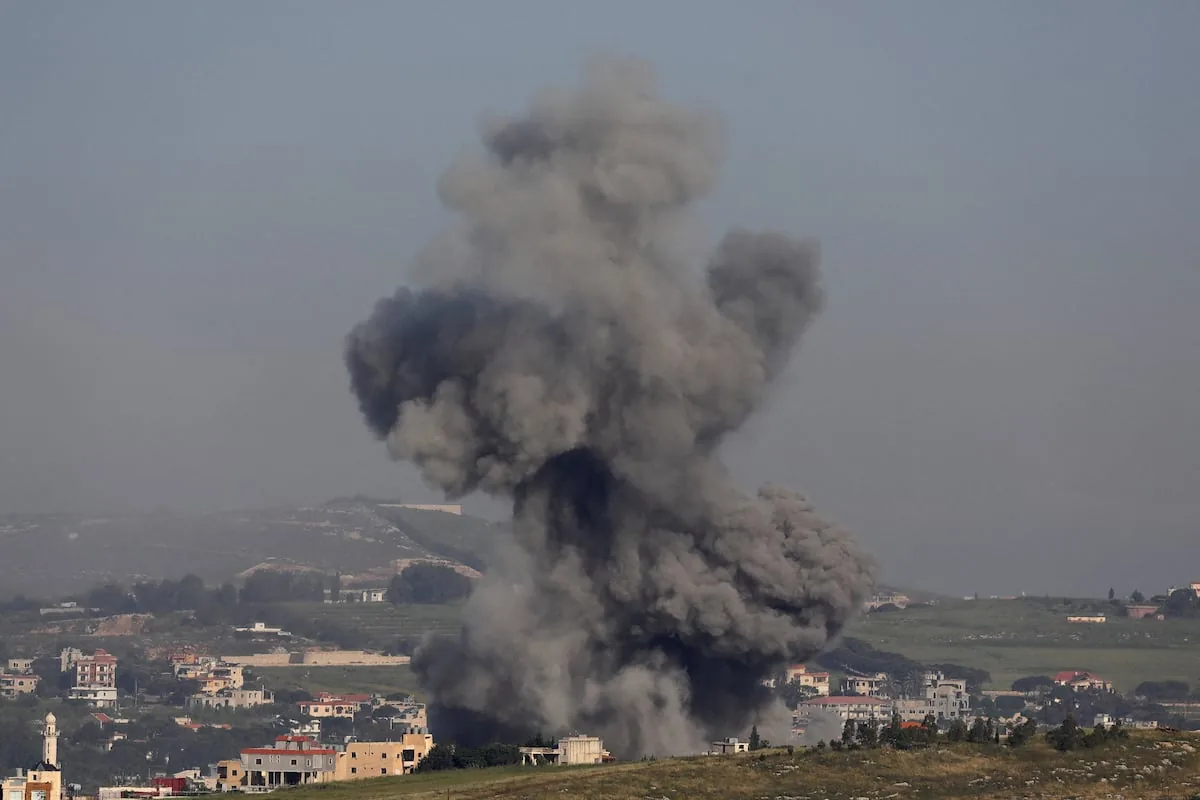
The Arab spokesperson for the Israeli army, Avichay Adraee, has issued an urgent alert ordering the immediate evacuation of residents from several towns in southern Lebanon, including Al-Rihan, Jarjua, Kafr Remane, Al-Numayriyah, Arab Salim, Jmayjme, Mashghara, Qlayaa, and Haruf. The Israeli army alleges it is acting in response to violations of the ceasefire by Hezbollah and asks civilians to move at least one thousand meters away from their homes toward open areas. “Anyone near Hezbollah elements endangers their life,” the statement warns.
A Hezbollah drone kills an Israeli soldier in northern Israel
A Hezbollah explosive drone has killed an Israeli soldier in northern Israel, near the border with Lebanon. The deceased is reserve sergeant Alexander Glovanyov, 47, assigned as a heavy vehicle driver in the border area. Explosive drones have become one of Hezbollah’s most used weapons, having caused the death of three Israeli soldiers and several injuries in the last two weeks. Despite the April 16 truce, fighting continues in southern Lebanon. Since the offensive began on March 2, Israeli attacks have caused 2,864 deaths in Lebanon, according to the Lebanese Ministry of Health. (Efe)
Netanyahu does not rule out using force to remove enriched uranium if diplomatic route fails
Israeli Prime Minister Benjamin Netanyahu said this Sunday in an interview on CBS’s 60 Minutes that “the war is not over” until Iran’s enriched uranium is removed and its enrichment facilities dismantled. Netanyahu did not rule out resorting to force if the diplomatic route fails, although he said the best option would be a negotiated agreement. The prime minister also acknowledged that Israeli planners underestimated Iran’s ability to block traffic through the Strait of Hormuz. “It took them some time to understand the magnitude of that risk, which they now fully understand,” he said. (Reuters)
Three tankers cross Hormuz with tracking off to avoid Iranian attacks
Ship traffic through the Strait of Hormuz remains minimal compared to pre-war levels. Three crude oil tankers managed to exit the strait last week, but did so with tracking systems off to avoid Iranian attacks, according to data from specialized platforms Kpler and LSEG. Before the conflict began on February 28, about one-fifth of the world’s traded oil and liquefied natural gas passed through this route. The strait has become one of the main pressure points of the war. (Reuters)
Trump will travel to Beijing on Wednesday with the war against Iran on the agenda
Trump will travel to Beijing on Wednesday, and the war with Iran will be among the topics on his agenda with Chinese President Xi Jinping. Washington has been pressuring China for weeks to use its influence over Tehran and push the Islamic Republic toward an agreement. The visit comes at a time of maximum diplomatic tension, following Trump’s rejection of Iran’s response, and with growing pressure, both domestic and international, to end the conflict that has global energy markets on edge. NATO allies, for their part, have refused to send ships to open the Strait of Hormuz without a complete peace agreement and a mission with an international mandate. (Reuters)
WAR AGAINST IRAN
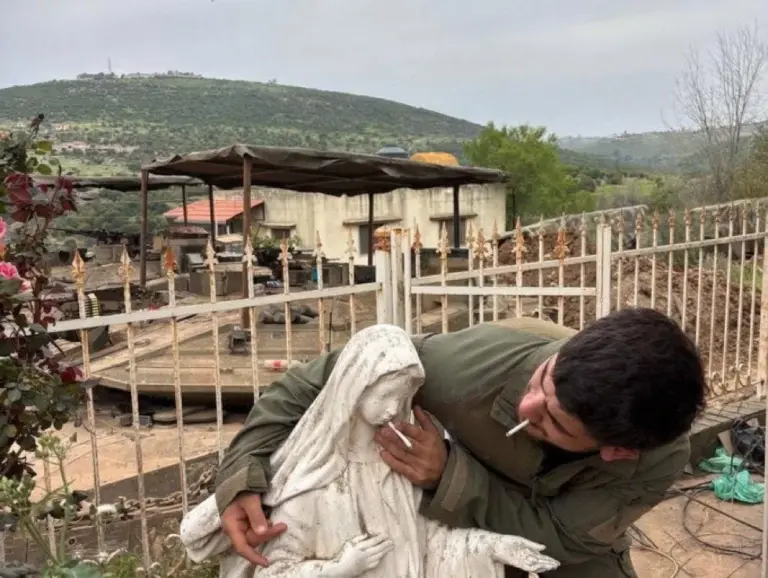
A cigarette for the Virgin Mary or a ‘bulldozer’ knocking down Saint George: other offenses by Israeli soldiers against Christians in Lebanon that barely caused a stir
Last month, an Israeli soldier photographed another knocking down a statue of Jesus Christ with an axe in the area of southern Lebanon occupied by his army. No one took the image as a denunciation; rather, one of them spread it, thinking more about his audience than the consequences. In fact, besides the soldier who struck the statue and the one filming, six others saw it and neither tried to stop it nor reported it to their superiors. The image went viral and received many condemnations from different parts of the world, prompting Israeli Prime Minister Benjamin Netanyahu to issue an unusual critical statement, and the army sentenced the two responsible to a month in prison and announced it was already working to “ensure it does not happen again in the future.”
You can read the full information here.
A large tanker with Iraqi crude bound for Vietnam crosses the Strait of Hormuz via the route designated by Iran
The large tanker Agios Fanourios I, loaded with Iraqi crude and bound for Vietnam, crossed the Strait of Hormuz this Sunday following the route designated by Iran, according to the semi-official Iranian agency Tasnim. The news comes after several media reported that the ship had turned off its tracking systems to avoid possible Iranian attacks while crossing the strait.
The transit of Agios Fanourios I occurs amid escalating diplomatic tension between Tehran and Washington, following Trump’s rejection of Iran’s response to the US peace proposal, and while the Iranian military spokesperson threatens to hinder passage through Hormuz to countries that continue US sanctions. (Reuters)
Brent oil rises 4.5% after Trump’s rejection of Iran’s response
Brent crude oil for July delivery surged 4.5% this Monday, reaching $105.81, after Trump called Iran’s response to the US peace proposal “totally unacceptable.” The European benchmark crude reached nearly $106 in early trading.
The rise comes after Brent closed higher on Friday, following three consecutive days of losses, amid new attacks between the United States and Iran that again raised tensions in the Strait of Hormuz, through which nearly 20% of the world’s oil passes.
You can follow the oil price here.
Iran executes 29-year-old activist accused of spying for the CIA and Mossad
Iran has executed Erfan Shakourzadeh, a 29-year-old activist whom Tehran accused of acting as a spy for the CIA and Israeli Mossad, according to Iranian media. The Tasnim agency, linked to the Revolutionary Guard, indicated that the young man was hanged for maintaining communications with the enemy to sell scientific information of the country. The human rights group Iran Human Rights described him as a graduate student in Aerospace Engineering at the Iran University of Science and Technology.
The execution comes hours after Trump called Iran’s response to the US peace proposal “totally unacceptable.” Iran has accelerated executions since the war began on February 28, especially of those convicted of alleged links to Israel. According to the UN, 21 people have been executed and more than 4,000 detained in Iran for political or national security reasons since the conflict began. Iran is one of the countries with the highest number of executions in the world and in 2025 hanged 1,639 people, the highest figure since 1989, according to NGOs Iran Human Rights and Ensemble contre la Peine de Mort. (Efe)
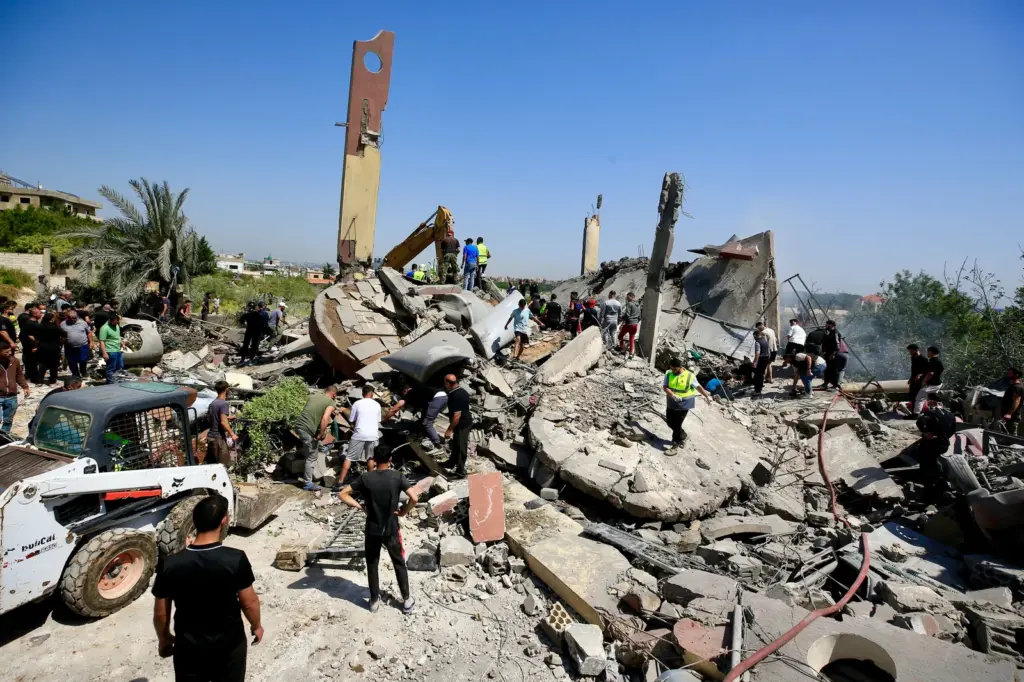
Israel’s war in Gaza
Israel torpedoes the truce with Lebanon after killing more than 400 people in 24 days
The ceasefire in Lebanon is an empty phrase. And achieving an effective truce with Israel is a very distant goal. Because Israel continues demolishing homes in municipalities in southern Lebanon such as Bint Jbeil and extends the deadly bombing rain to the outskirts of Beirut. On the other side, Hezbollah’s drone attacks against Israeli troops also persist. Although the United States imposed the entry into force of a ceasefire on April 17, Israeli troops have killed more than 400 people in Lebanon since then under an agreement that grants them freedom of action.
You can read the full information here.
WAR AGAINST IRAN
Trump considers Iran’s response to his peace proposal “totally unacceptable”
US President Donald Trump declared this Sunday that he considers Iran’s response to the US peace proposal “totally unacceptable.” “I just read the response from the so-called ‘representatives’ of Iran. I don’t like it, TOTALLY UNACCEPTABLE!” the president wrote on his social network Truth. The Republican expressed his opinion after Tehran presented its response to the US proposal to resolve the war in the Middle East, the details of which are unknown. Hours later, the Iranian state agency Tasnim reported that Tehran has demanded war reparations, the lifting of sanctions, the unfreezing of assets, and control over the Strait of Hormuz as part of its rejection of the US proposal, according to state media.
You can read the full information here.
Good morning. We begin live coverage of the latest developments in the Middle East conflict this Monday, May 11. Iran has delivered its formal response to the US peace proposal through Pakistan, which acts as a mediator between the two countries. Trump has called the response “totally unacceptable” in a message on Truth Social. The Iranian response, whose details were leaked by the Tasnim agency linked to the Revolutionary Guard, includes lifting sanctions, ending the naval blockade, unfreezing assets, and Iranian control over the Strait of Hormuz. Washington, on the other hand, considers the dismantling of the nuclear program a non-negotiable red line.