







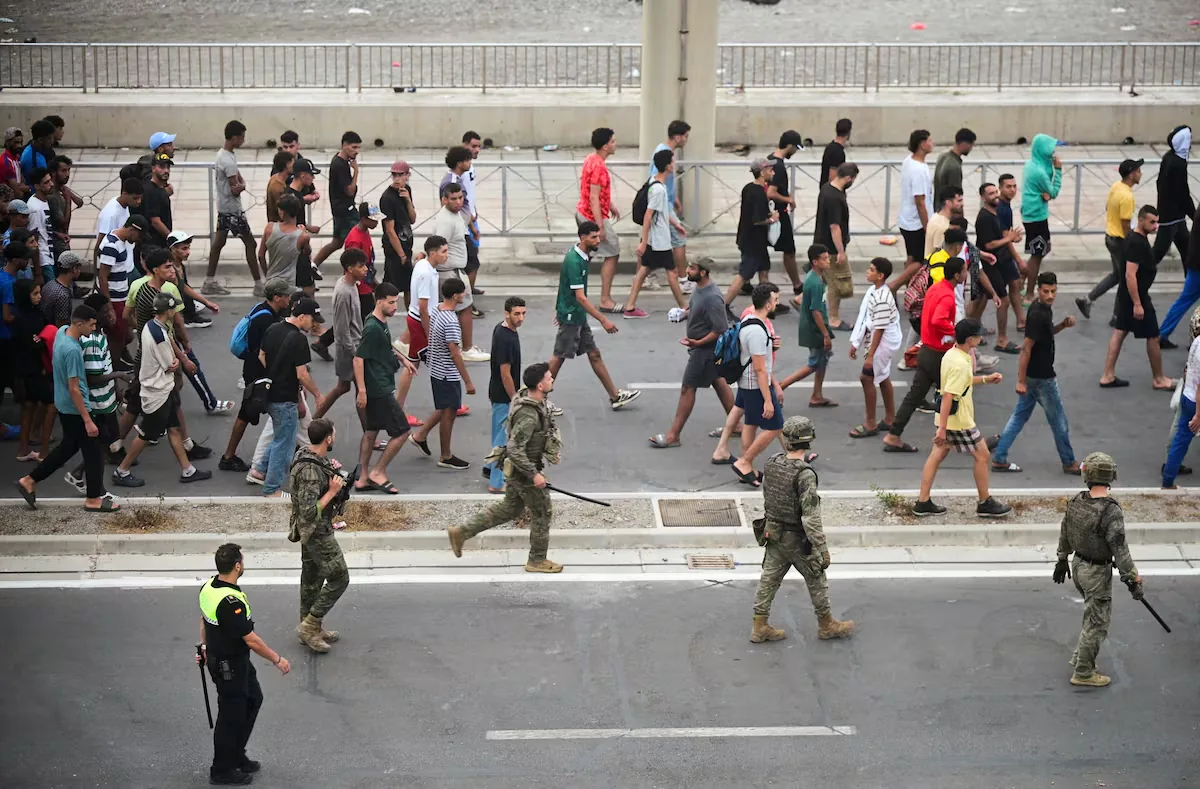
The night in the autonomous city of Ceuta passed normally, according to the Ministry of the Interior on Saturday. Entries have been completely stopped and exits towards Morocco have continued without notable incidents. Meanwhile, the installation of containment barriers on the Tarajal pier has begun. The city of Ceuta faces this Saturday the aftermath of the massive entry of nearly 50,000 people from Morocco, of whom 48,300 have already returned, in a crisis that has claimed at least 57 lives. The leader of the PP, Alberto Núñez Feijóo, is traveling to Ceuta this Saturday, while the Minister of the Interior, Fernando Grande-Marlaska, will meet with the Government delegate and with commanders of the National Police and the Civil Guard. In addition, Giorgia Meloni’s government has reintroduced random checks at ports and airports from this Saturday for travelers coming from Spain.
Read more Goodbye to Luis Uruñuela
EL PAÍS offers the latest on the migration crisis free of charge. If you want to support our journalism, subscribe.

The containment barriers in Ceuta: 500 meters long, with a submerged part up to one meter deep
At 07:50 this Saturday, the installation of containment barriers on the Tarajal pier in the autonomous city of Ceuta began, according to the Ministry of the Interior.
The main element is a pneumatic barrier 500 meters long, with a surface height of 30 to 70 centimeters and a submerged part up to one meter deep. This structure is combined with a first line of anchored buoys provided by the Navy.
An intermediate channel will allow Civil Guard boats to guarantee the protection of the pneumatic barrier at all times.
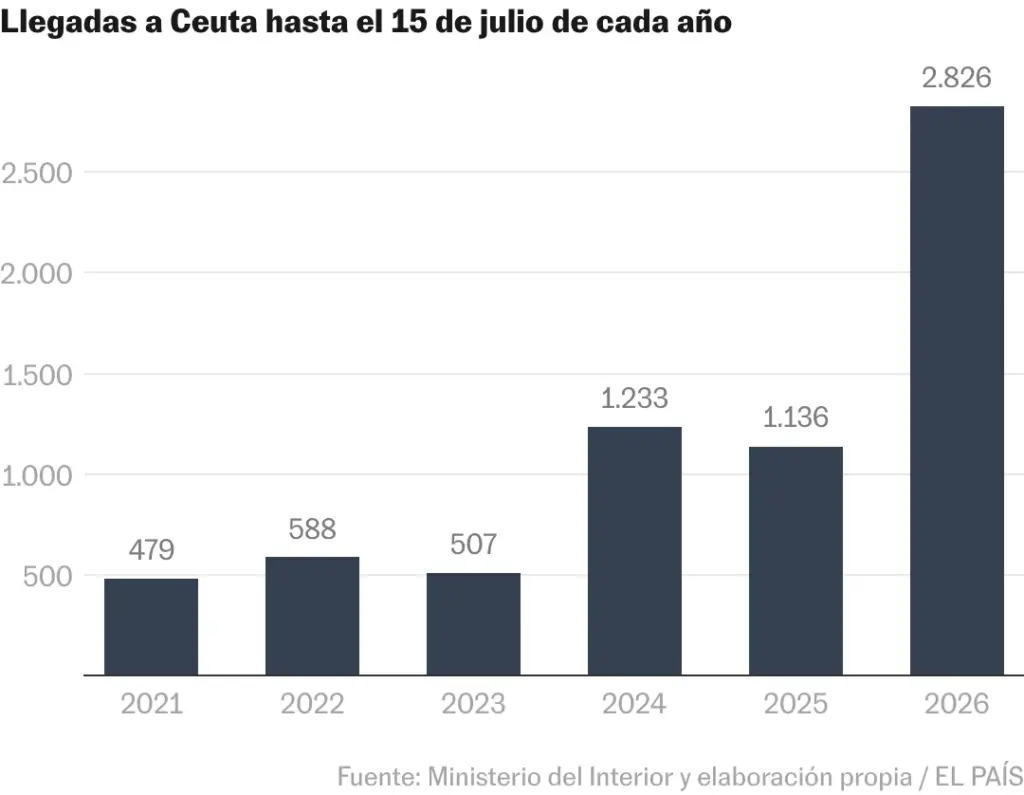
Maps and graphics to understand what happened in Ceuta: the entry and exit of almost 50,000 people in 48 hours
The largest wave of arrivals to Ceuta from Morocco lasted less than 48 hours. Since Thursday, about 50,000 people have entered due to the inaction of Moroccan security forces: authorities estimated 25,000 crossings on Thursday; 40,000 on Friday morning and 50,000 at noon. But throughout Friday, according to the Ministry of the Interior, most, about 48,300 people, had already returned to Morocco. At least 57 migrants have died, in one of the deadliest events at a Spanish border.
You can consult all the maps and graphics here
Installation of containment barriers on the Tarajal pier begins after a night of normality
The night in the autonomous city of Ceuta passed normally, according to the Ministry of the Interior on Saturday. Entries have been completely stopped and exits towards Morocco have continued without notable incidents.
Meanwhile, the installation of containment barriers on the Tarajal pier has begun.
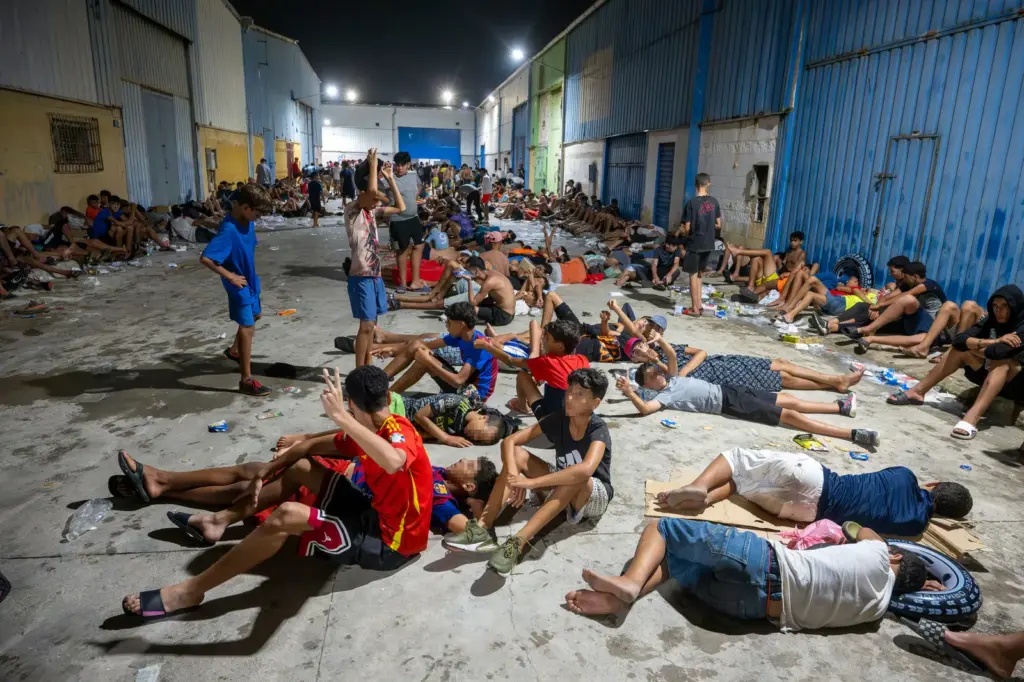
Ceuta
No resources to care for minors in Ceuta: “We had been warning that something was happening, but they didn’t listen”
Sweat mixes with tears on the face of Malak, a 14-year-old girl with a bandaged foot. The teenager, wearing a football shirt and shorts, sadly says her ankle hurts a lot, which she twisted while crossing to Ceuta over the rocks from the Moroccan coast of Castillejos two days ago with her brother Zakariyya, the same age. “I want to see a doctor,” she pleads. The siblings, from the coastal town of Rincón (M’diq), 23 kilometers south of Ceuta, have grown tired of dodging soldiers who on Friday afternoon herded thousands of men, many young and some women, towards the border. Like about ten boys returning around six in the evening to their country, they say they tried to go to minors’ centers, that the city would shelter them, but only found saturation and rejection. They say they have not eaten. Some have only drunk water. With stained clothes, tired, they walk towards the border. Some limp. “We climbed the mountain fleeing and fell rolling down. The soldiers are chasing us away,” Malak says excitedly.
You can read the full information here
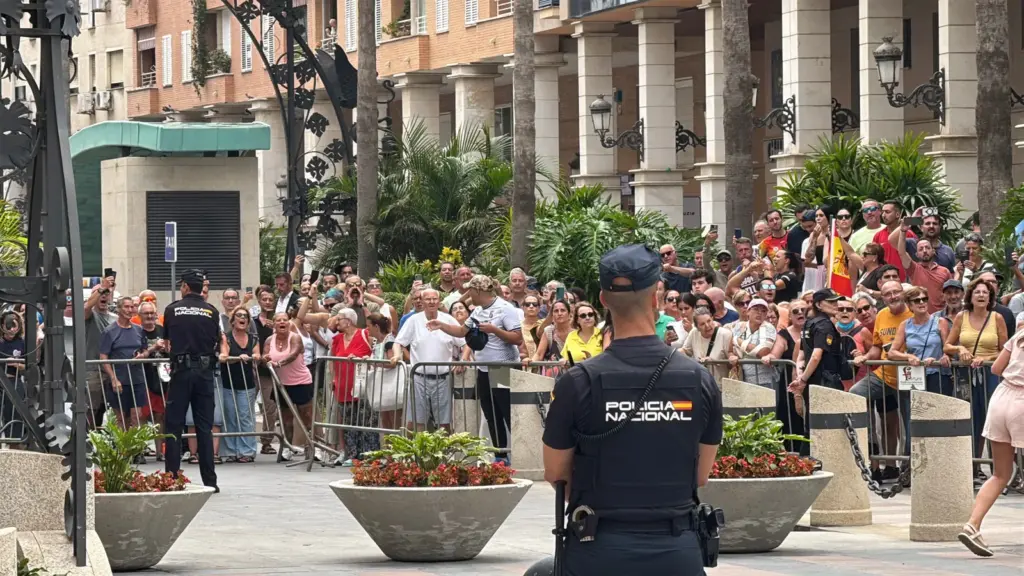
Migration crisis
Abascal uses the crisis to increase pressure: “If the Government doesn’t expel the immigrants, the Spaniards will”
Read more Extraordinary draw of the National Lottery on Saturday, August 1
Images of thousands of Moroccans illegally entering Ceuta through the El Tarajal crossing, swimming or on foot, have confirmed Vox’s darkest predictions, according to its leaders. The word “invasion,” which they have been wielding for years like a mantra, does not seem so hyperbolic in the face of the arrival in the Spanish city of a human avalanche equivalent to 60% of its registered population. Although they are unarmed invaders, many minors, the vast majority have returned to their country after leaving a toll of at least 57 drowned among those trying to reach the first Spanish beach on the other side of the border.
You can read the full information here
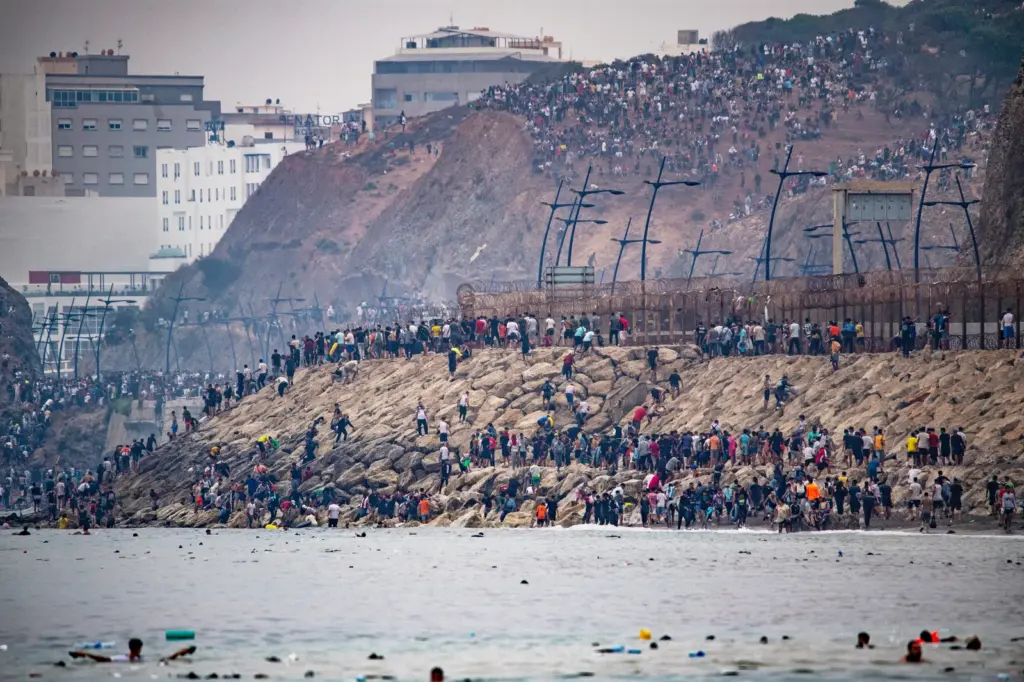
The European compass
Why Ceuta is the epicenter of a dark international struggle
The tiny territory of the autonomous city of Ceuta has become the epicenter of a gigantic international struggle where multiple interests and political and geopolitical layers converge.
You can read the full opinion here
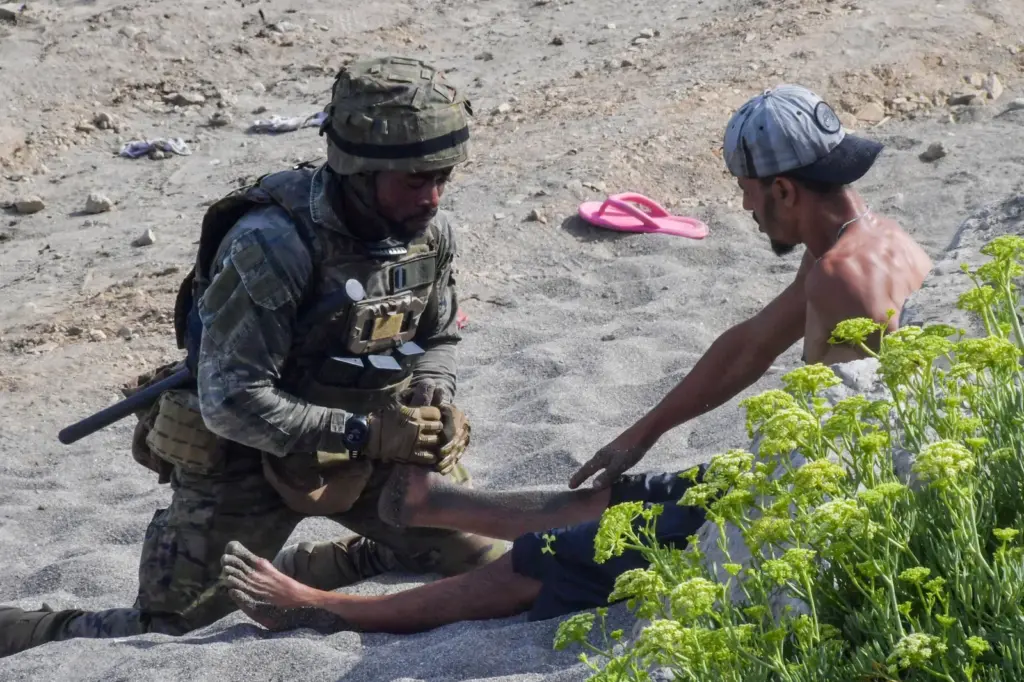
MIGRATION CRISIS
Ceuta, a city upside down: “We are leaving because there is no food, they don’t sell milk for the girl”
A sad army of torn pants, mismatched flip-flops, bandaged legs, and heads covered with t-shirts follows a slow march under the sun, heading to the border with Morocco. They return defeated. Their adventure has been a failure. Tens of thousands of immigrants who arrived en masse on Thursday from Morocco to Ceuta by sea made the return journey yesterday, without laughter, without cheers for Spain, without desire. On the road, flanked by soldiers urging them on, a young couple comes tired. The father carries a three-year-old girl. Just 24 hours earlier they were swimming in the sea with the child firmly held on the float, a dangerous crossing that has left dozens of bodies on the beaches of Tarajal. And all for nothing. “We are leaving because there is no food, we have money, but they don’t sell to us, there is no milk for the girl, everything is closed. And they have shown us knives and thrown stones. We only wanted a future for my daughter,” the woman says between anger and resignation. Nabil is 30 years old and drives an Uber in Morocco and she, Wisal, has turned 23 raising a girl who suffers from asthma. With all these difficulties, it is better to retrace the path. This time it will be easier, the doors of Spain are open and those of Morocco too. Hundreds of floats accumulate at the Civil Guard border facilities or drift ownerless.
You can read the full information here
migration crisis
The Government admits it did not see the Ceuta crisis coming: “If we had had information, 50,000 would not have entered in 24 hours”
The Government did not see the Ceuta crisis coming. “It is evident that we did not have information. If you have it, 50,000 people do not enter the way they did in 24 hours,” admits a senior member of the Executive. The scale of the fires in the center and west of the country, which also forced the confinement or evacuation of nearly 100,000 people, monopolized the attention of La Moncloa and several ministries, including the Interior Ministry, for a week. Amid the firestorm, the border with Morocco was not a concern. Warning signs were not taken into account, such as the alerts from the regional president, the popular Juan Jesús Vivas, or the first reports from the Civil Guard pointing to a slight increase, initially insignificant, in the swimming entries of irregular migrants. “Those days no one talked about Ceuta. There was a light rain of entries and we were watching, until practically overnight it exploded,” admits another member of the Executive.
You can read the full information here
Morocco detains 70 people for violent incidents during the migration crisis
Morocco detained 70 people late Friday for their alleged involvement in violent incidents following the irregular crossing of tens of thousands of people to the Spanish enclave of Ceuta, a crisis that has claimed at least 57 lives.
The detainees are being investigated for crimes related to attempted homicide, arson, and damage to public and private property, according to sources close to the investigation. The charges stem from clashes that occurred early Friday in Castillejos, where minority groups entrenched in the hills near the border crossing with Ceuta confronted Moroccan security forces and set several vehicles on fire.
The crisis erupted on Thursday, when about 60,000 migrants, according to estimates from the Ceuta government, crossed irregularly into the Spanish autonomous city. The agreement reached between Madrid and Rabat for the immediate repatriation of irregular migrants, along with the temporary closure of businesses in Ceuta due to the crisis, has facilitated the return of about 53,000 people to Castillejos during Friday. However, this massive return has overwhelmed Castillejos’ capacity, a city of less than 80,000 inhabitants, where shops, restaurants, and banks remain closed for fear of new episodes of violence.
Although thousands of migrants have already started returning to their hometowns, many continue to wander the streets, spend nights in parks and public spaces, and seek some means of transport to leave this northern Moroccan town, a traditional vacation destination for Moroccan families.
Meanwhile, cleaning teams work to remove debris, stones, and remains of burned vehicles near the border with Ceuta, where the situation is gradually returning to normal. (Efe)
Good morning. We start the live narration of the latest on the migration crisis this Saturday, August 1. The city of Ceuta faces this Saturday the aftermath of the massive entry of nearly 50,000 people from Morocco, of whom 48,300 have already returned, in a migration crisis that has left at least 57 dead. The leader of the PP, Alberto Núñez Feijóo, is traveling to Ceuta this Saturday, while the Minister of the Interior, Fernando Grande-Marlaska, will meet with the Government delegate, Miguel Ángel Pérez, and with commanders of the National Police and the Civil Guard. Melilla again draws attention at the border due to the increase in migration pressure and the closure of its only operational border post with Morocco. In addition, Giorgia Meloni’s government has reintroduced random checks at ports and airports from this Saturday for travelers coming from Spain due to the crisis triggered in Ceuta after the massive arrival of people from Morocco.
Read more Pemex obtains profits of 1 billion dollars in the second quarter due to the rise in oil prices