







Despite this, it may be difficult to explain what immigration contributes to the economy (among other things). Otherwise, the Observatory of Racism and Xenophobia of the Ministry of Inclusion would not have detected 39,559 hate messages on social media in April alone, almost one per minute. The figure is unusual —hoaxes against migrants are up 12%— and could be linked, according to the data, to the debate generated around the extraordinary administrative process launched in Spain with which the Government intends to regularize half a million people by next June 30.
Read more The Festival de les Arts is cancelled for violating the noise ordinance
Immigration cycles over the last 20 years have had a positive impact on GDP expansion, according to a 2025 report by the Economic and Social Council. Collecting data from the ECB, immigrants account for almost 80% of the GDP increase between 2019 and 2024, due to the increase in the working-age population and the employment rate of foreigners. But an enormous pool of citizens in an irregular administrative situation has also been created —Funcas estimates them at 840,000—. According to the INE, between 2022 and 2024, between 600,000 and 700,000 people entered Spain each year. That means adding the equivalent of a population almost like that of Seville every 12 months. Those born abroad reach 9.46 million, 19.2% of the population according to census data, which has given a strong boost to the economy, which continues to grow (2.7%, according to first-quarter data) thanks, in large part, to this imported workforce.
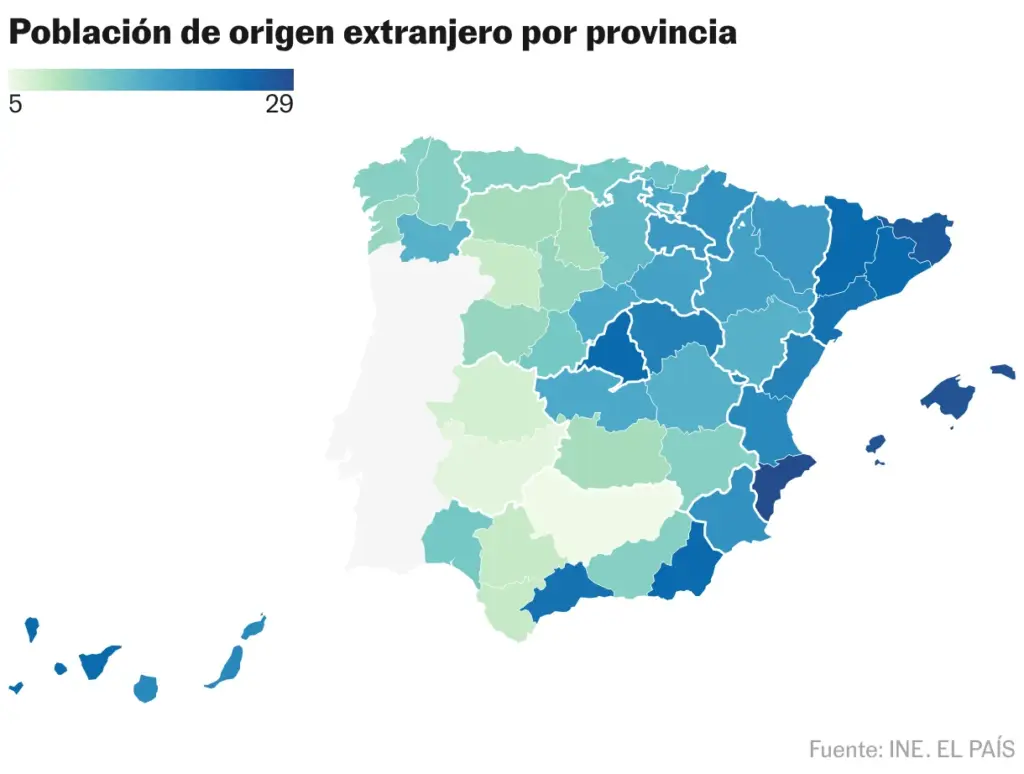
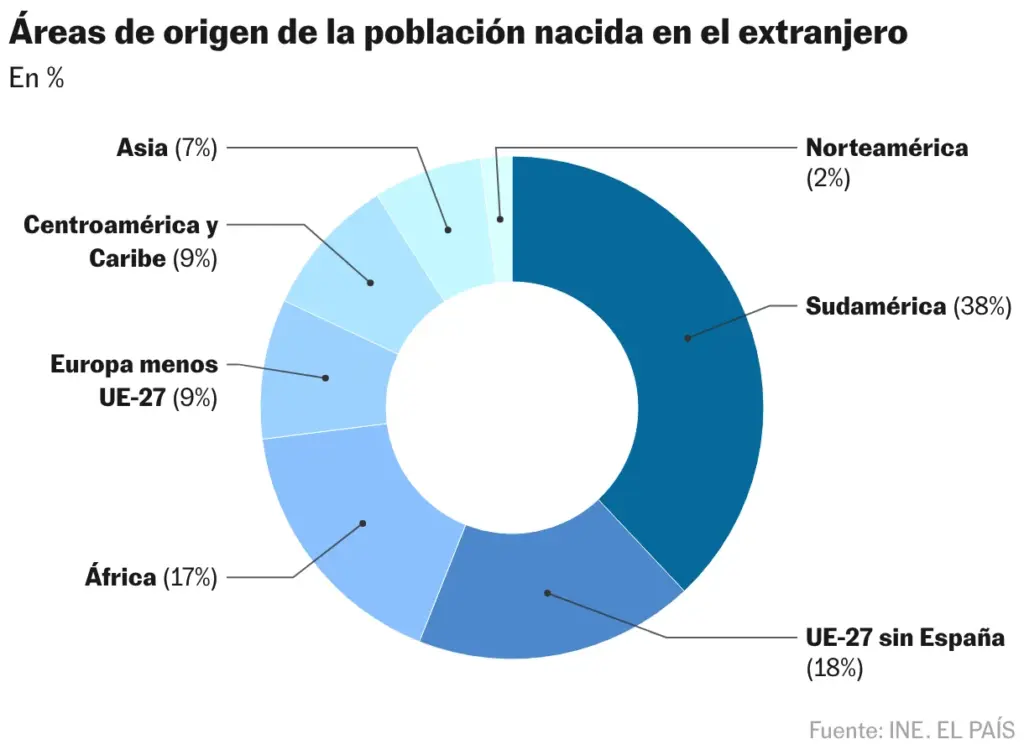
Facing restrictions found in other countries at a time of geopolitical uncertainty, immigrants arrive in Spain attracted by better life opportunities and an economy that needs labor to fill the 156,000 job vacancies for which no candidates are found. But this open-door policy is generating an intense debate between those who defend it as the only alternative to stable growth in the face of aging, and those who attack it, arguing that it destabilizes the social system by adding pressure on welfare services, which despite record tax collection figures do not seem to advance at the same pace as the population.
Perhaps the first problem with migration policy is… migration policy itself, as Yoan Molinero, researcher and professor at the University Institute of Migration Studies at Comillas University, suggests. “Migration and irregularity are social realities that exist due to moral issues or electoral calculations by parties that decide not to regularize it or to do so schizophrenically.” A problem is created (in this case, pockets of irregulars) and a solution is sought, sometimes improvised. To apply for ‘arraigo’ (rooting), which grants regularization, in a normal process one must prove having resided in Spain for at least two years (without a criminal record), which implicitly leads to assuming initial irregularity. And from there, wait for the administrative process. An exhausting situation for those who feel caught in the cycle. “Knowing that people are going to come, it would be much more efficient to allow them to look for work instead of having to submit to exploitation,” Molinero adds. For Gonzalo Fanjul, an expert in poverty and development, the Spanish system is “pathologically cautious, introducing obstacles in the market” because, in his opinion, “migration policy has very little to do with rationality and a cool head. It is governed by very emotional, circumstantial considerations.”
The solution of resetting the counter is neither new nor exclusive to Spain, as Ana Damas, an economist in the international migration division of the OECD, reminds us. “Italy, Portugal, France, or Chile have resorted to extraordinary regularizations. Even without resorting to them, all OECD countries have mechanisms to regularize the situation of foreigners.” In 2000, with the popular José María Aznar as president, a similar process was carried out that resulted in 264,000 residence and work permits. A year later, his Government granted another 239,000 permits for ‘arraigo’. The last extraordinary process, promoted in 2005 during the presidency of José Luis Rodríguez Zapatero, resulted in 576,506 concessions. What impact did they have? Subsequent studies, such as the one signed by Ferrán Elías, Joan Monras, and Javier Vázquez in 2005, show that formal employment for immigrants increased, while that of natives was not affected. However, there was a decrease in undeclared employment, both for low-skilled native and immigrant workers. Furthermore, each person contributed an average of 4,000 euros to tax revenues without an observed increase in public spending.
In this new express regularization, some things have changed (such as access requirements), but almost all experts consulted agree that it will help bring the underground economy to light and will have a positive effect on affiliation and contributions to Social Security, prices, and GDP. Although with some nuances. Pablo Pumares, from the University of Almería, points out that the most direct consequence will be the emergence of undeclared work “which will become formal work, with all that this means in terms of salary improvements, rights, and contributions.” Regarding the employment of natives, “in a situation of economic prosperity, it should not have a negative impact in general.”
BBVA Research estimates indicate that the effect on activity will be moderate (around 0.5 points in GDP and inflation, distributed over the coming quarters), “without ruling out that there may even be no effect,” explain the bank’s research department, because many of the people being regularized are already working, living, and consuming in the country. “However, the transition to jobs in the formal sector will mean an improvement in tax collection,” they add, though not through VAT, whose effect is already discounted. The OECD researcher also warns of another phenomenon: GDP growth “does not automatically translate into an increase in real household incomes.” In some cases, macroeconomic growth takes time to be reflected. “Furthermore, there are distributive effects. Economic gains are not always distributed uniformly among the population.”
Job theft?
It is false that immigrants come to “steal” jobs. The economy is a flexible system that tends to expand and generate more activity (and more jobs) as it becomes more dynamic. Between 1998 and 2007, for example, Spain received 3.8 million immigrants, and the employment rate increased by 17 points. Something similar is happening now: in the last year alone, foreign employment has grown by 289,000 positions, and there are now 3.36 million affiliates, 15% of the total. Seven out of ten new affiliates are foreigners, according to Funcas.
But it is true that peculiar situations can arise in specific labor segments, as Ismael Gálvez, a professor at the University of the Balearic Islands, points out, since some studies find that the group most affected by this type of regularization are the country’s own foreigners, who already work in low-skilled sectors and may face increased competition from immigrants with the same skill set.
Carmen González, principal researcher at the Elcano Royal Institute, points to another immediate shocking effect detected after cross-referencing data from the 2005 regularization: “Immigrant employment decreased. Some of the immigrants detected by the EPA [working in the underground economy] were profitable for their employers because they did not contribute to social security. The moment they became legal, many lost their jobs.” This time, she clarifies, that will not happen because the requirement to be employed has been eliminated. But González criticizes the lack of a migration policy capable of managing arrivals “in accordance with the capacities of public services, housing, the labor market,” and lament that the country is unable to increase productivity, its Achilles’ heel, since foreigners usually come to reinforce sectors that rely most on manual labor.
The deputy director of the Centre d’Estudis Demogràfics at the Autonomous University of Barcelona, Andreu Domingo i Valls, is skeptical of the tabula rasa policy: “If informal work is not addressed, it will accumulate again,” and he mentions domestic work, often performed by women. “If the first migrations at the beginning of this century abounded in the deregulation of the labor market, using foreign workers as guinea pigs and then affecting the entire economy, that will happen now with platforms. Many domestic workers will get contracts on platforms at the price of overexploitation. That worries me. More labor inspectors are needed.”
Another important point of the debate has to do with the seams of the welfare state and failures in the social mobility of immigrants. In one of the hundreds of videos circulating on social media, several people hang from the catenary of a train at Atocha station as if there were no room in the carriages: “Welcome to the new progressive Spain,” the text says. Obviously, it is false (the scene occurred in India, not Madrid), just as images of boats full of people who only think of setting foot in the country to apply for the minimum vital income or the right to vote are also false. This does not negate, the CES denounces, the need to undertake reforms to overcome shortcomings and avoid social segregation. Neither social services nor non-profit organizations have seen their resources increase to the extent that the population they serve has.
Meanwhile, hate speech seems more present than ever. “Welcome to Spain in reverse. The Spain where breaking entry laws is rewarded, where Spaniards work for newcomers, and where millions of Spaniards feel like strangers in their own neighborhoods,” stated Vox deputy Ignacio Hoces in Congress after the regularization announcement. There is no study —or this newspaper has not found one— nor expert that supports the existence of a “pull effect” from regularizations. “It’s a myth,” summarizes Francesco Pasetti, a Cidob researcher. On the contrary. A paper published in 2022 by the Oxford Review of Economic Studies found surprising misconceptions about the number and characteristics of immigrants in several European countries. “In all of them, respondents considerably overestimate the total number, believe that they are culturally and religiously more distant from them and economically weaker —with lower educational levels, higher unemployment, and greater dependence on government transfers— than they actually are.” But as Fajul clarifies, this visceral rejection also arises from the perception of solid realities, such as the deterioration of healthcare or education. “Spain is growing twice as fast as the EU. It needs to invest in a society that is transforming. The housing problem, for example, is not due to immigrants, but to a society that is growing larger. You cannot want labor and then expect these people not to get sick, not to send their children to school. If you want it, you have to want it all,” he illustrates.
Even understanding that no one should be subjected to “migratory utilitarianism,” as Joan Molinero defines it, the reality is that their activity and employment rate is significantly higher than that of the native population, and they do not resort to public services or benefits more than the Spanish population. And regarding birth rates, experts agree that it will not substantially improve just because there are more immigrants, because newcomers will eventually assimilate their rate with the native population. Even so, some will continue to fabricate hoaxes about it.
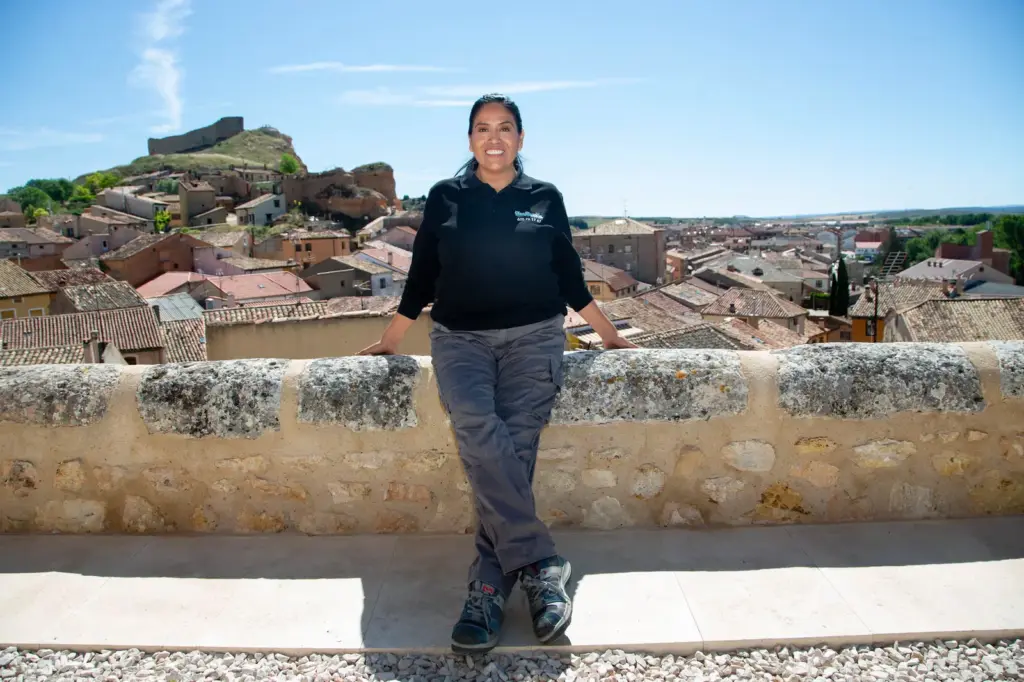
Rosa Carmen Pulupa Muzo (Businesswoman, 53 years old, Ecuador)
“I have 12 employees. Luckily, my children haven’t needed scholarships to study”
Rosa Pulupa is proud to have put down roots in depopulated Spain. At 25, she boarded a plane in her native Quito, leaving her husband and one-and-a-half-year-old baby behind. She arrived, like most, on a tourist visa that expired, placing her among the undocumented population. “Before, there wasn’t the information there is now. My cousins welcomed me in Madrid and trained me for job interviews. They told me that anything not negotiated in the interview couldn’t be demanded later,” she recounts by phone from San Esteban de Gormaz (Soria), a town of almost 3,000 inhabitants where she has lived since late 2000. “You seek regularization to start having a more normal life. Like most migrant women, I initially took on domestic work,” she says.
She cared for the elderly, learned to cook Spanish food, and experienced complicated situations. Some tried to pay her less, taking advantage of her undocumented status, but she always found alternatives to avoid exploitation. “People told me: ‘you only go to Spain to serve.’ I felt frustrated because I left my computer science degree in the fourth year to come here, but I didn’t want to get discouraged. I told myself I was going to prove that wasn’t true.”
@rosa.ecosanes Self-employment is also a possibility for economic stability.#migration #entrepreneurship #businessplan #businessproject #selfemployed🇪🇸 ♬ original sound – RosaEcoSanEs Limpieza ®
After bringing her family over, she ended up as a programmer in a furniture factory in the town where she lives. “Life in Madrid was very expensive; you couldn’t afford rent. But when I arrived here, I said: this is my town. Here, the wages by collective agreement were very low, but we had economic stability.”
Read more Fernando Alonso crashes into a wall
In 2008, after the bubble burst, she and her husband lost their jobs. She validated her studies and pursued a higher vocational degree in self-propelled vehicles, which enabled her to set up a cleaning company, but not just any cleaning company. “I thought: I’m going to be an industrial technician, know mechanics, electronics, materials. I took all that knowledge to my field.” It was 2010. Her husband had emigrated to London, and she was starting an entrepreneurial venture, distributing business cards in her Opel Corsa. “The crisis was very tough, but I didn’t want to emigrate again, I didn’t want to be separated from my children again.”
Her company is now an SME with 12 employees, many of them newcomers to Spain whom she has tried to help, as well as Spaniards. Additionally, she has just started another natural cosmetics company. Her eldest son, 29, is a nurse in Madrid, and her youngest daughter, 25, is a veterinarian in León. “For me, emigrating hasn’t just been about finding work, but about building a life. The opportunities Spain has given me, I am giving back with my company, with the employment I have created. My children haven’t had scholarships; they haven’t needed them.”
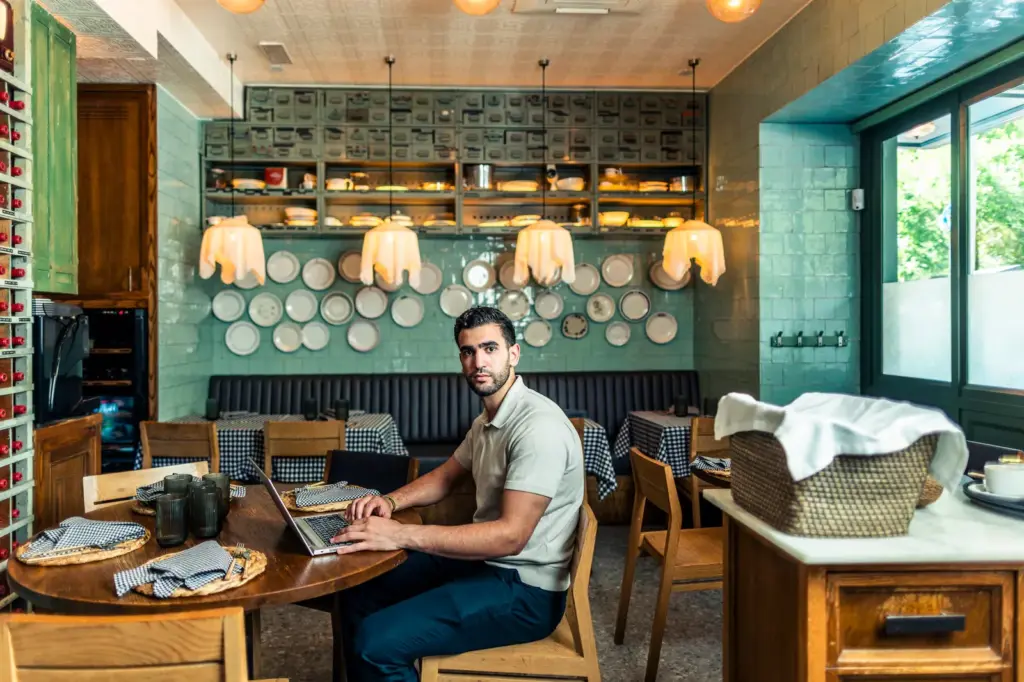
Yassine Merroun, (Cook, 23 years old, Morocco)
“I see myself setting up my business here”
Yassine Merroun arrived in Algeciras at just 16 years old, on a dinghy. He had been trying since he was 14, first through administrative channels, then by boat, even by jet ski. “It was a very long story… my brother was here, my parents came to see him and tried to get me a visa, but it was denied.” So he got on a Zodiac with, he recalls, between 30 and 40 people. Unfortunately, they were left adrift after nine hours of navigation and had to be rescued by emergency services. Once in Spain and as a Mena (acronym for Unaccompanied Foreign Minor), he went through two youth centers, the last one in Casa de Campo in Madrid. In the Spanish capital, he had family, but he couldn’t speak Spanish and felt lost. “The first year I couldn’t communicate, people didn’t understand me; until you learn Spanish, it’s hard to integrate. To give you an idea, I’m 1.85 meters tall, when I left Morocco I weighed 90 kilos, and in two months I dropped to 58,” he says in fluent Spanish.
The first thing he did was a six-month cooking course, which finished just as the pandemic broke out. At 17, he started an internship at Bulbiza, a group of restaurants where he now works as operations director, leading a team of 22 people. He manages orders, reservations, purchases… “the work is demanding,” he explains, but he likes the city despite the frantic pace and impossible rental prices. “I share a flat with my brother; we pay over 800 euros. It’s cheap because we’ve been in the same house for three years.”
During this time, he has worked in other restaurants and tried to take a social education course, but didn’t finish it. Would he return to Morocco? “A year ago I had that idea, but I’ve lost all my friends there,” he laments. In the future, he sees himself setting up his own business in Spain. “I see myself here.”
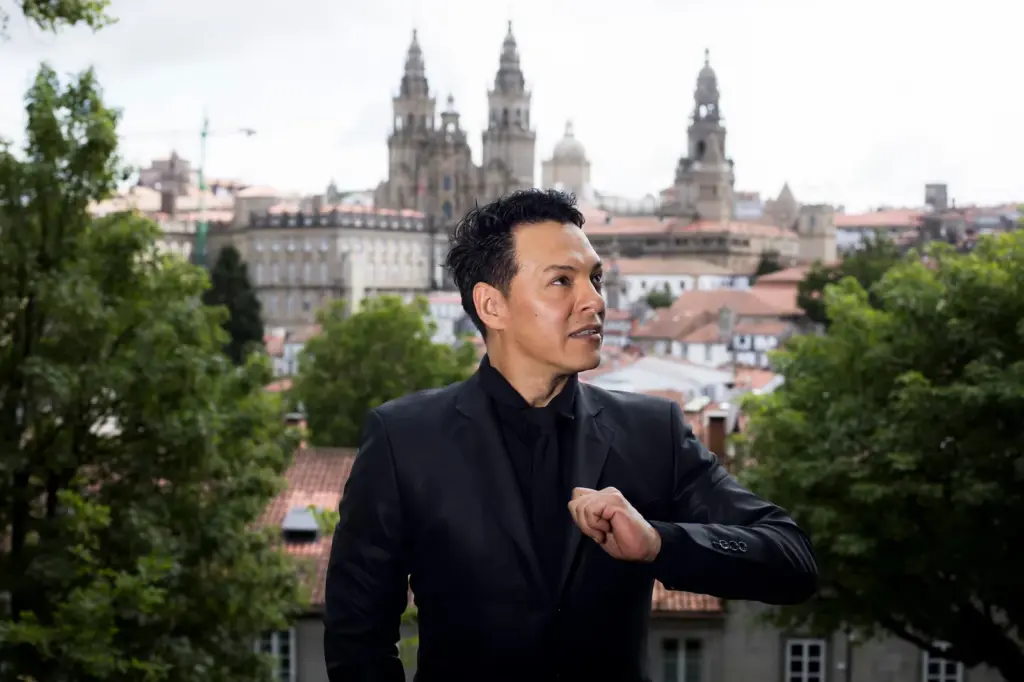
Mario Restrepo (dancer, 39 years old, Colombia)
“I’ve lost four years waiting for papers”
One of the few joys Mario Restrepo has received lately is the favorable resolution to his regularization application within the extraordinary process promoted by the Government. A dance graduate and chiropractor, he arrived on June 22, 2022, after being selected to participate in the Got Talent program. “I thought: maybe later I could work as an artist in hotels, events, or shopping centers.” But he didn’t pass the program’s filter —“Risto Mejide didn’t like my performance”— and with the 500 euros he had left, he decided to rent a room in Madrid. “The decision I made was tough. I ran out of money and had to sleep five days in El Retiro park and wash myself in terminal bathrooms.”
Through a friend he had lived with in Germany, he ended up in Santiago de Compostela, where he worked as a dance teacher. But he always hit the same wall: “Since they couldn’t give me a contract, people were afraid to have me working illegally.” He had to seek help from the Migrantes de Galicia (Amiga) association: “They helped me, gave me clothes, and here, thank God, there’s a soup kitchen I still go to.” During his three years in an irregular situation, he managed: giving massages at a home lent to him by a family acquaintance in Colombia. “I feel like they offer a hand. But I didn’t come to ask for help; I came to work. Spain fails in that aspect, in homologating the qualifications of people who want to work.”
After having traveled and lived in countries like the United Arab Emirates or the USA, Restrepo is clear that he doesn’t recommend anyone to come. “I’ve been in many countries. Here, they prefer to give you aid rather than a job. I’ve lost four years of my life that I could have invested in something more than waiting for papers. That’s the reality.” When he hears speeches about “national priority,” he gets angry. “I feel like we are all tourists in the same world. Being inside a country doesn’t give you enough guarantee.” He wants to try his luck in the Canary Islands, where perhaps now he can be hired as a dancer in hotel entertainment programs. “But I still don’t even have enough for the ticket.”
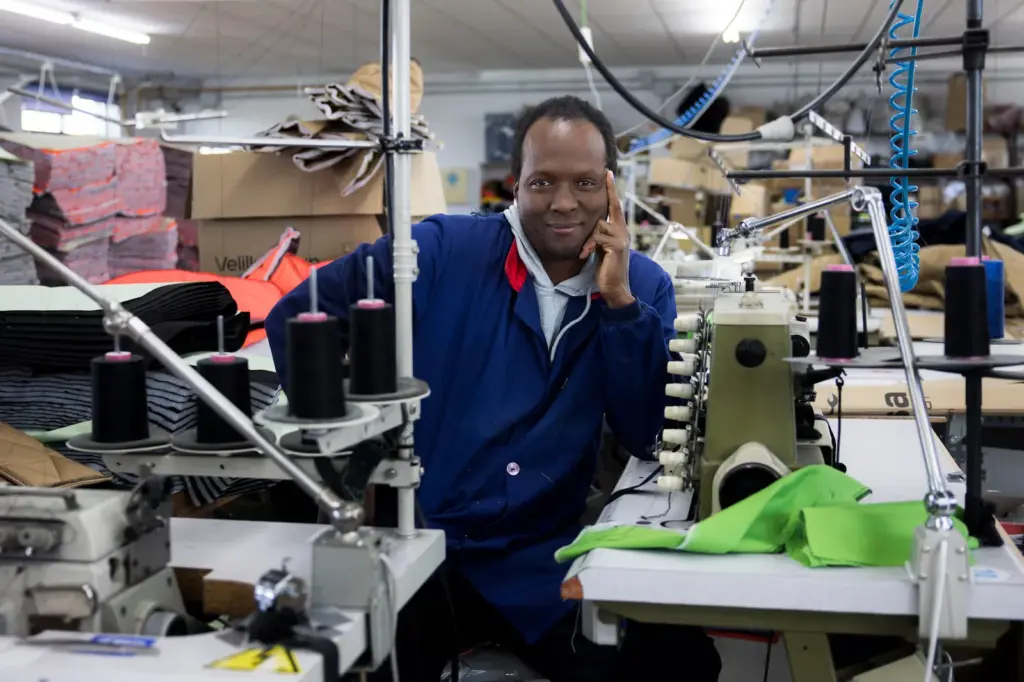
Mamadou Diallo (Seamster, 39 years old, Guinea-Conakry)
“Spain needs hardworking people”
Philosopher Donna Haraway believes that immigrants bear the brunt of all disasters. Perhaps Mamadou Diallo, who remembers the day he arrived in Spain on a dinghy with 70 people, has already experienced many of them. On April 28, 2024, this textile worker by profession disembarked from one of the four cayucos that arrived on the Canary coast that day after a journey he still finds hard to talk about. “The first days of the trip I felt fine, but by the third, I couldn’t move, I was very tired. Water started coming in; I thought I was going to die. When we arrived, I couldn’t believe it. I wouldn’t have been able to get out even walking if the Red Cross people hadn’t helped me,” he explains over the phone. He lives in Xermade, Lugo, a place as lush as his country, Guinea-Conakry, “but much colder.” He works nearby, in Vilalba, at an industrial clothing factory, Xorsa, where he says he has found very good colleagues. His migration has political roots. First, he suffered reprisals for protesting against Alpha Condé’s government, and after the military coup in 2021, he suffered beatings from the “red berets,” an elite unit of the Army. “They beat you, they leave marks.”
What hurts him most is that his wife and five children remained in Guinea. “I dream of having papers to get my family out of there as soon as possible,” he explains. He believes regularization is necessary. “Spain also needs hardworking people; it’s very good. When you have papers, you can work to pay rent, electricity, water… they can’t exploit you. It’s a good economic measure.”

Kenlly Dahianna Giraldi (lawyer, 31 years old, Colombia)
“They paid me 150 euros a month as a nanny”
“My story is not that of someone who fled their country. I studied law in Colombia, practiced as an independent lawyer, and at one point in my life, at 29, I emigrated to pursue a master’s degree in equality, gender, and education at the University of Santiago.” Kenlly Dahianna Giraldi, 31, born in Bogotá, thought that this education would open doors to a better-paid future. But the path was paved with tolls. She had to go into debt to pay for the master’s, the visa (which requires a minimum of 7,000 euros in the account), and health insurance that, as she would later discover, was barely useful. She landed in November 2023 with a study permit and the hope of finding employment: “What I could aspire to was hospitality, which here opens from five in the afternoon, when I have class. Plus, you need training, which I don’t have. I also realized that, having a permit, they wouldn’t hire me because I wasn’t easily exploitable.” She managed thanks to a shop that hired her on weekends. It was enough to cover rent (she pays 350 euros plus expenses) and little else. “I didn’t aspire to work as a lawyer because I don’t have my degree validated, but I didn’t think it would be so difficult to work in hospitality.”
By the summer of 2024, her room contract, which was listed on Airbnb for 500 euros, was ending. “I had no job, I was earning 300 euros… I decided to go as an Au Pair with a family in Valencia. They paid me 150 a month. The contract allows it because they provide housing and food. It was fine; there were three three-year-old twins and a one-year-old baby. Fortunately, I’m good with children, but I did the math, and they were paying three euros an hour for three children. It was an incredible house, but when I started thinking… I did it because I had no other option.”
Having submitted her Master’s thesis and completed her master’s degree, in 2025 she returned to Compostela determined to earn enough to pay back all her debt. She got a job in hospitality, but as a lawyer, she knew her employers were not complying with night shift payments or by giving her opening and closing shifts. “They were doing things they couldn’t do, but as they say in my homeland, necessity has the face of a dog.” To avoid exhausting her student visa, she obtained a C1 in Galician and then opted to regularize her situation through the extraordinary process. She has had her permit for two weeks. She works in a restaurant chain. “To come here, I went into debt for 10,000 euros for the visa plus interest, which is 20,000 euros; I don’t want to arrive in Colombia with a negative balance.” Aware that her situation is not that of someone traveling out of necessity, she feels very precarious, in an emotional and physical state that is starting to affect her over simple things like going to the dentist, which become difficult. “I was never in love with Europe; I’m very reflective about that, some people are. It’s not all perfect. 25 years ago, in the early 2000s, you got on the euro and the cost of living wasn’t so high, and that myth stuck in people’s minds.” She adds that, professionally, she doesn’t feel there’s a space for highly qualified people, “It’s a very personal and unpopular opinion.” She will try to make her way to work on issues of interculturality, diversity, or gender. “I don’t have a conflict with work; I don’t mind working at anything because it doesn’t make me a better or lesser person, but I do need to work, it does make me feel useful. I ask to reach a minimum where I feel treated as a person, not simply as cheap labor.” She recalls that emigration is nothing new, that many Galicians emigrated to Switzerland or Venezuela. “I work, at 29, the lady at 50 works… we all work, we’re not at home waiting. I need to get the bank off my back.”
Immigration cycles over the last 20 years have had a positive impact on GDP expansion, according to a 2025 report by the Economic and Social Council. Collecting data from the ECB, migrants account for 80% of the GDP increase between 2019 and 2024 due to the increase in the working-age population and the employment rate of foreigners. It is also having a positive impact on the sustainability of the pension system, despite generally having lower contribution bases.