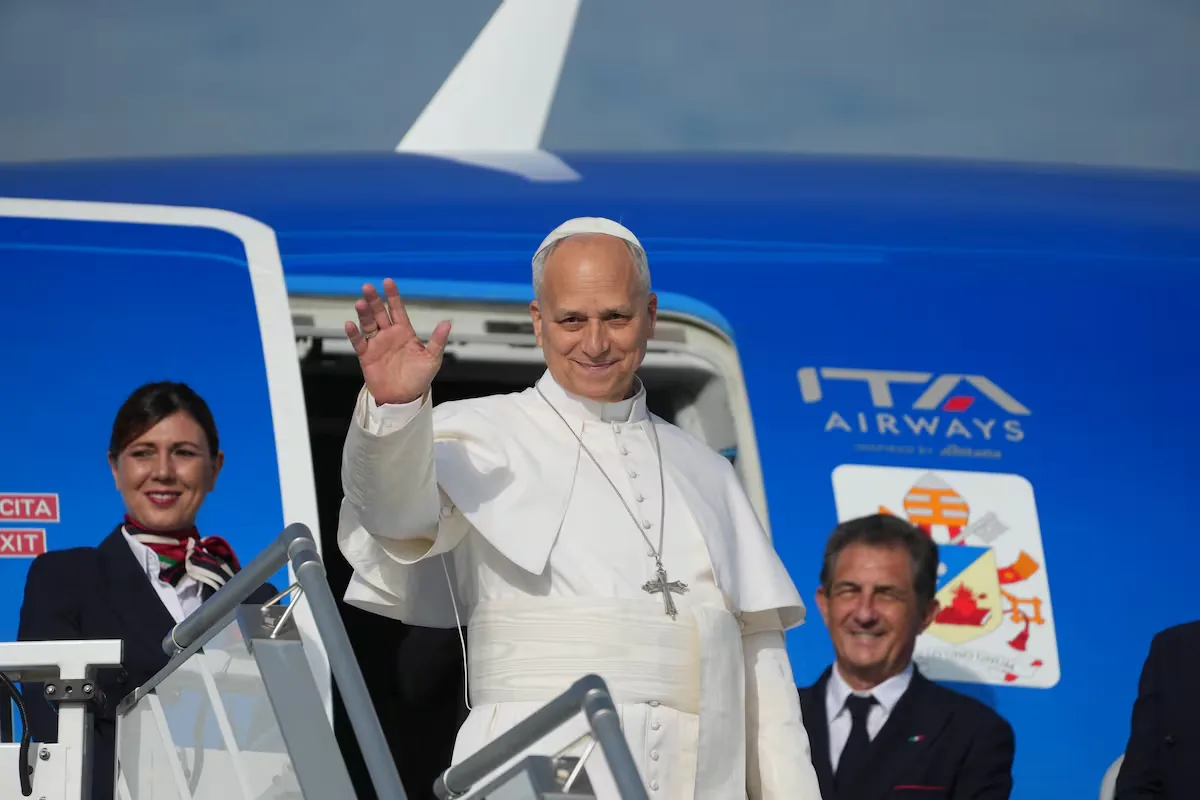
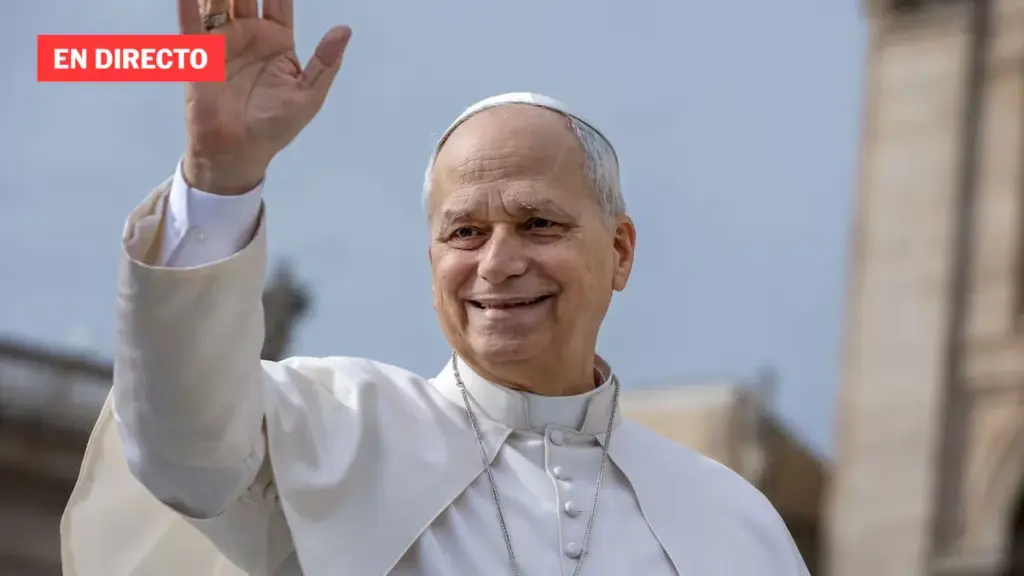
Pope Leo XIV begins a seven-day visit to Spain this Saturday. The Pontiff will land at Barajas airport in the capital, where he will be received by the King and Queen and the President of the Government, Pedro Sánchez. This morning, he has several official events scheduled at the Royal Palace, where he will again be received by the King and Queen and the authorities. In the afternoon, Leo XIV will visit the Caritas Cedia 24 homeless center in the Carabanchel neighborhood. Afterwards, around 8:30 PM, he will preside over a vigil with young people in Lima Square. The Pontiff will remain in Madrid until Tuesday, when he will depart for Barcelona, where he will stay for two days before leaving for Gran Canaria and, later, Tenerife. The Pope’s agenda will alter traffic in the cities he passes through. You can consult the affected streets and areas in Madrid and Barcelona here.
Read more Extraordinary Red Cross Draw of the National Lottery
- Leo XIV, the peacemaker
- Interactive agenda of Pope Leo XIV’s visit to Spain by days and cities
EL PAÍS offers free real-time updates on the Pope’s trip to Spain. If you want to support our journalism, subscribe.
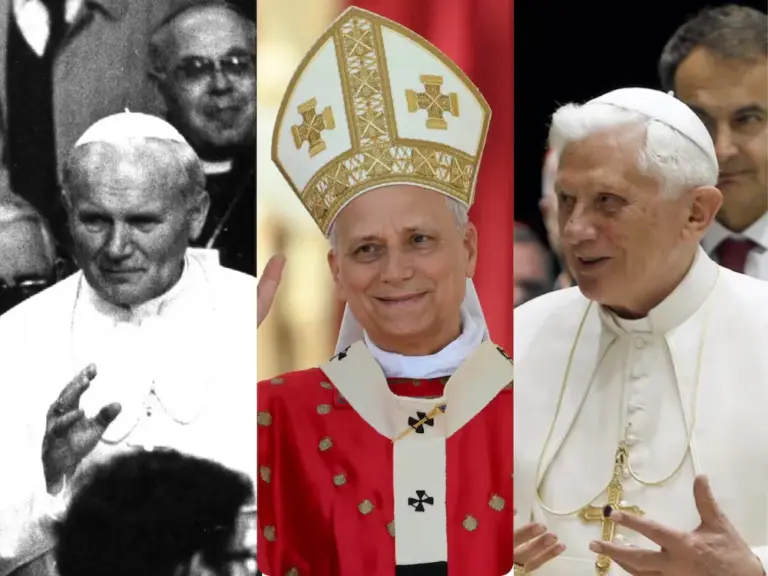
From left to right: John Paul II, in Madrid in 1982; Leo XIV during Pentecost Mass; Benedict XVI on his visit to Spain in 2010. / Ricardo Martín / Vatican Media / EFE
John Paul II, Benedict XVI, and the absence of Francis: when and where were the other papal visits
Only three popes have visited Spain in the last 50 years: John Paul II did so on five occasions and Benedict XVI on three. Francis was the first pontiff since Pius XII not to set foot in the country during his pontificate. Leo XIV will be the third, 15 years after the last papal visit.
1. John Paul II, November 1982. The first visit of a Pope to Spain since the Concordat of 1953 came at a politically symbolic moment: the country had just held general elections won by Felipe González’s PSOE. In ten days, John Paul II visited 16 cities before more than ten million people, in one of the most intense journeys of his entire pontificate. In Santiago de Compostela, he delivered the famous speech of the European Act: “I, Bishop of Rome and Pastor of the universal Church, from Santiago I launch to you, old Europe, a cry full of love: Find yourself again. Be yourself.”
2. John Paul II, 1984. He returned to Zaragoza to celebrate the centenary of the Pilar, a visit during which he met with the President of the Government, Felipe González.
3. John Paul II, August 1989. He passed through Santiago de Compostela and Oviedo for the IV World Youth Day, the first held in Spain. His visit was decisive in encouraging young people to walk the Camino de Santiago: it was precisely then that the minimum of 100 kilometers was established to obtain the Compostela, the official pilgrimage certificate.
4. John Paul II, June 1993. A long journey that touched multiple cities and accumulated several milestones: the first papal visit to the sanctuary of El Rocío, the only papal coronation in Spain (to the Virgin of Miracles in the Monastery of La Rábida), and the first consecration of a cathedral, the Almudena of Madrid.
5. John Paul II, May 3 and 4, 2003. The last visit of the Polish Pope, already heavily affected by Parkinson’s. In Plaza de Colón, before a million people, he canonized five saints: Pedro Poveda, José María Rubio, Ángela de la Cruz, Genoveva Torres, and Maravillas de Jesús.
6. Benedict XVI, June 2006. His first visit to Spain took him to Valencia, where he was received by the King and Queen and President José Luis Rodríguez Zapatero, despite tensions with the Government over the legalization of same-sex marriage approved the previous year. He also visited the site of the metro accident on June 3, which had left 43 victims. One and a half million people participated in the closing mass, a record attendance for a Catholic event in Valencia. The Pope avoided directly mentioning Spanish laws but defended marriage between man and woman as “constitutive of the family.”
7. Benedict XVI, November 2010. He made a pilgrimage to Santiago and celebrated mass in front of the cathedral. On November 7, he consecrated the Sagrada Familia as a minor basilica (the most significant consecration performed by a pope since medieval times), after 128 years of construction.
8. Benedict XVI, August 2011. Before abdicating, he returned to Spain for the XXVI World Youth Day, held in Madrid, with more than a million young people from all over the world. The event will be remembered for a historic vigil under a storm at the Cuatro Vientos airfield, where the Pope addressed the young people with a phrase that would become famous: “You are stronger than the rain.”
9. Leo XIV, June 2026. Fifteen years later, a pope returns to Spain. Among the most notable events on his agenda are the visit to the Canary Islands, where he will meet with migrants, and the blessing of the Sagrada Familia’s Jesus Christ tower.

Around 25 children aged between 3 and 12 are already waiting at Barajas airport to receive the Pope
Around 25 children, aged between 3 and 12, accompanied by parents and teachers, are already at Adolfo Suárez Madrid-Barajas airport to receive Pope Leo XIV, who is scheduled to land at 10:30 AM.
Among the delegation of children who will greet the Pope upon his arrival in the Spanish capital are some minors with mental and physical disabilities. The children have been selected by both the Spanish Episcopal Conference and the Vatican. (EP)
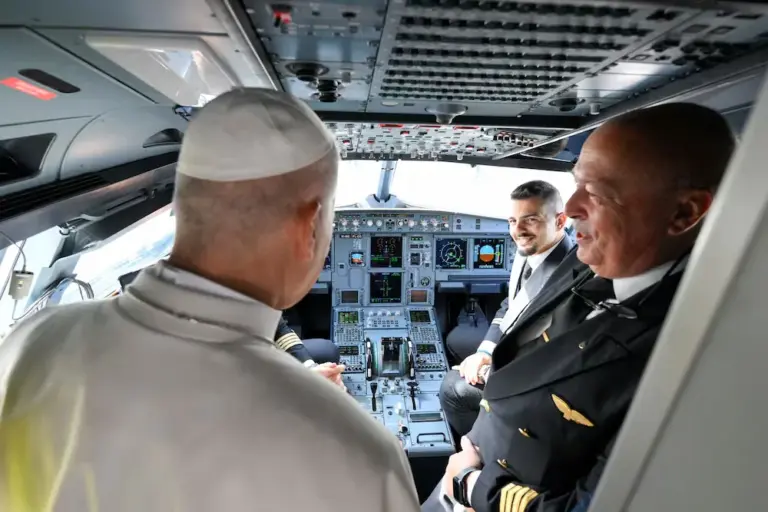
Pope Leo XIV, inside the plane en route to Spain, this Saturday. / Simone Risoluti / via REUTERS
The Pope, on the plane to Spain
Pope Leo XIV speaks with the pilot of the plane taking him to Madrid, this Saturday. The Pontiff is traveling on an Ita Airways A320 flight that departed at 8:13 AM from Rome-Fiumicino International Airport, bound for Adolfo Suárez Madrid-Barajas Airport, where he is scheduled to land at 10:30 AM.
Immediately after boarding the plane, the pontiff greeted the aircraft’s pilots. Upon takeoff, as is traditional on such journeys, the Pope sent a telegram to the President of the Italian Republic, Sergio Mattarella, as it is customary to greet and ask for blessings from the heads of state of the countries whose airspace he flies over.
In the text, Leo XIV stated that his trip to Spain is being made “under the maternal gaze of the Virgin Mary, who welcomes us and guides us towards God, source of unity and hope for all peoples.”
The Pontiff will be received by the King and Queen of Spain, along with the President of the Government, Pedro Sánchez, upon his arrival in the country. (EP)
Catholic Church
An army of Catholic ‘influencers’ lands in Madrid to viralize the Pope’s visit: “We are the modern version of an apostle”
An army of more than 500 Catholic influencers is landing in the capital from different parts of the country to viralize the visit of Pontiff Leo XIV, and they are not doing it self-taught, but coordinated through the platform organizing the event, called Con el Papa (With the Pope) and created by the Spanish Episcopal Conference, in addition to the dioceses involved in this event. The Madrid diocese summoned these creators of religious content to a meeting in May with the aim of synchronizing their work these days. “Parables were Jesus’ Instagram,” this entity summarizes on its website. The Church is increasingly focusing on the digital environment in a context where the percentage of Catholics barely exceeds half, although only about 16% declare themselves practicing, according to the latest CIS. Among those under 24, it barely reaches a third, while church weddings have fallen by more than 40% since 2015. Two decades ago, more than eight out of ten Spaniards considered themselves Catholic. The transformation is as rapid as it is significant.
You can read the full information here
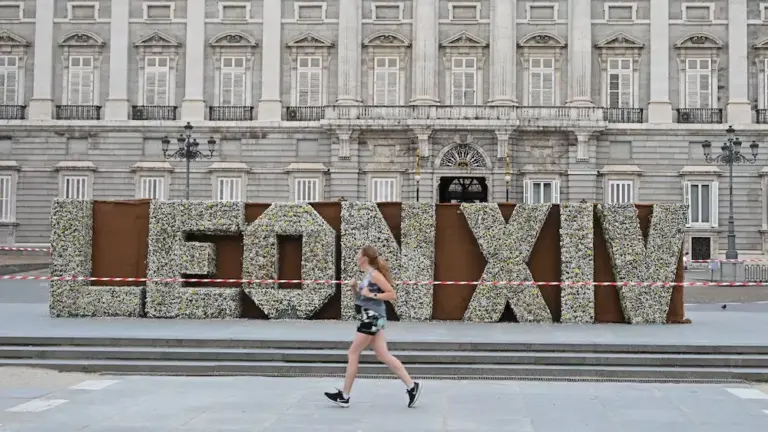
View of the Royal Palace in Madrid, this Saturday, awaiting the visit of Pope Leo XIV. / FERNANDO VILLAR / EFE
Madrid presents the largest police operation in its history to receive the Pope
Pope Leo XIV’s visit to Spain, and specifically to Madrid, has become a major security challenge, surpassing the NATO summit in June 2022, and has required an unprecedented operation in Spain’s democratic history to ensure the smooth running of the visit not only of the Head of State of Vatican City, but also of the spiritual leader of Catholics.
More than 14,000 personnel will ensure security from this Saturday until Tuesday, when the Pontiff will head to Barcelona. The National Police will contribute 9,700 units from Madrid, but also from other parts of the country, who will join 625 Civil Guards and the more than 4,000 municipal agents that the Madrid City Council will deploy.
The National Police’s special security plan is structured at surface level, with agents from the Police Intervention Unit (UIP), Cavalry and Canine Units, as well as Environmental Protection units, the Mobile Brigade and the Prevention and Reaction Unit alongside the Special Operations Group (GEO) and escorts from the Central Protection Unit.
The operation will also address possible underground threats with the Underground Unit and also from the sky with helicopters, drones and an aircraft from the Air Unit. In fact, the National Police has placed special emphasis on prohibiting the use of private drones during the days of the visit. Specialized units from the National Police’s Armament Service, Telecommunications, and IT Area will also be deployed in Madrid. The Civil Guard’s Traffic Group will be involved, responsible for accompanying the Pope from Adolfo Suárez Madrid-Barajas airport to the Royal Palace. In addition, agents from the Special Intervention Unit (UEI), the elite group of the Citizen Security Unit (USECIC), and the Airport Surveillance Team (EVA) will also participate.
The operation will also include specialized units such as Explosive Ordnance Disposal (TEDAX) technicians, or the Explosive Disposal and CBRN Defense Service. The Underground Unit has been responsible for inspecting the airport and wells in the area, while the airport’s Fiscal Unit has also intensified its controls in recent days.
For the capital’s Municipal Police, the Pope’s visit also represents an almost unprecedented challenge for which the City Council has organized “the largest municipal security operation ever launched” in the capital, focused mainly on citizen security in concentration areas, crowd flow control, and the movements of the entourages. Agents from all territorial police stations will participate in the deployment, with special attention to June 6 and 7, when the main public gatherings are expected. The largest deployment will be in traffic matters, with 1,900 agents responsible for accompanying the entourages.
Read more The Knicks win again on the road against the Spurs and create distance in the NBA Finals
To guarantee security in the venues and during movements, camera surveillance resources will be combined through the Integrated Video Signal Center, aerial support, and canine units for the control of dangerous elements such as drugs and explosives. Special monitoring will be carried out on social networks to detect possible threats, a task that has been underway for weeks.
All territorial police stations will participate, along with personnel from the Special Services Police Station, the Central Security Police Station, the Road and Urban Analysis Police Stations, Road and Transport Support, the Air Support Section, the Services Inspection and Evaluation Section (SIES), the Canine Section, the Diversity Management Police Station, and the Information Analysis Section (SAI).
Regarding health services, Samur-Protección Civil will deploy around a thousand personnel, as well as five advanced medical posts in Cibeles square — the scene of a multitudinous mass on Sunday — and another four in Lima square, where half a million young people are expected to attend Saturday’s vigil.
During the vigil, they will be located in Nuevos Ministerios, Pablo Ruiz Picasso square, Vitruvio street at the corner of José Gutiérrez Abascal, and Hermanos Pinzón street at its intersection with Paseo de la Castellana. On Sunday, they will be in Gran Vía with Alcalá street, Neptuno, on Paseo del Prado between Montalbán street and Juan de Mena, on Armada Española street, and on Bárbara de Braganza street, between Tamayo y Baus and Conde de Xiquena.
These capabilities will be supplemented by mobile rapid intervention teams on foot (Eco), bicycle (Lince), and motorcycle (Halcones), which will be distributed throughout the main areas of influx. In addition, Madrid Salud technicians will carry out additional controls on public fountains and water points to ensure safe consumption given the expected crowds.
In the weeks leading up to the visit, Samur-Protección Civil has trained a total of 2,600 volunteers in basic first aid techniques. In addition, the service is disseminating basic recommendations for protection against heat, action in case of choking, or behavior in situations of large concentrations of people.
The Madrid Fire Department will deploy three pump trucks and a command vehicle to the main areas of the papal visit, so that they will be able to intervene or act quickly in any emergency situation that may arise. In addition, they will participate in the prior inspection of the venues and the monitoring of emergency lanes. Precisely, the size of the Madrid Fire Department’s deployment has been criticized by the main unions, who have warned of the “insufficient” mobilization.
The Citizen Participation section of the National Police will set up three tents where minors, elderly people, and other attendees who get lost among the crowds at the main events will be taken.
Regarding Summa 112, the Community of Madrid has not planned a special operation for the event, although the service will be reinforced with seven more managers per shift in the Emergency operations room.
Furthermore, the regional government has already activated the Territorial Civil Protection Plan of the Community of Madrid (PLATERCAM) in its Operational Situation 0, in alert phase, in anticipation of possible incidents requiring greater collaboration between administrations. (EP)
POPE LEO XIV
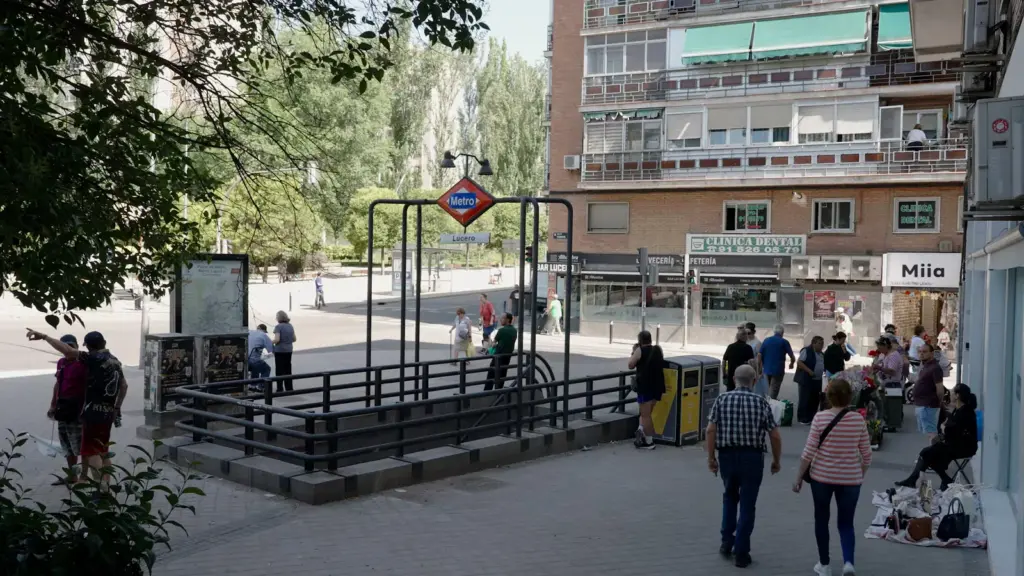
Video | A day in Lucero, Madrid’s working-class neighborhood that receives the Pope amidst a struggle against abandonment
Leo XIV will visit the Caritas center for homeless people hours after landing in Spain.
You can watch the full video here
Leo XIV takes over from Francis with a visit focused on immigration
The previous Pope, Francis I, began his pontificate in Lampedusa, the Italian island where thousands of immigrants, those who survived the deadly Mediterranean crossings, finally set foot on European soil, after true odysseys to cross Africa or other continents and the sea itself. For health reasons, Francis was eager to travel to the Canary Islands, the arrival point in Europe for the other migratory route, that of the Atlantic.
Leo XIV will resume his predecessor’s intention on his trip to Spain, with a visit very focused on supporting migrants and asking for solidarity from host countries. On the 11th, the Pope will go to the Arguineguín pier, in the south of Gran Canaria, one of the main arrival points for these immigrants, where a camp was set up with nearly 4,000 people sleeping on the ground after reaching Europe. There he will meet with a group of migrants, relatives of those who did not make it, volunteers, and rescue workers. “This visit will not solve anything immediately, but it will move something in the long term,” Ricardo Iglesias, general secretary of Caritas Diocesana de Tenerife, told this newspaper. Also from Caritas, María José Baeza hopes that the visit will mark “a before and after in the sensitivity of the population” and help curb “discourses that point to migrants as responsible for the problem, when in reality they are the victims.”
With his visit to the Canary Islands, where 17,788 irregular migrants arrived last year, Leo XIV intends to express solidarity, calling on arrival countries to welcome them and treat them “as human beings and not animals.” He defends the right of countries to establish rules at their borders, to prevent uncontrolled situations from leading to “more unjust situations for migrants than those they left behind,” but he calls for efforts towards integration and overcoming poverty. In this sense, the Pope arrives in a country that has just approved a massive regularization of immigrants, which half a million people have taken advantage of.
Pope Leo XIV
Leo XIV, the most uncomfortable and inopportune visitor for Vox
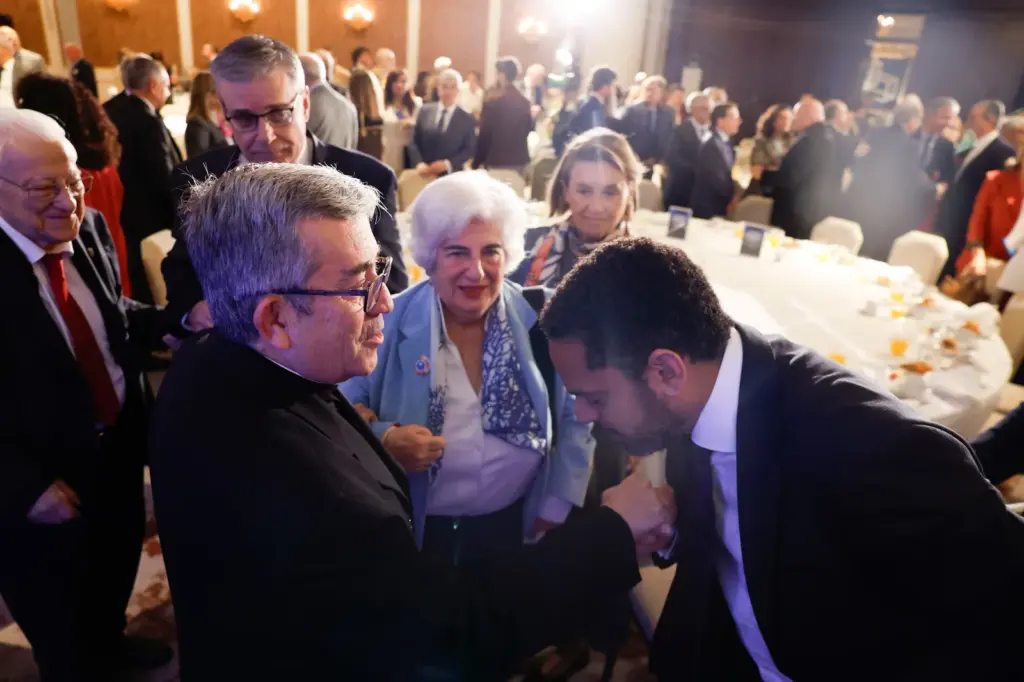
Ignacio Garriga, general secretary of Vox and a member of Opus who concludes his political speeches by invoking God’s blessing, assured this Monday that his party’s followers will receive Pope Leo XIV “with enthusiasm” this Saturday. “We are very happy and convinced that it will be a great visit,” he stressed. On May 12, Garriga attended a conference in Madrid by the president of the Spanish Episcopal Conference (CEE), Luis Argüello, with the aim of trying to mend the damaged bridges between the far-right and the ecclesiastical hierarchy.
You can read the full information here
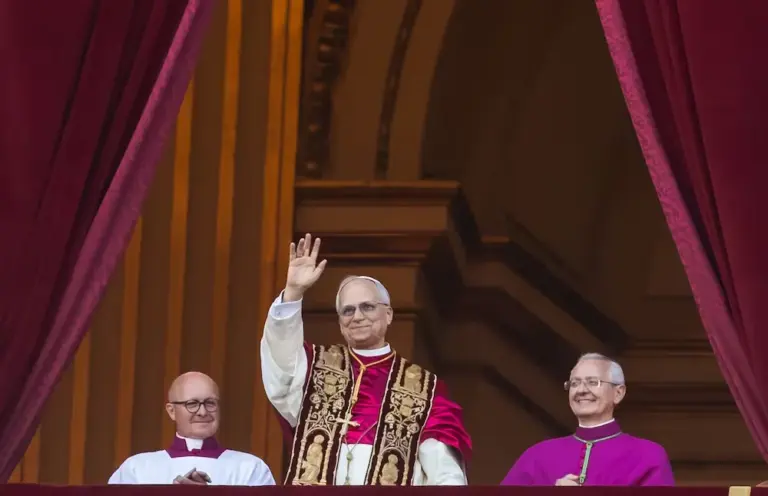
Pope Leo XIV during his first appearance as Pontiff on the central balcony of St. Peter’s Basilica, May 8, 2025. / MASSIMILIANO MINOCRI
Profile | Who is Leo XIV, the Pope of balance
Leo XIV, born Robert Francis Prevost, is the first American Pope in history and the 267th Pontiff of the Catholic Church. An Augustinian, with a conciliatory profile, humble demeanor, and shy character, his election just over a year ago came at a time of strong political polarization, both in the United States and around the world. His first words from the balcony of St. Peter’s were a call for peace, a speech without improvisation, read, with a catechetical tone and classical rhetoric, very different from the colloquial style of his predecessor. Dressed in traditional vestments, like Benedict XVI, he immediately sent signals to reassure the more conservative sectors of the Church.
Born in Chicago to a father of Italian descent and a mother of Spanish origin, Prevost spent much of his pastoral life in Peru, where he arrived at age 30. Francis appointed him bishop of Chiclayo in 2015, a poor diocese marked by emigration to the United States. He also holds Peruvian nationality, and in his first speech, he expressly recalled that diocese and spoke a few words in Spanish.
He was the safest candidate for those who feared bold experiments with names from Asia or Africa, but also the most original within the West. Elected in just four votes (as quickly as Benedict XVI in 2005), his name had circulated in the shadows as the great candidate of the most pragmatic sector. Francis brought him to Rome as prefect of the Dicastery for Bishops, from where he has appointed hundreds of new prelates worldwide, which provided him with a decisive network of support in the conclave.
With a degree in Mathematics and Philosophy, and a tennis enthusiast, he also represents the fall of a historical taboo: no major power had ever had one of its nationals in the Chair of Peter.
PAPAL VISIT
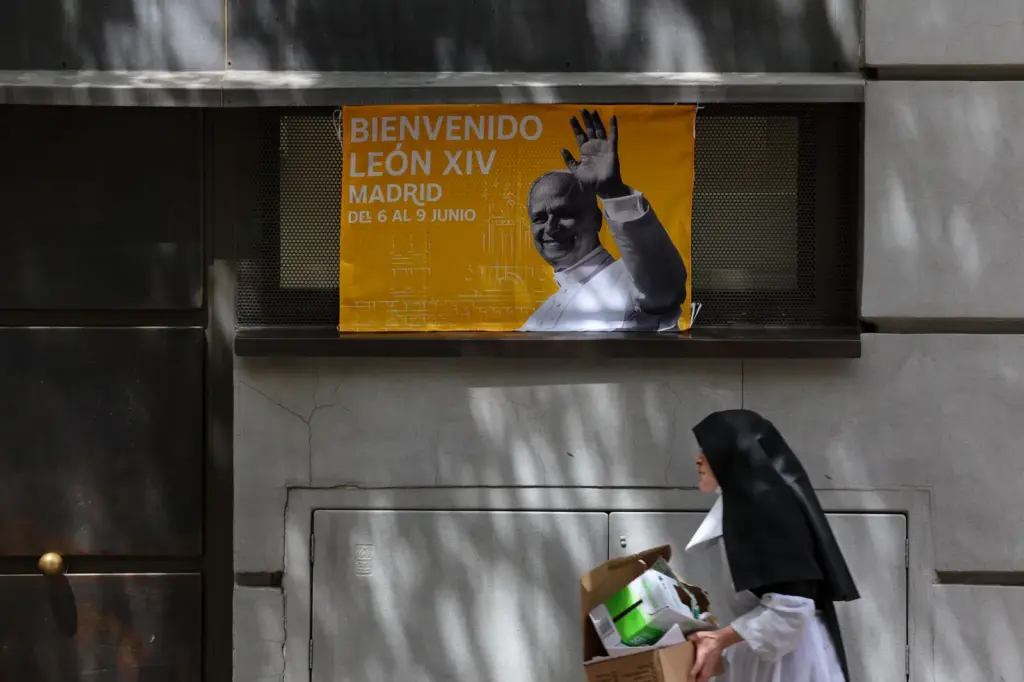
The Vatican addresses the controversy with pedophilia victims and confirms the Pope will meet with them in Spain
The controversy over whether the Pope will meet with victims of pedophilia in the Church during his visit to Spain is already shaping Leo XIV’s trip before he even arrives this Saturday, and the Vatican has decided to intervene in an unusual way. In a brief statement released at nine o’clock this Friday evening, the director of the Holy See Press Office, Matteo Bruni, confirmed that the Pontiff will indeed meet with abuse survivors. He did not clarify when or where. It will probably be in Madrid, at the nunciature, where the Pontiff will be staying.
You can read the full information here
Pope’s Trip
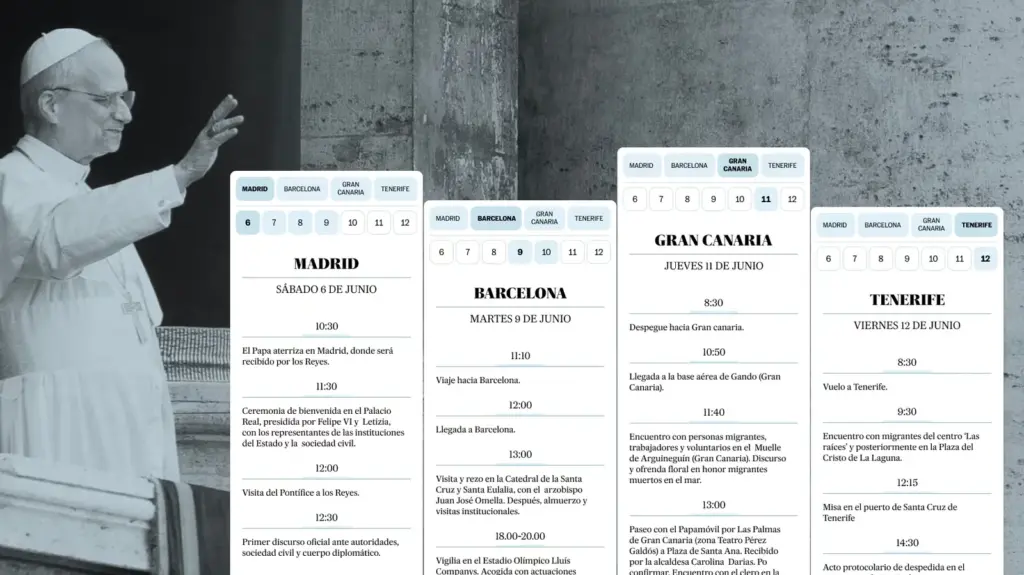
Interactive agenda of Pope Leo XIV’s visit to Spain by days and cities
Seven days, three autonomous communities, seven locations, half a dozen multitudinous events, and unprecedented acts mark the packed agenda of Pope Leo XIV’s visit to Spain, the first by a pontiff to the country since 2011. The trip begins in Madrid, with a reception by state authorities and as a highlight: a speech as head of state in Congress. The second stage takes place in Barcelona with, among other events, the blessing of the recently inaugurated Jesus Christ tower of the Sagrada Familia. Finally, in the Canary Islands, Leo XIV seeks to focus on the reality of migrants at the gates of Europe, with whom he meets at the Arguineguín Pier and in La Laguna. In total, more than 20 events. This is a guide to follow, step by step, a historic event.
You can consult the interactive agenda of the visit here
Pope Leo XIV boards the plane to Spain, this Saturday. / Matteo Minnella / REUTERS
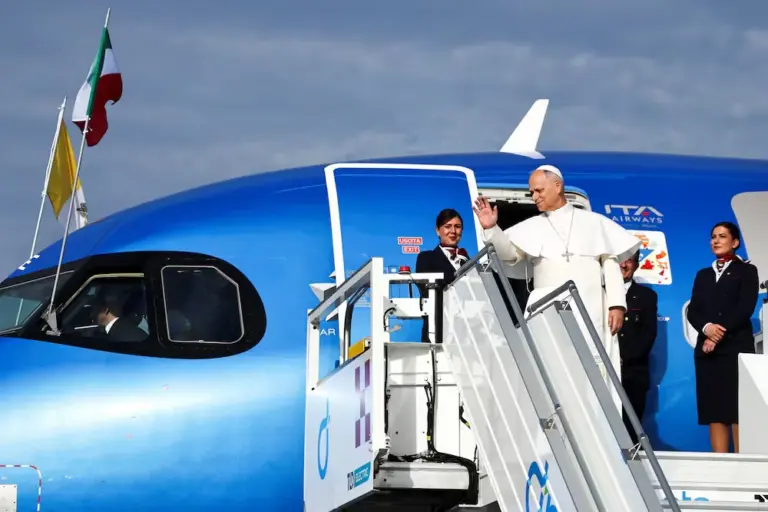
The Pope departs for Madrid
Pope Leo XIV boards the plane to Madrid at Fiumicino airport, near Rome, this Saturday.
Pope Leo XIV
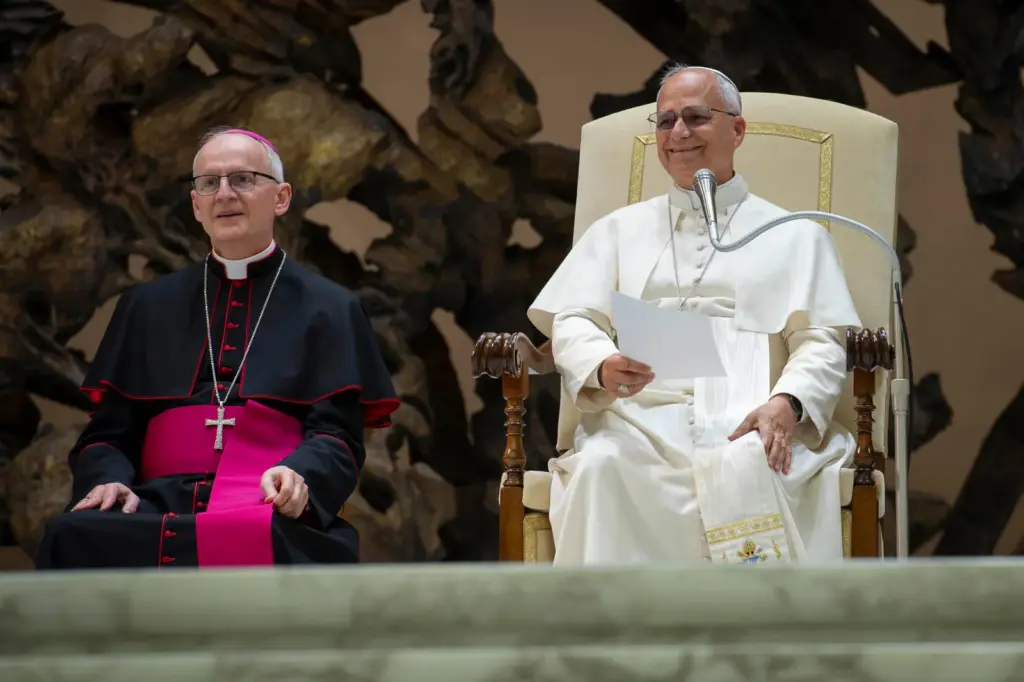
The Pope arrives in Spain with a message against polarization and hatred of immigrants
Leo XIV’s visit to Spain, from this Saturday to next Friday, the 12th, will not be like those of other popes. There were two: John Paul II (five trips from 1982 to 2003) and Benedict XVI (three, from 2006 to 2011). They represented a traditional and conservative Church, and the last time Ratzinger came, 15 years ago, it was a different era; bipartisanship still existed, and WhatsApp was a novelty. In fact, two of the main arguments the Pope will likely address now, two of the most contemporary political issues, very prominent in Spain, were absent: polarization and hatred of immigrants. These are two priority issues for Robert Prevost, an American and Peruvian, who in the last two months has become a moral antagonist to Trump globally and to his ripple effect worldwide. Against division and racism, Leo XIV will promote a message of dialogue and coexistence, based on the defense of human dignity.
You can read the full information here
PAPAL VISIT
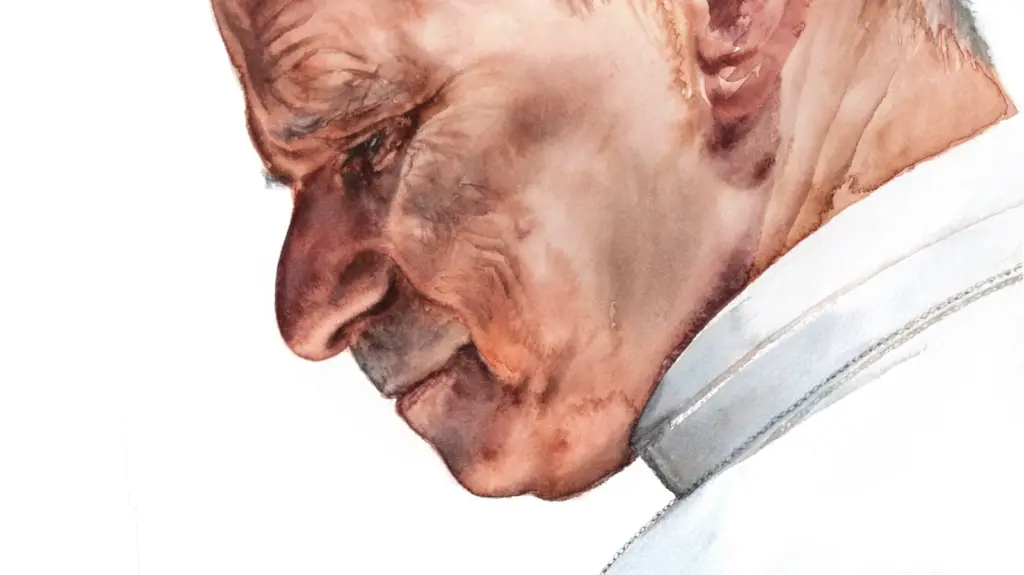
Leo XIV, the peacemaker
Spaniards are about to get to know a Pope whom the world still knows little about. He has gone from being a mystery, someone seemingly pusillanimous, to becoming a surprising revelation in two months, ever since he clashed with Donald Trump in mid-April and two weeks ago published a politically significant encyclical, an appeal against Silicon Valley’s technofascism. His long visit to Spain will culminate in the definitive discovery of Prevost, as it is his first major trip to Europe and he will speak to the entire Western world. But what does this Pope think and why has he proven so disconcerting?
You can read the full information here
Good morning. This Saturday marks the start of Leo XIV’s trip to Spain, the first by a Pontiff in 15 years. Six days, four cities, 2,500 kilometers through a country that had not received a Pope since Benedict XVI presided over World Youth Day in Madrid in 2011. The visit begins in the capital, with an official reception at Barajas at 10:30 AM, a welcome ceremony at the Royal Palace, and a meeting with the King and Queen. At midday, Leo XIV will deliver his first official speech before authorities, civil society, and the diplomatic corps. In the afternoon, the Pope will visit the Caritas CEDIA 24 Horas center, before closing the day with a multitudinous vigil with young people in Lima Square.
Read more Who are Ella Bright and Belmont Cameli, the protagonists of ‘Off Campus’, the new viral series