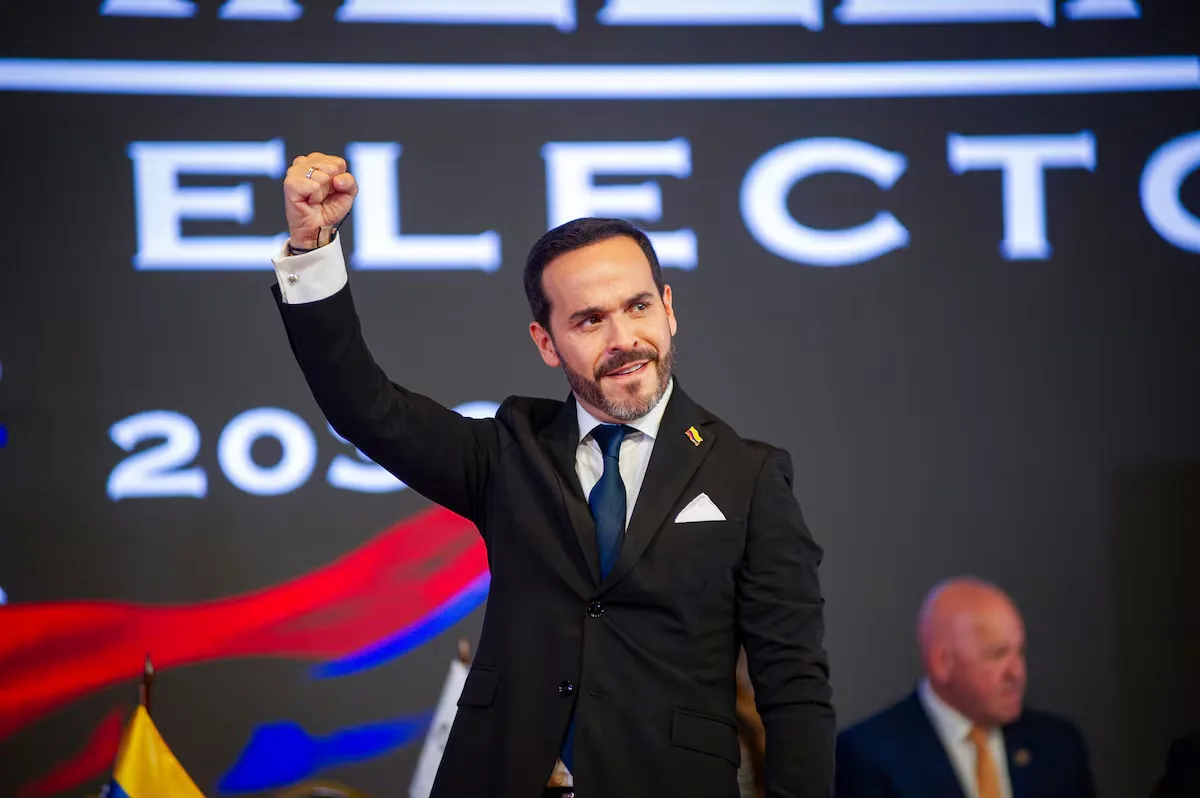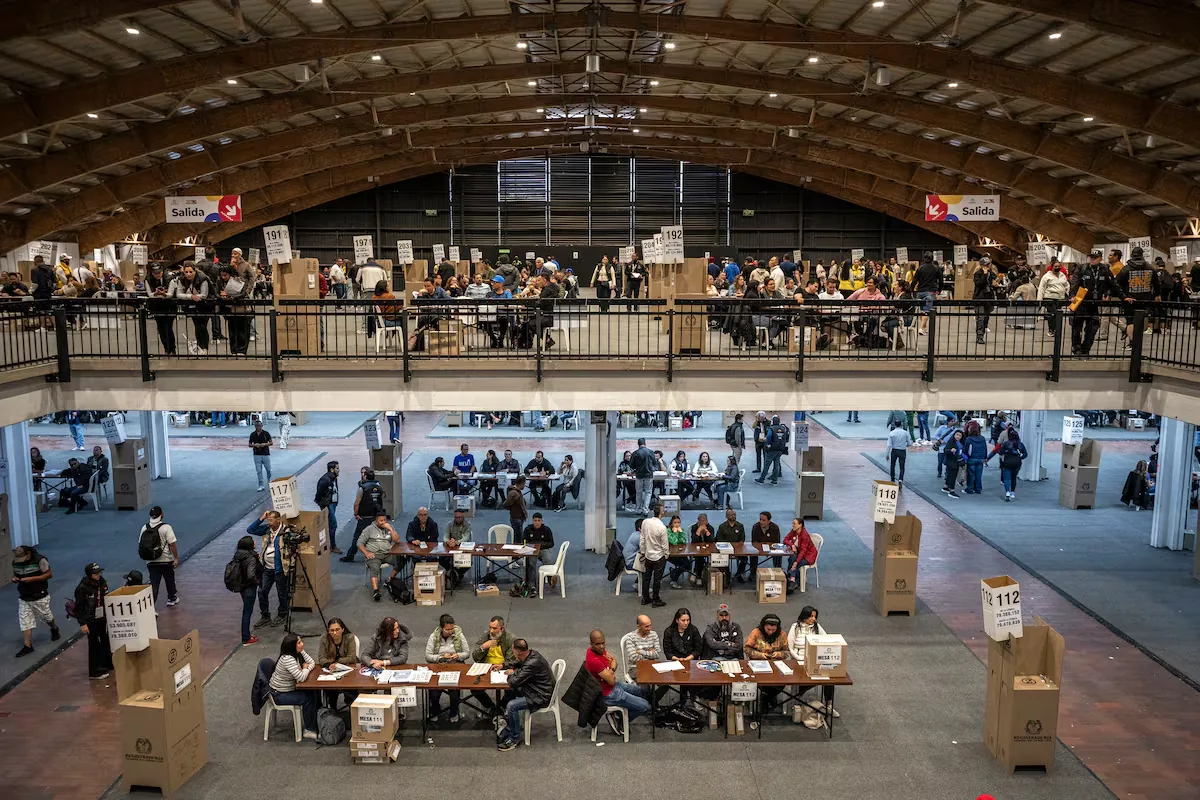







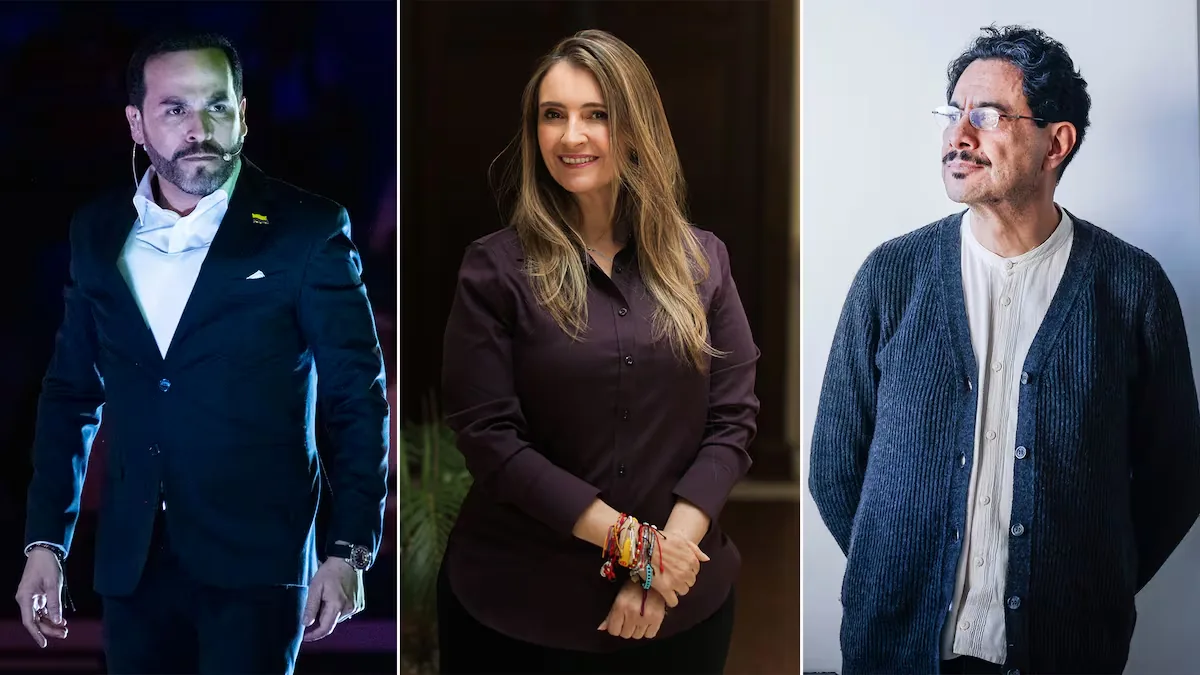
The polls open this Sunday in Colombia for a first presidential round with a clear favorite, Iván Cepeda, the candidate of President Gustavo Petro, but also with huge expectations about who will face him on June 21. The polls point to a polarized scenario in which Cepeda’s left will battle Abelardo de la Espriella, a far-right outsider admirer of Trump, Bukele, and Milei.
Read more ‘Cape Fear’ on Apple TV, ‘House of the Dragon’ on HBO Max, and other recommended series for June
With an economy at half speed and politics increasingly skewed to the extremes, unpredictability has been a constant in this election, but the chances of Paloma Valencia, the candidate of former right-wing president Álvaro Uribe, reaching the second round have deflated completely in recent days. Third in the polls, the senator started strong in the presidential race with the support of the traditional right and the once unquestionable influence of former president Uribe, but De la Espriella has been stealing the anti-system vote, the hardline vote, the punishment vote against Petro.
Valencia, Uribe’s last electoral bullet, realized too late that to beat Cepeda she first had to defeat her competitor on the right, and she arrives this Sunday with constant criticism of the ultra and depending on the polls’ numbers being wrong.
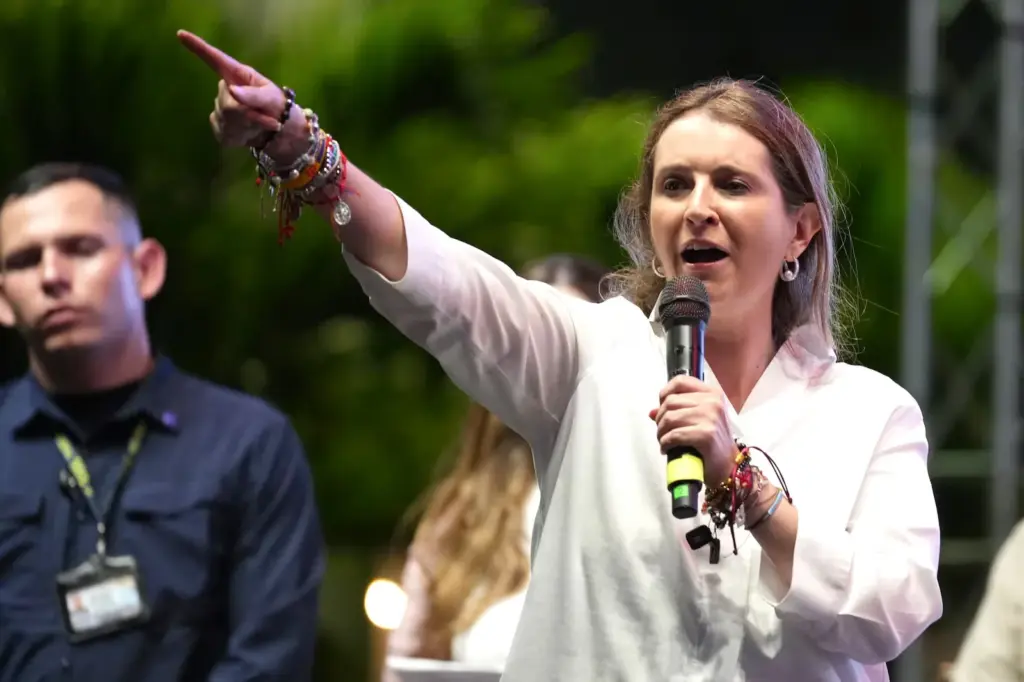
The third scenario hovering over this day, although it seems remote, is that Cepeda surpasses the 50% threshold and wins in the first round, as he has been announcing throughout the campaign. No poll foresees this possibility, but his team — like Valencia’s — trusts that the surveys, which have fundamental methodological problems, are not capturing the real fervor of their bases. Since the country established its two-round system in 1991, only Uribe has won in the first round, both in his arrival at the Casa de Nariño in 2022 and in his reelection — a possibility later banned — in 2006.
Four years ago, Colombia voted for the first time in its modern history for a left-wing president. Gustavo Petro came to the Presidency with the promise to transform a deeply unequal country, to negotiate peace with the armed groups left after the FARC, and to look at many corners of the country that have always been ignored. He tried, but his transformations have been half-done or outright failed. The promise of change has not been fully fulfilled, although Petro has made all kinds of efforts — communicational, legal, and economic — to achieve progress.
His structural reforms — in health, labor, pensions, agrarian — clashed with a hostile Congress, economic powers, and his own administration. The total peace policy with the armed groups he has negotiated with simultaneously produced some discreet advances but also bloody setbacks in many territories. The economy has the best social indicators of the century but accumulated a fiscal deficit close to 7% of GDP. Meanwhile, healthcare has become one of the biggest concerns of Colombians.
His alliances and corruption scandals, which he promised to fight, have looked too much like those of his predecessors. And in foreign affairs, where Petro sought regional leadership, he ended up in a strange cohabitation with Donald Trump in the United States and Delcy Rodríguez in Venezuela, without major advances or major setbacks.
Petro, however, ends his term with about 46% approval according to polls, an unusually high figure for an outgoing president, thanks to decisions like suddenly increasing the minimum wage by 23%, the ability to represent sectors of the country that have felt excluded for decades, and a discourse in which he blames Congress, judges, the opposition, or even his ministers for failures. The president, for better or worse, is an omnipresent figure in the country’s public debate — especially on X — so much so that he is considered just another campaign actor, if not the main one.
This Colombia governed by the left is one of the last exceptions in Latin America, along with Mexico and Brazil. While the continent has witnessed in recent years the rise of a new hard right — Milei in Argentina, Bukele in El Salvador, Kast in Chile, Noboa in Ecuador… — the country had resisted that reactionary wave. This first round will serve as a thermometer to measure several phenomena: the strength of the traditional conservative right to stop the far right that promises to end the establishment and both to finish off a progressive government.
“We see with great concern a scenario of confrontation in the second round between the far right and the far left,” says political consultant Miguel Silva, who does not hide his preference for Paloma Valencia, who throughout the campaign has become a third option representing institutionality and moderation. “They are candidates with very little administrative and public sector experience,” he notes. He refers to Cepeda, with a long legislative career but none in the Executive, but also to De la Espriella, who has made a career in the private sector.
Read more Too serious to laugh: the awkward place of humor in literature
Silva, who presents the concerns of part of the elite and capitals leaning toward a more classical liberalism, regrets that the game ends up depending on opposite poles. “This forces us to ask who among them would be risky for the preservation of democracy.”
Angie K. González, a research professor at Universidad Externado de Colombia, represents another view, one in which the lack of experience in public management criticized in Cepeda means opening spaces to different collectives — far from the elites — that are trying to incorporate their causes into the national political agenda. “What is at stake is precisely whether we want to go back to the way things were or, despite its imperfections, a new model will be ratified in which the collective begins to weigh more than the individual,” she explains.
The country has been practically in election campaign mode since February, between Petro’s announcements, the legislative, the primaries, and the presidential elections, and besides fatigue, a huge fear of the other has settled in. The left feels terror at the possibility that someone like De la Espriella — who promises more prisons and less state and sells you both rum and a silk tie on his website — has become a real government option. Opposite them, a classic right but also many disenchanted who have accumulated so much resentment and disdain against Petro that they cannot conceive of a worse scenario than the victory of his heir Cepeda.
On the margins are the center candidates who promised to end polarization and who together do not reach 10% of the votes. The irony is that it will be precisely those center voters and the undecided who will probably decide the outcome of the second round on June 21.
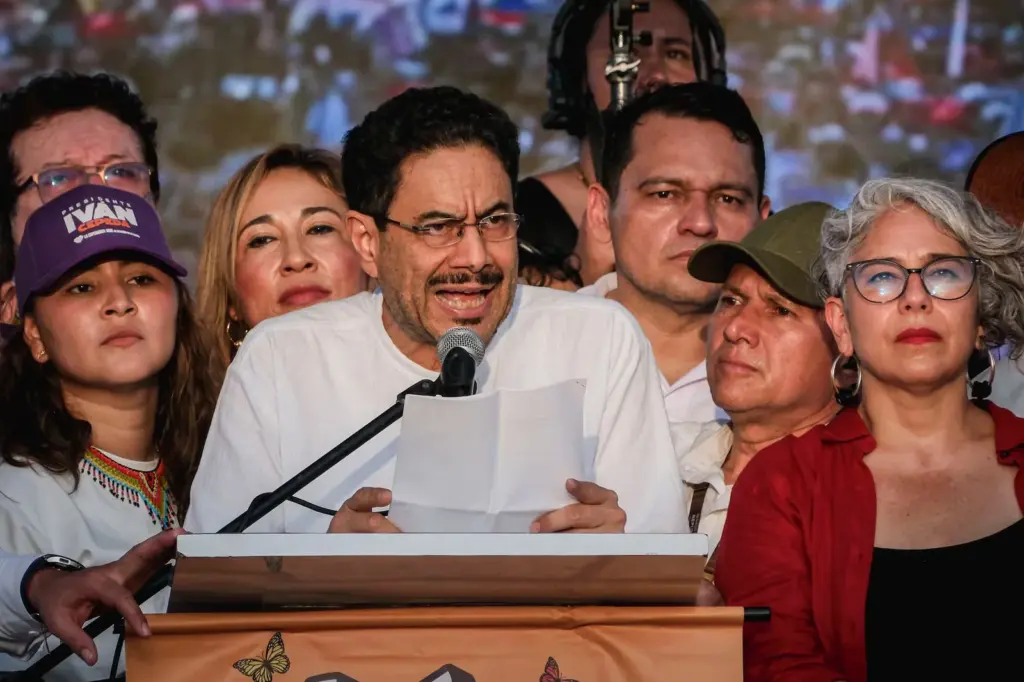
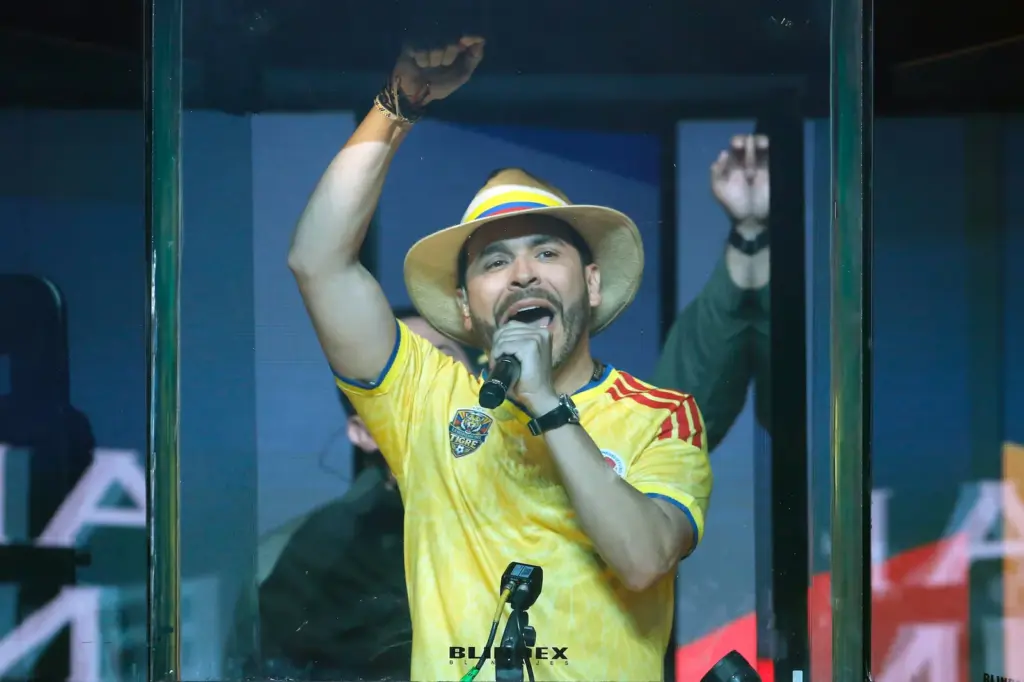
Cepeda and De la Espriella have led antagonistic campaigns. The Tiger (De la Espriella’s nickname) has surrounded himself with spectacle, held rallies in bulletproof glass boxes, shouts and provokes, and has an army of content creators on social media, with a notable and very contemporary emphasis on the digital sphere. Cepeda is exactly the opposite: a sober man who never changes tone and goes from plaza to plaza reading speeches about social justice and structural racism, aimed mainly at the left’s bases. Under other circumstances, he would be an anti-candidate. But his campaign has largely been done by Petro, who, although forbidden to participate in the campaign, has not let a week pass without stirring the political hornet’s nest in favor of his candidate. But a Petro who has a 50% rejection rate is at once the best asset and the heaviest burden for his candidate.
“It’s impressive how, especially in the upper strata, they have a rejection vote rather than a thoughtful vote. And they will vote for Abelardo as long as Cepeda doesn’t win,” says a source with extensive political experience in the center-right who watches the rise of the ultra with horror. “That ghost [of Petro] can do terrible damage.”
What Colombia decides this Sunday is not yet who will govern it, but it will mark the final outcome: whether Petro’s experiment deserves a second chance under another name or if Colombia opens the door to a new right more radical than the one that has governed the country for a lifetime. The answer, according to all polls, is that Colombia will reach that second round split almost exactly in half, with enormous uncertainty about what will happen on June 21. “Whoever wins will find a divided country that does not agree that there is only one way to do things,” says González, who is also a strategic consultant in political communication.
The second round will be a campaign of barely 20 days in which the result of this Sunday will only mark the starting gun. Monday begins the real game, when the eliminated candidates start moving their pieces. And the logic, barring surprises, is that the right, fragmented during these months, will end up rallying around De la Espriella, although many of his voters find it hard to sympathize with such an ostentatious and deliberately vulgar man. On the other side, the center and moderates will tend to move closer to Cepeda, not out of enthusiasm, but by elimination — although there is the possibility that they simply won’t leave their homes, in an active abstention that leaves the decision in the hands of others.
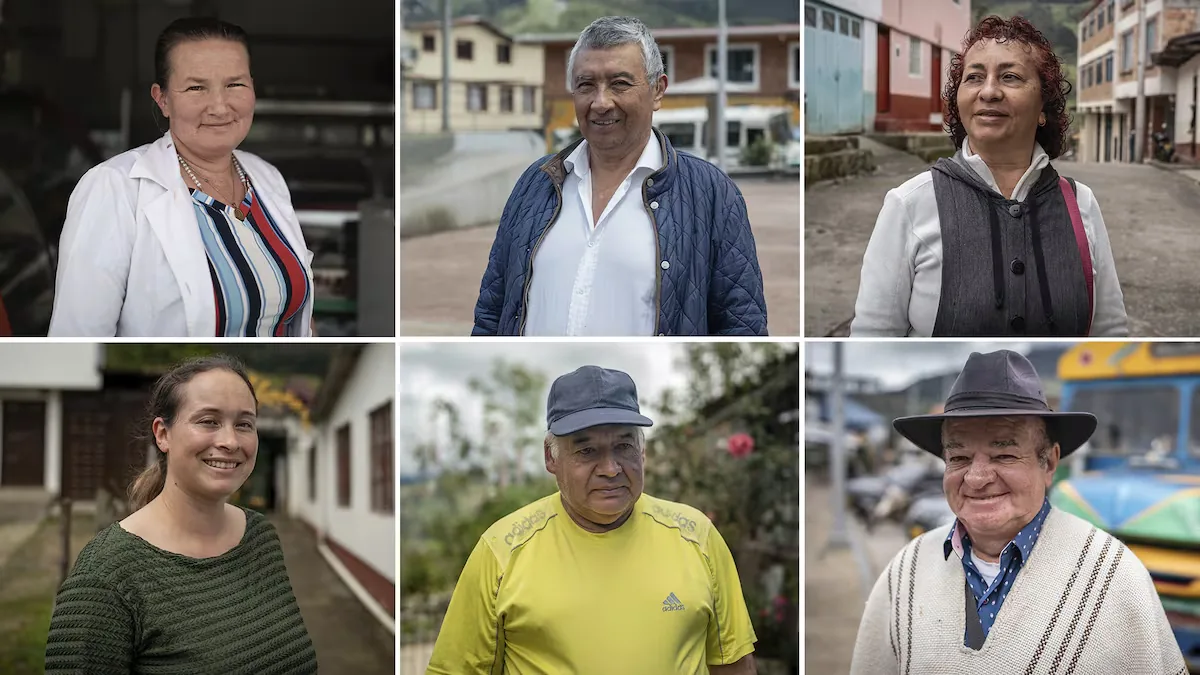
The 41 million Colombians called to the polls this Sunday arrive at this day with the accumulated fatigue of a country that has been living in a permanent campaign state for four years, with its president governing by tweets. The country voting today is not the same that elected Petro in 2022 with the euphoria of historic change, but it is also not clear that it wants to break radically with what began. “The real challenge for the new government will not be to impose an agenda, but to build from what already exists, and not to start everything from scratch again,” says Rodríguez. Colombia begins to define this Sunday the country it wants to be.