







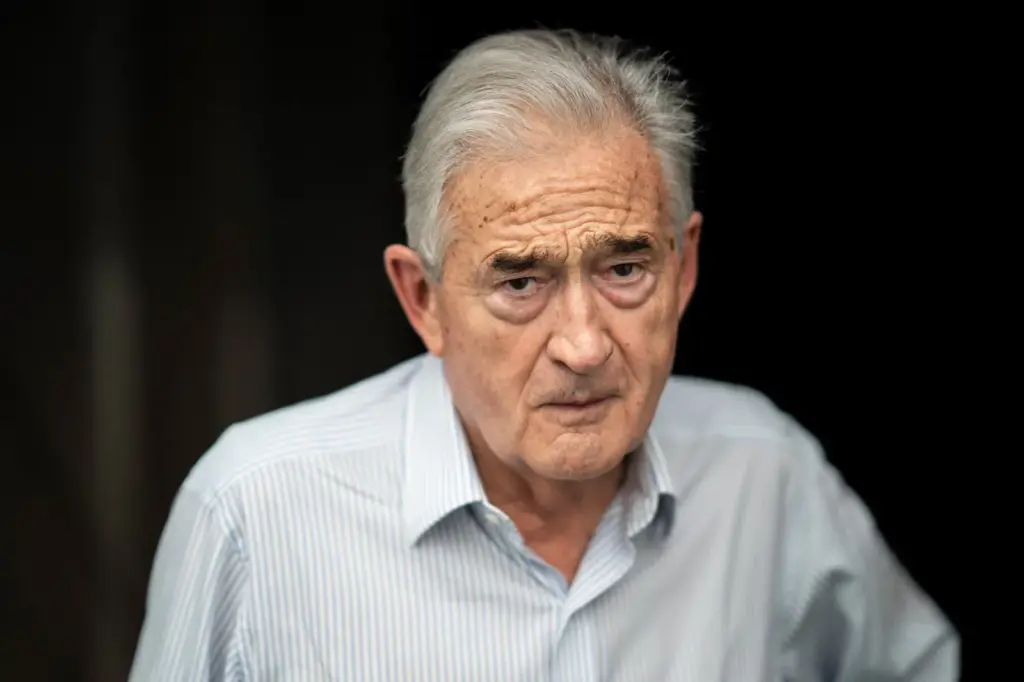
Used to hearing Antony Beevor detail troop movements in Stalingrad, the siege of Berlin, the Normandy landing, the paratroopers’ effort in Arnhem, or the panzer offensive in Hitler’s last gamble in the Ardennes, it is surprising to hear him talk about Rasputin’s penis. The truth is that he shows the same look of concentrated interest as with his usual war topics. “Rasputin’s penis… is certainly an attractive object,” he says when his interlocutor mentions having seen, in an afternoon of astonishment and vodka, what is exhibited as such an appendage in a museum in St. Petersburg in a glass jar. “Yes, it is supposed to measure 13 inches, about 33 centimeters, but I don’t know if it’s something we should take seriously. My father-in-law, the historian John Julius Norwich, explained that his father, Duff Cooper, the first British ambassador to France after the Liberation and also a historian [and father of the notable writer Artemis Cooper, Beevor’s wife], was convinced that part of Rasputin’s sexual success and magnetism lay in his member and muscular control, but there is no historical record that it was cut off after his assassination. Today it is impossible to affirm that what is exhibited is his; I don’t think any DNA test has been done.” In fact, some say it is a horse’s penis, if not a dried sea cucumber, as has also been suggested. Beevor recalls, in any case, that at the time in Tsarist Russia, Rasputin was attributed extraordinary sexual potency and caricatures circulated showing his organ, referring to the monk’s influence over the tsarina and, through her, over the tsar, with the legend: “The rod that rules Russia.”
Read more Comic artist and filmmaker Marjane Satrapi, author of ‘Persepolis’, dies at 56 years old
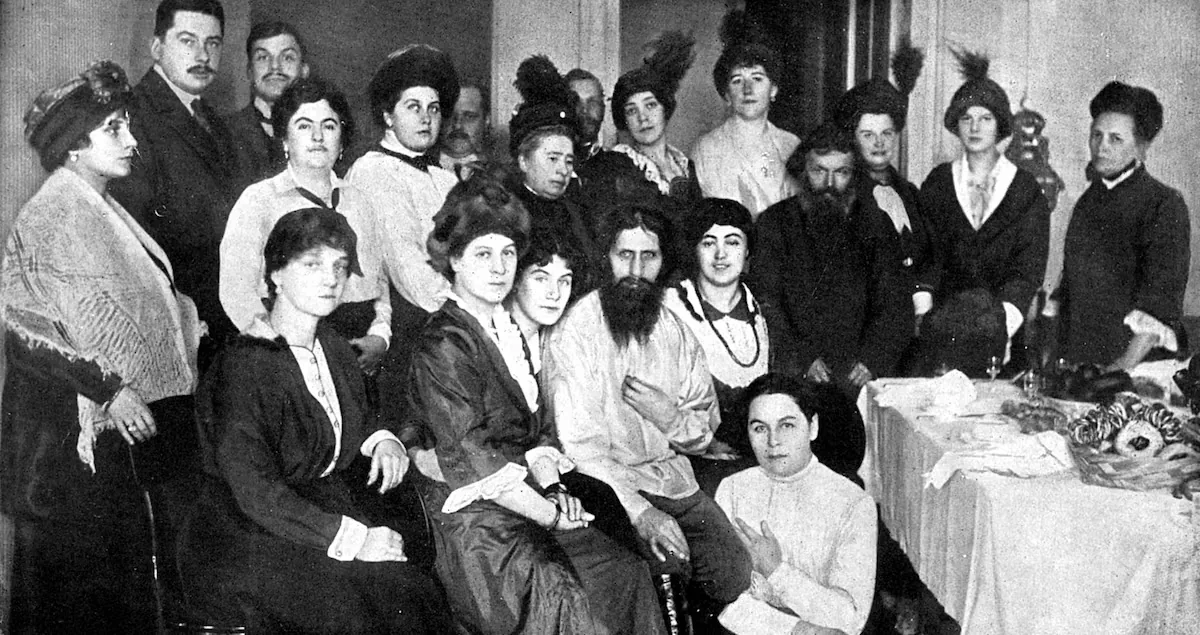
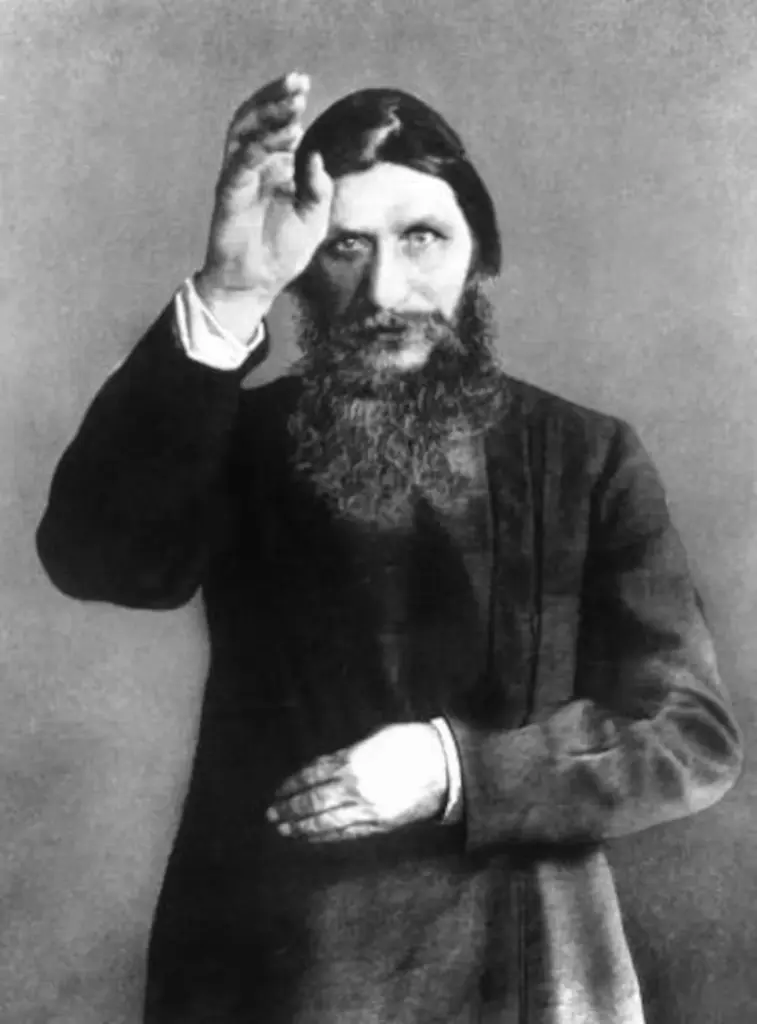
This entire unique conversation with Sir Antony Beevor (London, 79 years old), recognized as one of the best military historians of our time, and which will later include humming the famous Boney M song dedicated to Rasputin, is relevant because the author has just published a book centered on the controversial character, Rasputin and the Fall of the Romanovs (Crítica, 2026), a fascinating and revealing work that falls within another of the scholar’s areas of interest, Russia (with titles such as Russia, Revolution and Civil War 1917-1921, A Writer at War, in collaboration with Luba Vinográdova, about Vasili Grossman in the Red Army; The Mystery of Olga Chekhova or the very Stalingrad). In his new book, Beevor investigates the truth behind the extravagant character of Grigori Yefimovich Rasputin (1869-1916), the great seducer, the wild mystic, the lecherous, drunken, and somewhat filthy mujik (typical Russian literary peasant, rough and poor), who enchanted Tsar Nicholas and his wife Tsarina Alexandra, and whom he says has fascinated him for some time.
The historian emphasizes that despite having no official position and being an almost illiterate Siberian peasant, Rasputin, a novel-like character with a life (and death) of legend or farce, depending on the view, “contributed, unintentionally and not at all as a revolutionary but as a devoted monarchist, more than anyone else to the collapse of the world’s greatest autocracy,” the Romanov empire. In that sense, Beevor believes it is not inaccurate and that there is “some truth” in Kerensky’s judgment, who, expanding on the idea that the monk’s influence over the tsarina destabilized the empire, stated that “without Rasputin there would have been no Lenin.” And the historian recalls that Rasputin, influencing Nicholas’s governments, was responsible, for example, for bread shortages in St. Petersburg, which led to revolts, and is therefore “a direct link to the revolution.”
In his book, Beevor traces Rasputin’s life but not as a conventional biography, rather embedding it in general history and the course of Tsarist Russia towards disaster, observing the character’s connection with the events that precipitated the end of the Romanov house. “The fall of an empire is an extremely dramatic moment, worthy of Shelley’s Ozymandias, and it fascinated me just as the collapse of the Nazi empire did, which I recounted in Berlin.” The historian, who considers that the Romanov Russia was “a narcissistic empire whose fall is an act of poetic justice,” is especially interested in the web of myths and lies, many sexual, that swirled around the tsarina’s favorite and compares them to today’s fake news. And how paranoid rumors about conspiracies could (and can) create effects as powerful or more than reality.
In fact, Rasputin’s assassination in 1916 was the result of the obsession of a part of the tsar and monarchy’s followers — including the dowager empress mother of Nicholas and several grand dukes — who viewed the monk’s influence over the imperial family with alarm and wanted to rid them of him. The conspiracy to kill the rowdy little father and the act of his elimination, which includes the clumsy use of expired poison in pastries and wine, and shots with a faulty pistol, have the same surreal hues as the entire story of the character and the final era of the regime. Regarding this, Beevor recalls that there is an element irreducible to logic in the great Eastern country. He brings up Churchill’s phrase (after the unexpected USSR pact with the Nazis in 1939) that “Russia is a riddle wrapped in a mystery inside an enigma,” and the poet Fyodor Tyutchev’s maxim that “Russia cannot be understood by reason alone.” And he adds: “Nor Rasputin.”
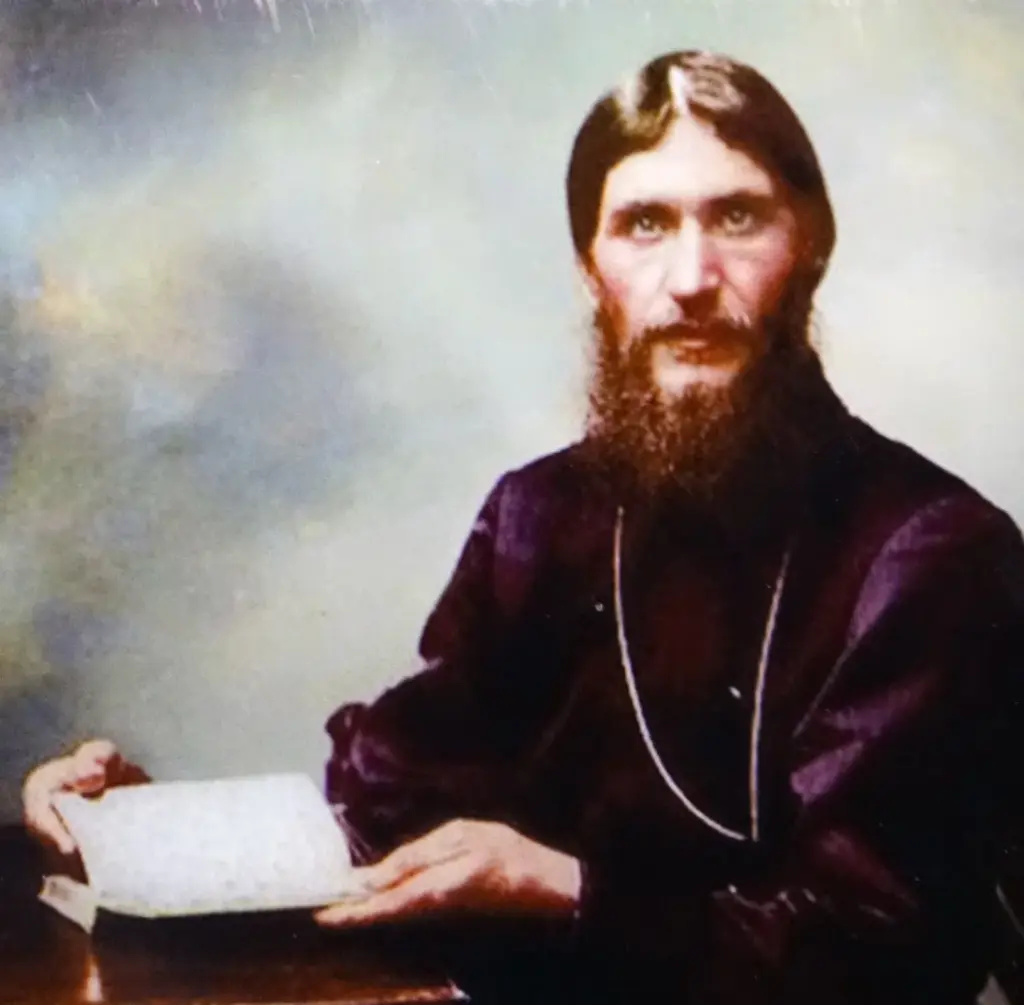
“He was partly a charlatan, but I think there was also an authentic side to his personality, a sincere and even innocent spirituality,” reflects Beevor. “The most surprising thing is that he switched from one character to another; there was an almost schizophrenic element in him.” And what about the lust attributed to him? “There was undoubtedly a component of that in Rasputin, pure lust and extreme lechery; testimonies speak of a compulsion to touch women — he said it established a special communication. Many were seduced by his charisma and shameless, indecent behavior, his combination of eroticism and mysticism; they had intimate relations with him, and there were even great ladies who volunteered to cut his nails and kept the clippings as talismans, as well as leftovers from his food. The fact is he was attracted to female flesh. Obsessed with temptation, sin, and repentance, he felt an irresistible attraction to prostitutes, whom he even hired in pairs, and sometimes tested himself to see if he could restrain himself by lying with them and remaining naked without more — mortification with echoes of the flagellant sect of the jlysty. There is evidence that he treated numerous women of all classes perversely, many lonely, unhappy, or vulnerable, and that he harassed, abused, and raped them. Behavior that today would be judged as absolutely criminal.”
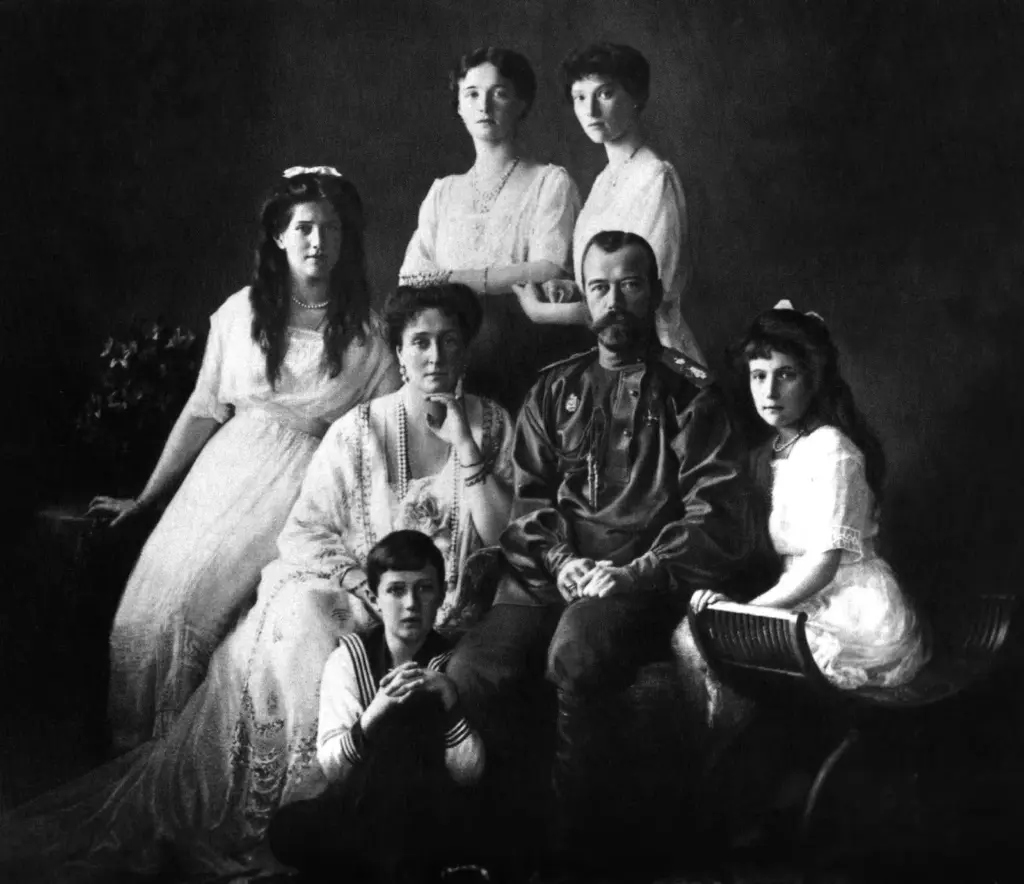
“The tsar and tsarina were also certainly eccentric,” he continues, “and they were not normal people either.” Beevor points out the contradictions of Alexandra, of German origin, raised as a poor Lutheran princess (Alice of Hesse and by Rhine) and later elevated to imperial grandeur, including a name change, to the extent that Queen Victoria, her grandmother, was surprised to see her adorned with the impressive Romanov crown jewels and said: “Who would have thought.” As for Nicholas, “he was not well prepared for his role as autocrat, and was, besides fatalistic and unimaginative, stubborn and indecisive,” a very bad combination to lead an empire in difficult times. They were both very handsome, though (he shorter than her, which caused him insecurity) and were marked by the illness of their only son and heir, the hemophiliac tsarevich.
“You have to see Rasputin as a symptom,” Beevor continues. “At the time in Russia there was a predisposition to mysticism, spiritualism, and holy men that facilitated his rise in imperial society; partly it was entertainment, but the tsar and tsarina took it very seriously and for them, especially Alexandra, Rasputin was a true holy man and a guru, a spiritual master and healer.” Was there any truth to the mental powers attributed to him? “Well, he was very intuitive but was unable to see that they were going to assassinate him. As for his survival ability and his ‘diabolical refusal to die,’ the entire popular account of the assassination is rubbish. It was simply a big botch; the cyanide was expired or made ineffective by the sugar in the pastries, and the pistol with which they first shot him was a very light weapon. It was the most incompetent assassination in Russian history.” Speaking of gurus, does he see a connection with Gurdjieff? “I don’t know him well enough to judge, but it’s interesting how such characters fill some women’s male fantasies.” The historian emphasizes that the Siberian monk arrived at a very bad time for the monarchy but very good for him, after the disaster of the Russo-Japanese war and popular revolts. “Rasputin’s call to contemplate the beauty of God and the spirituality of nature comforted Nicholas, but at the same time the monk eroded the tsar’s reputation, who was seen as cuckolded and incapable of stopping the character’s interference in Russian politics.”
It is curious that Rasputin was eliminated by the most reactionary and far-right Russian sector. “Yes, the most rancid absolute monarchists, desperate over his influence and arrogance — he was even meddling in military decisions of World War I then underway — and who believed he had bewitched the royal family. They killed him because they believed that way they would save the Romanov dynasty; the assassination caused a sensation throughout Europe, where Rasputin was well known. Characters like Yusupov, the main assassin, who cross-dressed, are almost as eccentric as Rasputin himself.”
Some of those anti-Rasputin characters, not to mention Rasputin himself, seem to have come from the pen of Dostoevsky or Chekhov. “That’s true, art imitates life, but Rasputin had not read either of them; in fact, I don’t see him interested in any figure of Russian literature.” However, Boney M was interested in Rasputin; do you remember the 1978 song? It had some interesting verses, like “he was big and strong/ in his eyes a flaming glow” or “full of ecstasy and fire.” Beevor smiles and, surprisingly, quotes other verses from the popular melody, “the ‘russia’s great love machine’ was nonsense, let’s be frank, and also the ‘love of the russian queen,’ all very superficial and false, of course. Sorry I don’t hum it, I sing terribly.” Curiously, Boney M sang a phrase that matches what the historian thinks: “ah, those russians,” ah those Russians.
On the internet, by the way, you can find a Boney M parody with Vladimir Putin singing and dancing to Rasputin. Ras-Putin, is there any relation between the two Russians? “I don’t see it, beyond Putin saying that his grandfather Sprididon Ivanovich had been the chef at the Astoria and that Rasputin always gave him a ten-ruble gold coin as a tip, which may be another of Putin’s fantasies and inventions.”
Is Beevor going to return to World War II as all his readers expect? “Honestly, I don’t see myself like my father-in-law, who wrote his last book, about France, at 88 years old, but I will do another, the last one, and it will be about the Battle of Britain, which is a great turning point, where Hitler’s failure made it clear he could not win the war. And I want to write about the air war, something I have never done.”
Regarding current international affairs, Beevor is not particularly worried that the traditional ally, the US, is distancing itself from European defense. “To some extent, it’s our fault; we should have made more effort before Trump. I trust that the new European army will know how to defend Europe, because I am clear that there will be war in the Baltics in three or four years, and we must be prepared. Spain is far away, and we have the Channel, but if you live near the border with Russia you are very aware of the danger.” As for the Iran war, “I fear it is impossible to predict how events will evolve but I don’t think there will be a very big jump in scale; it will be a matter of degree. We live in dark times, yes.”
Beevor observes differences between historians of his generation who have tackled war history and the new ones. “I don’t want to seem pedantic, but authors like Max Hastings, the great Michael Howard, or myself have a different and more global perspective. We don’t call ourselves military historians like the young ones but historians of war, in the sense that we are especially interested in the effects on the population and not just movements on the battlefield. The younger generation has a more individual focus and they put themselves into the history they tell. We changed the way of telling, offering a more realistic view of how terrifying war is. One must be very aware of the horrors it brings and that conflicts like World War II were no joke. Explaining the horror of war very well is our duty.”