









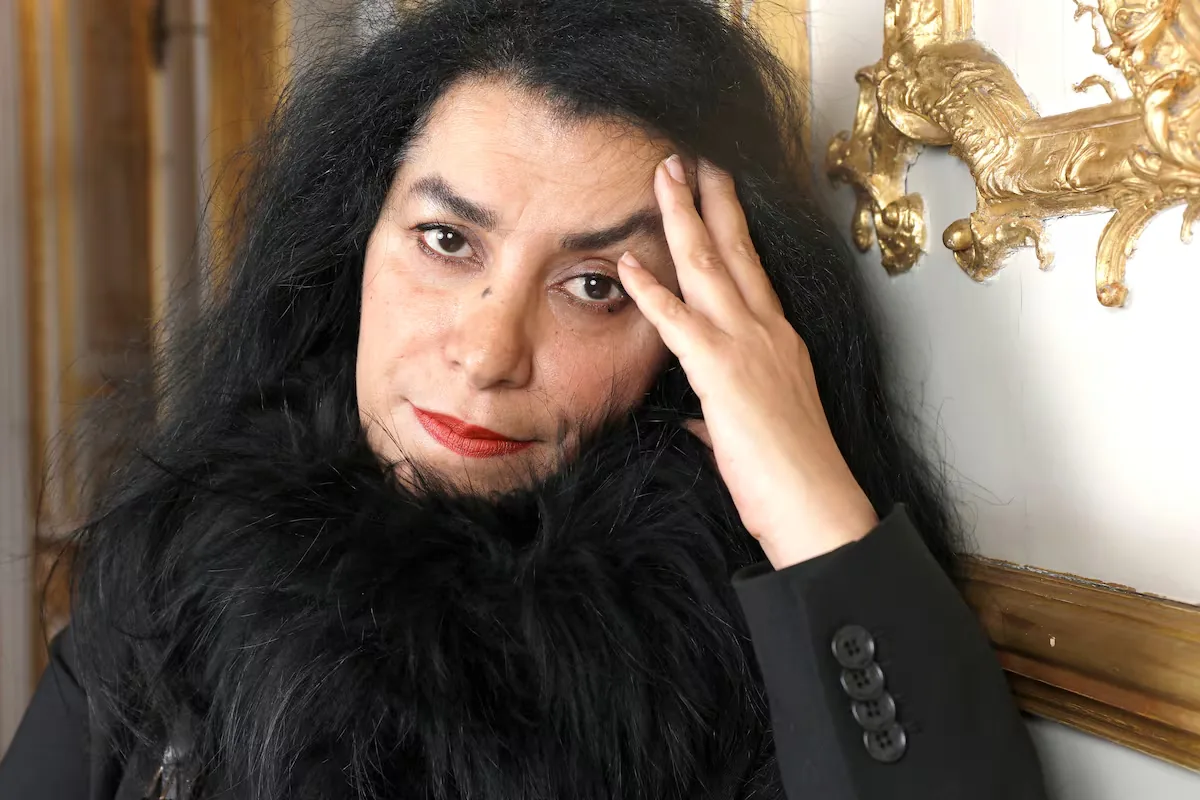
Marjane Satrapi (Rasht, Iran, 1969), author of the graphic novel phenomenon Persepolis and filmmaker, has died at the age of 56, according to the French press, which cites a statement sent by the family to the AFP agency. “Marjane Satrapi died of sadness just over a year after the death of Mattias Ripa, her husband and the love of her life,” the text reads. Ripa, actor, screenwriter, and producer, died in April 2025. On his Instagram account, there are several posts where you can read “I lost the love of my life.”
Born in Rasht, Iran, Satrapi settled in France in 1994. She left her country to study in Europe because her parents wanted her to be educated away from the oppression of the regime. Persepolis, a cult comic and her best-known work, tells of her childhood in Tehran and the changes in Iran after the overthrow of the Shah of Persia in 1979 and the establishment of the Islamic Republic.


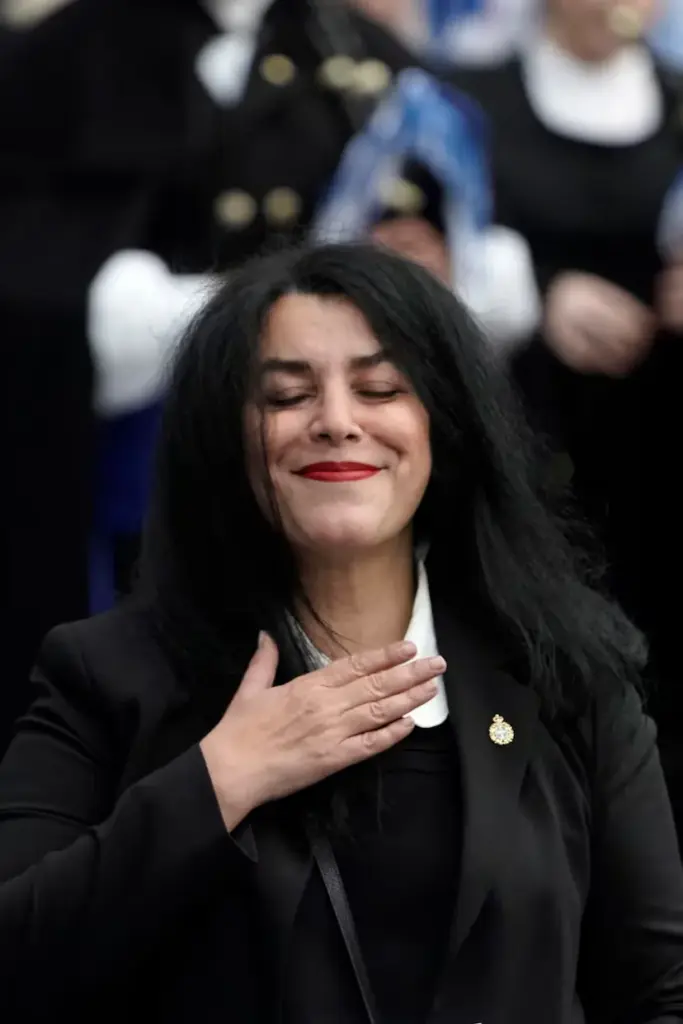
She had little experience and had only been at the Strasbourg School of Decorative Arts for a short time when Satrapi created her masterpiece, which was published in 2000. She believed she would never find a publisher, that everything would end up as photocopies for her friends. “When I was a student, I was clear about one thing: I was going to be poor. I would live in an attic, always eat pasta, and never travel, but I would work on what I liked. With Persepolis, I didn’t even think I would find a publisher,” she said in an interview with EL PAIS. It became a milestone for comics “only comparable to Art Spiegelman’s Maus,” according to Reservoir Books, the publisher that releases it in Spanish, Basque, and Catalan.
Satrapi’s family, affluent and progressive, initially sympathized with the revolution, but when it was dominated by Islamist sectors, it turned into a theocratic regime that curtailed individual freedoms and embarked on a war with Iraq in 1980, under the watch of the Revolutionary Guards.
The comic was adapted into a film, co-directed with Vincent Paronnaud, and premiered in 2007 at the Cannes Film Festival, where it won the Grand Jury Prize. It was also the first nomination of a female creator for Best Animated Feature in Oscar history. Later, she directed The Band of Jotas and The Voices, a road movie about a killer in the United States.
“Drawing is the first expression of the human being, before writing,” the author said about choosing comics. Among her graphic novels are Embroideries, which narrates the lives of Iranian women, and Chicken with Plums, about the last eight days of the life of a relative of Satrapi named Nasser Ali, a well-known tar player, the traditional Iranian lute. With this book, she won the best work award at the Angoulême comic festival and it was also adapted into a film.
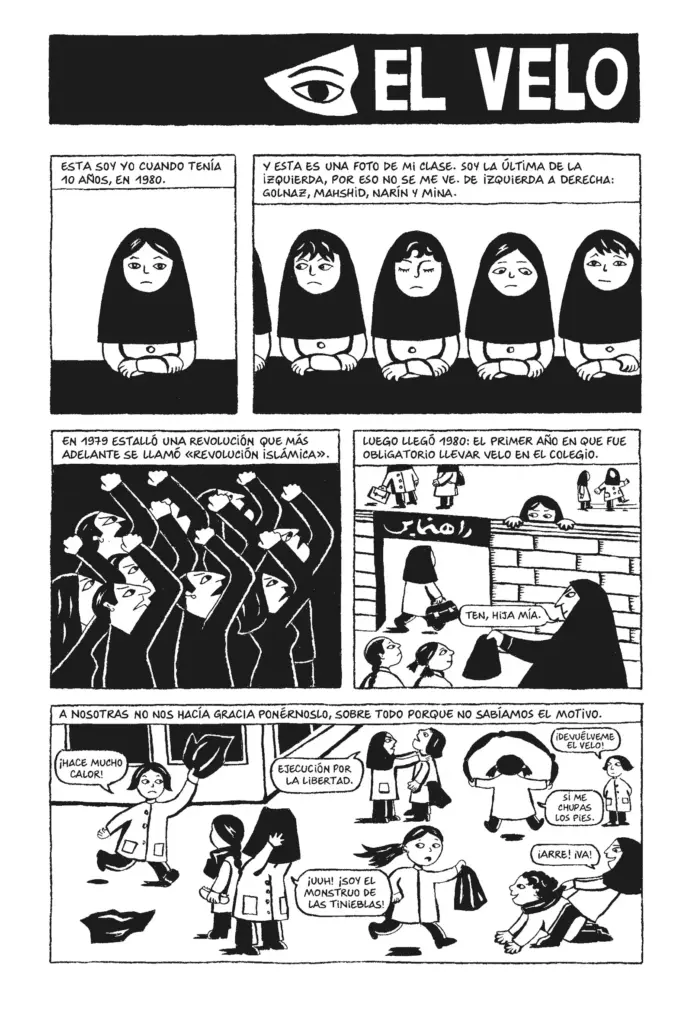
With a strong personality and a heavy smoker (she smoked since she was 13), she hated being photographed, was outspoken, and above all defended freedom, to the point of supporting women’s right to wear or not wear one of the things she hated most: the Islamic veil. “Since I consider human rights superior to my personal point of view, I will fight so that these women can wear the veil, even though I detest it,” she told this newspaper.
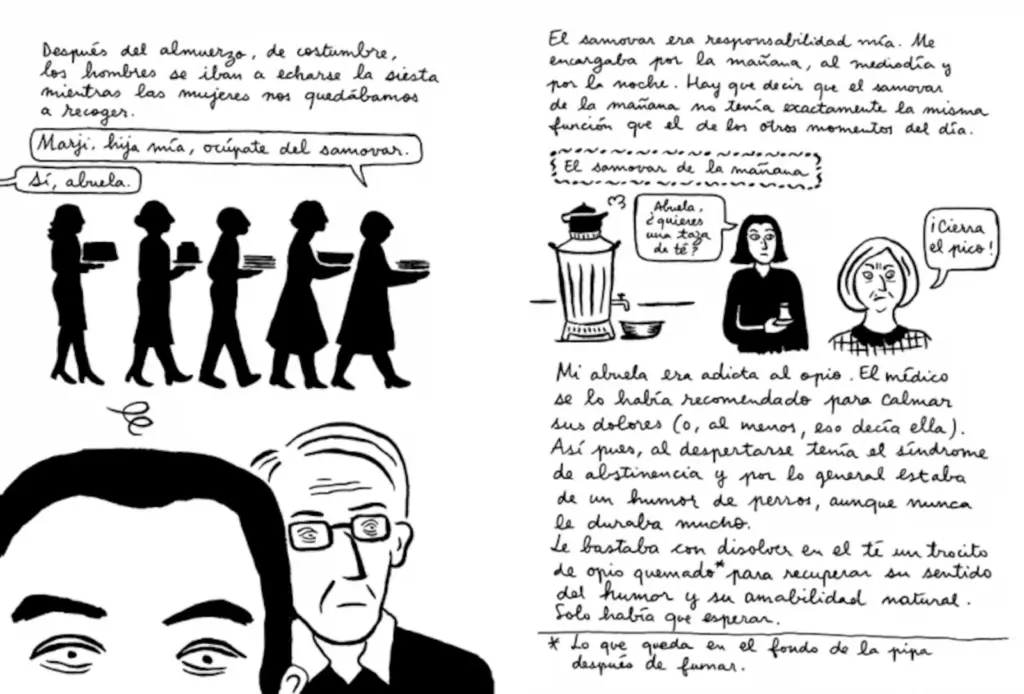
She always dressed in dark colors, like her famous comic, published in black and white: “It’s not about mourning, in the comic the script is what matters. I already have a complex story and if the drawing is too overloaded, it becomes overwhelming. Also, La Association, which published me, only made black and white comics for economic reasons,” the artist said about the origins of Persepolis.
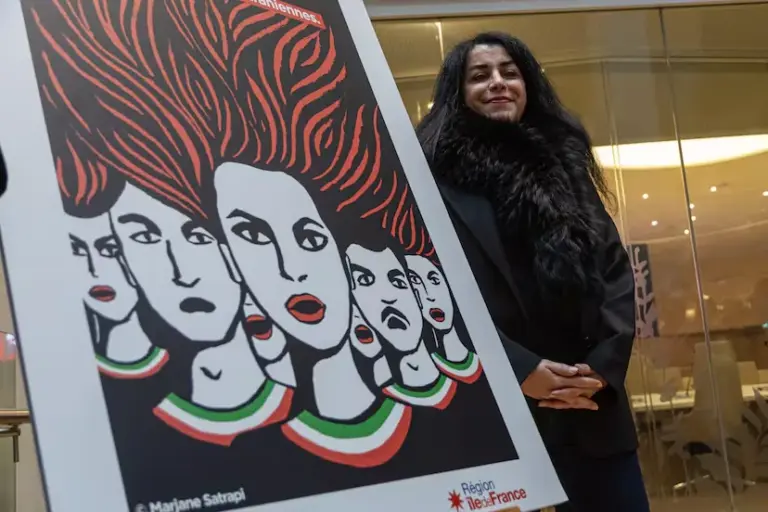
For many years Marjane Satrapi left comics, until in 2023 she coordinated Woman. Life. Freedom, with Iranian female authors and where she gathered stars like Paco Roca and Joan Sfarr — a kind of “international comic brigade,” in her definition. The book tells of the revolution started after the death in 2022 of Masha Amini, killed by the police for not wearing the veil properly. Recently, she had also filmed Paris Paradis, with Spanish actress Rossy de Palma.
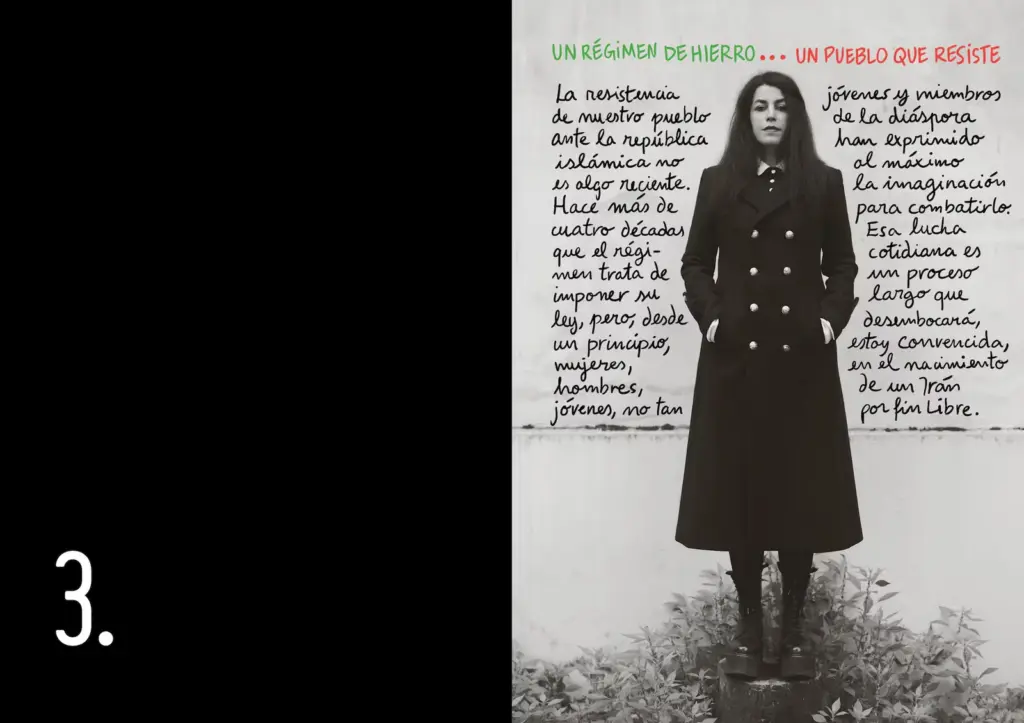
In 2024, she received the Princess of Asturias Award for Communication and Humanities. The jury described Satrapi as “a symbol of civic commitment led by women,” called her “one of the most influential people in the dialogue between cultures and generations,” and recalled that in “Persepolis she exemplarily portrays the search for a fairer and more inclusive world.” And she, in a videoconference press conference, dedicated the award to the fight for freedom in her country and to the rapper Toomaj Salehi, sentenced to death days earlier: “He is the voice of the whole country.”
In 2025, she rejected the Legion of Honor in France for “a matter of principles.” “I cannot ignore what I considered a hypocritical attitude by France towards Iran,” she said. “I find it very hard to understand France’s policy towards Iran,” she said, criticizing that visas are denied to young Iranians “who love freedom, while the children of Iranian oligarchs stroll through Paris as if it were Saint-Tropez without any problem.”
“I sold millions and I don’t know how many hundreds of lectures I gave. Did I change anything? Who knows. Did I awaken people’s curiosity? Yes. I contributed a little. Just a little, although only in this way the world changes,” she reflected in EL PAÍS.
The death of young Mahsa Amini at the hands of the regime in 2022, after 23 years without setting foot in Iran, changed her expectations about a possible return to her country. Until then, she doubted she would return and had made a will saying she should be buried there. But that event changed her perspective: “Now I know I will return,” she confided to this newspaper while alive.