





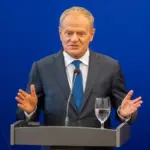
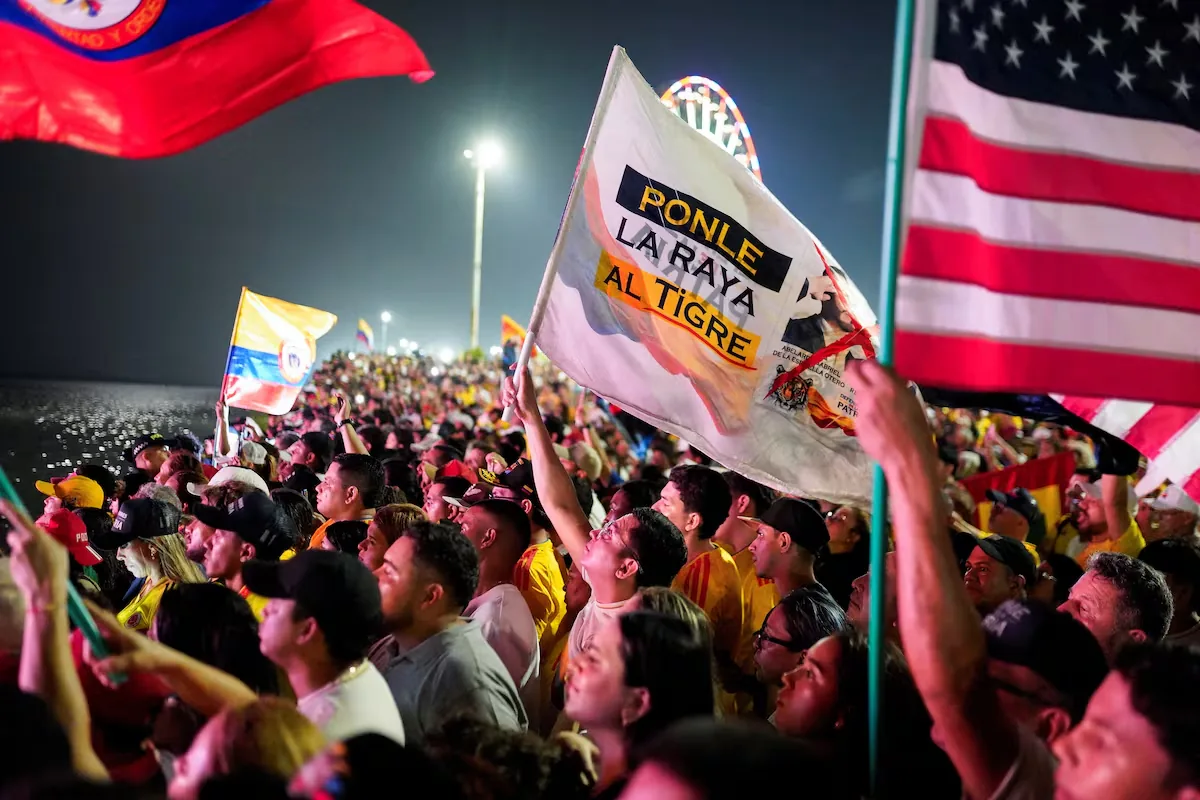
The “total support” given last Tuesday by Donald Trump to Abelardo de la Espriella, who, in addition to being a far-right candidate in Colombia’s presidential elections, has been a US citizen since 2023, was denounced by his rival on the left, Iván Cepeda, as “the intervention of a foreign Government” in an electoral campaign that will be decided on June 21.
Read more Leo XIV, the peacemaker
Beyond the anomaly of Espriella’s dual nationality, Trump’s support for candidates aligned with Washington has become a custom since his return to power, despite the fact that US diplomacy traditionally avoided, however interventionist it may have been for decades through other means, taking sides as explicitly as the White House has done for Javier Milei (Argentina), José Antonio Kast (Chile), Nasry Tito Asfura (Honduras) or Laura Fernández Delgado (Costa Rica).
All of this is part of a strategy that, like almost everything in Trump’s foreign relations, involves viewing Latin America as an internal problem. From this perspective, the President of the United States and his ideologues, Secretary of State Marco Rubio, and close Trump ally Stephen Miller, see no qualms in pushing to make the left-wing pieces of the region’s political domino fall under Washington’s pressure. The goal is to draw a board of exclusively right-wing governments, ideologically aligned with the interests of the northern neighbor. And in this master plan, the next targets, without patience to wait for the natural ideological pendulum to complete its work, are Colombia, Brazil, and the jackpot: Mexico.
The resurrection of the old “war on drugs,” launched in the 70s by President Richard Nixon, and the reactivation of the dusty Monroe Doctrine, which for two centuries has proclaimed that America (the continent) is for Americans (understood as only US citizens) are the theoretical frameworks for this campaign of domination of what, once again, Washington views as its “backyard.” These ideas were made clear in two essential documents for understanding the present and future of an always tumultuous relationship.
On the one hand, there is the US National Security Strategy. Made public in December, it set the priority of “restoring US preeminence in the Western Hemisphere” (which is how Washington usually refers to the American continent). It also came with an addendum, the “Trump corollary,” summarized as a “sensible and forceful restoration” of the “power and priorities” of the United States, which, as has been seen since then, involves, if necessary, supporting allied candidates, the military capture of Venezuelan President Nicolás Maduro, or the strangulation of Cuba to bend it to US interests.
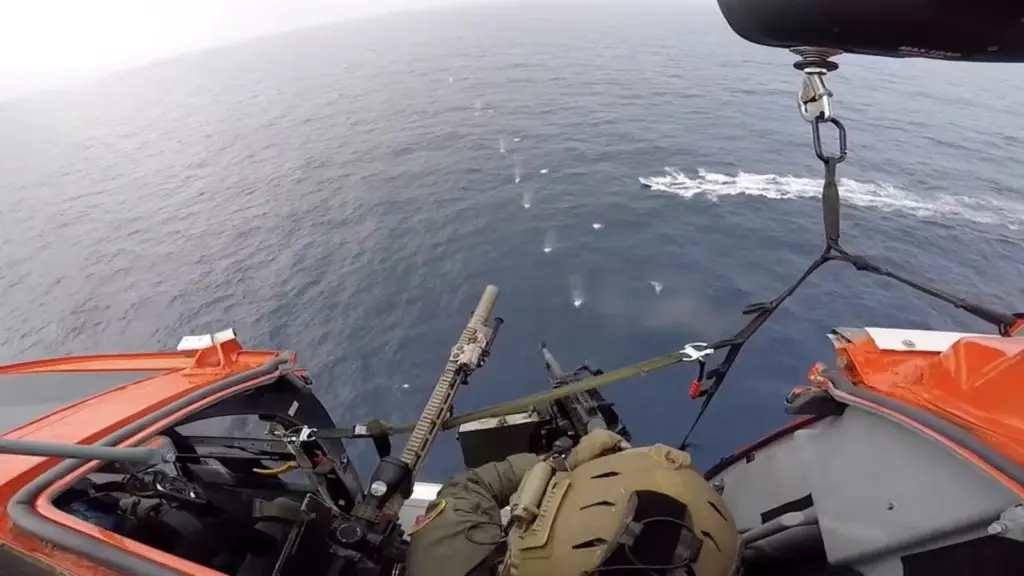
The other document is the National Drug Control Strategy 2026. Published in May, it proposes a more aggressive approach to the global chain of narcotics production and trafficking, ignores, as usual, the problem of US demand, and focuses on Colombia and Mexico. The document serves as justification for actions by the Trump Administration such as the campaign of extrajudicial executions of crew members (more than 200, to date) of alleged drug boats, presumed guilty of crimes not punishable by the death penalty in the United States, joint operations against cartels already operating in Ecuador, and under pressure to launch them in Guatemala, or the promotion of the “narco-terrorism” label as a semantic justification for all of the above.
In this context, the three governments of non-explicitly aligned countries, Mexico, Brazil, and Colombia, have raised their tone as pressure also grew. In recent weeks, the thesis of the erosion of sovereignty due to US interference, with greater or lesser intensity, is already on the table at a decisive moment for the three countries. Colombia awaits the second round of presidential elections, Brazil holds its general elections in October, and Mexico has an appointment with the polls next year to renew parliament.
Mexico, narcopolitics in the judicial crosshairs
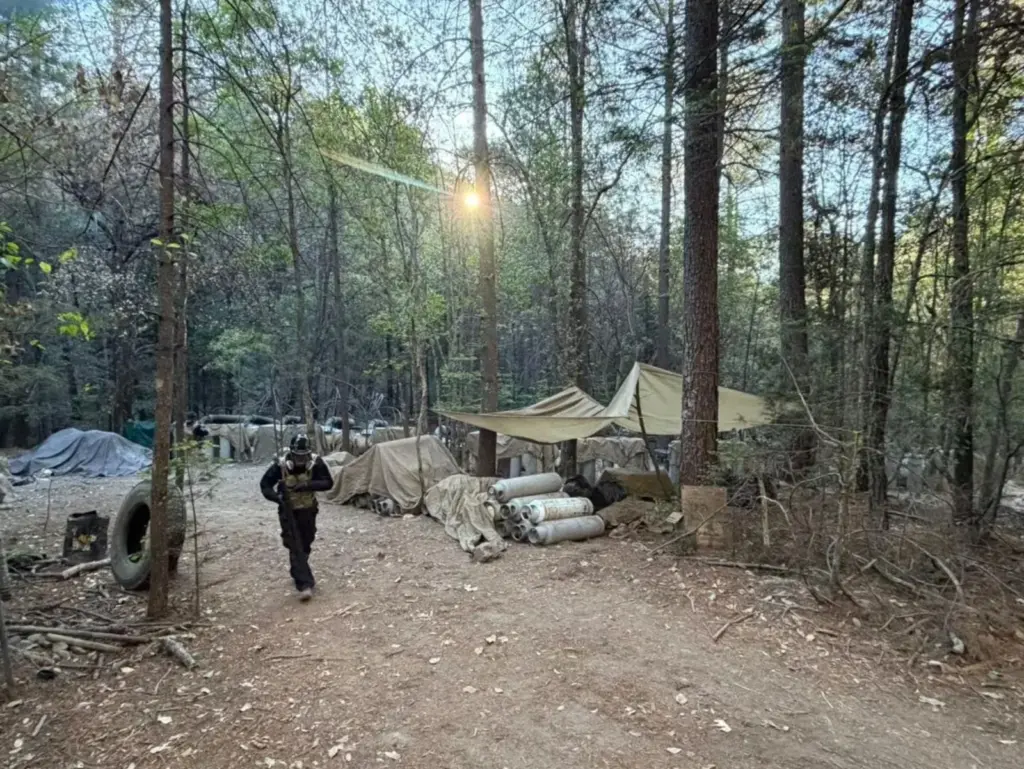
From the first day of his mandate, Mexico has been in Trump’s crosshairs. The classification of six Mexican drug mafias as terrorist organizations —the largest number on the list— was much more than a rhetorical leap; the White House opened the door to military interventions in the territory of its southern neighbor. With this constant pressure on its shoulders, Claudia Sheinbaum’s government has been negotiating Washington’s other demands —from trade to migration— in an intense bilateral relationship. It was rare for a week to pass without a Republican senator, a Cabinet member, or even Trump himself, hinting at their intention to deal with the problem themselves, with or without Mexico’s cooperation.
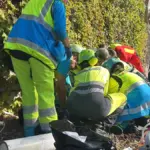
President Sheinbaum insisted on defending the limit of national sovereignty and tried to place the thesis of “shared responsibility” for the problem of drugs and violence on the agenda. But something changed on April 19. An accident in the Chihuahua mountains revealed that two CIA agents were conducting joint operations with the state prosecutor’s office. The president reacted firmly, denouncing that they had no authorization, and from there, everything accelerated rapidly. Less than two weeks later came the explosive indictment from the Department of Justice against Sinaloa Governor Rubén Rocha and nine other high-ranking state officials for links to one of the factions of the Sinaloa Cartel.
The bilateral relationship escalated to a new, more critical phase with increasingly less room for maneuver for Mexico. The government demanded more evidence and announced its own investigation, while from the other side of the border, signs emerged that more accusations are about to be released against Morena governors. In parallel, political and parliamentary levers were also activated. Last week, the ruling majority approved a constitutional reform to allow elections to be annulled by invoking “foreign interference.” This even explicitly embraced the thesis of intervention behind the judicial blows. “Is it really a legitimate interest to combat organized crime, or do they perhaps intend to influence the 2027 election in our country?” the president rhetorically asked this Sunday during a massive event.
Read more The monastery of Sant Pere de Rodes returns to 1314 through virtual reality
As a culmination, former president and totem of the Mexican left, Andrés Manuel López Obrador, reappeared this Wednesday on the public scene to bolster the same strategy, closing ranks with the president by denouncing “interventionist practices under the pretext of combating drug trafficking.” He elaborated on this thesis by asserting that “some US officials are plotting to weaken Morena and strengthen the right-wing opposition in Mexico with the idea of once again having a subservient, corrupt, mafioso, and cruel government, and therefore, vulnerable, subordinate, and faithful to their interventionist designs.”
Brazil, drug terrorism and possible new tariff hike
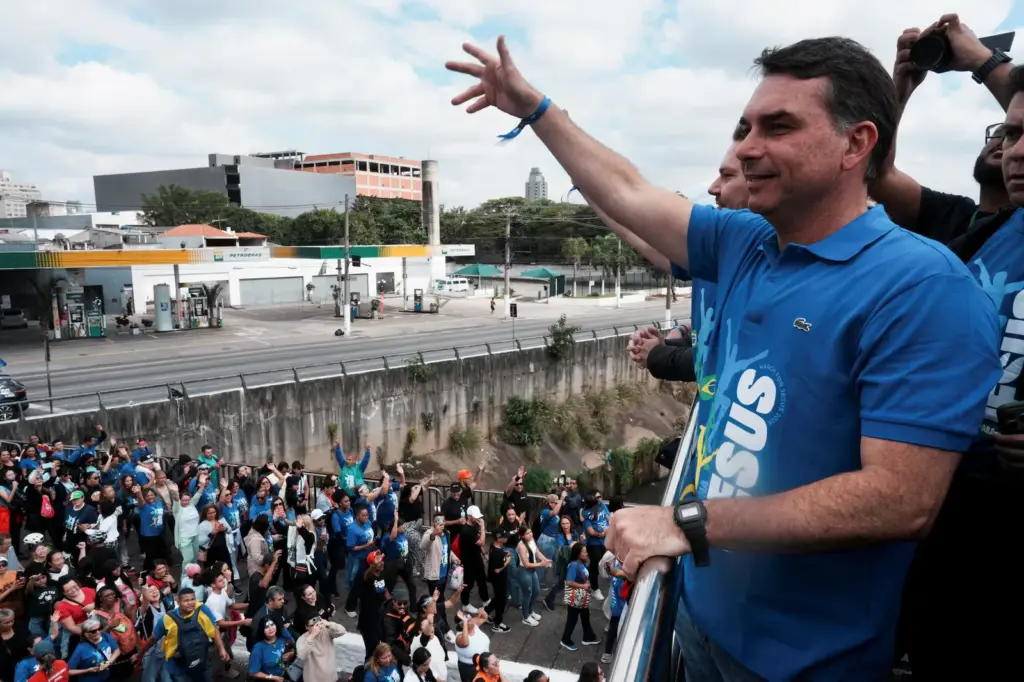
The first interference in Brazil’s elections —the explicit attempt to sabotage the trial against Bolsonaro Sr. in 2025— left Lula’s government and the instigators themselves, the Bolsonaros, speechless and in shock. The new maneuvers now undertaken by Washington have no longer surprised anyone. By including the Primeiro Comando da Capital (PCC) and Comando Vermelho on the US terrorist list starting this Friday, alongside Al Qaeda, ISIS, the Palestinian Hamas, and the Lebanese Hezbollah, the Trump Administration fully enters the Brazilian debate on public security, one of the electorate’s main concerns.
Lula’s government, which skillfully and patiently managed to neutralize the bulk of the 2025 tariffs, has not this time managed to persuade Trump to curb his plan to militarize the fight against crime that the Bolsonaros were demanding. The United States announced the news the day after Flávio Bolsonaro, who intends to contest the elections against Lula, asked Trump for it during a visit to the Oval Office. Lula prefers to attack the PCC and CV through their finances, not with heavy fire.
President Lula cried foul because he considers that labeling both gangs as terrorists —unilaterally and outside the UN— constitutes a frontal attack on national sovereignty and opens the door to military intervention.
Washington has more artillery in the chamber. The Trump administration is seriously considering imposing a new 25% tariff on Brazil for unfair trade practices, including the super-popular instant payment system Pix, which competes with US credit cards. The final decision rests with Trump. The United States is preparing a second extra tariff against Brazil, China, and much of the planet for using forced labor. Meanwhile, Lula and Bolsonaro Jr. have fully entered a heavy-caliber dialectical war. The president accuses his rival of being a traitor, while the latter accuses him of protecting narcoterrorists while claiming to have asked Trump not to approve the new tariffs.
And since this is about geopolitics, Iran has slipped into the spat between the United States and Brazil with an artificial intelligence video in which the Statue of Liberty attacks Christ the Redeemer, who strikes back and wins. It was disseminated after the tariff threat by the Iranian embassy in Tunisia, Tehran’s animated propaganda arm in the war against the US and Israel. END
Colombia: Trump bursts into the elections
Trump waited for the first round of the Colombian presidential elections to occur before directly intervening in the campaign. After approaches by several of his close associates with the ultra-right candidate’s campaign, led by Colombian-American senator Bernie Moreno, the news was not surprising. In a post published on June 2 on Truth Social, the US president endorsed far-right candidate Abelardo de la Espriella, a Caribbean criminal lawyer who has built his campaign on criticism of bureaucracy, calls for a firm hand, and rejection of elites he calls corrupt —values that resonate with Trump’s own. De la Espriella immediately expressed gratitude and promised to build the largest network of alliances and treaties with the United States in the country’s history.
Gustavo Petro, who has been openly campaigning against De la Espriella and in favor of his candidate, Senator Iván Cepeda, responded by repudiating the interference and calling on Colombia to move forward with its process regardless of the opinions of the American leader. The declaration comes at a particular moment in the relationship between the two presidents: after a series of crises in Trump’s first year —which included the announcement of a trade war that never materialized and the suspension of Petro’s visa to enter the United States—, a visit by the Colombian to the White House last February had smoothed over the rough edges. Petro even said he had a good relationship with Trump.