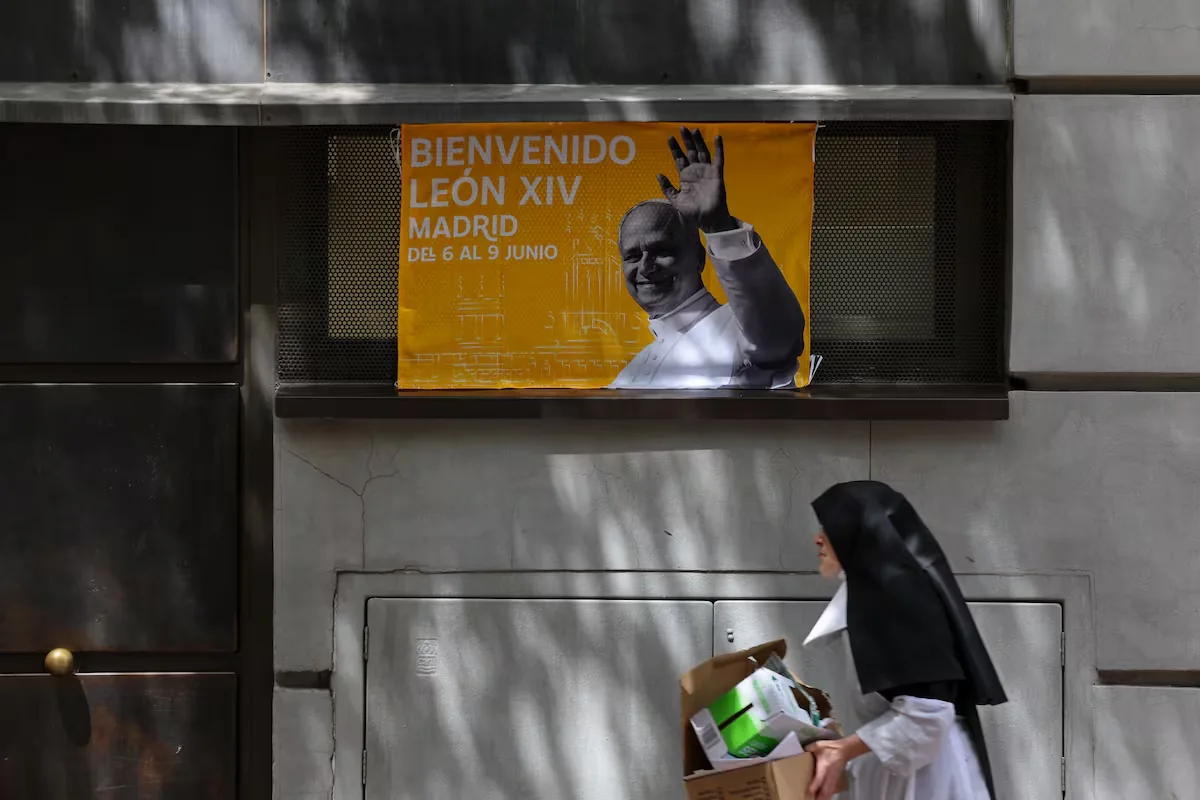


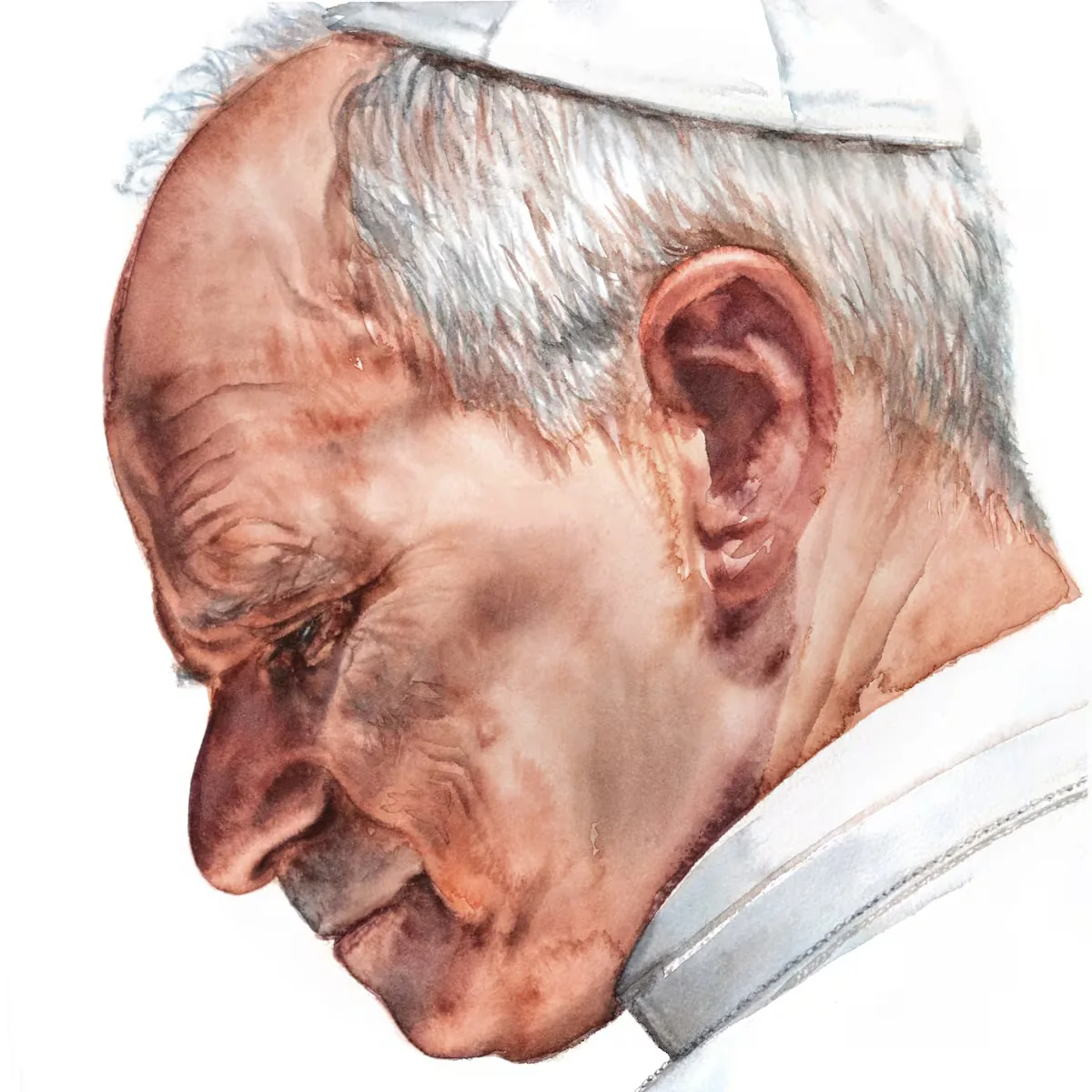
Spaniards are going to get to know a Pope up close whom the world still knows little about. He has gone from being a mystery, someone seemingly pusillanimous, to becoming a surprising revelation in two months, ever since he clashed with Donald Trump in mid-April and two weeks ago published a far-reaching political encyclical, an indictment against Silicon Valley’s technofascism. His long visit to Spain will culminate in the definitive discovery of Prevost, as it is his first major trip to Europe and he will speak to the entire Western world. But what does this Pope think and why has he been so disconcerting?
Read more The monastery of Sant Pere de Rodes returns to 1314 through virtual reality
The bewilderment is due to a matter of timing. Prevost’s method is to listen, reflect, but then speak and act directly. This is why his initial silence, which he has begun to break by deploying a point of view that does not come out of nowhere. As a good Augustinian, his Christian vision forms a political stance, according to the principles of The City of God by Saint Augustine, which describes two cities, one earthly and one spiritual, which is the one men should keep in mind. In his speech to the diplomatic corps on January 9, he expressly cited the work: “Christians living in the earthly city are not alien to the political world and, guided by the Scriptures, seek to apply Christian ethics to civil government.” They do so, he argued, for “a more just and peaceful coexistence.” “Augustine also warns of the serious dangers to political life posed by false representations of history, excessive nationalism, and the distortion of the ideal of the political leader,” he noted.
The first American Pope began with that speech, at the beginning of the year, to delineate a political vision that would lead him to a collision with Trump. In fact, after hearing him, the alarm went off in the White House and the nuncio in Washington was called for a “frank” exchange of opinions, as later transpired. Elected in May, Prevost took 2025 to prepare to take the stage. After the summer, he began to speak with journalists when leaving the papal residence of Castel Gandolfo, on the outskirts of Rome. With striking phrases: “Whoever says they are against abortion but agrees with the inhumane treatment of immigrants in the United States, I don’t know if they are truly pro-life.”
But it was from that January speech that he began to speak more and more clearly: “War is back in fashion and warlike enthusiasm is spreading. The principle established after World War II, which prohibited countries from using force to violate other people’s borders, has been broken.” Prevost defended the UN, international and humanitarian law, condemned attacks on civilians and the use of hunger as a weapon of war.
At the same time, he drew the line on other fronts, sensitive to the progressive world, by condemning abortion, euthanasia, defending conscientious objection, and even speaking of “a new Orwellian-style language that, in an attempt to be increasingly inclusive, ends up excluding those who do not conform to the ideologies that feed it.” “In the West, the space for true freedom of expression is rapidly shrinking,” he even said, almost in line with US Vice President J. D. Vance. All this gives clues as to where he will go in his speeches in Spain, which will sometimes please some and sometimes others.
His idea is to speak to everyone. In his book-interview (Leo XIV. Citizen of the World, Missionary of the 21st Century, Debate), journalist Elise Ann Allen asked him about Trump’s politics and he replied: “I don’t plan to get involved in partisan politics.” His idea is to talk about the values of the Gospel and “hopefully people on both sides of the aisle, as we say, can listen.” In reality, as he has confessed, when he was young he thought of dedicating himself to politics.
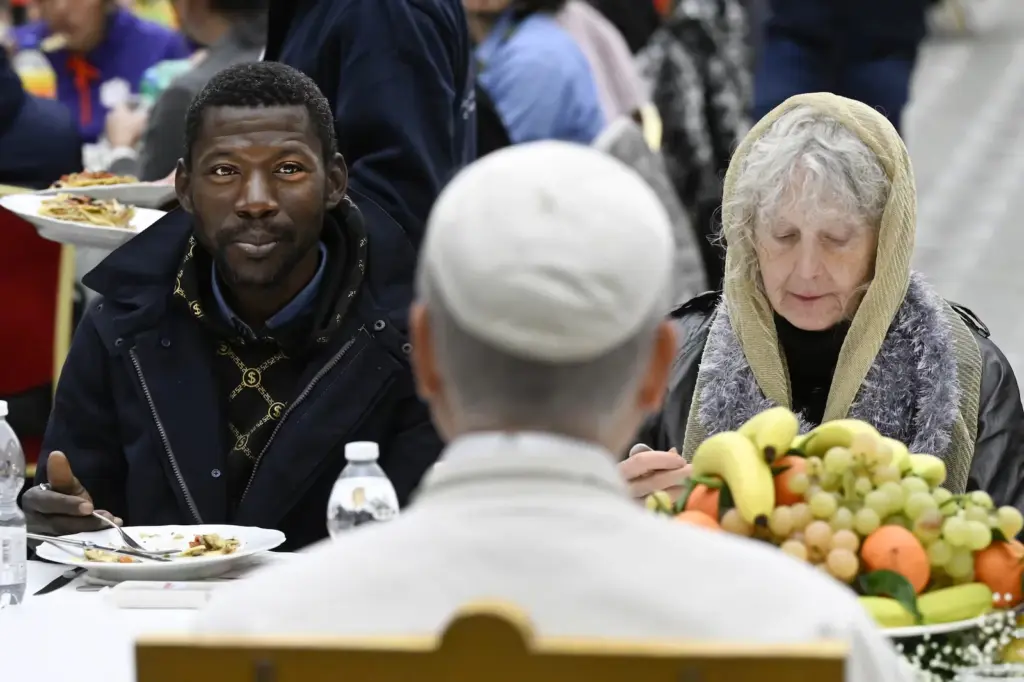
The interesting thing is that he has become Trump’s moral antagonist on the global stage, but garnering more consensus than Francis, without internal fractures. Due to his parsimonious style, there is no feeling that he has confronted him by engaging in politics, but rather that it is Trump who has ended up clashing with him. In fact, Trump attacked him first. And Prevost’s response was very calm: he said he was not afraid of him and had no interest in debating with him. Regarding his predecessor, he is aware of having an advantage: “The fact that I am American means, among other things, that people cannot say, as they did with Francis, ‘he doesn’t understand the United States, he just doesn’t see what’s going on.'”
“Whoever is against abortion but accepts inhumane treatment of immigrants, I don’t know if they are truly pro-life,” he affirmed.
The line of clash is clear. In addition to reacting to barbarism, Leo XIV responded above all to the attempt to manipulate the Christian message from the American far-right, and also the Bible by Israel, to endorse war as a crusade. The Pope recalled on March 29 that Jesus “does not listen to the prayer of those who wage war and rejects it saying: ‘Even if you multiply your prayers, I will not listen: your hands are full of blood!'”
On April 11, he was even harsher, with very clear references to Trump. He said that in the kingdom of God “there is no sword, no drones, no revenge, no trivialization of evil, no unjust profit, but only dignity, understanding and forgiveness.” “In this we have a barrier against that delirium of omnipotence that becomes increasingly unpredictable and aggressive around us. (…) Enough of the idolatry of oneself and money! Enough of the display of force! Enough of war!” The next day was Trump’s first personal attack on Leo XIV. He said he should “stop pleasing the radical left.”
It is useful to remember the first phrase Leo XIV said as soon as he appeared on the balcony of Saint Peter’s, upon being elected on May 8, 2025: “Peace be with all of you!” And then he specified: “An unarmed peace and a disarming peace, humble and persevering.” These are adjectives that define him well. This phrase summarizes his first great priority, an impulse that continues to this day: to calm spirits. His great concern is polarization, division, both in society and in the Church. It will probably be one of his central messages in Spain.
A detail is revealing: he drives “like a madman,” at full speed. And in Peru he danced salsa, even ‘El meneíto’.
This is the core of his thought: the idea of division that clashes with that of community, which for him is essential (“I am not a lone ranger, I never have been”). He became an Augustinian for that reason (“The communal life of the Augustinians, the aspect of friendship, doing things together, all that made sense to me”). The priority is unity, overcoming differences, and also not leaving anyone out, including everyone. That is why he sees a root of polarization in inequality, “the ever-widening gap between the income levels of the working class and that of the richest.” “Yesterday I read the news that Elon Musk is going to be the first trillionaire in the world. What does that mean and what is it about?” he has said.
On the other hand, for Prevost, the idea of unity is dynamic, linked to that of movement, moving forward together, without getting stuck in problems. This gives him a practical sense. Leo XIV is a mathematician and canonist, with a very American pragmatic mentality. In all his positions, he has proven to be a skilled administrator. He himself summarized it in Allen’s book: “I know how to listen, I think, quite well. When I’m with people, I have respect for everyone’s point of view, but then I also get to a point with them, when possible, of saying: we have to make a decision here, friends.”
Prevost is someone who, despite appearing shy, takes his time and then takes risks: “I am adventurous. Some people would use the word brave, others would say crazy, but I am willing to move forward. (…) You can’t keep going around in circles: let’s think about this and talk about it forever.” A revealing detail on which those who knew him agree: he drives “like a madman,” at full speed. And in Peru he also danced salsa when there was a party, even El meneíto.
His entire worldview was formed by his experience in Peru. His biography provides many clues to understanding how he thinks: he is the first missionary Pope. John Paul II never left Poland before becoming pope. Benedict XVI, German, spent his life in Rome. Francis was Latin American, but always lived in Argentina. In addition, as prior general of the Augustinians, Prevost traveled to nearly 40 countries.
He himself admits that going to Peru changed his life. He fell into a lost corner of the world, he knows what it’s like to be in that place: “I remember arriving in Chulucanas in 1985. It was the year after the horrible floods of 1983 and 1984. The roads were still destroyed. It was a situation of extreme poverty, very different from what it is even today, and there was a part of me that looked around and said: Lord, where have you brought me?”
It is in Peru that his political vision also takes shape. When he arrived in 1985, the country was agonizing with the terror of Sendero Luminoso and a collapsed economy. The terrorists even threatened Americans and some priests left. Prevost and others stayed. He was clear that his place was alongside the people. Like Bergoglio, and hence their strong common genesis, he is a son of the new progressive and post-conciliar Latin American Church, after the Celam conference in Medellín in 1968. This is what he thinks of liberation theology: “It is to begin to look through the eyes of the poor and with the poor to understand how God is in and among us. It does not necessarily mean that you are promoting Marxist ideology, although some have labeled it that way.”
There is another experience that Prevost lives firsthand in Peru: the brutal effects of an ultraliberal regime that plunges a country into poverty and ends up leading to a dictatorship. The regime of Alberto Fujimori and his fujishock, the shock economic measures. Leo XIV knows very well what leaders like Milei do. In Peru, he had to fight it by creating soup kitchens, helping the poorest. Also by promoting street demonstrations in defense of human rights and democracy. Collecting signatures for the creation of the Truth and Reconciliation Commission, which investigated human rights violations committed in Peru between 1980 and 2000, after the fall of Fujimori.
Similarly, it’s not that he believes in climate change, it’s that he has suffered its effects in natural disasters in Peru, such as the coastal El Niño phenomenon in 2017, or Cyclone Yaku in 2023. His diocese was dedicated to delivering prefabricated houses. Likewise, his empathy with immigrants is seen in all those he had to help in Peru, especially from 2018 with the massive arrival of Venezuelans. Prevost provided assistance to immigrants and helped pay for more than 3,000 regularization procedures. But, to begin with, he is the son of immigrants, from a mixed-race family: “I remember a neighbor who wouldn’t speak to my mother because ‘your mother is African American’ and there was prejudice there. We didn’t pay much attention to it. My father at the time was a school superintendent and brought people home all the time, African Americans, whites, Hispanics, it didn’t matter.”
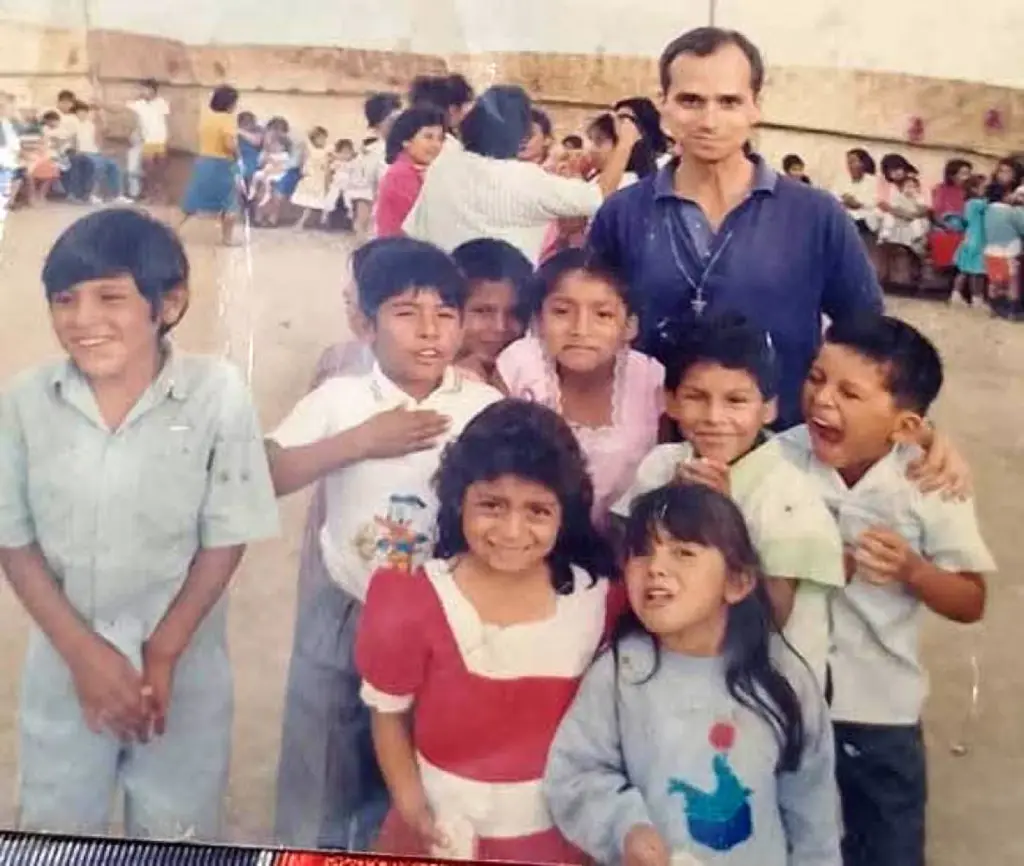
Prevost also experienced firsthand the translation of Cold War tensions in the Latin American Church, which fueled the rise of ultraconservative movements. He knows the situation perfectly. In the Church of Peru, from the eighties onwards, Opus Dei, the Neocatechumenal Way, and the Sodalitium Christianae Vitae dominated. Prevost had to deal with all three. But, again, he applied his method: not to prejudge, to understand everyone, to let differences dissolve through mutual interaction.
When he arrived at the diocese of Chiclayo in 2014, it had been an Opus Dei stronghold for decades, with Spanish bishops. He faced resistance, he was criticized in WhatsApp groups. But he was unfazed, he simply took it with patience. The same happened in El Callao, where Francis sent him as a paratrooper in 2020 to bring order to a chaotic diocese. A Neocatechumenal bishop had practically gone mad, wanting to impose the adherence of all priests to his movement. He even sent hitmen to parishes. After a while, Prevost imposed peace and restored coexistence.
Leo XIV’s toughest battle was against the Sodalitium, and it still continues, as it is from its environment, with connections to the far-right in the US and Spain, that attacks against him originate. This group with cult-like characteristics, inspired by the Spanish Falange, spread among the Peruvian upper classes and other neighboring countries, where it gained economic and political power. In 2015, a book finally brought to light dozens of sexual abuses, and Prevost was one of the few Peruvian bishops who supported both the victims and the press. He was decisive for the final dissolution of the entity in January 2025.
This is the issue that revealed the scourge of pedophilia to Leo XIV. He has recounted how he was impressed by a woman’s denunciation against a well-known member of the Sodalitium: “Of course, the institutional response was to muddy her name, to say she was crazy, to seek all forms of defamation, simply to destroy the person. (…) The institution itself is corrupted by this mentality of ‘we have to defend the institution above and against anything.'” Regarding his contact with victims, he has said: “I don’t know if I have ever heard a case where I didn’t believe the victim. I have to say it, because when you talk to people and you know they are suffering, that suffering comes from somewhere. It’s not made up.” This is what he thinks about pedophilia, but being one of the most complex issues he faces, he has not yet taken any steps on this.
Read more Américo Villarreal shows his visa and denies accusations of ties to crime: “My conscience is clear”