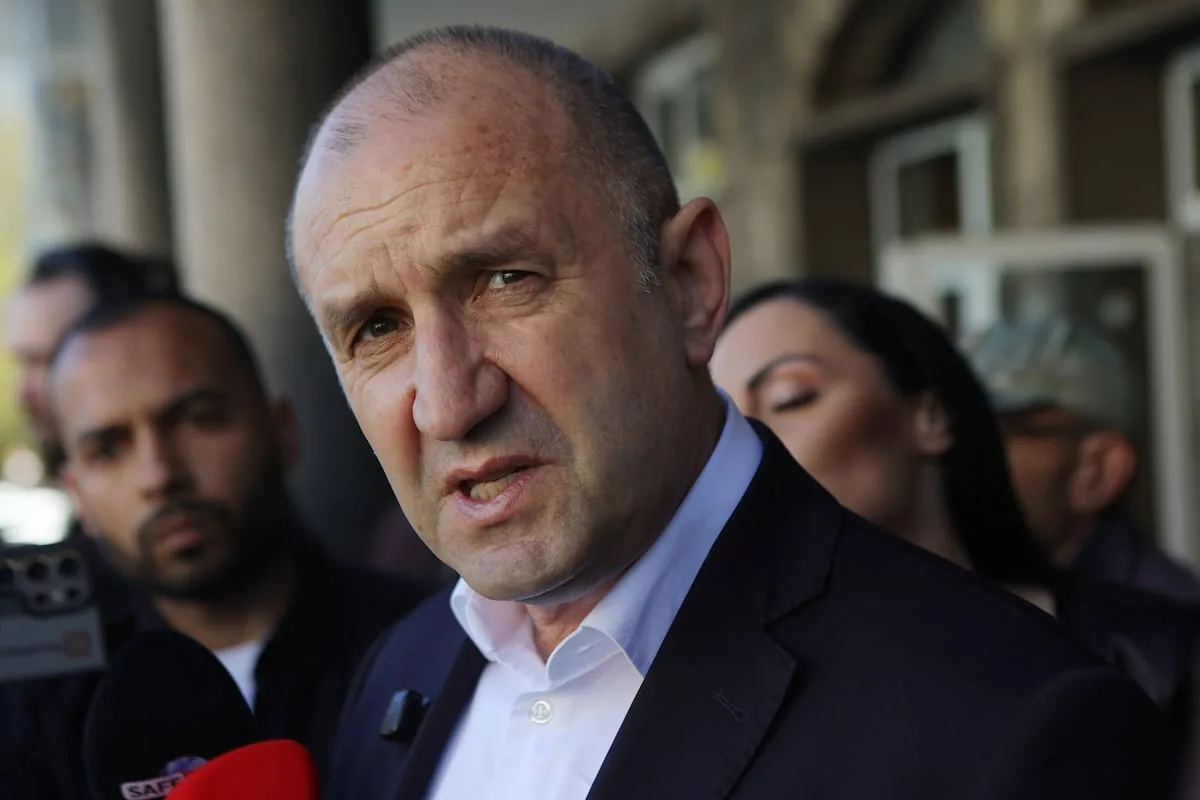





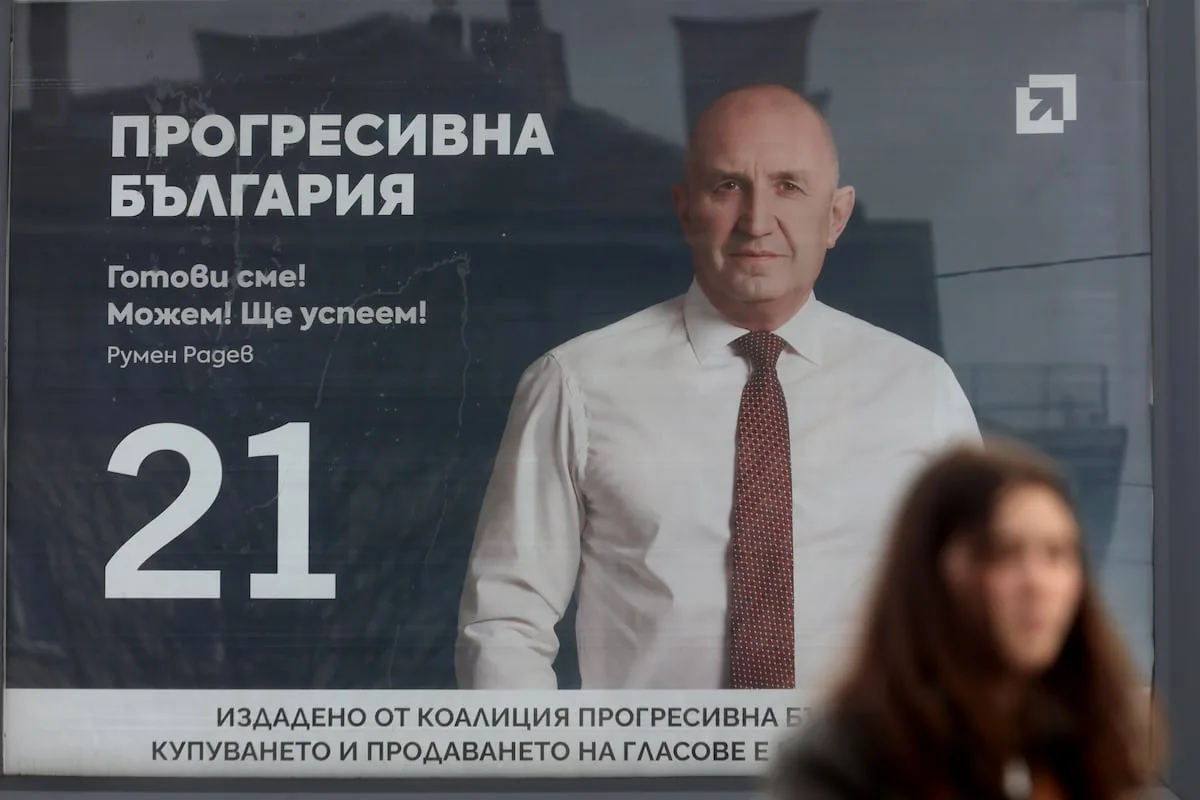
After the euphoria of a good part of the European Union member states over the electoral defeat of ultranationalist Viktor Orbán in Hungary, President Vladimir Putin’s staunchest ally, Brussels faces a possible new obstacle within the bloc. Bulgaria’s former president, the pro-Russian Rumen Radev, is emerging as the winner of this Sunday’s snap legislative elections, the eighth since April 2021.
Read more The footprint of destruction in southern Beirut: “I fear Israel will return to war”
This 62-year-old former fighter pilot and head of the country’s air force, who has consistently opposed aid to Ukraine, resigned as Head of State in January, a position more symbolic than with real power. He made this decision a few months before the end of his second term to lead a left-wing coalition called Progressive Bulgaria, at the head of which he is now running as a candidate for prime minister.
In these elections, Radev presents himself as the new champion in the fight against corruption imposed by the oligarchy of this country of 6.5 million inhabitants. In this way, he intends to capitalize on the discontent of citizens who unleashed large protests in the capital, Sofia, in early December, which triggered the fall of the Executive that protesters branded as mob-like.
Led by members of Generation Z, those born between 1997 and 2012, those who participated in these protests focused their anger mainly on two political figures who, without government positions at the time, were considered in the shadow of power. These are Boiko Borisov, former prime minister on three occasions since 2009 who controls the country’s largest party, Citizens for European Development (GERB), and Delyan Peevski, a powerful oligarch sanctioned for corruption by the United States and the United Kingdom and current leader of the Turkish minority party, Movement for Rights and Freedoms (DPS, by its acronym in Bulgarian).
Radev resigned three weeks after Bulgaria joined the euro on January 1. Precisely, the adoption of the single currency generated criticism from the now candidate, who urged authorities to call a referendum in this country, which deplores the lowest per capita income in the EU.
A possible coalition
Forecasts suggest that Radev will need a partner to form a new executive. Polls give the former president a range of between 32% and 34% of the vote, which would grant him around 100 seats, below the 121 for a parliamentary majority. However, in his favor is the expectation of a considerable increase in voter turnout: from 35% in the last elections to more than 50% in this Sunday’s.
“Voting now really matters as we have a big newcomer: the politician who enjoys the most popularity,” Parvan Simeonov, director of the MYARA polling company, explains to El PAÍS. “A greater presence in the vote will surely benefit Radev, who is seeking a sufficient majority to allow him to govern alone,” the political scientist continues.
Polls give between 18% and 20% to the conservative GERB party, still led by Boiko Borisov, but Radev presents himself as an opponent of the country’s entrenched mafia and its links with high-ranking politicians. At Wednesday’s final pre-election rally, he promised to “eliminate the corrupt and oligarchic model of political power governance,” ruling out any agreement with Borisov or Peevski.
A possible coalition partner to carry out reforms could be the pro-European alliance We Continue the Change-Democratic Bulgaria (PP-DB), which is expected to come in third place with 12% to 14% of the votes. However, there are important foreign policy issues that could prevent such cooperation, including the ongoing controversy surrounding Russia’s invasion of Ukraine. While officially denouncing Moscow’s aggression, Radev has advocated for resuming dialogue with Russia as a way to end the conflict.
Read more Everything adults can learn from youth culture
“These elections will determine whether Bulgaria finally removes two oligarchs entrenched in power, Borisov and Peevski, while not replacing them with a Bulgarian version of Orbán,” Asen Vasilev, former Minister of Finance on three occasions since 2021 and leader of the center-left We Continue the Change, tells El PAÍS.
Instead, the politician is confident that there will be cooperation in Parliament for judicial reform, which he considers essential to remove loyal individuals of the oligarchy from high positions. “Current polls indicate the possibility of true judicial reform, even if we have divergences on key foreign policy and economic policy issues,” Vasilev emphasizes. “Radev wants to follow Orbán’s model with Russia on external matters; regarding economics, he advocates for austerity and specific measures to alleviate the crisis in Iran, while we advocate for a broad anti-crisis package that ensures incomes and pensions increase faster than inflation,” he notes.
In the same vein is Bozhidar Bozhanov, co-leader of Democratic Bulgaria (center-right). He believes that the main stake in these elections is to “destroy the captured state model in which we live” and ensure that “Bulgaria does not become the next Hungary in Brussels.”
“For the first time in many years, there is an opportunity to eliminate the hidden and entrenched forms of power, the illegitimate ways of exercising power through the judiciary, particularly through the Prosecutor’s Office,” he tells El PAÍS. “There is a real possibility that this will happen. And if it does, it will be for the first time since 2009,” emphasizes Bozhanov, who leaves open the option of reaching an agreement with Progressive Bulgaria: “After the elections, we will sit at the negotiating table and see if there is a match in priorities.”
The elections are poised to be momentous despite presenting a lower emotional charge compared to previous ones, according to Rumena Filipova, director of the independent organization Institute for Global Analytics (IGA). “During that period, there was a determined opposition between the political forces of the status quo and change, which was also reflected in growing citizen demands for greater transparency; but since it did not produce a definitive result and neither traditional nor new parties managed to obtain a decisive majority, social enthusiasm dissipated over time,” the expert tells El PAÍS, who believes that the desire for change towards greater transparency persists.
“Voters will probably resort to pre-existing tendencies to vote for a strongman, also mixed with the impulse to vote for a new political party,” Filipova points out before warning that the main question is whether the next government “will maintain its general foreign policy orientation in alignment with the EU and NATO or if there will be a tendency to deepen relations with Russia and China.”
During the campaign, Radev avoided giving definitive answers about the direction he would take if he governed, surely to attract votes from both pro-Russian and pro-Western factions. “Radev could be an incentive against pro-state radicalism by capturing these sovereignist sentiments and using them more rationally; if his messages are analyzed, he seems more pro-Russian in Bulgaria, but more loyal to the European Union and NATO when abroad,” Simeonov argues. “He is aware that there is a political spectrum close to Russia for historical reasons and cultural similarities that is empty, as the Bulgarian Socialist Party, which used to group this niche, is struggling to enter Parliament,” the analyst concludes.
Read more Without nostalgia or resignation: a new multilateralism for a world in distress