


What is the purpose today of global institutions and rules? What is the use of international order when what prevails are wars, the remilitarization of countries, televised genocides, and digital platforms that organize fear and hatred?
Read more ‘Son de la Selva’: Indigenous Murui rap in the Amazon triple frontier
Without a minimum of shared norms and forums where accountability is rendered, world politics remains at the mercy of brute force and the power of a few capable of unilaterally deciding the fate of others. It is true, an institutional order does not guarantee justice or peace, but in its absence, only the law of the strongest prevails.
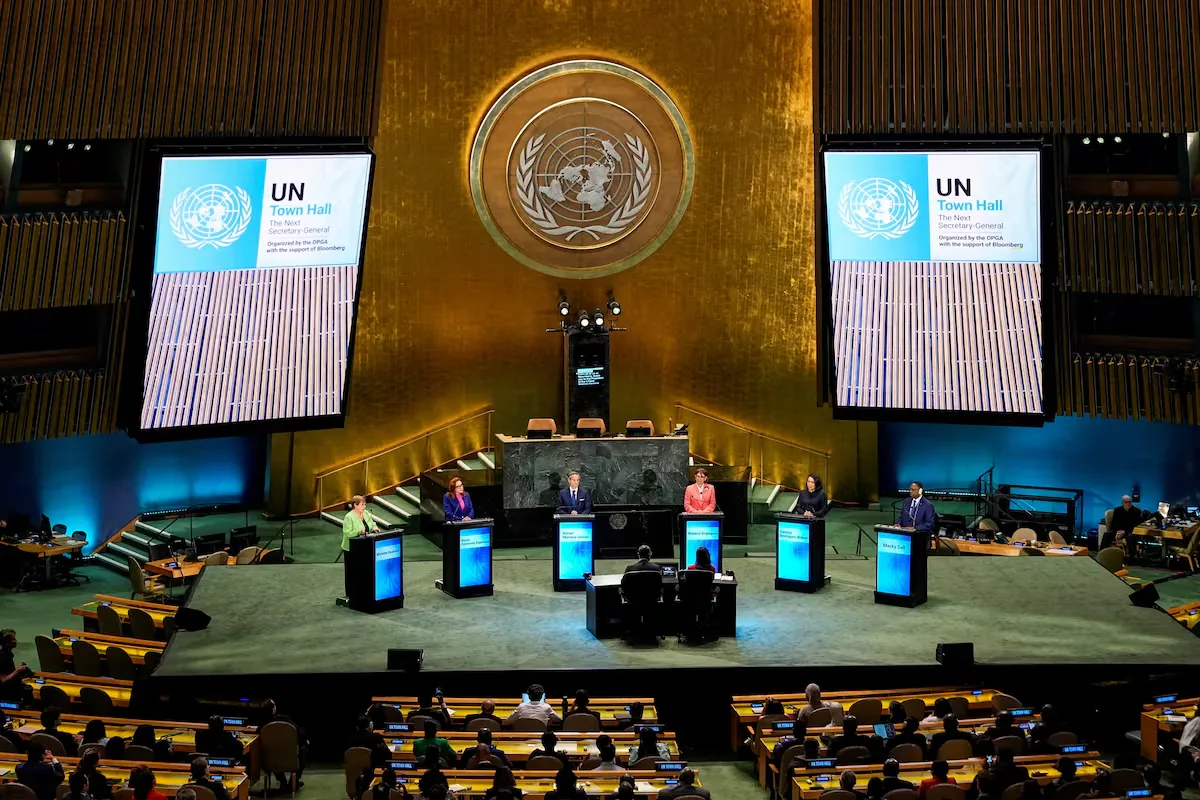
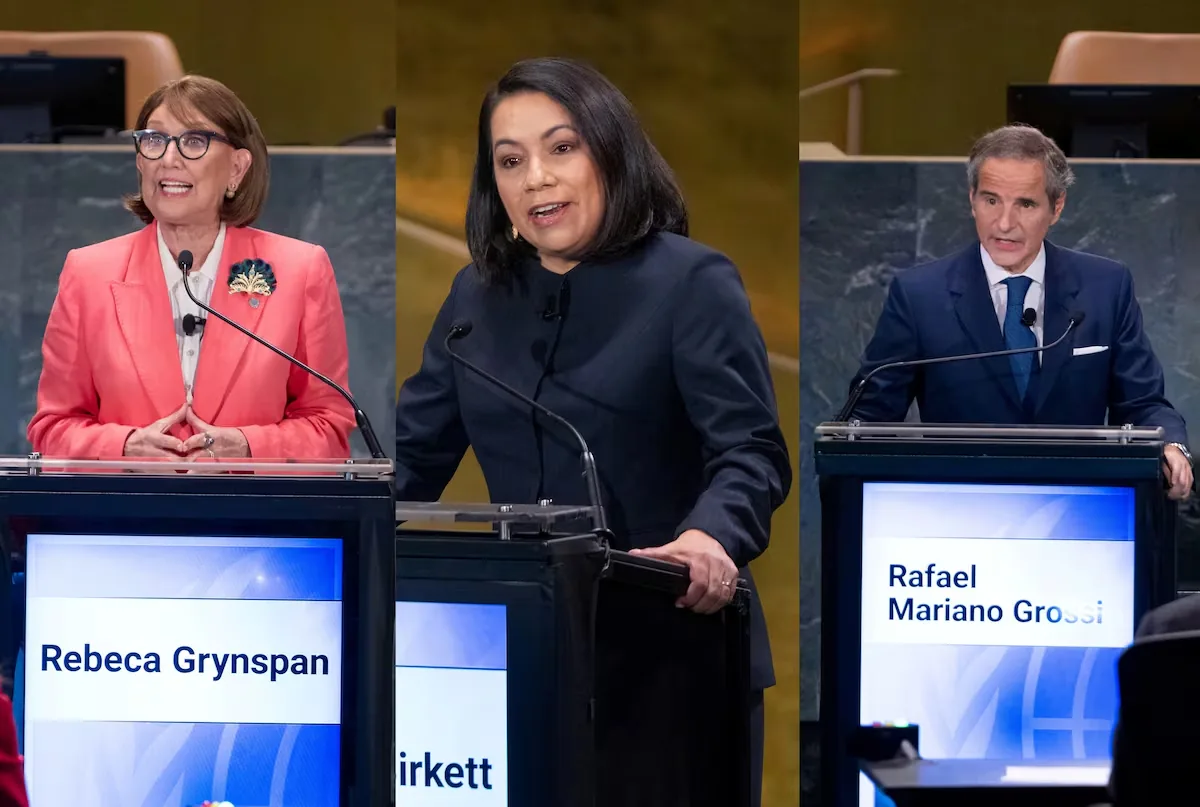
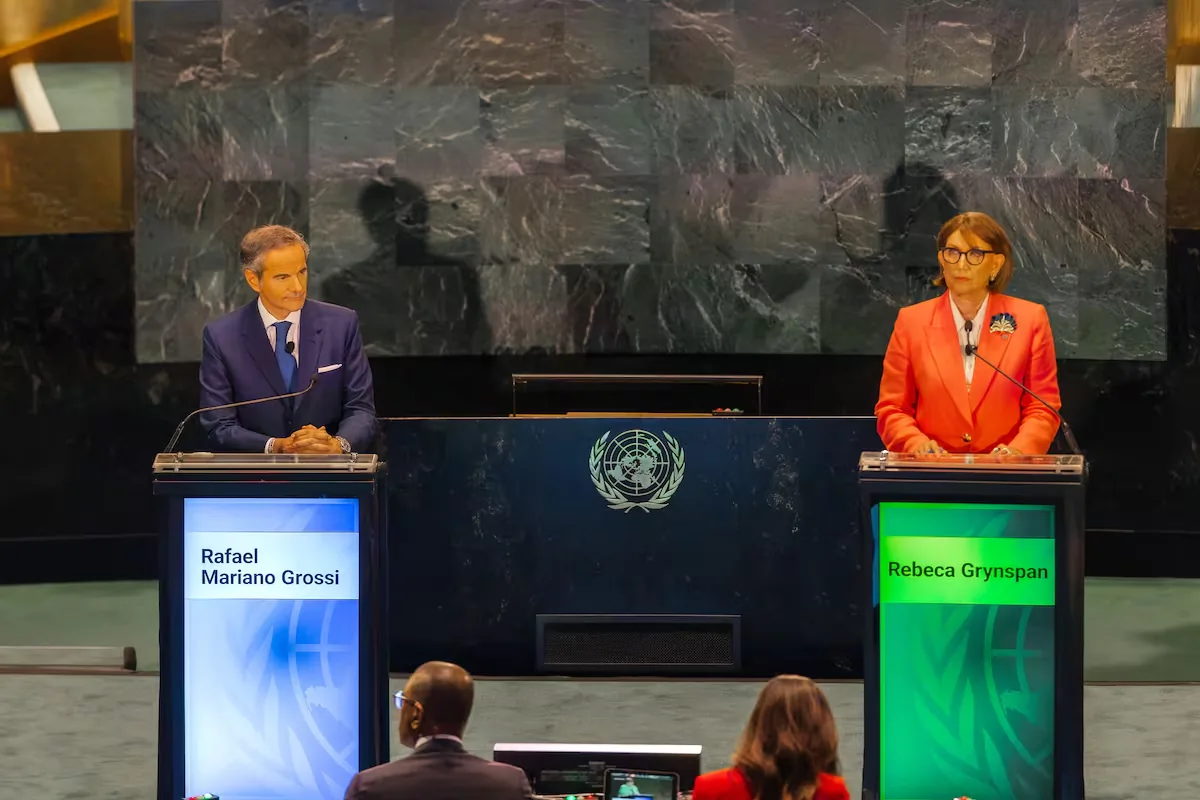
This coming April 21, hearings begin to elect the person who will be in charge of the UN Secretary-General. This election is marked by a very particular context: never before has an institution capable of resolving the global poly-crisis been so needed, and at the same time, it has never been so weak. Latin America now has the possibility and the duty to lead it, update it, and restore its role as the global forum that the world demands.
In the present we live in, we are experiencing what literature calls “super-wicked problems” (super entangled problems). These are defined by four combined traits: the time to solve them is running out; there is no central authority capable of governing them; those who should solve them are often those who caused them; and, finally, decisions often undervalue the future in favor of immediate benefit.
Growing military conflicts, climate change, pandemics, cyberspace governance, structural migrations, or water and biodiversity management are clear examples where no one can act unilaterally and whose effects are global and multidimensional.
The United Nations and its entire institutional framework were created to respond to these global challenges, but today they lack teeth. Multilateral spaces are not effective, governance frameworks do not produce binding collective decisions, and available conflict resolution avenues fail to limit the discretionary power of arrogant governments or global corporations. Without these spaces, the void is filled by tariff diplomacy, financial blackmail, the withdrawal of cooperation funds, and predatory capitalism dominated by a few tech giants.
The post-war institutional order had been showing signs of exhaustion for decades in effectively addressing global problems. The legitimacy of its functioning and the distribution of power on which it was built have long been questioned by the Global South. That order defended universal principles while tolerating invasions without clear mandates, suffocating debt regimes, and trade plagued by asymmetries. Today we are witnessing the progressive destruction of that imperfect order and its dismantling by the very country that promoted it.
The result is before our eyes, expressed in the worst version of the law of the strongest: an international community that looks the other way in the face of a genocide like that in Gaza, powers dangerously approaching the threshold of a third world war, and cuts to humanitarian agencies when they are most needed. Trumpism and the most reactionary sectors of the planet take advantage of the discredit of multilateralism to design a world to their liking.
Read more The new trial for Maradona’s death: murder, negligence, or an inevitable outcome?
That the post-war international order is in crisis should not lead us to a false longing for an idealized past. These institutions were conceived for the centrality of the nation-state and designed with the correlation of forces from more than eight decades ago. Today, centers of power have multiplied, and the world is much more complex and diverse. But the alternative cannot be a normative vacuum where military, financial, or technological power is exercised without restraint, but rather the construction of a new order that learns from the failures of the previous one.
What we need is a new multilateralism that reflects the changes of the 21st-century world. From Asuntos del Sur, a center for research and democratic innovation working in Latin America and the Caribbean, we have been proposing a global governance that we call 3M, which combines three strategic dimensions.
At the multilateral level, it is about articulating the different forums and regional organizations so that they cease to be satellites of the great powers and become poles capable of defining common positions in the face of major challenges. The Security Council and other key spaces must reflect the distribution of population and power in today’s world.
At the multi-level plane, it is assumed that these problems are played out simultaneously at global, regional, national, and local scales. Cities and networks of subnational governments primarily lead development policies. They must be at the decision-making table, not just executing policies. At the multi-stakeholder level, it is understood that legitimate governance cannot continue to be a conversation between diplomats who merely consult non-state actors. It is necessary to stably integrate civil society, businesses, indigenous peoples, trade unions, academia, and social movements with decision-making power. This logic is the minimum condition to prevent global problems from becoming a pretext for a new technocratic authoritarianism.
The Global South, and Latin America in particular, has the historic opportunity to articulate and lead this change. The eventual election of Michelle Bachelet to head the UN could provide the impetus that is currently lacking. She would be the first woman to hold the position, a figure with government experience, presence in the Global South, sensitivity, and a track record of fighting for human rights, capable of translating the jargon of “global governance” into a concrete agenda of rights, security, and a just ecological transition. Such leadership, driven by Brazil and Mexico —the region’s main economies— could catalyze long-postponed reforms: democratizing the Security Council and financial institutions, creating effective mechanisms to regulate markets and technologies, guaranteeing additional climate financing, and protecting those who currently bear the brunt of the crisis.
One person at the head of the UN will not be enough to reverse the current drift, but it would open a window to redirect humanity towards a rules-based order that promotes peace and sustainable and inclusive development in line with current times. The alternative is clear: the Global South manages to rewrite the rules, or others will do it in its place.
Read more The Spring Meetings 2026: the world under the shadow of war