






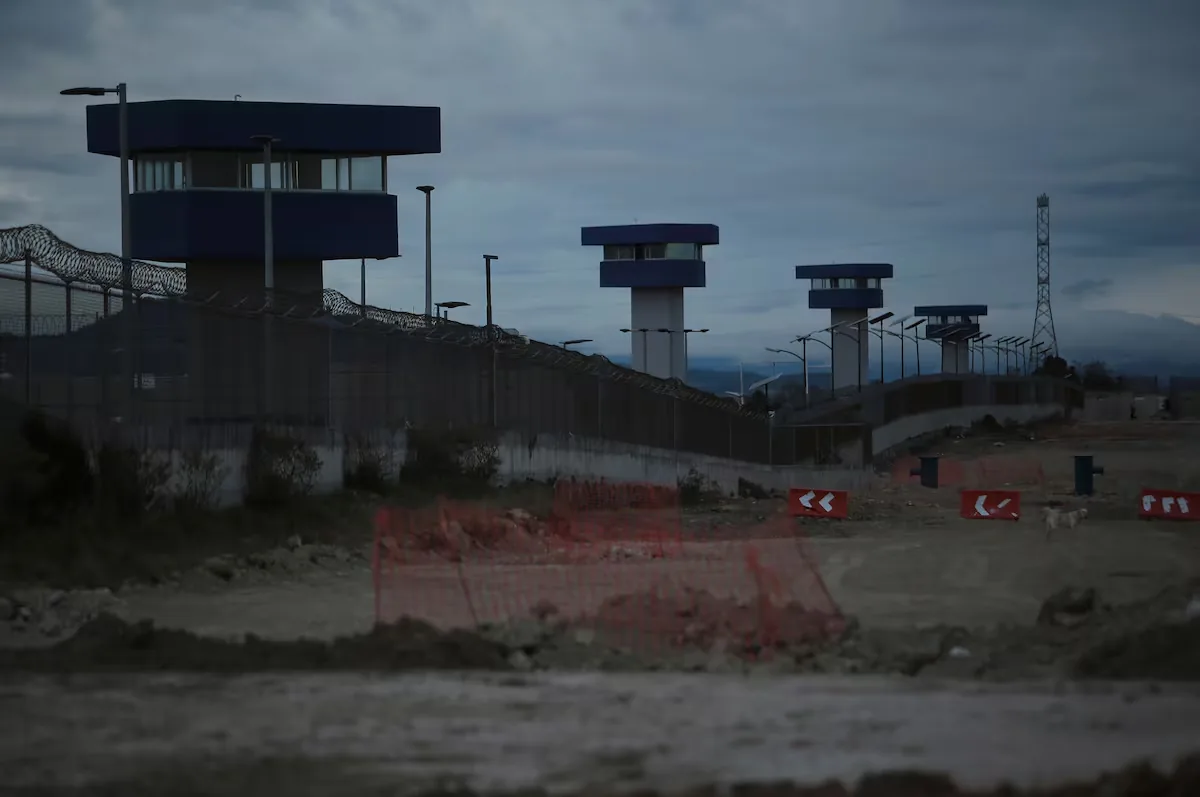
I met Fernanda on March 8, 2024. We went with OCUPA and the Musas Sonideras to bring music and dance to the Tepepan prison. This prison houses women processed or sentenced for a crime and who live with various mental illnesses.
Read more The actress Carmen Machi, National Film Award
The Musas Sonideras set up their speakers while the inmates slowly began to fill the yard. Reggaeton started playing and everyone began to dance. Fernanda approached me and, a little shyly, asked:
—Hey, can you play a Karol G song?
—Of course! Which one do you want?
And she started singing: “What would have happened / if I had met you before?”. That’s the one I want.
As soon as her song started playing, Fernanda’s shyness disappeared. Happy, she closed her fist and imagined it was a microphone. I was struck by how young she was. When I saw her close her eyes and sing, she seemed like a happy child imitating her favorite artist, dreaming of being in a stadium in front of an applauding audience, not caring that she was actually in a prison yard in front of a bunch of inmates who ignored her.
When she finished singing, she stepped down from her imaginary stage and sat with me.
—What’s your name?—, I asked her.
—My name is Fernanda.
—My name is Paola.
—Paola? Seriously? What a coincidence! That was my mom’s name… Look, I have her name tattooed on my arm.
—Wow! What a coincidence. What happened to your mom?
—They say I killed her… but she used to hit my dog.
Fernanda is very thin, has short hair, light brown eyes, and a tender gaze.
Through one of the prison’s social workers, I learned that Fernanda was 18 years old when she entered prison, although her mental age is that of a 7-year-old child. She lives with various disabilities, including schizophrenia and autism. In 2022, she was accused of killing her mother and uncle. The three lived in extreme poverty, in a room full of garbage and dog and human excrement, where Fernanda experienced physical violence from her mother and sexual abuse from her uncle.
At that time, Fernanda had not yet been sentenced. She was in mandatory pre-trial detention; the Prosecutor’s Office was asking for 120 years in prison, and the defense sought her release, arguing that there was not enough evidence against her, and that, due to her mental condition, she would in any case be deemed not criminally responsible. That is, she cannot be considered guilty of a crime, as her mental disability prevents her from understanding and controlling her actions.
—She will be sentenced soon, most likely she will be released—, the social worker told me.
—I hope so—, I replied.
—No, I hope she stays. Outside, she has no family or anyone to care for her. Here, even as a prisoner, she is safe, and we give her her medication. The street is a huge risk for her.
Fernanda’s fate seemed bleak to me. I looked for her again among the inmates. As soon as I found her, she took my hand and led me to sit under the shade of the only tree in the Tepepan yard, like two friends at recess.
—How do you imagine the day you get out will be, Fer?
—Oh! The day I get out, my lawyer is going to take me to eat at a restaurant, and we’re going to celebrate. She’ll probably give me a Karol G t-shirt to change out of my prison clothes and take me to an association so they can put me up for adoption.
Her answer moved me.
—Hey, and if they can’t put you up for adoption, what would you do?
—I would look for my girlfriend.
—Ah! You have a girlfriend? That’s great!
—Yes, she was also an inmate here in Tepepan. She got out a few months ago.
—And where will you look for her?
—She told me to look for her on a street called Sullivan. Do you know where that is?
I didn’t want to answer her.
Fernanda’s case transcends all the contradictions of the justice system, especially because it is not an isolated case.
According to criminal law in Mexico, individuals deemed not criminally responsible should be admitted to specialized mental health centers and not to prisons, as they should be treated as sick individuals and not as criminals. However, in 2022, there was a reform to the General Health Law that established the closure of psychiatric hospitals, leaving only the option of outpatient care.
Due to lack of evidence, Fernanda was acquitted in April 2024; the judge ordered her immediate release.
Freedom for what? To live on the street? To work on Sullivan and be sexually abused due to her mental vulnerability? To stop taking her medication?
The recently approved Mexico City Care System Law recognizes care as a human right and, therefore, implies obligations for the State. It establishes that the City will have shelters for homeless people who “require” them and that the Institute for Mental Health and Addiction Care will “collaborate” in the care of people in this situation who “request” it.
Again: only outpatient care, only if they request it.
Our legislation recognizes, on the one hand, that individuals deemed not criminally responsible, due to their mental conditions, cannot fully understand or control their actions, and at the same time, it expects them to take care of themselves and request medication and care.
And in the eternal contradiction of justice, they remain there, at every traffic light, facing an indifferent society and a negligent government.