









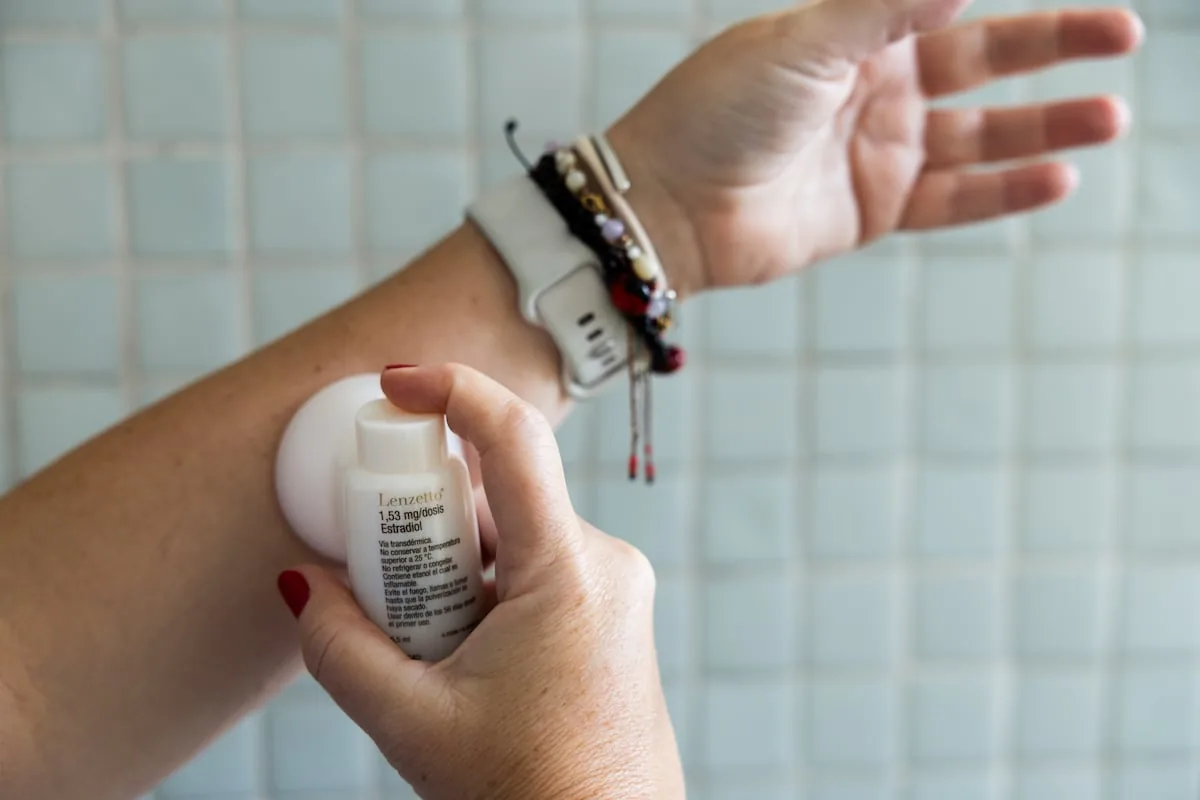
Cristina Muñoz had been feeling unwell for a few weeks. It wasn’t the kind of discomfort that makes you consider going to the hospital, but that other kind you just survive with. She was exhausted, extremely tired, and felt her legs were swollen. She would wake up at night moments before breaking out in a sweat. She was irritable. She thought it was allergies or lack of exercise. At the pharmacy, they recommended ginseng. Then, one day, she realized she hadn’t been taking her daily hormonal treatment for menopause. She had stopped taking it because she couldn’t find it in pharmacies: she didn’t know she was searching for the scarcest medication in Spain. Nor was she told it was out of stock and that, therefore, she should change her treatment as soon as possible. And she didn’t know she shouldn’t stop taking it abruptly, because her symptoms would return.
Read more ‘The drama’: immune to the massive cult of queen Zendaya
The medication is called Lenzetto, it is indicated for menopausal and trans women, and in Spain it is nowhere to be found. However, in the rest of Europe, there are no reports of problems finding it. So why here? There is a very simple reason: this drug is much cheaper in Spain than in the rest of Europe. And in the EU, it is legal to export the production of a drug to other countries where it is more profitable to sell it. So in April, the Ministry of Health agreed to raise its price, partly to prevent it from flying to other European countries and thus avoid its shortage. But the pharmaceutical company cites “capacity limitations” to explain that it will very likely not return to Spain throughout 2026, despite the price increase — a 77% rise for the public in April — and despite it still being sold in other markets. Thus, this hormonal medication became the most sought-after drug in Spain last quarter, with no reported problems in the rest of the EU. The system has failed menopausal and trans women, who have been wandering pharmacies for months without anyone informing them what is happening with their treatment, many unaware that they should not interrupt it.
Lenzetto is an estradiol spray, a female hormone, applied directly to the skin of the arm and absorbed through it. It is taken by menopausal women to relieve symptoms such as hot flashes or vaginal dryness, and by trans women undergoing hormone therapy. It is funded by the Spanish public system, making it especially accessible. The odyssey in search of Lenzetto began at the end of December, long before any official announcement. At that time, most women resolved it with a call from their pharmacist, who informed them of another place to find it. Around last Christmas, patients and pharmacies began reporting problems, says gynecologist Silvia P. González, newly appointed president of the Spanish Association for the Study of Menopause.
At the end of each day, the CISMED system (Information Center on the Supply of Medicines) of the General Council of Pharmacists receives automatic notifications of drugs missing in the supply chain from about 13,800 pharmacies. The Council detected two particularly pronounced shortage peaks, in February and March, and confirms that Lenzetto continues to be among the drugs with the highest number of supply incidents. Data from LUDA Partners, a network monitoring stock in 3,700 pharmacies, shows that Lenzetto was the drug with the highest number of shortage notifications during the first quarter of 2026, accounting for more than 8% of all incidents recorded between January and March, reaching 10% in March. Two independent monitoring systems, the same conclusion. Above the famous Ozempic. Above antibiotics and above ADHD drugs that have been scarce for years. According to LUDA data, the most affected provinces were Madrid, Barcelona, Valencia, Alicante, and Málaga.
A ticking time bomb
There is one figure that explains everything: Lenzetto consumption multiplied by almost ten in six years, from 13,000 packages distributed in 2018 to 123,000 in 2024, according to data from the Directorate General of Pharmacy obtained by this newspaper. Part of that growth, explains César Hernández, its general director, is due to the use of the drug in the trans community — for which it has no official indication, although it is widely prescribed —; another part, to the widespread increase in interest in hormone therapy among menopausal women. What the system failed to manage was that a demand multiplied by nine for a complex-to-manufacture product, with hardly any equivalent alternatives and a low regulated price, was a ticking time bomb.
The manufacturer of Lenzetto is Gedeon Richter. In a written response to EL PAÍS, it attributes the shortage to an exceptional increase in demand in all its markets. “Due to the exceptional increase in interest, we face capacity limitations,” it emphasizes. But Lenzetto is authorized in 25 European countries, and no problems have been reported in other markets. “To date, the EMA has not been notified of a shortage of this nationally authorized product and therefore has no further information on possible or actual shortage cases,” explains the European Medicines Agency in response to EL PAÍS questions.
Sources from the pharmaceutical sector describe a repeating cycle: low regulated price, the laboratory adjusts production or prioritizes other markets, shortage arrives and, with it, pressure to review the price upwards. The Ministry raises the price to match the rest of Europe. Gedeon Richter, however, denies any link between Lenzetto’s shortage and the price increase: “The current situation is not related to any price review process nor ongoing negotiations with health authorities.”
The price increase
The price rose “due to the systematic price review carried out with the Ministry of Health,” says the laboratory. Regarding the price difference and the possibility that it is more profitable to sell production in other countries, Gedeon Richter states: “We have no information about commercial activities in other markets, as the Spanish subsidiary operates exclusively within the national territory. Within the European Union, there is a regulatory framework governing the free movement of goods between member states, including medicines.”
On March 16, the Spanish Agency of Medicines and Medical Devices (AEMPS) officially declared the shortage of Lenzetto. Just a few days later, on the 24th, a delegation from the association Euforia — representing about 700 families of trans people — met with César Hernández García and Cristina González de Miro, senior officials from the Directorate General of Pharmacy of the Ministry of Health, to discuss various matters. In that meeting, according to Natalia Aventín, president of the association, the issue of Lenzetto was also addressed. The shortage was acknowledged, and the Ministry committed to finding a solution. It explained that, due to the product shortage, a price war began with other countries, “which had already negotiated to raise the price. But the shortage had to end. They gave us the problem as resolved.”
César Hernández confirms to EL PAÍS that the price was reviewed because the laboratory “demonstrated with documents” that the production margin did not fit the current price. He adds that, before officially declaring the shortage, the AEMPS had already included Lenzetto in the circular excluding certain medicines from parallel export to protect supply. He insists he considered the situation resolved in his meeting with Euforia because the laboratory conveyed it as such.
Because Lenzetto is much cheaper in Spain. The same 56-dose bottle that cost the public 7.04 euros in Spain until last April sells for about 19 euros in Italy and around 14 in Germany. On April 1, the laboratory’s sale price rose from 4.51 to 5.46 euros, a 21% increase. For the public, it was 7.04 euros. Now it costs 12.49. A 77% increase. But the medication is still in shortage today, although it is no longer the leader among the most sought-after drugs: in April, according to LUDA, it fell to sixth place because patients no longer request it. “Since the price in Spain is cheaper than in some other countries, and it is legal to do so, it is imported from other locations in the European Union,” explains gynecologist Silvia P. González. This is known in the sector as parallel export: the product bought in Spain at a low regulated price flows to markets where it is more profitable to sell.
No real alternative
The problem is that Lenzetto has no exact substitute. Although there are other ways to administer estradiol — gel, patches, and pills — none share its specific pharmaceutical form. “Different transdermal estradiol formulations are not completely interchangeable from a clinical point of view,” explains González. “There are individual differences in absorption and response, and some patients may need dose adjustment or even return to a specific formulation to regain symptomatic control,” adds González.
Gynecologist María Josep Gisbert began receiving calls from her patients in February. “These are women with well-founded indications for treatment and, of course, they were afraid there were no alternatives, that these wouldn’t work as well to calm their hot flashes, the resulting insomnia, or that they would return to the discomfort they felt before starting hormone replacement therapy,” she indicates.
The consequences of abruptly stopping estrogen treatment are not the same for all patients, but they are real for all. Rosa Almirall is a pioneer in care for trans people and a reference in gynecology in Spain. She says that abruptly stopping treatment for menopausal women is like causing an artificial menopause suddenly: hot flashes, insomnia, joint pain; the whole picture “but more acute,” she explains. Trans women, moreover, face something Almirall describes as the central fear of these patients: that testosterone will rise again. “Gradually they will notice more body hair growth, facial hair too, and after four or five months without treatment, they may even notice changes in their voice,” she warns. “Above all, what I have seen most in these women is fear,” she concludes.
The Council of Pharmacists confirms it: legally, it is a funded medication that would be replaceable. But in practice, there is no other authorized medication in Spain with the same active ingredient — estradiol —, the same pharmaceutical form, and the same dosage units. The pharmacist simply cannot make the substitution at the counter even if they want to. “In case of shortage, patients should not stop treatment on their own initiative. The appropriate action is to consult to find an equivalent temporary alternative,” warns González.
On the island of Fuerteventura, Carla Soto has been on hormone treatment for six years. She is 21 years old, studies advertising, and is a trans woman. She had been using Lenzetto for three or four years without any problem. Her endocrinologist was the one who gave her the news: the manufacturer had communicated that it would no longer supply it. They put her on patches, but she says she had never felt “so affected” in all her six years of treatment. The patches fall off. She has hot flashes in class. And then, a fatigue that crushes her and, curiously, at the same time Cristina mentions, seven in the evening. “I fall asleep on the corners.” Mood swings. Nausea. And having her arm full of tape so the patch doesn’t fall off.
The patients
The manufacturer of Lenzetto acknowledges that “there is a high probability that supply will not be restored in Spain in the coming weeks nor during the rest of 2026.” This means that all the demand that supported Lenzetto will migrate to other transdermal options, mainly patches, also funded. Rosa Almirall warns of the risk: “If there is a peak in demand for these three-month patches, we will be without patch distribution.” The vicious circle, in other words, does not end with Lenzetto: it simply shifts to the next link in the chain. César Hernández graphically describes it as “domino pieces.”
“In cases of shortage, there is no established, comfortable, and systematized circuit that can notify people who have picked up this treatment at pharmacies in the last six months,” says Almirall. The result is always the same: when institutions find out, the problem has been installed in pharmacies and in patients’ bodies for months.
Mar Cambrollé, president of the Trans Platform Federation, demands that the Ministry diversify supplier laboratories and recalls that trans people are especially vulnerable to these interruptions because their access to the health system is already precarious. Marta Alonso, from the State LGTBI+ Federation, agrees, having participated for months in meetings with the Ministry to advance a homogeneous trans and intersex health protocol across all autonomous communities. No tangible result so far, she says.
Cristina Muñoz still doesn’t feel well. No one has told her how long it takes to adapt to her new patches. The pharmacist sold her ginseng. The family doctor didn’t update the prescription. The gynecologist saw her by chance: “They changed my medication as if they were changing nail clippers. It’s a chronic treatment and I’m 44 years old. I have the right to feel well.” Natalia Aventín is the mother of a trans boy. As a rural woman, she says she has suffered “a lot of discrimination.” But knowing firsthand the situation of trans people, she says she has felt “what it is to be a third-class citizen.”
Rosa Almirall tells it with the precision of someone who has been in this for decades: “Estrogens are very cheap to manufacture. And funded and cheap medicines are the little brother of the pharmaceutical industries.” The industry, she explains, does not object to supplying the market with soy-derived supplements or other products now sold to women under the menopause umbrella. The problem is access to the medicines that are really needed. “Pharmaceutical companies want all women to be medicated around the world,” concludes Almirall. “All, not just those who need it.”