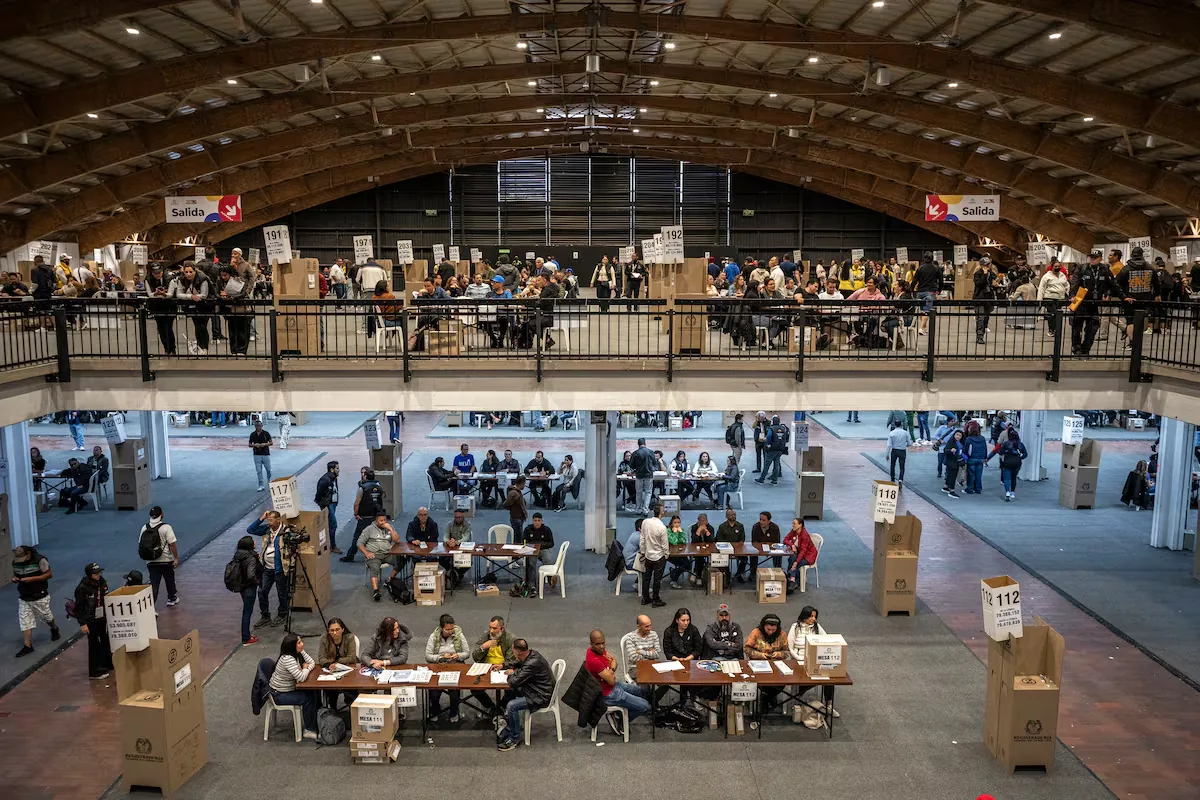









There are 167 hours left until the presidential election. If we sleep 25% of the time, Colombia has only 126 hours left to decide the direction it wants to take. That of a country aware of its strengths and the achievements reached during more than 200 years of republican life; a country that had been following a path of social and economic progress for 52 million Colombians and that knows it must move forward with greater agility, efficiency, and a sense of urgency. Or that of a country moving with open eyes toward the abyss of statism and authoritarianism, where the narrative of “everyone was corrupt,” “all businessmen are exploiters,” and “nothing has worked well” ends up justifying institutional destruction and the moral elimination of those who think differently.
Read more The Chilean salmon industry has a high rate of diver and worker deaths
Many political tragedies begin this way: convincing society that all evils have a culprit other than the ruler and that the solution consists of dismantling democratic limits, silencing dissenters, and concentrating power in a supposed redeemer. History shows that when this happens, the rule of law begins to disappear and freedom ceases to be a right to become a concession from the ruler, for whoever he wants and for as long as he decides. This process destroys the economy, erodes institutions, and ends up making the progress of a nation impossible, as happened in Venezuela and Cuba.
Professor Mauricio Gaona brilliantly reflects on this transition toward authoritarianism in his book La Constitución Soy Yo, whose recent presentation at Gimnasio Moderno I had the opportunity to attend this week. Gaona explains how the next stage of democratic deterioration consists of turning institutions and the Constitution into obstacles for the ruler to fulfill the supposed will of the people. Then arises the leader who considers himself the sole interpreter of that will and who, in the style of Louis XIV, seems to affirm: “I am the State.”
In that logic, the Constitution ceases to be the supreme norm that limits power and transforms, according to populist discourse, into an impediment to executing the popular will, regardless that only a minority of the electoral census voted for that ruler, who assumes himself vested with legitimacy superior to laws and institutions. Professor Gaona recalls how, since ancient Rome, the concentration of power began by using institutions to empty them of content. That is why Marcus Tullius Cicero defended the Republic as an architecture of balances designed to prevent absolute power from taking over the State. And he warned, with a phrase that remains fully valid: “We are servants of the laws in order to be free.”
In Colombia, we have already begun to recognize several elements of that sequence: businessmen, judges, journalists, and political parties are turned into enemies when they question power. The separation of powers is uncomfortable because it limits presidential will. Congress must become a subordinate body. The Prosecutor’s Office, a political dependency. And the judiciary, an instrument at the service of the ruler.
However, the Constitution and the autonomy of public powers exist precisely to prevent the head of state from exceeding the limits established by law and concentrating unchecked power, as happens in dictatorships. As Professor Gaona warns, the danger appears when a “institutional metamorphosis” is promoted in which the Constitution ceases to be a guarantee of freedom to become, according to populist discourse, an obstacle for the sovereign.
In populist narrative, there is always a culprit. When in opposition, the culprit is the government in power. But when power is attained and promises fail, the responsible become businessmen, judges, journalists, Congress, or citizens who do not understand the enlightened and misunderstood leader. Populism turns emotions and frustrations into political fuel. Thus, it ends up presenting constitutional limits as enemies of change and dismantling democracy from within.
That is what is at stake today in Colombia: the possibility of a constituent assembly to dismantle a Constitution internationally recognized as one of the most protective in the world regarding citizens’ rights. In this way, a dependent, permanently outraged, and easily manipulable citizenship is built.
Read more The five highest-rated battery-powered brush cutters on Amazon to effortlessly care for your garden
Colombia cannot continue moving with open eyes toward the precipice. We cannot destroy, out of frustration or anger, an imperfect democracy that can and must continue improving and that, despite its flaws, allowed social advances, economic growth, and social mobility for millions of Colombians for decades.
That is why we must choose well on May 31. We need a person with preparation, character, integrity, and governing capacity; someone who strengthens democracy instead of weakening it, who respects constitutional guarantees, and who does not consider themselves the only legitimate interpreter of the people. Because behind messianic egos and political vanities usually hides the true checkmate to freedom: the so-called “constitutional dictatorship,” as defined by Professor Gaona.
Choosing well means strengthening democracy, recovering trust in institutions, demanding profound political reforms to clean it up, and consolidating parties capable of guaranteeing governability. The alternative is to fall into the arrogant isolation of a government that believes itself superior to all but that, in its infinite loneliness, ends up incapable of governing and helping the country move forward.
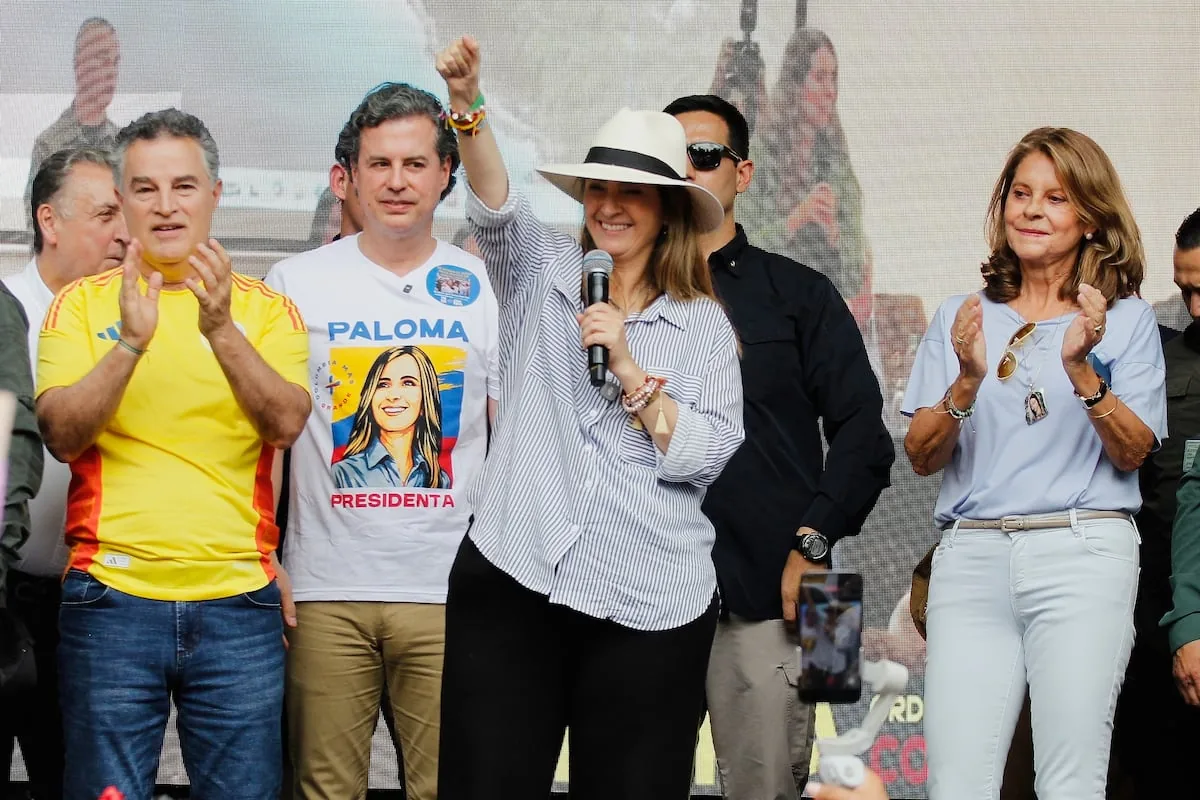
Because of her character, preparation, and ability to convene, I consider that Paloma Valencia today represents a solid alternative to recover the country’s course. The urgencies are clear: security, health, and employment. Security to live without fear. Health to protect human dignity. And employment to guarantee income and opportunities. That is what Colombians really feel when they close their door every night: the need for tranquility, stability, and well-being.
Precisely there will be the great discussion of the next government: in the ability to return to citizens the confidence in the future and the certainty that Colombia can correct its course before plunging into the abyss.
Colombia needs to recover a State capable of protecting. Organized crime advanced because it found weakened institutions and abandoned territories. That is why a serious security policy based on strengthened intelligence, territorial presence, and effective coordination between the Military Forces, Police, Prosecutor’s Office, and justice is required. Extortion has become a criminal tax that suffocates merchants, transporters, entrepreneurs, and thousands of families. To face it, a serious security policy is needed, with character, knowledge, and the capacity to strike criminal networks, their finances, and their illegal economies.
I trust Paloma Valencia because she has shown understanding that without security there is no freedom, without the rule of law there is no democracy, and without strong institutions no progress is possible.
Read more Summer perfumes for men: fragrances with a clean scent and marine freshness that last all day