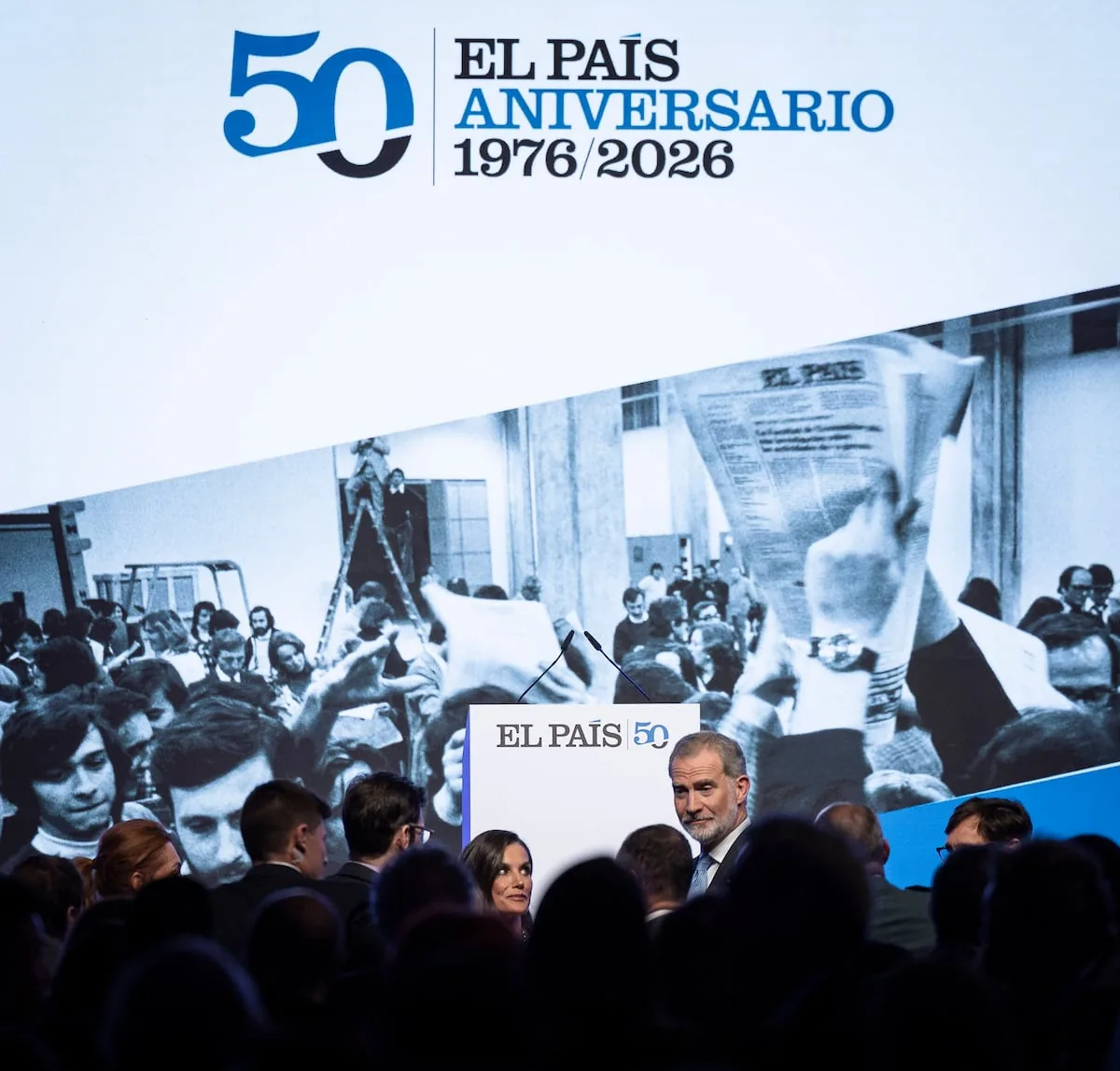
Antonio Muñoz Molina, one of EL PAÍS’s early and insightful writers, wrote when the newspaper celebrated its first 20 years: “Now it seems inevitable to us that Spain and EL PAÍS would become what they are: we all possess an extraordinary ability to prophesy the past, but the only certainty in Spain was the most dizzying uncertainty, and that the future of EL PAÍS was as uncertain and dark as that of the democracy yet unborn.”
Read more The right-wing parties overturn the rental decree amid criticism of the PSOE from its left
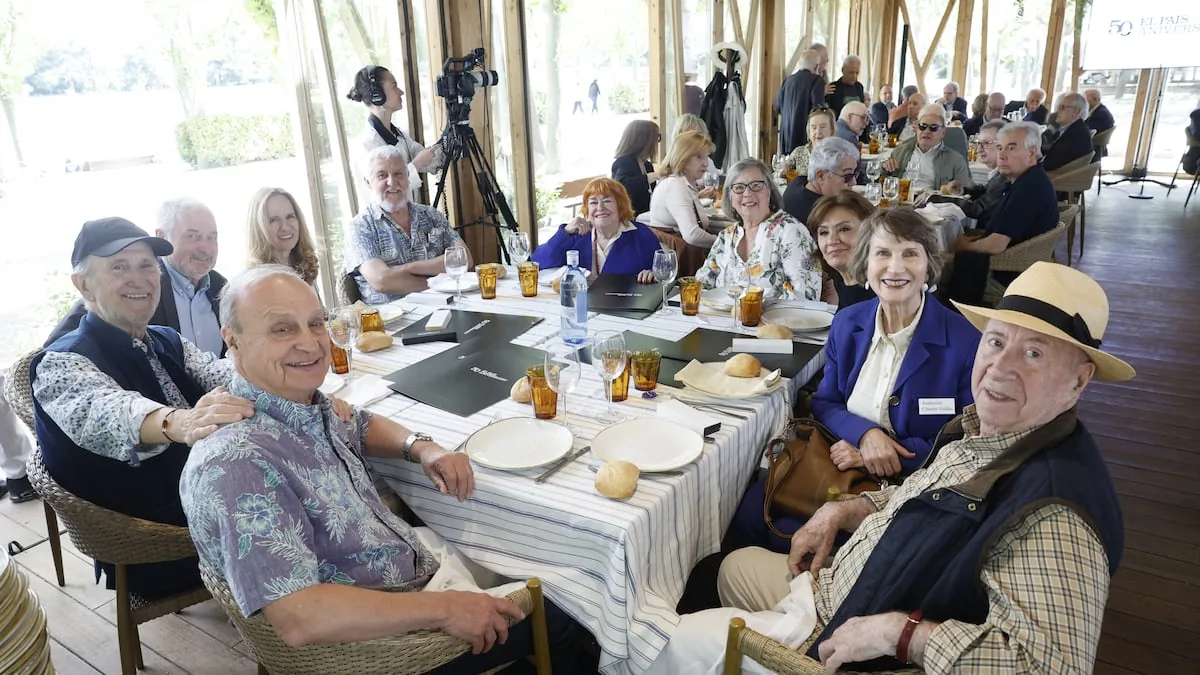
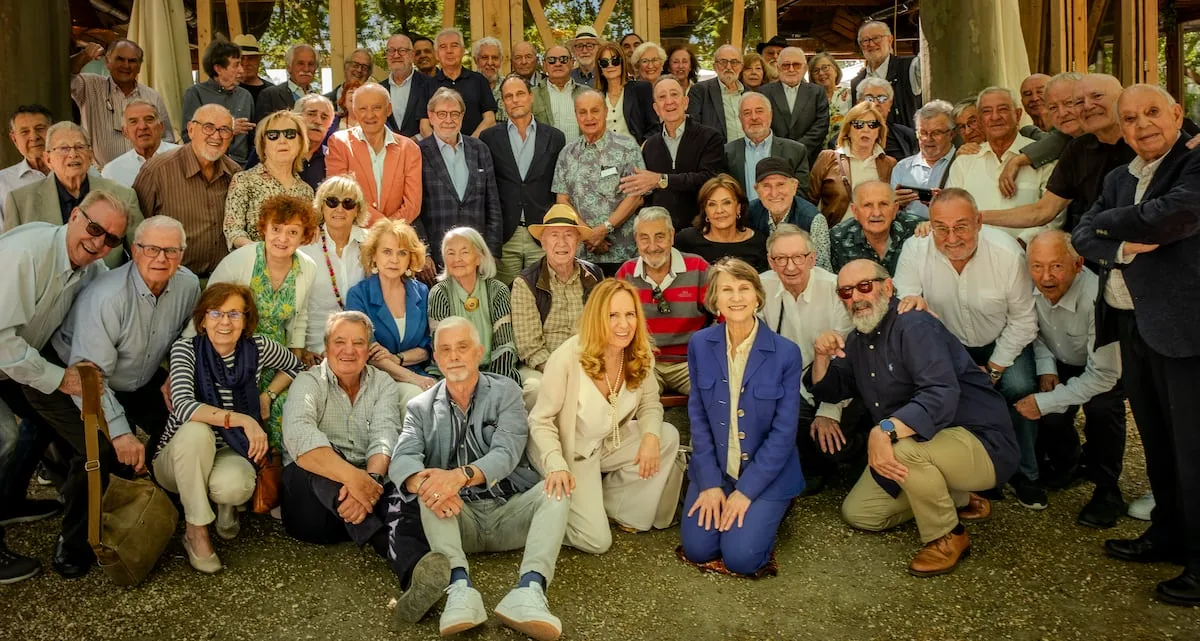
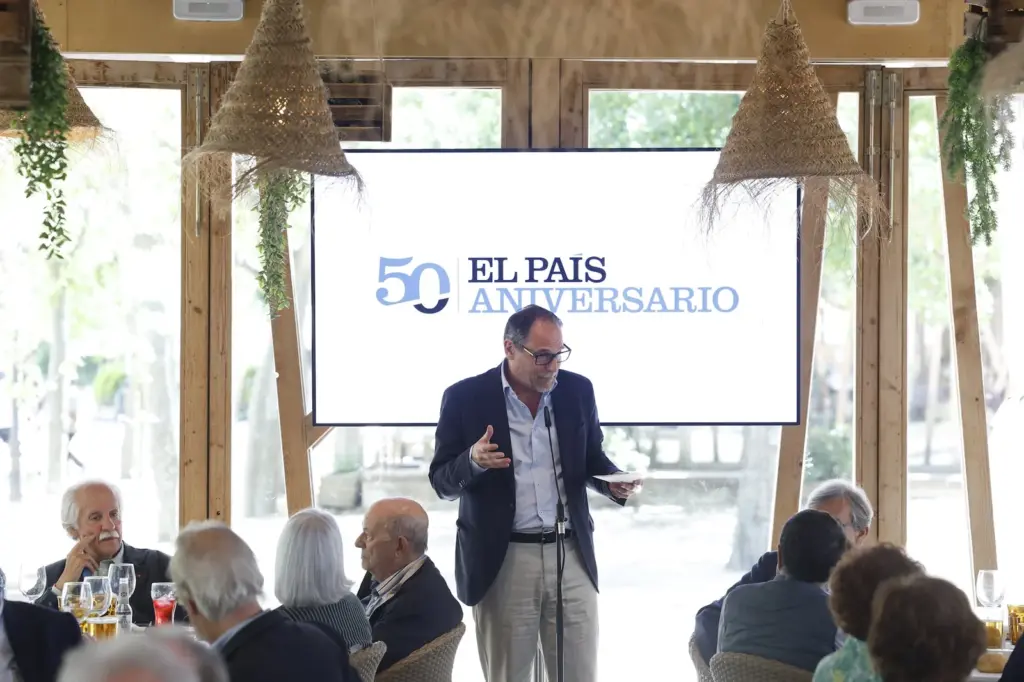
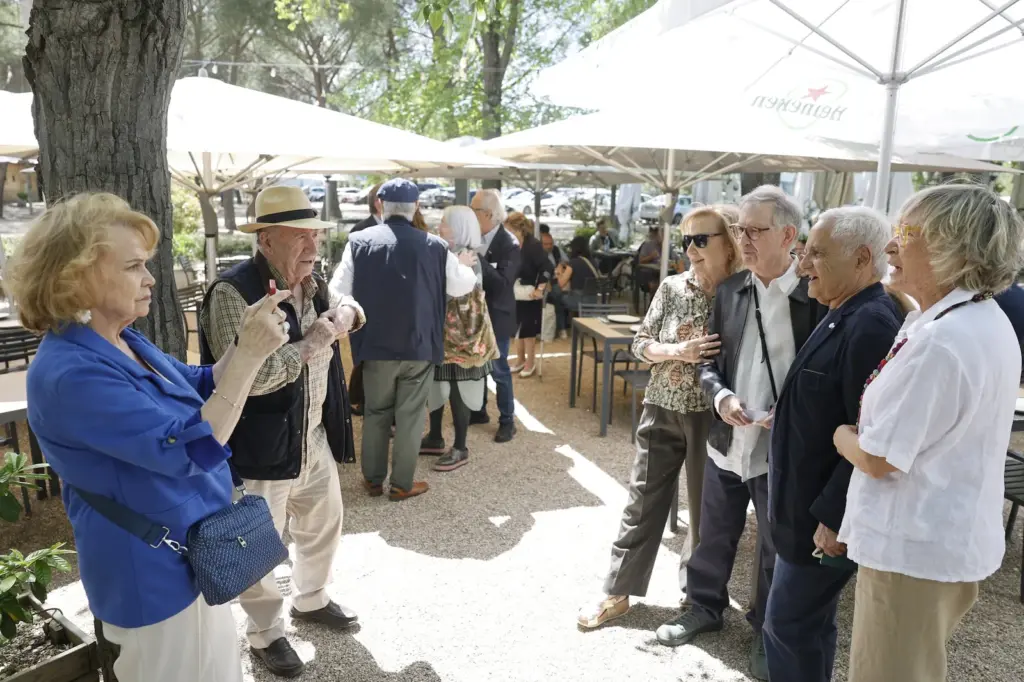
Those who started the newspaper, which appeared on Miguel Yuste street in Madrid on May 4, 50 years ago, gathered yesterday for a lunch in a city park. They were joined by the first director, Juan Luis Cebrián, the current director, Jan Martínez Ahrens, and a crowd that reconnected to celebrate what is now a dizzying certainty.
Alongside them was Jesús Ceberio, who was also the newspaper’s director. His first report, as the first correspondent in Euskadi, was about an ETA attack. That night, the newspaper was born with its own uncertainty, which was also what kept a nation rebuilding itself on tenterhooks.
The machines broke down, but not the enthusiasm. Ramón Vilaró was the first correspondent in Europe, and his report also appeared on the front page. It was about explaining what future awaited this country. Then came the history, to which Juan Luis Cebrián referred when he took the microphone to explain the past and to search in the present.
Juan Luis Cebrián recalled the newspaper’s beginnings. In the nascent newspaper, he said, “there was no majority shareholder, not by a long shot: the shareholder who had the most, 8%, was José Ortega Spottorno. And Jesús Polanco had 6%.” Cebrián added: “It wasn’t about doing business, or having power, it was about trying to recover the excellence that the press had lost during the dictatorship. I believe that is the most impressive lesson I, at least, take from the newspaper. It is increasingly difficult for the current press to oppose political power and money, which often go hand in hand. We are going through a period where, in fact, the press is no longer the fourth estate. The fourth estate is called TikTok, or X, or whatever it’s called. And public information, which is basic for democracy, is currently in *veremos* (up in the air). What we did, we did together… I have always thought that a newspaper is an orchestra.” He has always been haunted by the image of the bomb that exploded and killed an 18-year-old bellboy and injured two other colleagues, one of whom was the head of the newspaper’s general services. “Quite a few EL PAÍS journalists needed protection…”
Cebrián concluded his speech thus: “I wanted to ask for your forgiveness, because I was director for 13 years and a bit. I have been CEO and then president. I have spent 48 years writing for the newspaper. And in a position of responsibility, many mistakes are made, many times injustices are committed. Many people are harmed by the decisions of those at the top, which are not always right, not always necessary, they are the result of weakness or circumstances or ignorance. And so, I want to ask for forgiveness from those of you who have ever suffered these things, through my fault, and thank you for your collaboration.”
Read more PSG — Bayern Munich, live | Bayern controls the match in the first minutes
The director with whom EL PAÍS now celebrates 50 years, Jan Martínez Ahrens, said: “I am neither a pioneer nor a founder. I arrived when the newspaper was already made, well-made and with its foundations well laid. But I do want to bring you the recognition and gratitude of the entire Miguel Yuste newsroom that I now represent. Without you, today’s EL PAÍS would not exist, and that is what deserves recognition and, of course, continuous and long applause that will not end here today. You are a professional benchmark of rigor and quality for all of us.”
“A benchmark for all of us”
Martínez Ahrens added: “There in Miguel Yuste, sometimes when we have problems, when we face thorny issues, we think about how you would have solved them. You lived through a very complicated era, the dictatorship, the attacks, a coup d’état, a quality journalism that did not exist. And you did it and created a newspaper that is still standing and that remains, and I firmly believe it, the best in the Spanish language in the world. But furthermore, you fought for democracy and instilled in us values that we firmly continue to believe in at EL PAÍS. Democracy understood as tolerance, as dialogue, as plurality and also as independence, which is something Juan Luis has pointed out and which I believe is very important now for making a newspaper. That is our aspiration. You achieved it, you are still with us and we aspire to it every day. We are all part of the same history. Although 50 years have passed, there is still much to do, and I believe we must do it all together.”
Karmentxu Marín, an early journalist for EL PAÍS, recalled her times: “Adjutants in the first greeting position and us, the damn base, as we called ourselves then, working as hard as we could and in many cases as if our lives depended on it. We had a will for public service, but what was astonishing was how quickly people, the readers, thought about the extent to which the newspaper was theirs or represented them, even attributing to us capabilities beyond our duties and performances. I joined EL PAÍS taking care of the education section, and one day a lady called me because a school on the outskirts of Madrid had flooded and the teachers were with all the children in the street. I quickly uttered the standard phrase: Madam, we’ll send a reporter and a photographer. To which she replied: ‘What do you mean, a reporter and a photographer? What about the plumber?’”
Juan Bedoya, a journalist for EL PAÍS since its early years, asked questions about the future: “Fifty years later, ink is digital and the printing press rolls less. But the question remains the same as then: how to tell Spain’s story and who tells Spain’s story? What kind of newspaper is made to tell Spain’s story, to tell what the world is like?”
Julián García Candau was the first editor-in-chief EL PAÍS had in several of its areas: “I haven’t come to give a speech, I’ve simply come to share a memory.” And then the former first sports editor-in-chief remembered those who wrote in the newspaper’s first issue, from Ramón Vilaró, Eduardo San Martín, Rafael Alberti, Peridis, Juan Luis Cebrián, Jesús Ceberio, Alfons Quintà…, so many… Until he wanted to remember the colleague killed by the far-right. Then Candau could not continue. That moment in EL PAÍS’s history has never been erased. Terrorism ended the life of Andrés Fraguas at the end of October 1978.
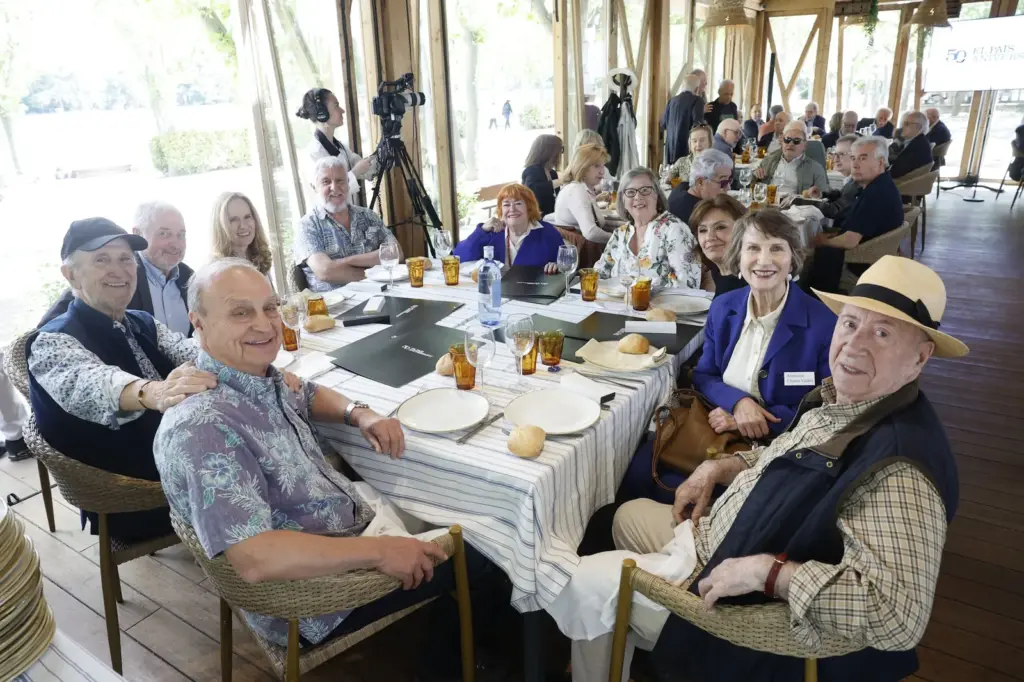
There were more than 60 diners at the lunch. The EL PAÍS of the early era experienced an afternoon whose emotion now seems not only like a reunion but, above all, like the resonance of a time that continues. Rafael Fraguas, an early journalist, like Rosi Rodríguez, the lifelong editorial secretary, with Pepe el Motorista, an EL PAÍS legend of all time, enlivened a gathering that truly seemed much more than the essence of a newspaper: it was many people wanting to see each other again.
Read more The mayors of Barcelona and London demand “to recover the city center for the residents”