









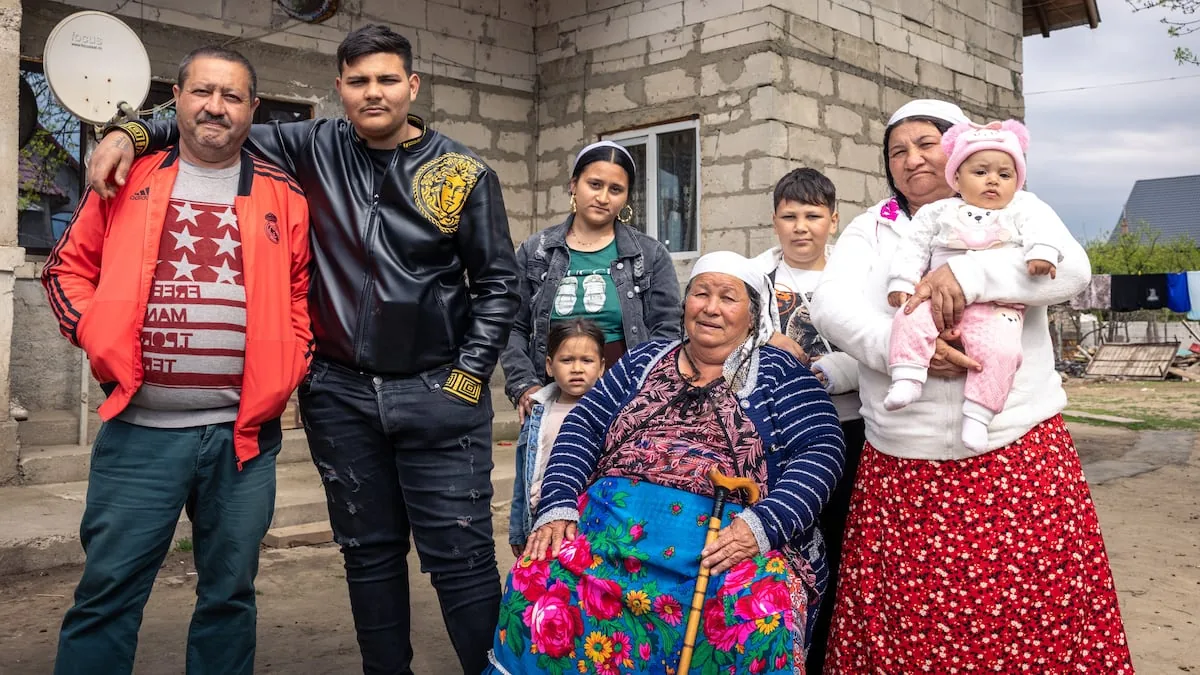
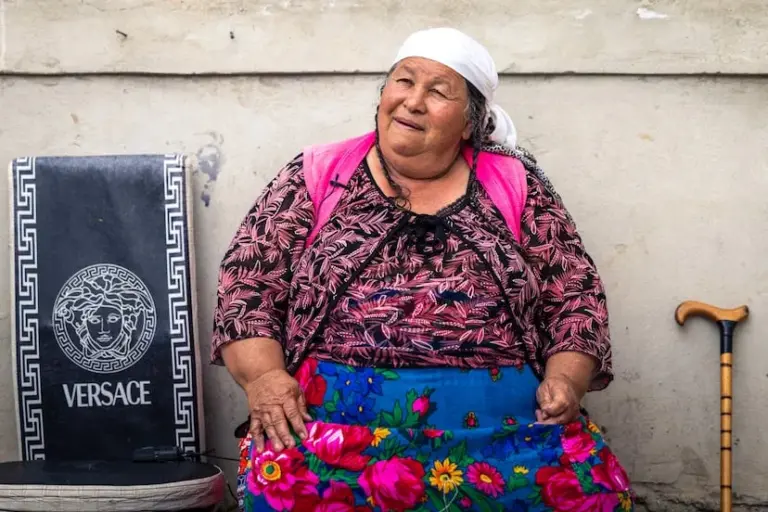
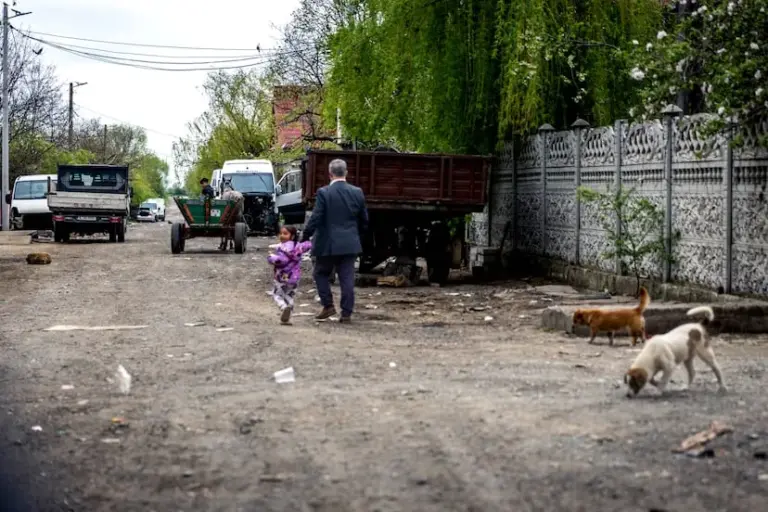
She was born on the road, at the feet of a carriage loaded with cauldrons and stills, about 70 years ago. María Stanescu grew up nomadic, helping in the family trade of distillers. She slept under the open sky, next to the fire that served as light and stove. She was free, even though she lacked even shoes.
Thirty years ago “the winters were so harsh” that she and her people decided to abandon the wandering life and build a house in the Romanian village of Fetesti, 145 kilometers east of Bucharest. Upon becoming a widow, she became the matriarch of a family of three generations of Roma who now gather at the entrance of the house.
Stanescu passes on her legacy orally, like her language, Romani, which is not taught in schools. She recounts years of persecution suffered for being Roma after the Romanian dictator Ion Antonescu, aligned with Nazi Germany, ordered in 1942 the transfer of 40 members of her family to “the north, to forced labor camps from which many never returned.”
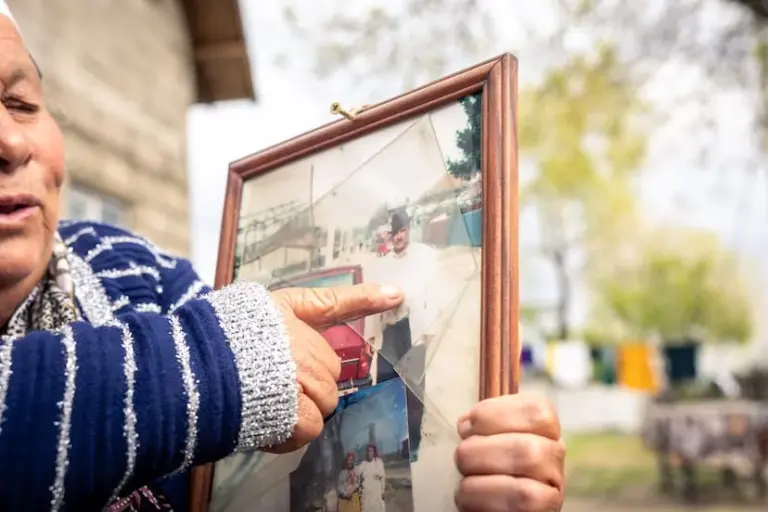




Half a million Roma — from an estimated total population of one million at the time — were exterminated in those 1940s, a genocide forgotten by history books. These are the figures handled by the European Union and questioned by experts for being low, due to the lack of both statistics and interest. They agree that between 25% and 50% of the Roma people were annihilated.
“We were born into stigma. From our first day of life, we are taught that to succeed you have to be twice as good as a non-Roma,” says sociologist Gelu Duminica from his office in Bucharest. He places the origin of the Roma people in what is now Punjab, in northern India, from where the Roma left in several waves fleeing invasions and poverty.
They entered Europe through Romania, where they today represent the largest minority, with 9% of the population according to EU data. The first documented appearance of the Roma dates back to 1365. “Part of the Roma were enslaved for five centuries. It is the longest-lasting case of slavery in Europe,” Duminica states.

The Roma genocide, or Samudaripen, has been recognized much later than the Jewish Holocaust. Both peoples lost half of their population in the Nazi extermination. Roma were identified by an armband with a brown triangle, that of the “undesirables.” They were subjected to mass sterilization campaigns and Nazi experiments. It was only a decade ago that the European Parliament officially recognized this genocide, and only in recent years has Germany begun to compensate the descendants of the victims, notes the sociologist.
The Roma constitute the largest ethnic minority in Europe: according to estimates by the European Commission, between 10 and 12 million Roma live on the continent, and approximately half of them, six million, reside in EU countries (of these, 1.3 million in Romania and around 800,000 in Spain). The figures fluctuate due to lack of statistics and fear of identifying as Roma. The EU has established a Strategic Framework for the equality, inclusion, and participation of Roma, to be developed during the 2020-2030 period.
Although some progress has been made in the first years of implementing that plan — greater schooling of Roma children, access to healthcare and the labor market — Romanian socialist MEP Victor Negrescu criticizes that there is no “specific EU fund” exclusively dedicated to the inclusion of the Roma population.
Structural poverty
Trapped in structural poverty, Roma in Spain suffer dismal statistics: 80% are at risk of poverty, compared to 16.8% of non-Roma in the EU, according to 2019 data. And political integration remains the great pending issue.
“In this legislature, for the first time in the 15 years I have been here, there is no Roma ethnic MEP,” deplores Spanish socialist MEP Juan Fernando López Aguilar. The situation, he says, is especially worrying in countries like the Czech Republic or Slovakia, where legal obstacles persist for Roma to manage their documentation and access basic services. The MEP emphasizes that Spaniard Juan de Dios Ramírez-Heredia became in 1986 the first Roma ethnic deputy in the European Parliament.

Achievements have been made in access to education, key for political representation. “My success is an accident,” says Petre-Florin Manole, Minister of Labor, Family and Youth in Romania, smiling. The first Roma minister in an EU country. He emphasizes that Roma who manage to escape poverty still have to deal with social stigma.
In Europe, Manole argues, a change of perspective is needed to close a gap that has not stopped growing. He was marked by a conversation he had in Brussels with the head of an NGO who presented “a handbag-making project as a success example for Roma beneficiaries, while most of the European economic and intellectual elite talks about artificial intelligence, going to the Moon, the new industrial revolution.”
Like the minister, in Spain the professor from Córdoba Trinidad Muñoz Vacas is an exception, being part of the 0.8% of Roma with university studies — compared to 26% of non-Roma, according to data from the Roma Secretariat Foundation. In a park in Seville, the anthropologist takes a tour through the history of Roma in Spain. The first document referring to them dates from 1425. And barely 74 years later, in 1499, there is already a pragmatic decree issued by the Catholic Monarchs, promoting the forced assimilation of the Roma people. Pragmatic decree after pragmatic decree, they were deprived of their clothing, their language, and their nomadic way of life. Finally, their trades were banned, such as blacksmith or livestock traders, forcing them to cultivate others’ fields as day laborers.
The low-cost flight connecting Bucharest with Seville is full of Roma passengers. Mario and Pamela, both in their thirties, carry their three children. They emigrated a decade ago to cultivate the fields of Andalusia, where 40% of the Spanish Roma population gathers, according to data from the Roma Secretariat Foundation. They returned to Romania to care for Mario’s father, and now they return to Spain to work several months and thus pay for the food that, in their tradition, they must offer to relatives once six months have passed since the patriarch’s burial.
On one of these flights also traveled Minister Manole’s mother a decade ago, to work as a day laborer in Spain. The stories of Mijaela, Tina, Daniel, interviewed in Roma villages that are emptying of their people, repeat themselves: the opening of borders in the European Union has returned their nomadism and better job opportunities but in trades imposed in the past.
The Great Raid
The night of July 30, 1749, marked the definitive break between the Roma and non-Roma populations in Spain, asserts Professor Muñoz Vacas. “In a single night, the triumvirate of the church, the army, and the monarchy apprehended all the Roma settled in Spain,” she cites, referring to what is known as The Great Raid or the first attempt of genocide of the Roma people in Europe.

Between 10,000 and 12,000 people — almost the entire Roma population in Spain at that time — were apprehended at dawn in their beds throughout the national territory. Men and women were separated to prevent reproduction, and their belongings confiscated. They would be exploited in the galleys of the Spanish fleet. The women, in the Houses of Mercy. Slave labor. The dispossession of all their properties “plunged the Roma people into absolute poverty forcing them to beg,” emphasizes the anthropologist.
No trace of this tragic episode in history books in Spain, laments Muñoz Vacas. Roma history is mainly transmitted orally. Flamenco singing has not only contributed to Spanish artistic identity but has served to preserve Roma identity and transmit to new generations the history of persecution of the Roma people in the form of soleás or fandangos, in the absence of textbooks.
“From 1939 to 2012, the official definition in the Romanian Academy dictionary for the word Roma or Zigan referred, first, to a person with dark skin and, second, to improper behavior,” explains sociologist Duminica. It took three years of complaints to change that meaning.
From repression to reivindication
“The Roma people have historically moved between stigma and the threat of disappearance. It has been resistance that has allowed their survival and the transmission of their traditions into the 21st century,” concludes Muñoz Vacas, who also highlights a renewed drive among new generations to claim their identity and political participation.
In the case of Romanian Roma, systemic persecution ended with the fall of the Soviet Union’s communist regime in 1989, while for Spanish Roma the turning point came in 1978, with the arrival of democracy after the death of dictator Franco. “It has been only a few decades that Roma are free to define our identity for the first time,” says actress Alina Serban from a theater in Bucharest. The artist has been selling out her play The Great Shame for five years, confronting the Romanian audience with an uncomfortable and first-person reality: the persistent stigma towards her ethnicity.

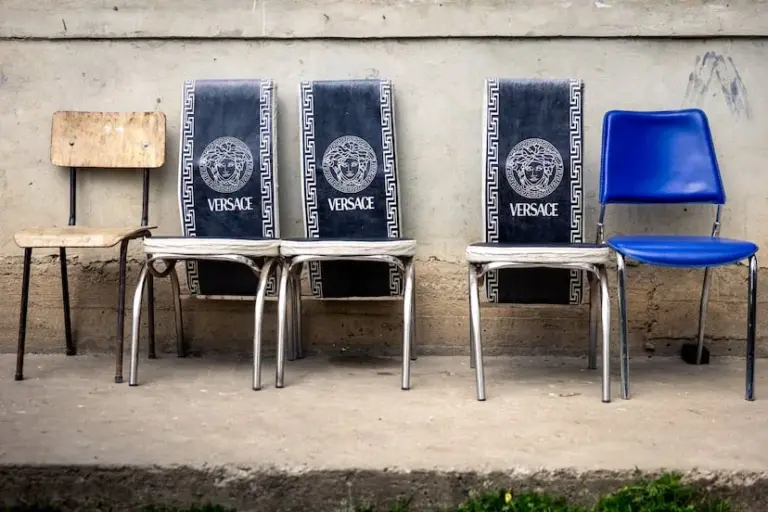
2,500 kilometers in a straight line from the Romanian matriarch María’s village, the caps, bandoliers, and T-shirts of Louis Vuitton or Versace worn by her grandchildren are the same that dictate the fashion of young Roma in the Tres Mil Viviendas neighborhood of Seville. It is the poorest neighborhood in Spain, where exclusion and stigma are chronic. After a night at the Fair, a woman walks down the street to throw a bag of garbage on a huge pile of waste growing among overflowing containers. “The garbage trucks don’t come,” explains a neighbor, shrugging. No one expects them to protest, nor to file a complaint with the City Council, just as they do not expect cleaning services to be sanctioned for coming late or simply not coming.
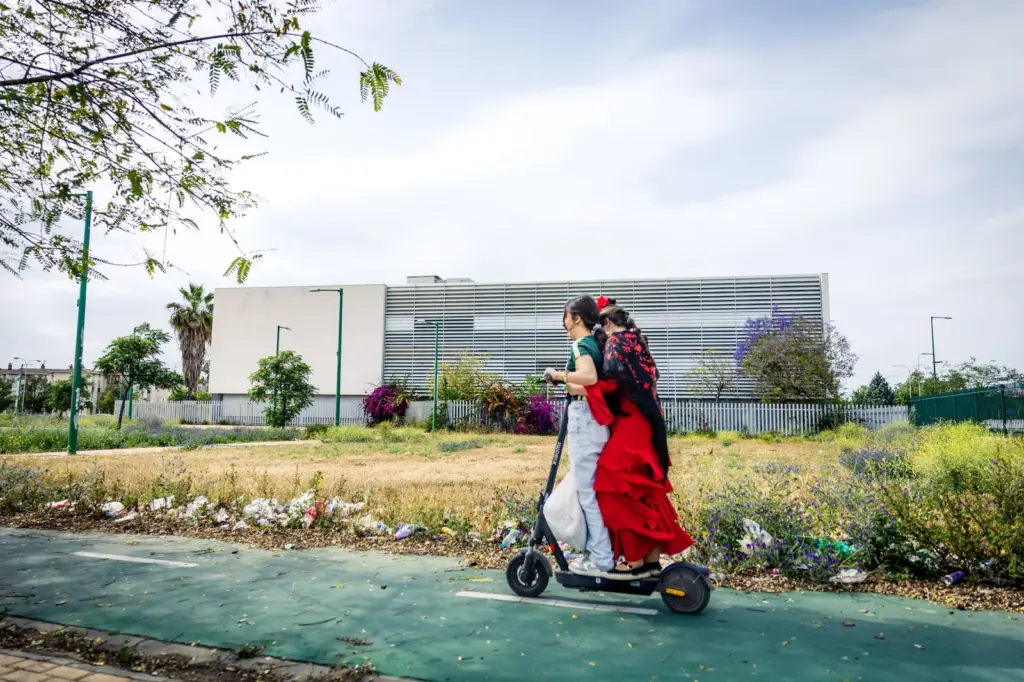
From those same streets emerges a new generation of Roma influencers, who use social networks to claim their “race,” denounce exclusion, and demand their place. Manuel Jiménez, a 26-year-old gay Roma, has been the pioneer, opening a window on social media to discover daily life in the neighborhood.
In the Las Vegas neighborhood of the 3,000, we are welcomed by the influencer Jr Yuse, who proudly claims, at 19 years old, his three identities. He says he is Moroccan and “entrevelao: half payo, half Roma.” His father came young from Casablanca (Morocco) and married his mother, daughter of a Roma and a payo. Yuse El Hor Vega, the Andalusian version of the Arabic name Yusef, is starting to stand out on TikTok. He takes a seat in front of a peeling building and little by little his friends arrive, whom he calls cousins or brothers.

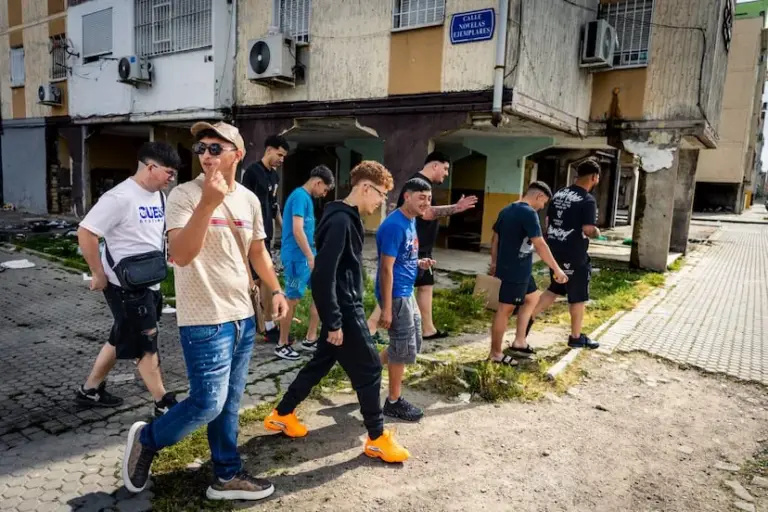
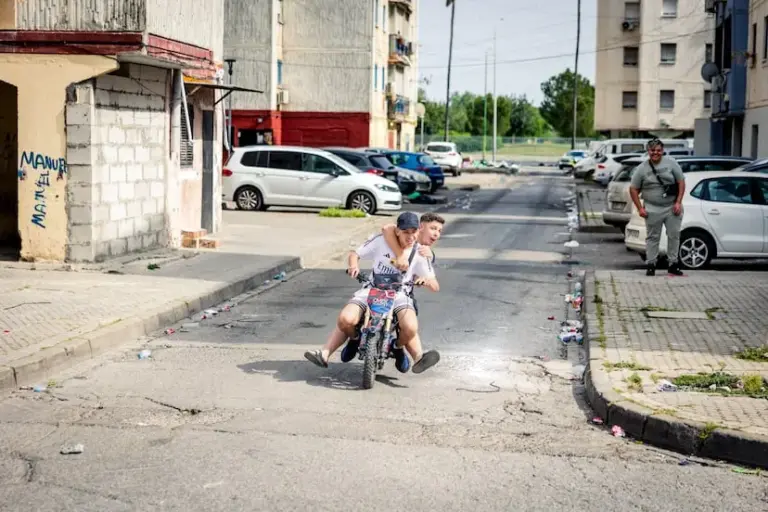




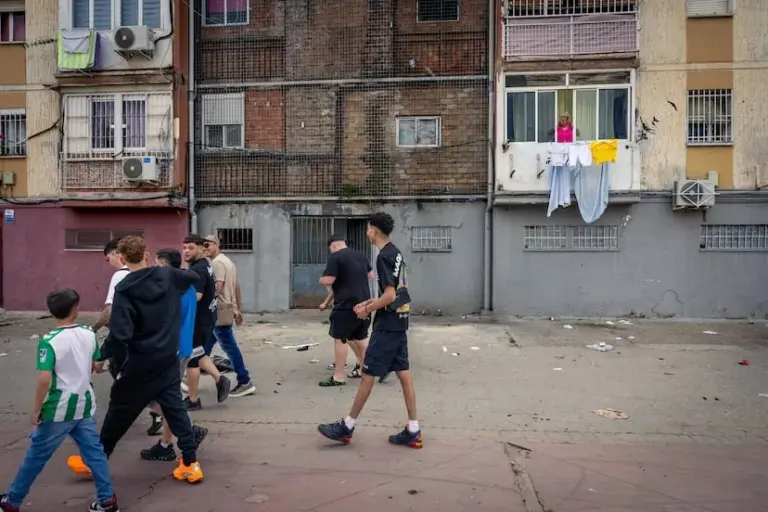

In that group, few have continued studying beyond 14 years old. Like Miguel Santiago Moreno, 19 years old, who has set up his own urban music production company. “You go out to the neighborhood, start seeing the evil, and get carried away. Then you don’t want to study anymore,” Yuse justifies, alluding to the exclusion context in which they are born. Others insist that a Roma with studies “will not have more opportunities” than one without. They denounce discrimination not only in access to employment but in daily life. “There is always someone who crosses the street or a lady who clutches her purse when she sees you,” says Juan Carlos Portela Hidalgo.
They do not hide the presence of drugs or crime in the neighborhood, but they claim there are also “good people” who only seek “a job to support the family and be happy.” Statistics say that six out of ten Roma children are doomed to drop out before completing secondary education. Yuse works in his mother’s grocery store and spends the rest of the day on the street with his people. The “quality of the socio-family network” is where the Roma people in Spain surpass non-Roma, according to the Foessa report: 48.5% of the Roma community has “social and family relationships” daily; in the rest of the population, that percentage is 29.7%.