




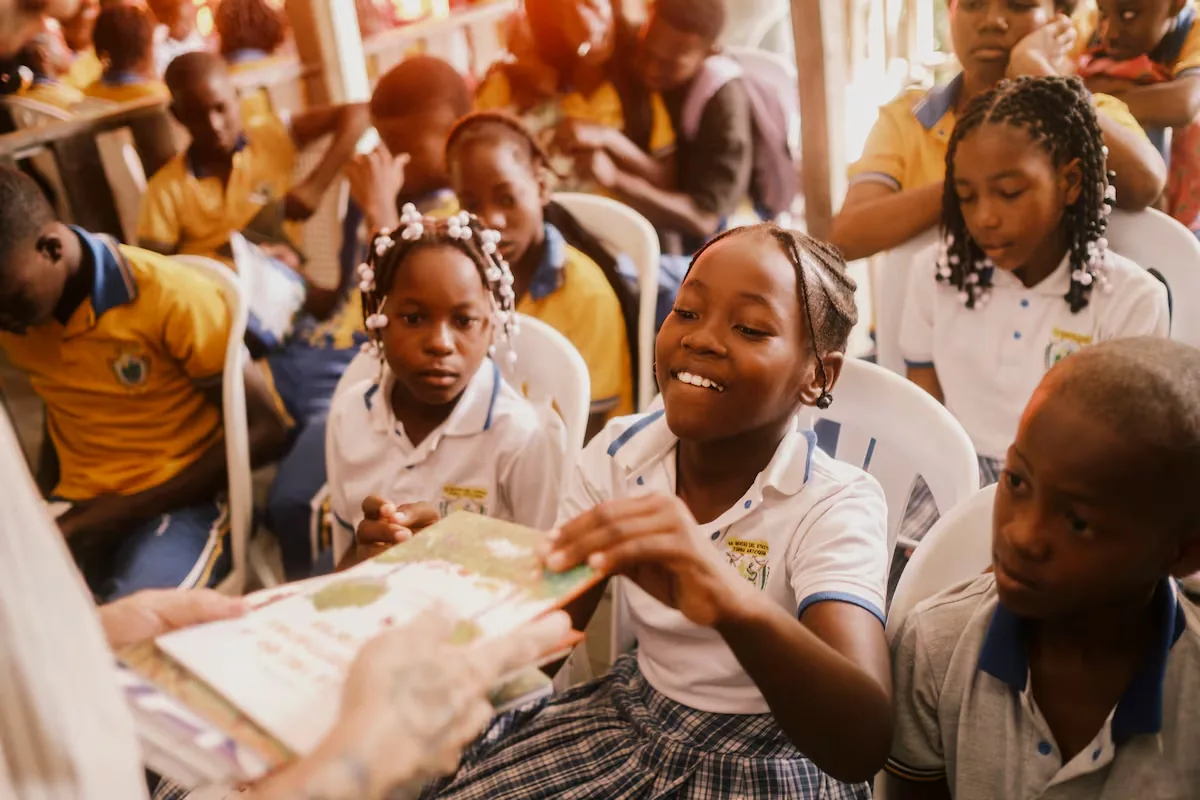
Attending school is a possibility that does not equally cover all children and young people in Colombia. The multidimensional poverty faced by 10 out of every 100 households, with deprivations to cover basic needs such as decent housing, health, or drinking water, prevents many from attending classrooms. The severity of the armed conflict adds to the difficult economic conditions. The International Committee of the Red Cross (ICRC) recently warned that the country is experiencing the worst humanitarian crisis of the last decade. Threats, forced displacement, and clashes in areas besieged by illegal groups push away opportunities; meeting with teachers and schoolmates is neither safe nor stable for everyone.
Read more The 5 best-rated quiet fans on Amazon for this summer
“There are risk scenarios that make it almost impossible for a child to go to school. A family that cannot afford the uniform, or the child who has nothing to eat for breakfast before learning. The same happens if the school is in a high-conflict zone,” emphasizes Eladio Jiménez Madé, specialist of Education Above All for Latin America and the Caribbean. This Qatari foundation, with a presence in 77 countries, works in alliance with the Pies Descalzos foundation, created by Barranquilla singer Shakira, so that no child is left behind due to lack of resources or the dangers of war.
To close these gaps, field teams, together with the Ministry of National Education and education secretariats, conduct house-to-house searches to locate children and young people who are out of school and ensure their enrollment. “We search under every rock, as they say colloquially, because the system said they were in it, but they didn’t appear,” says Patricia Sierra, executive director of Pies Descalzos. Since its creation, this organization has built 22 schools and supports more than 300 public institutions with pedagogical strategies. When they guarantee student access, they follow up with teachers, families, and communities to ensure their continuity. “It’s not just about access, but about providing quality education. The idea is that a child who enters school finishes their academic journey and can aspire to professional, technical, or technological education. This can break the disadvantages,” adds Sierra.
In the last five years, this mission has ensured educational access and retention for more than 75,000 minors in Barranquilla, Cartagena, and Medellín and in the departments of Chocó and La Guajira, two of the most impoverished in the country. 47,634 of these students, including migrants or young people who had passed school age and lost hope of entering, arrived in classrooms for the first time or returned to them. Another 27,554 found solutions to situations that put them at risk of dropping out. The goal is to reach an additional 75,000 beneficiaries between 2026 and 2028.
Jiménez says they have implemented all kinds of aid, from the delivery of materials or uniforms to academic reinforcement. “Sometimes the youngest children don’t have the mechanisms to pay attention and learn properly. Spaces are opened with professionals who help them rediscover the excitement of learning,” he explains. In the Centros Aprende – pedagogical support spaces during after-school hours – they strengthen language and STEM (Science, Technology, Engineering, and Mathematics) skills.
Education under attack
Not only poverty hinders academic development possibilities. Colombia is the country with the most attacks on schools and colleges in all of America and the fourth in the world, after Palestine, Ukraine, and the Democratic Republic of Congo. According to data from the Special Jurisdiction for Peace (JEP), since 2017, on average, one attack in school environments has been registered every four days. This body documented 913 offensives against teachers, administrative staff, and students, including murders, forced displacement, forced recruitment of minors, and sexual abuse within or near institutions. In recent days, rural schools in Jamundí (Valle del Cauca) had to switch to virtual classes due to drone attacks against the Public Force.
Read more Visit of Pope Leo XIV to Madrid: pontiff’s agenda on his trip through Spain
These aggressions cause interruptions, affect educational quality, and generate psychological impact. According to a study by Kobo, a non-profit organization specializing in data collection for the humanitarian sector, about 20% of students in affected schools in Colombia, between 2020 and 2025, had difficulty learning after the attack. “These children live in conditions of psychosocial impact. There is support for them and their families so that they can reintegrate properly,” emphasizes Sierra.
International Humanitarian Law (IHL) considers schools as protected assets and establishes that intentional attacks against them can constitute war crimes. For this reason, more than 30 congressmen from different benches are promoting a bill, which also has the support of the JEP, to toughen criminal penalties for attacks against education. The initiative proposes, for example, creating the crime of “docenticide” to make visible and sanction the murder of educators. According to transitional justice tracking, since the signing of the peace agreement with the FARC in 2016, an attack against teachers has been registered every nine days, including death threats and selective homicides. Teaching is a high-risk job.
The project, which is about to be discussed in the first committee of the House of Representatives to continue the process in three other debates after the installation of the new Congress on July 20, also contemplates the criminalization of forced de-schooling, the attack or military use of assets intended for education, and attacks against students and educational personnel. Right-wing representative Érika Sánchez, its main promoter, explains the urgency of filling several legal gaps. “These acts are investigated as homicide, threats, or terrorism, without recognizing the structural damage to the right to education,” states the congresswoman.
The Education Above All foundation, awarded the Simón Bolívar Order of Democracy in the Grand Cross degree by the Congress of the Republic, supports the proposal that would position Colombia as the country with the most advanced legislation to protect education in contexts of violence. “In the world, there are probably more than 50 serious active conflicts. The fact that Colombia is number four in attacks on education shows the seriousness of the situation. This should call for reflection and push the initiative,” points out Jiménez.
Read more The perfect ‘palazzo’ trousers for summer: cool, comfortable, and available in nine colors