







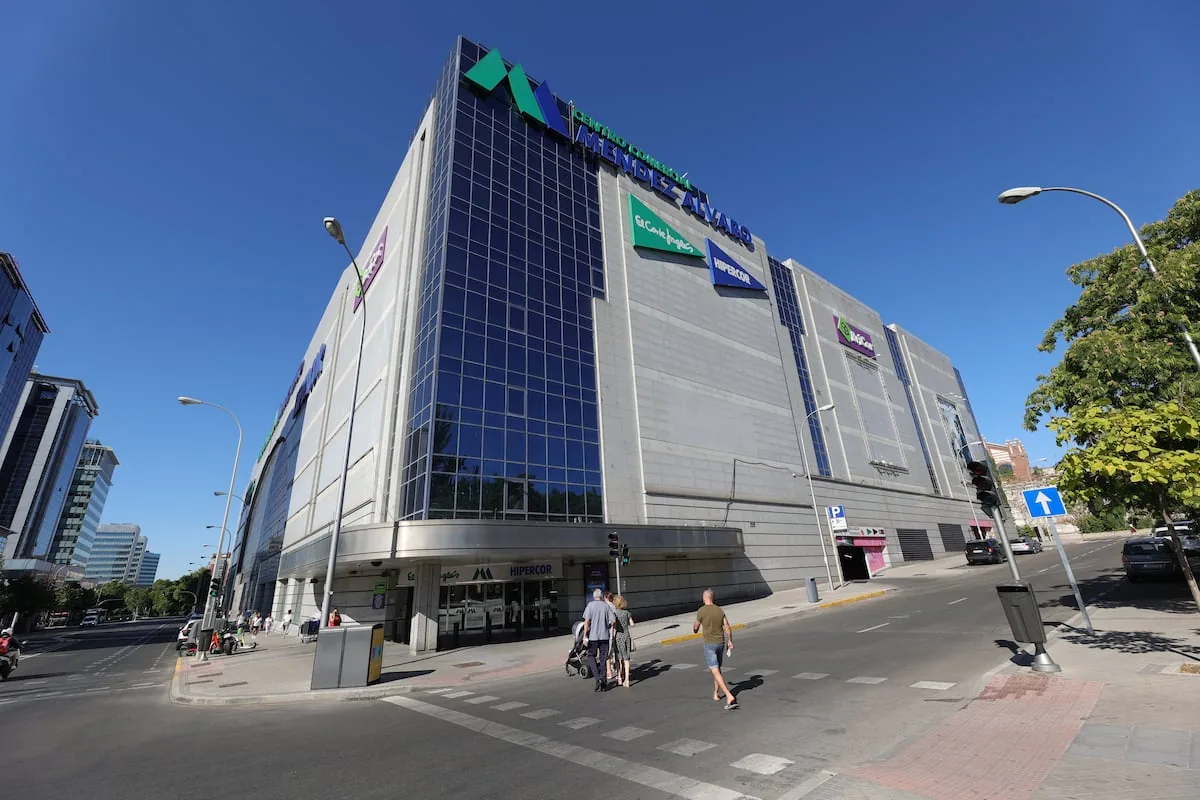
First it was Alcalá Street, then Nuevo Azca and Oporto Square, and now the plot of the former El Corte Inglés in Méndez Álvaro. The Madrid City Council gave the green light this Wednesday to the Nuevo Sur-Méndez Álvaro urban development project, an operation that will allow new offices, public facilities, and green areas to be built on the land of the former El Corte Inglés shopping center, which cannot be understood without the long legal conflict that forced its demolition for exceeding the allowed buildability. The 2019 Supreme Court ruling that settled the case forced the closure and subsequent demolition of the complex, thus opening the door to a comprehensive reorganization of the area that the City Council now turns into a new piece of its urban regeneration strategy.
The plan, approved in the municipal plenary session, ends an urban development process that began to take shape in 2023 with the modification of the General Urban Development Plan (PGOU), which already contemplated the demolition of the building and the reorganization of the plot. The origin of the conflict dates back to a final Supreme Court ruling in 2019 that forced the partial demolition of several company centers in Madrid, including the one in Méndez Álvaro, for having been built with more square meters than allowed.
The adopted solution divides the area — of nearly 11,800 square meters — into two plots. The main one, about 8,500 square meters, will pass into the hands of the City Council and will be used for public facilities and a large green area. The second, a little over 3,300 square meters, will remain in private hands for tertiary use, where El Corte Inglés will be able to build office buildings of up to 27 floors, according to the plan designed by the Almeida Government.
One of the central elements of the project will be the demolition of the former underground parking lot of the shopping center. In its place, the Madrid Municipal Transport Company (EMT) will build a sustainable mobility center that will act as the operational base for Bicimad and will concentrate various services related to urban mobility. The underground complex will have the capacity to manage up to 9,000 electric bicycles, as well as housing a rotational parking lot, municipal tow truck services, and an electric mobility hub.
The development also includes the creation of an urban park at the southwestern end of the municipal plot, with a planned municipal investment of three million euros. The City Council maintains that this green area will “improve pedestrian connectivity” between Kentia and Retama streets and will contribute to the “renaturalization of the entire environment” through the incorporation of native plant species.
Read more The jury understands that the man who left ‘El Leyenda’ paraplegic acted in self-defense
The operation has not been without criticism. Más Madrid has shown from the first moment its opposition to a project that the party considers prioritizes the development of private offices over neighborhood needs. “We already opposed the modification of the general plan that enables this new step that was voted on today [this Wednesday] in the plenary, the approval of the urban development agreement,” recalls José Luis Nieto, councilor and spokesperson for Urbanism of the party, and continues: “We have always opposed it because it is a tailor-made suit for El Corte Inglés. A ruling forced the demolition of part of the shopping center due to excess buildability, as also happened in Campo de las Naciones. And in this case, since the Méndez Álvaro shopping center was not of interest to El Corte Inglés, it reached an agreement with Almeida, demolished the shopping center, ceded a good part of the plot to the City Council so that a facility could be developed, and built a tower to dedicate it to the office business, which will be more profitable. In short, a perfect business for El Corte Inglés thanks to the tailor-made suit that Almeida has made for them.”
Along the same lines, the councilor and spokesperson for Urbanism of the Socialist Municipal Group, Antonio Giraldo, denounces that the action responds to “a tailor-made urban operation” for the interests of El Corte Inglés. In his opinion, the project was initially justified by the supposed need for basic facilities for the district, but it has turned into a use different from that planned. “They talked about facilities such as libraries or cultural centers and now a mobility center for the EMT is proposed that does not respond to that need. That corroborates what we always said, that here the City Council had no need for facilities,” he criticizes while questioning the general interest of the intervention.
The agreement establishes that El Corte Inglés will assume the demolition of the former shopping center within a period of between 18 and 24 months. Subsequently, the works on the municipal plot — which include the park, the facility building, and the mobility center — as well as the private office development will be carried out in a coordinated manner, with homogeneous design criteria and continuity in public spaces. With this action, the City Council seeks to consolidate Méndez Álvaro as a strategic node that combines economic activity, sustainable mobility, and new green areas.
Read more The young “perfectionist” who sold fake tickets all over Europe from Málaga