









Europe and its space industry have been essential for the success of the first crewed mission to the Moon in over half a century, Artemis 2. The engines that propelled the four crew members to the satellite and brought them back safe and sound were part of the European Service Module (ESM), our continent’s major contribution to this US-led program. The systems that kept them alive during these 10 days, such as the supply of oxygen, water, and heat inside a spacecraft crossing deep space at about 270 degrees below zero, are also part of this module. And to that, we must add the solar panels, without which the mission would not have had energy.
Despite this enormous success for the European industry, the crew’s return marks a moment of little certainty regarding what will happen in a few years. The European Space Agency (ESA) is one of the main partners of the United States in the Artemis program to take astronauts to the lunar surface in 2028 and colonize the satellite in 2032. But the US space agency has just completely changed its plans, putting a project worth hundreds of millions of euros on hold: the construction of a space station in lunar orbit, Gateway, in which Europeans had a prominent role.
NASA’s current plans involve going directly to the satellite’s surface, without creating orbital facilities. This means that Gateway’s first module, Halo, will not be launched. Europe also had multi-million dollar contracts in I-Hab, the station’s second module. This project is now also discarded, as NASA aims to land at the Moon’s south pole and build habitable bases and fission nuclear power plants there to provide energy during the long, frigid nights, which last about 14 Earth days. With this plan, the United States seeks to win the race against China, which wants to reach the satellite by 2030, and prepare from here for the future arrival of astronauts on Mars.
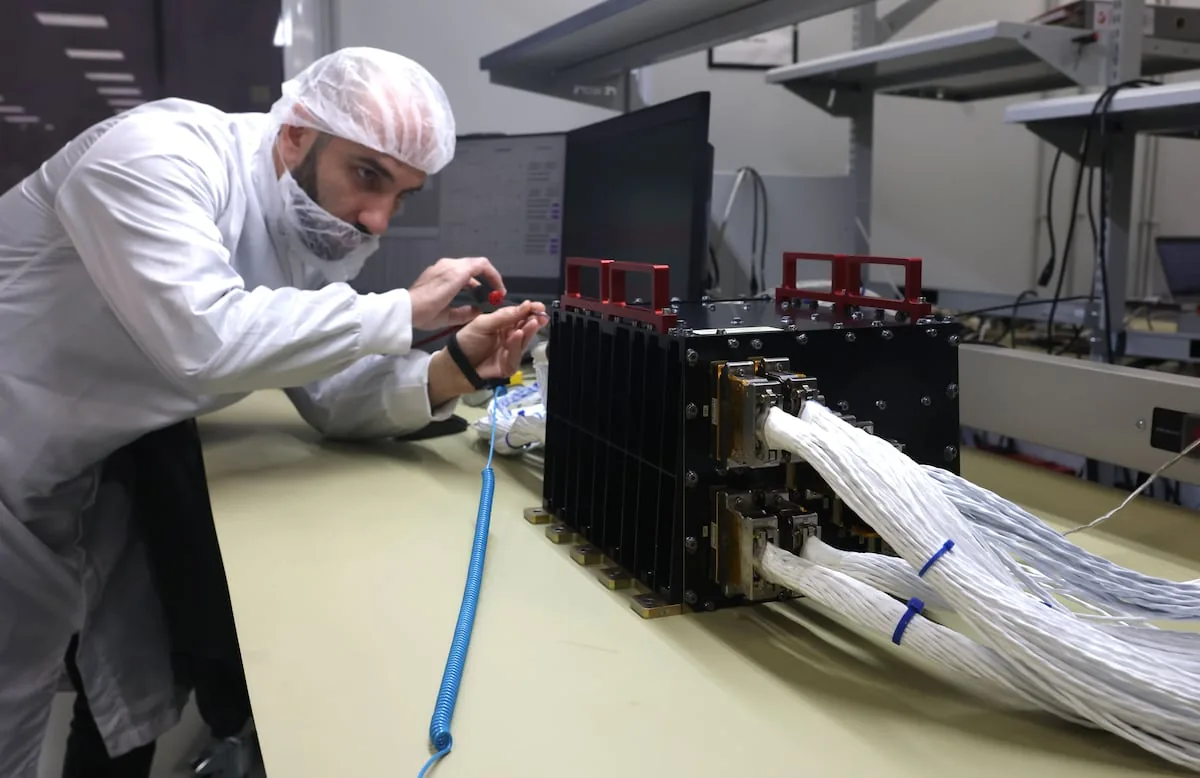
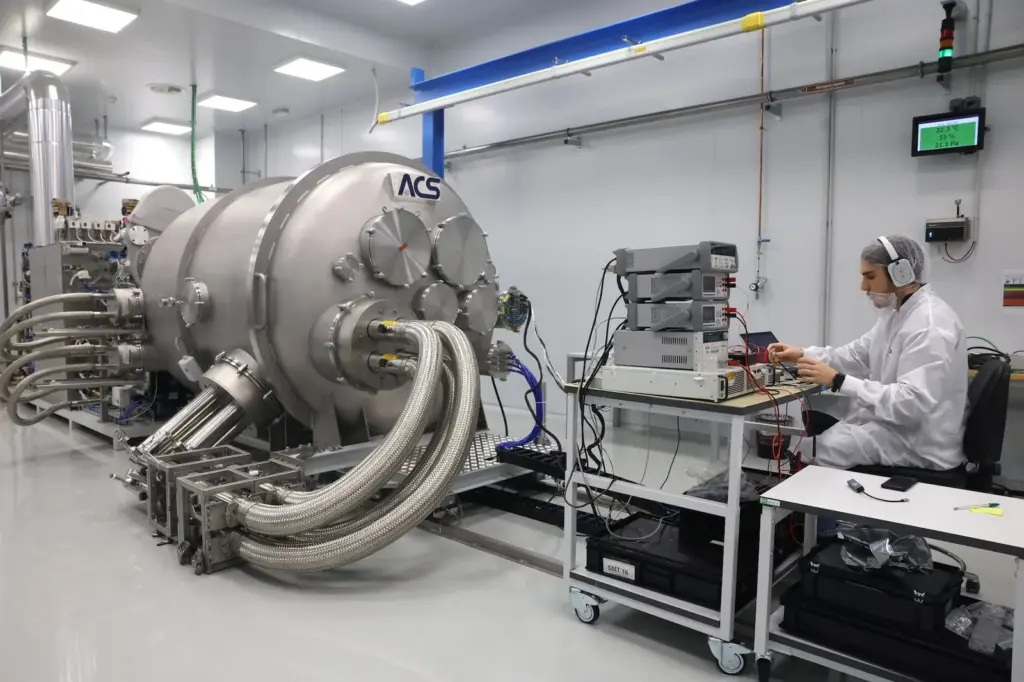
One of the companies participating in the construction of the European module is Crisa, based in Tres Cantos, near Madrid. It is a subsidiary of Airbus, the main contractor for the European Service Module. Crisa has been responsible for the thermal control unit of the European Service Module, the electronic “brain” that controls temperature and humidity inside the Orion spacecraft. This device is valued at about four million euros and is mounted in all modules. The approximate value of each European module is about 200 million euros.
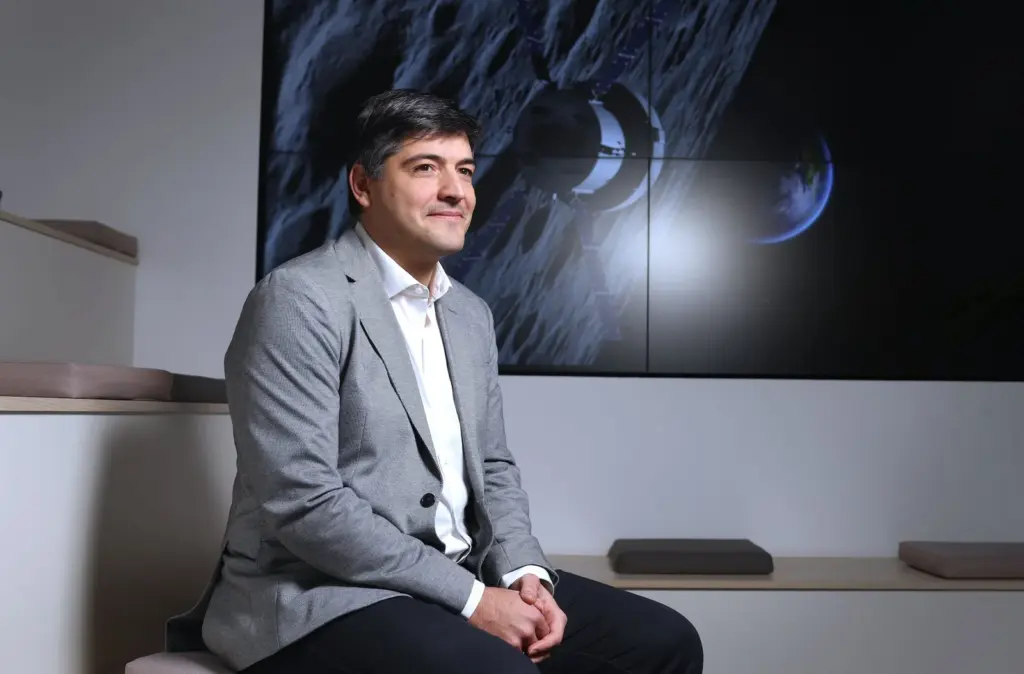
Fernando Gómez Carpintero, CEO of Crisa, explains to EL PAÍS: “The unit we supply provides 1.4 kilowatts, which is roughly the power needed to heat a small room in deep space.” This is the first time in history that NASA has entrusted critical components —on which the lives of its astronauts depend— to non-US companies from other countries. For Gómez Carpintero, this is a source of pride. “They have come to us from the United States to buy this technology. There is trust, but we have to keep earning it,” he adds. Like the rest of the European contractors, the company is now awaiting details on how NASA’s new plans will affect them, as Crisa is also responsible for creating the entire electrical system of the first module of the canceled Gateway station.
“The ESM has been able to take humanity back to the Moon with exquisite precision and operation,” highlights Gómez Carpintero. The control unit’s operation has also been perfect. “Humanity returns to the Moon, and it returns thanks to Europe,” he explains. The engineer is optimistic about the future, despite the change in plans and the uncertainty: “What I see are many opportunities.”
The message from the space agency and the US Government is that they want to return to the Moon with companies, not Governments. The main contractors that will build the spacecraft to land on the Moon are two rival firms: SpaceX, owned by Elon Musk, and Blue Origin, owned by Jeff Bezos. According to the new plans, Artemis 3 will be a crewed mission to test docking with these landers. Artemis 4, in 2028, would be the first lunar landing, and Artemis 5 possibly the second, although NASA has not yet detailed it. All this depends on whether the mentioned space companies deliver their landers on time, which seems increasingly uncertain.
Read more Scary binges in X
The feeling in Europe is one of being left hanging. The space sector operates with multi-year plans. To give an idea, the European space module began to be designed in 2013. The first unit, which flew into space on the highly successful uncrewed Artemis 1 mission in 2022, was finished and delivered in 2019.
One day before the launch of the Artemis 2 astronauts aboard the most powerful crewed rocket in history, this newspaper spoke at NASA’s Kennedy Space Center with two senior Airbus executives, the main European contractor for the service module, who expressed their doubts about the future. “The modules for Artemis 3 and 4 are already in the Neil Armstrong Building at the Kennedy Space Center [from where NASA launches its space missions],” said Justin Byrne, head of space exploration at Airbus, the module’s main contractor. The modules for Artemis 5 and 6 are already being built in Europe. And beyond? “It’s a bit uncertain,” he acknowledged; and added that it would be hard to understand if NASA were to discard this major component, as well as the Orion spacecraft itself, both having proven to be the only ones currently available capable of safely carrying astronauts into deep space. “If you look at the new launch sequence NASA wants, it’s quite a bit larger than what was there before. We wonder how any other service module starting to be designed from scratch now could be ready in a period of barely two years. We believe that the ESM and the Orion capsule will play a role, but the entire mission architecture will probably change depending on whether they ultimately fly with Starship or Blue Origin,” he detailed.
Mark Steckling, head of Space Observation and Exploration at Airbus, said that “in theory” the ESM could work with other spacecraft designed by SpaceX or Blue Origin, but he didn’t see much point in it. “The Orion capsule is a masterpiece of technology,” and he asks: “Why change something we know works?”
These two executives also spoke about the abandonment of Gateway. Steckling believes the ball is now in the European Space Agency’s court. “We are just companies, and of course, we follow ESA,” he explains regarding NASA’s new program. “I think this is now a job for the space agencies to see what role we can play. It’s also a question for Europe, how much ambition do we have? It’s also a task for Josef Aschbacher [ESA Director General] to remind everyone that Europeans have good technology and can contribute to this new stage,” he adds.
The last time Donald Trump’s administration tried to cancel the lunar Gateway station, Congress forced him to keep it alive with multi-million dollar injections. The US parliament also neutralized the brutal budget cuts Trump wanted at NASA, especially in its scientific program. Now history has repeated itself, and the president is again asking for a drastic reduction in the space agency’s budget, saving, however, the crewed exploration program. It will ultimately be Congress that decides on this. Congress, in fact, is one of Europe’s great hopes for the Gateway station and all the multi-million dollar contracts it entails to remain in force.
Read more Roberto Paparcone, the architect who left his job to mold clay