







Less than a week before the deadline for the United States and Iran to reach a peace agreement, mediators are pushing for progress in the two negotiations on which the prevention of renewed bombings on the Islamic Republic depends. To achieve this, it will be key to unblock the main disagreements over the Iranian nuclear program, the opening of the Strait of Hormuz, and the cessation of hostilities by Israel in Lebanon. The latter, in fact, was unblocked this very afternoon with President Donald Trump’s announcement of the start of a ceasefire from 11:00 p.m. this Thursday, which will last, for now, 10 days.
Regarding the Washington-Tehran negotiation, there are high expectations that a second round will be scheduled after a key Pakistani mediator made progress this Thursday, according to a senior Iranian official who confirmed to Reuters.
On the other hand, Israel and Lebanon do not have a specific date planned for a meeting. But the announcement of the temporary ceasefire changes the playing field.
These are the key points of the two conversations that have the Middle East on edge.
What is the status of the negotiations between the United States and Iran?
After the interruption of negotiations between Washington and Tehran last Saturday, due to failure to reach an agreement on the Iranian nuclear program, there is hope that a second round of negotiations can be arranged. The head of the Pakistani army and a key figure in the mediation, Field Marshal Asim Munir, arrived in Tehran on Wednesday to try to revive the dialogue. This Thursday, a senior Iranian official confirmed to Reuters that there is optimism about arranging a second meeting and extending the two-week ceasefire that expires on April 22.
However, the United States has its finger on the trigger. Defense Secretary Pete Hegseth said at a Pentagon press conference this Thursday that troops are prepared to resume combat operations if an agreement is not reached.
When would that second round of negotiations be?
Pakistan’s Ministry of Foreign Affairs indicated this Thursday that no date or location has yet been set for the next round of negotiations between the United States and Iran. Two Iranian sources confirmed to Reuters that the goal will be to obtain a temporary memorandum to avoid resuming the conflict. If the memorandum is signed, the parties would have 60 days to negotiate a definitive agreement that would require the participation of experts and the International Atomic Energy Agency (IAEA), according to the same sources.
Why is there disagreement over the nuclear program?
In last weekend’s talks, the United States proposed a 20-year suspension of all nuclear activity by Iran, although it had previously demanded a permanent ban. Tehran, for its part, suggested five years or to agree on another figure if it was a “single digit.” Washington walked away from the table over this disagreement.
The Trump Administration has also pressured for highly enriched uranium to be removed from Iran. They claim that the strategic mineral can be imported if Iran requires it for civilian uses.
Read more Carolina Tohá: “Kast’s economic agenda is from the 1980s”
Tehran, according to another source who told Reuters, had agreed to dilute its highly enriched uranium under the supervision of the IAEA and the United States.
What is the status of the Strait of Hormuz?
The maritime passage is under a double blockade: Iran’s, which began in early March, and the United States’, which started this week as a pressure mechanism on the Islamic Republic’s economy.
According to the Chairman of the Joint Chiefs of Staff, General Dan Caine, this Thursday, the United States is willing to use force against vessels that insist on leaving or entering Iranian ports. “13 ships have made the wise decision to turn around,” he added.
And the negotiations between Israel and Lebanon?
Last Tuesday, the ambassadors of Israel and Lebanon in the United States held a two-and-a-half-hour meeting in the presence of U.S. Secretary of State Marco Rubio. Although after that meeting it was agreed when and where to start direct negotiations, nothing has been announced.
Washington has also failed to arrange a call between Netanyahu and Lebanon’s president, Joseph Aoun, which was planned for this Thursday. Although Donald Trump celebrated via Truth Social that this would happen in the coming hours, Beirut ruled out talks in the short term, according to three Lebanese officials who confirmed to Reuters.
Will there be a ceasefire in Lebanon?
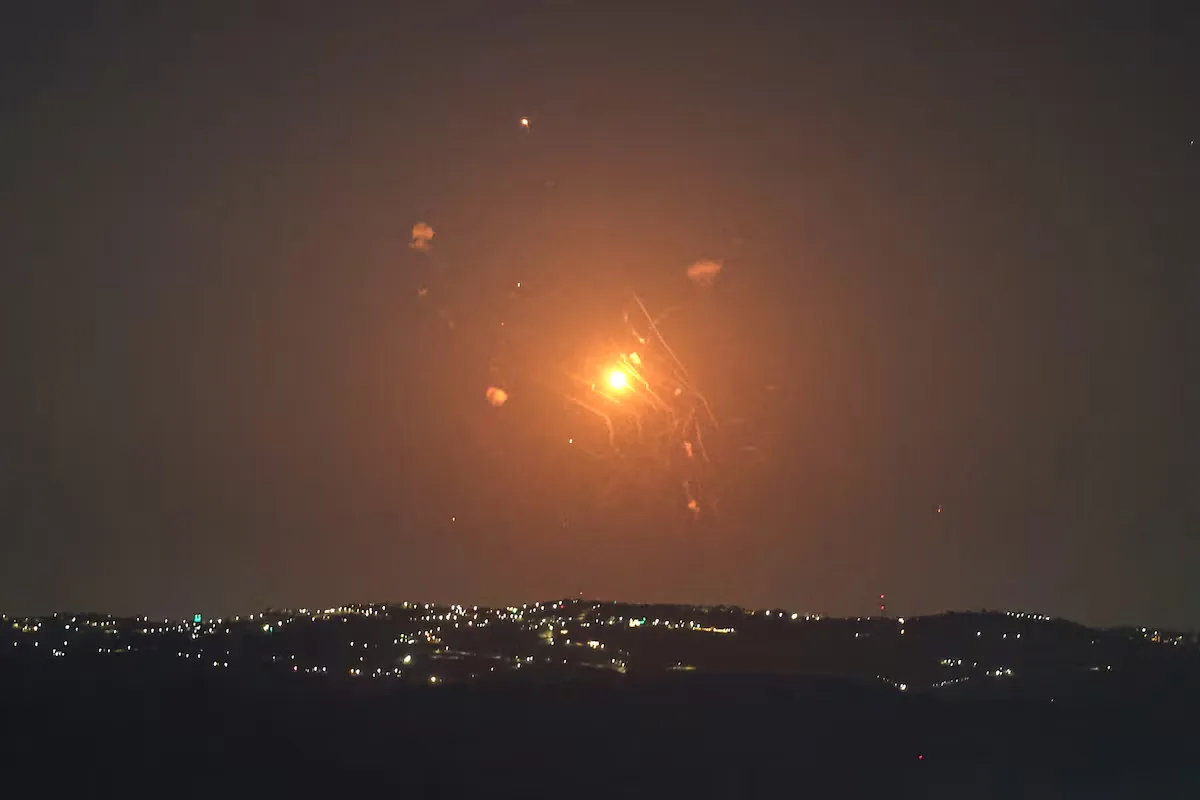
President Donald Trump has confirmed via Truth Social that there will be a temporary ceasefire between Israel and Lebanon starting at 11:00 p.m. this Thursday (Spanish peninsular time, 00:00 in Israel) and that it will last, for now, 10 days.
This Wednesday, the Israeli cabinet had met to discuss the possible cessation of hostilities, according to a senior Israeli official.
To date, the Israeli offensive has left 2,167 dead and 7,061 injured in Lebanon, according to the most recent data from that country’s Ministry of Health.