




Lois Nchang is 20 years old and seven months pregnant, but she does not know who the father is. In October last year, Anglophone separatist fighters broke into her home, located in the conflict-ridden Northwest region of Cameroon. They covered her head with a hood, four armed men took her to the forest, and raped her for several hours. “They threatened to shoot me if I resisted,” she says quietly over the phone. “I bled heavily afterward. I did not recognize any of them.” She now survives on occasional jobs, preparing to welcome a child she had not planned for. And like many in the Anglophone regions of Cameroon, Nchang seeks comfort from an unexpected source: the Pope.
Read more Carolina Tohá: “Kast’s economic agenda is from the 1980s”
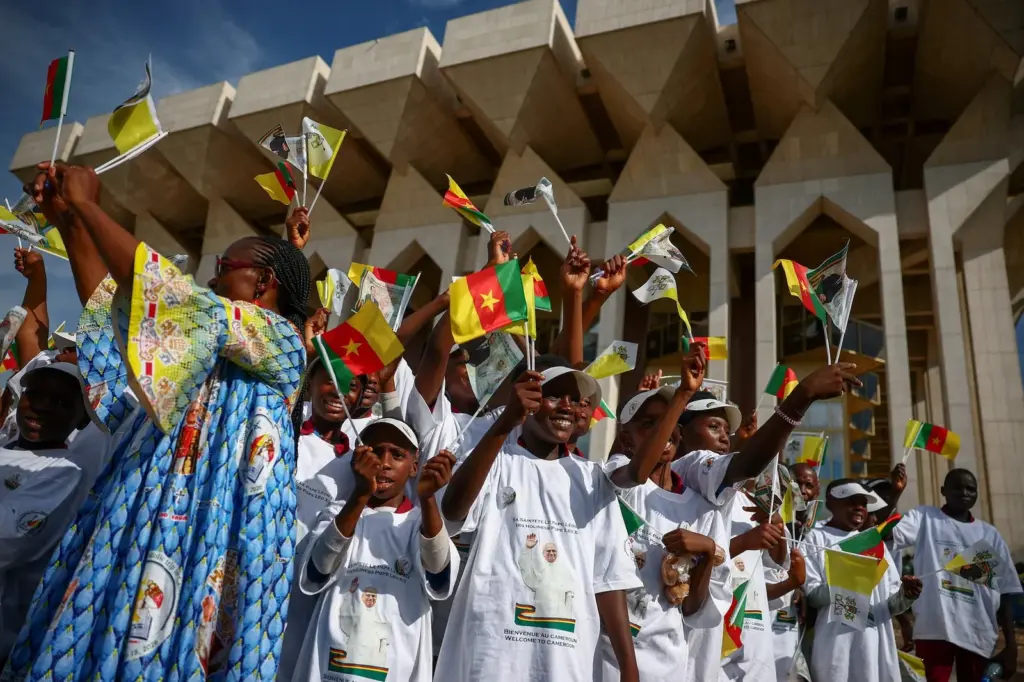
Pope Leo XIV is on an official visit to Cameroon this week, the fourth papal trip to the country in four decades, as part of his 10-day tour of Africa, where more than 20% of the world’s Catholics live and where he has already visited Algeria. The government has presented the pontiff’s stay as a moment of national unity and spiritual renewal. For survivors of violence like Nchang, the visit has a more intimate meaning. “I hope his presence brings peace,” she says.
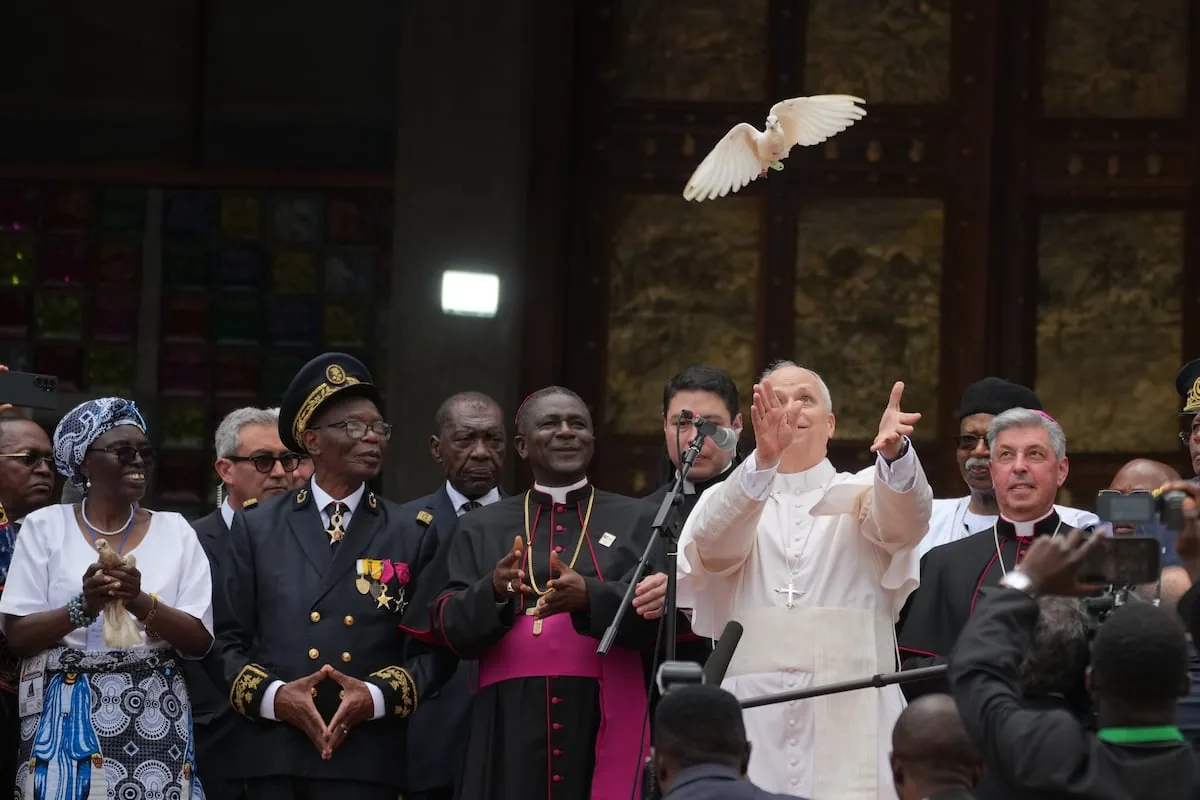
But in the Northwest and Southwest, where a decade-long conflict between Anglophone separatists and state forces has caused at least 7,000 deaths, expectations are more complex. Separatist leaders declared a three-day ceasefire to ensure “security in the Pope’s movements,” who traveled this Thursday to Bamenda, the main city of the Anglophone Northwest region, where he toughened his speech against world leaders and denounced that “the world is being devastated by a handful of tyrants.” He also criticized the spending of billions on wars while lacking resources for education or healthcare, in a city marked by nearly a decade of violence. The Pontiff delivered this unusually forceful speech days after the President of the United States, Donald Trump, attacked him on social media for his calls to achieve peace in Iran.
I hope his presence brings peaceLois Nchang, young Cameroonian woman
The everyday reality behind Leo XIV’s calls for peace is measured in Cameroon through concrete stories. Because Nchang’s case is by no means isolated. In the rural area of Bafut, also in the Northwest region, farmer Cecile Mafo, 43, recounts a different but equally devastating experience. Kidnapped in December 2025 when she was eight months pregnant, she was held in the forest for a month by separatist fighters who demanded a ransom of 500,000 CFA francs (760 euros). Unable to pay, Mafo was repeatedly beaten and, although she was eventually released after her family raised 350,000 francs, she lost her baby in the forest.
In the Anglophone regions, such testimonies have become common since 2016, when protests by lawyers and teachers from the Anglophone minority (20% of Cameroon’s 30 million inhabitants) against what they perceived as marginalization compared to the Francophone population intensified into an armed separatist movement. The civilian population has been the most affected by a conflict marked by kidnappings, extrajudicial executions, and mass displacements. The UN Office for the Coordination of Humanitarian Affairs (OCHA) estimates that more than one million people have been internally displaced and that over two million need humanitarian aid. Schools and health centers have been repeatedly attacked or forced to close, leaving communities with limited access to education and healthcare. For women, the war has brought increased risks of sexual violence, pregnancy complications, and economic hardship.
For the Catholic Church, which wields considerable influence in Cameroon—Catholics number about 11 million, around 38% of the country’s approximately 30 million inhabitants—the moment is delicate. The clergy has often managed to maintain a fragile balance, offering humanitarian aid and moral guidance while avoiding open political confrontation.
“Thirst for peace”
The pontiff’s trip coincides with a complicated political moment in the country. It comes a few months after controversial presidential elections, which left dozens dead and in which Paul Biya, 92, one of Africa’s longest-serving leaders, was re-elected, his authority further consolidated after several constitutional changes, according to his critics.
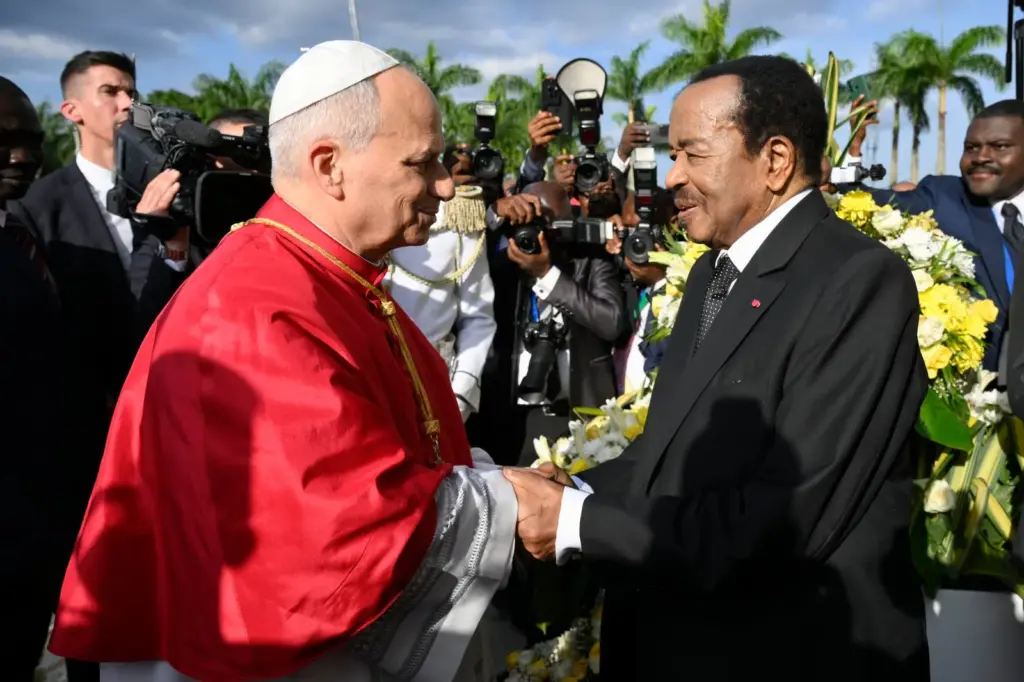
On Tuesday, at the presidential palace in Yaoundé, shortly after a private meeting with Biya, Leo XIV spoke before government authorities, civil society representatives, and the diplomatic corps. There he delivered one of the most direct speeches of his visit, a call for peace based not on force but on justice, inclusion, and shared responsibility. “The world thirsts for peace… enough of wars, with their painful trail of death, destruction, and exile,” said the Pontiff, warning that lasting stability cannot be imposed “from above” and that behind the numbers are “faces, stories, and broken hopes.”
Read more The promotion of reading and the municipal role
The world thirsts for peace… enough of wars, with their painful trail of death, destruction, and exileLeo XIV
Biya responded by presenting the visit as a beacon of hope in a world struck by conflicts. “Like a refreshing spring, his message quenches our thirst for harmony,” he said. “Humanity urgently needs hope, a hope in which dialogue replaces the sound of weapons.”
Already in Bamenda, Leo XIV’s tone became even more forceful. “The masters of war pretend not to know that destruction takes an instant, while rebuilding can take a lifetime,” he said. The trip to this region, which Biya himself has not visited since the conflict began, has rekindled faint hopes of mediation, in a context where the Church could play a key role alongside Muslim and Christian leaders.
However, that symbolism also generates mistrust among analysts and civil society representatives, who fear that the country’s most persistent political problem, the Anglophone issue, will be sidelined. Christopher Fon Achobang, a Cameroonian social justice activist, warns that beyond gestures and official speeches, “three key demands” persist: the opening of genuine dialogue between the government and Anglophone activists, the release of political prisoners, and the establishment of a credible process to address the constitutional status of the Anglophone regions. Nevertheless, he believes that “in moments of national uncertainty, even a purely spiritual visit can be interpreted as a moral stimulus for peace, reconciliation, and political moderation,” he says in a WhatsApp conversation.
A fractured state
Repeated attempts to resolve the conflict in Cameroon’s Anglophone regions have stalled due to deep mistrust between the government and separatist groups, as well as fragmentation within the separatist movement itself. The conflict has its roots in the country’s colonial past: first conquered by Germany (1884-1916), it was divided between France and Britain after Germany’s defeat in World War I. French Cameroon gained independence in 1960 and, a year later, Anglophone Cameroon joined it in a federation following a UN-organized referendum. The Francophone part constitutes approximately 80% and the Anglophone 20%, both in territory and population. However, a controversial referendum held in 1972 abolished the country’s federal structure, which guaranteed rights and ensured separate educational, judicial, and political systems for the Anglophone minority.
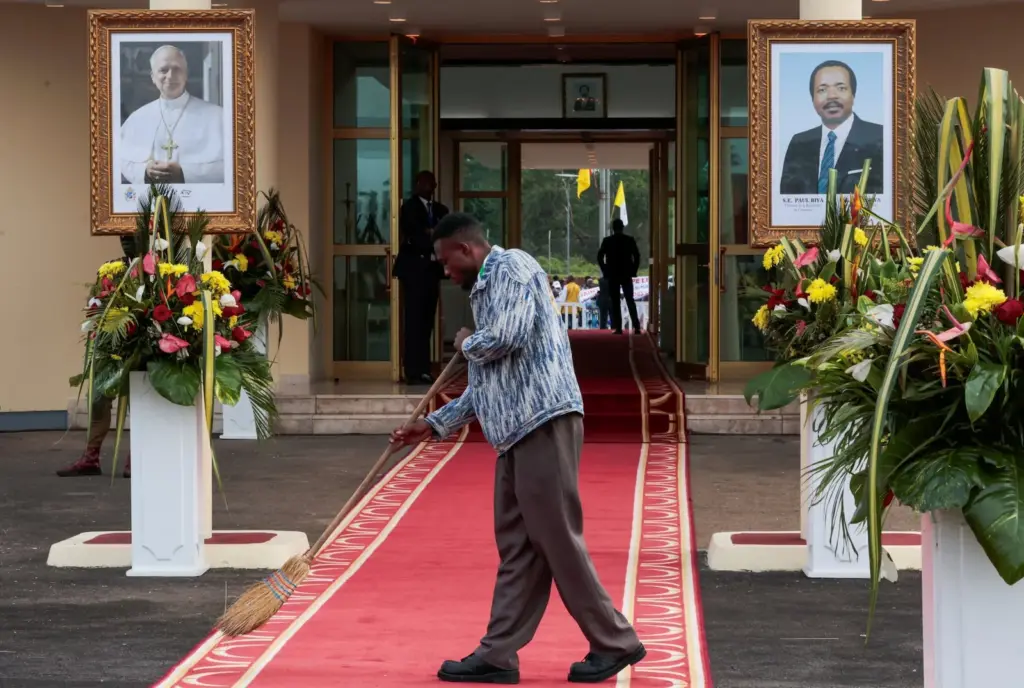
The Catholic Church has also been a victim of the conflict. Several priests from the two conflict regions describe a pastoral landscape marked by fear and exhaustion. A Catholic priest was shot in the Southwest in 2018; five priests and a nun were kidnapped in the region in 2022, while six priests were kidnapped in the Northwest in November 2025. The Church is often forced to walk a dangerous tightrope between supporting local communities and dealing with the parties in conflict. Churches have become places not only of worship but also of refuge, counseling, and quiet mediation.
The Archbishop of Bamenda and president of the National Episcopal Conference of Cameroon, Andrew Nkea, considers the Pope’s visit both a spiritual intervention and a subtle act of moral authority in a fractured state. “The Holy Father cannot come here and leave without Cameroon remaining the same. Something has to change,” he said in an interview on a national television channel.
Read more The woman they stopped asking