

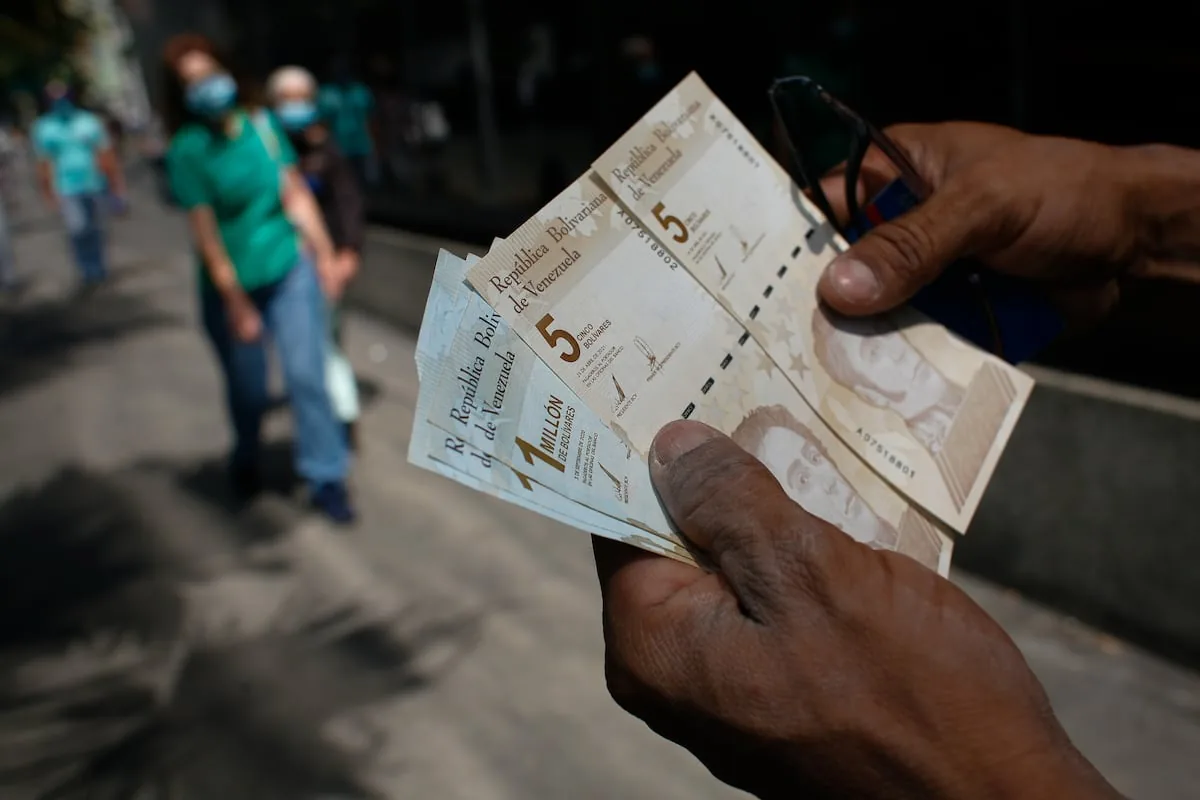
In a few hours, and following the agreements announced between the United States government and Caracas, the Venezuelan state has returned to the international financial community after a prolonged period of isolation. The nation has been readmitted to the International Monetary Fund and the World Bank, opening the door to refinancing its debt and obtaining new loans, oxygen tanks for the weakened local finances. The circumstance has generated very positive expectations among economic and financial actors, and is a consequence of the new reality following the U.S. military attacks of January 3.
The announcements these days between Venezuela and the United States, experts say, are all interrelated. Washington has issued special licenses to allow the local public banking sector and the Central Bank of Venezuela (BCV) to operate internationally. The acting president, Delcy Rodríguez, responded to the measure by announcing the departure of the current BCV director. Laura Guerra, a relative of Maduro, has been replaced by Luis Pérez, a current board member. Although Pérez’s appointment is not a very clear signal to the local and international economic community, deeper decisions are expected in the Executive to restructure the entire board of this institution.
“He is a man of the regime, but he has an interesting background,” says a source close to the Bank who preferred to remain anonymous about the new president of the BCV. “He has held several government positions, is fully trusted in the Miraflores Palace, and has been actively working on the country’s international financial problem.” His presence in the position tends to be interpreted as a hinge to advance the transition to a new board.
“The United States government is talking about the end of the post-military attack stabilization phase of January 3,” says economist Asdrúbal Oliveros, professor at the Central University of Venezuela. “These announced agreements seek to stabilize income, reduce opacity, approve licenses that allow the growth of the oil sector, options for public banking. This announced agreement, it seems to me, signals the end of that first stage. The arrival of multilaterals is excellent news. It will allow initial technical monitoring work that is very important to rescue the local statistics system and the mechanisms for implementing internal policies. It lays the foundation to design a genuine economic stabilization plan endorsed by IMF technicians. The World Bank can help a lot with technical assistance and resources for large-scale projects that need to be rebuilt, such as the electrical system, water system, and health system.”
“Resuming relations with the IMF and the World Bank is excellent news, no matter how you look at it, although some may not see it the same way,” says Luis Oliveros, dean of the Faculty of Economics at the Metropolitan University. “To begin with, Venezuela can access about 5 billion dollars that the IMF had approved for the most disadvantaged countries to face the pandemic situation, and which it never could use. Also, of course, to face the current default situation, the unilateral cessation of debt payments decreed by Venezuela during Maduro’s time. By returning to the markets, the country is again in the eye of international firms and investors. Venezuela’s ‘country risk’ falls significantly from this moment.”
The Venezuelan government, for its part, is not making these decisions out of conviction. Delcy Rodríguez’s opening measures, a medicine that the United States is prescribing to Caracas after January 3, contradict the fundamental contents of Chavismo and are beginning to generate irritation among its militants.
Read more It’s time for debates and to take the campaign out of boredom and threats
Venezuela’s distancing from the International Monetary Fund and the World Bank is not the result of any economic sanction or unilateral punishment by the financial community. Almost 20 years ago, in April 2007, Hugo Chávez had announced Venezuela’s exit from the IMF, an institution he called “a financial instrument of international slavery.” The decision later included the World Bank. Chávez then argued that the country needed “economic sovereignty”; he canceled the nation’s debts with these institutions and definitively distanced himself from them. He then did the same with rating agencies and global financial analysts, who tended to foresee a dark horizon for the country’s finances in the future, whom he stopped receiving at the Miraflores Palace. From 2008, it became common for him to tell them all to “go wash that coat” (go take a hike) in his public speeches. Despite the stridency, the IMF and the World Bank decided not to worsen the crisis, leaving the doors open to the Venezuelan government for future events.
Chávez then decided to seek resources for the development of his projects elsewhere and formalized agreements with alternative financial centers, such as the Bank of the South. Very especially, Hugo Chávez secured a solid and stable alliance with the Chinese government, which became one of the major lenders to the Bolivarian revolution in those years. In 2008, Chávez and the Chinese president, Hu Jintao, announced in Caracas the creation of the China-Venezuela Joint Fund: an ambitious agreement that formalized a revolving credit line, on generous terms for the country, with which infrastructure, energy, road, and housing projects were planned to be financed. The republic received 67 million dollars in loans in the first two years, almost all executed in a sloppy and ineffective manner and, in the long run, raw material for very serious corruption cases.
Broken state
The disorder of Venezuelan finances worsened even more during Nicolás Maduro’s time who, however, decided to continue his distancing from the IMF and the World Bank. The state’s debt tripled, corruption worsened even more, oil revenues fell, and the country entered debt default in 2017, thus entering the blacklist of global finances. Finally, China also canceled its loans to Venezuela, upset by the poor use given by the officials of the Chavista regime to those resources. The icing on the cake was the international sanctions on the Caracas government for undermining democratic institutions. By 2018, the bankruptcy of the Venezuelan state was total.
Finally, in 2019, the IMF decided on its own to distance itself from the Venezuelan regime, not recognizing the legitimacy of Nicolás Maduro ―who fraudulently re-elected himself in 2018― and recognizing Juan Guaidó, the opposition leader who decreed the creation of an interim government with the help of the United States government. In this decade, Maduro’s government has been making efforts to restore its relations with the Chinese government, and achieving some partial agreements with other countries, such as Russia and Iran.
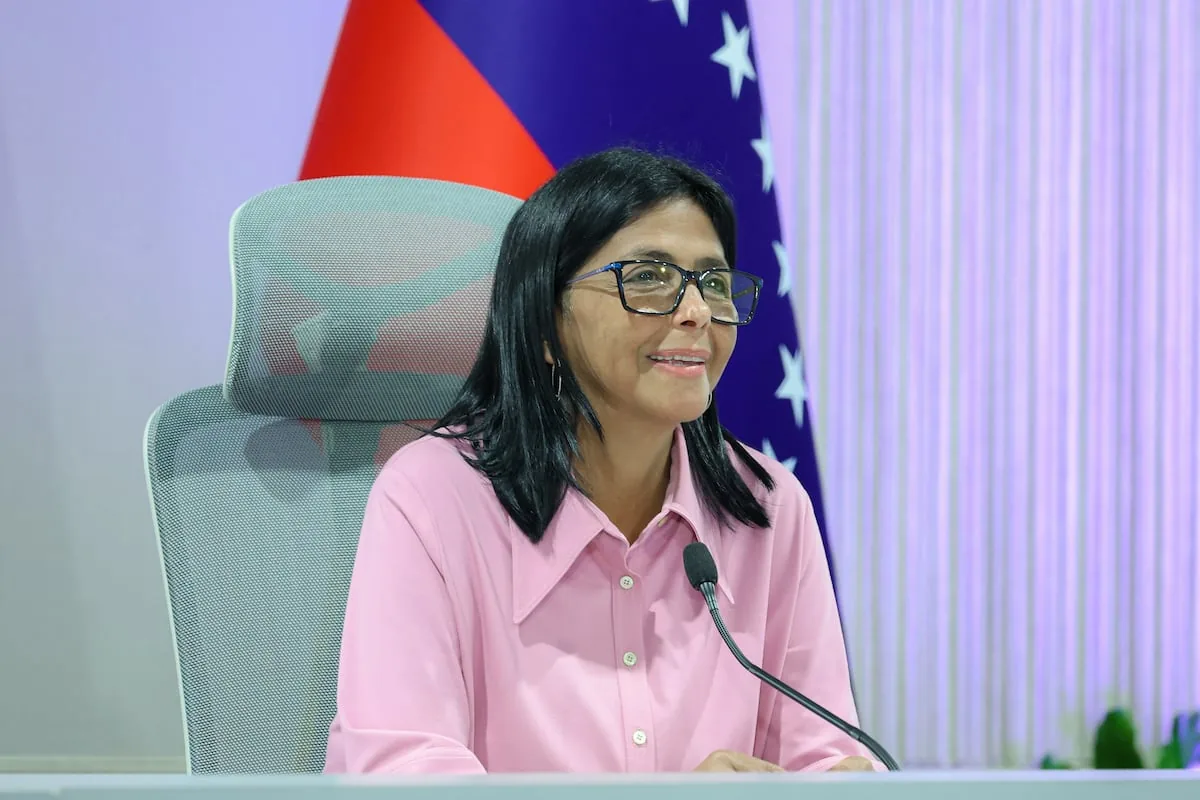
Commenting on Venezuela’s return to the IMF and the World Bank, acting president Delcy Rodríguez said it is “a very important step for the Venezuelan economy, but also what Venezuela means for our region. It has been a great achievement of our diplomacy. I also want to thank all the countries, all the governments that joined this push for Venezuela’s return to the International Monetary Fund.”
Read more The Mexico City Prosecutor’s Office arrests a probable suspect in the femicide of Edith Guadalupe