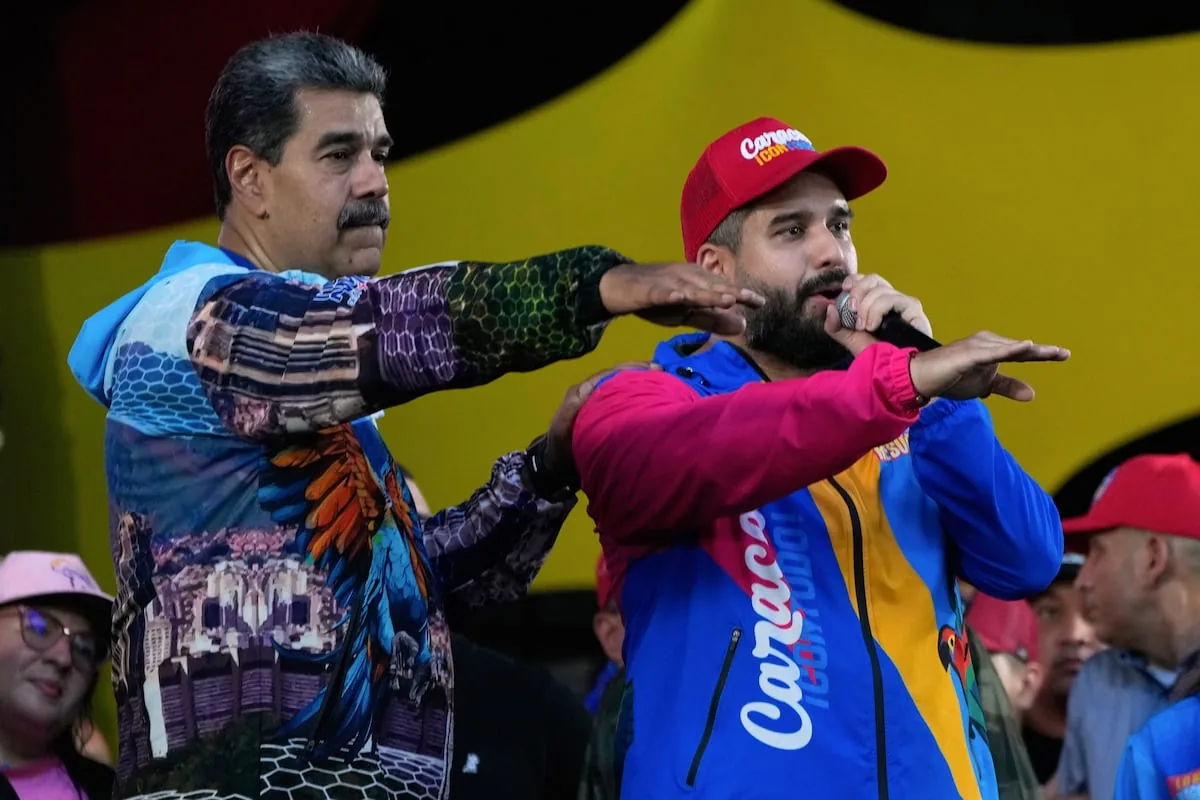
In the early hours of January 3, when the first bombing shook Caracas, Nicolás Maduro managed to record an audio message for his son. He still does not want to make it public —“it will come out at some point,” he promises— but he shares some phrases: “Nico, they are bombing. Let the homeland keep fighting, let’s move forward.” It was a farewell. “He thought he was going to die that day,” his son tells EL PAÍS four months after the attack that abruptly changed Venezuela’s history. “We all thought he was going to die that day.”
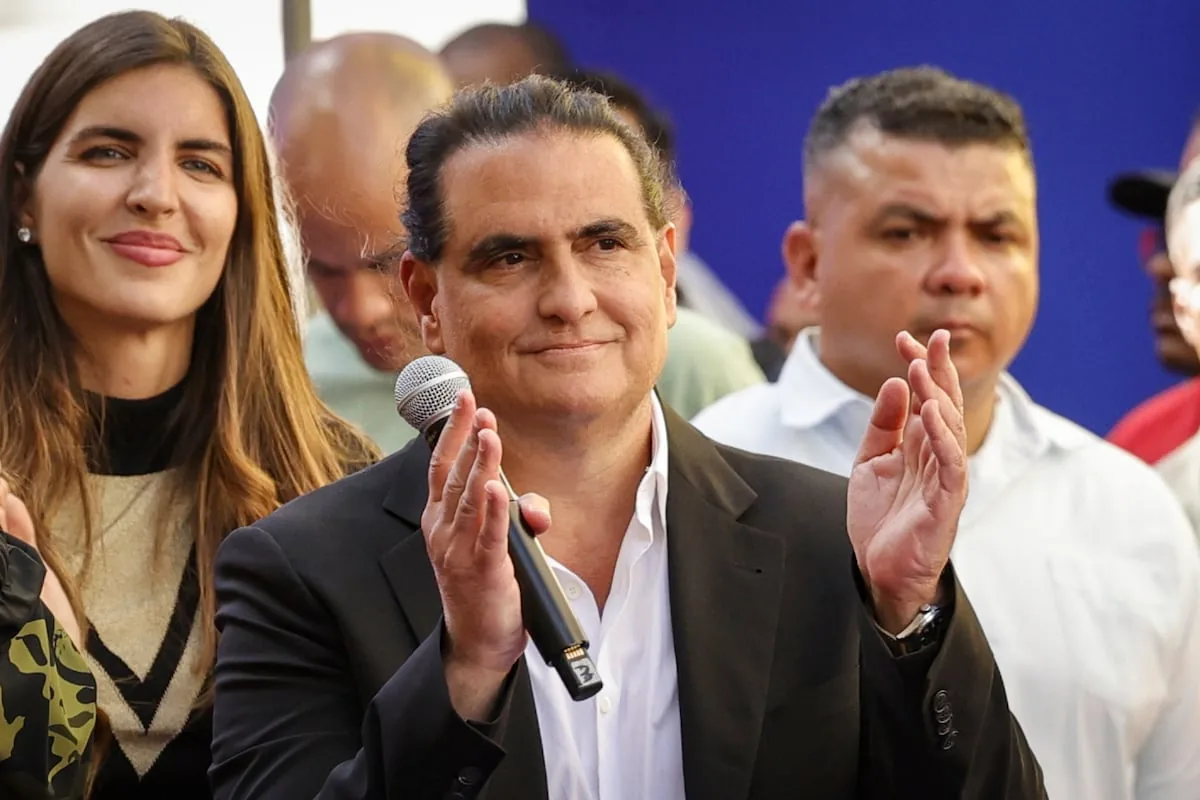
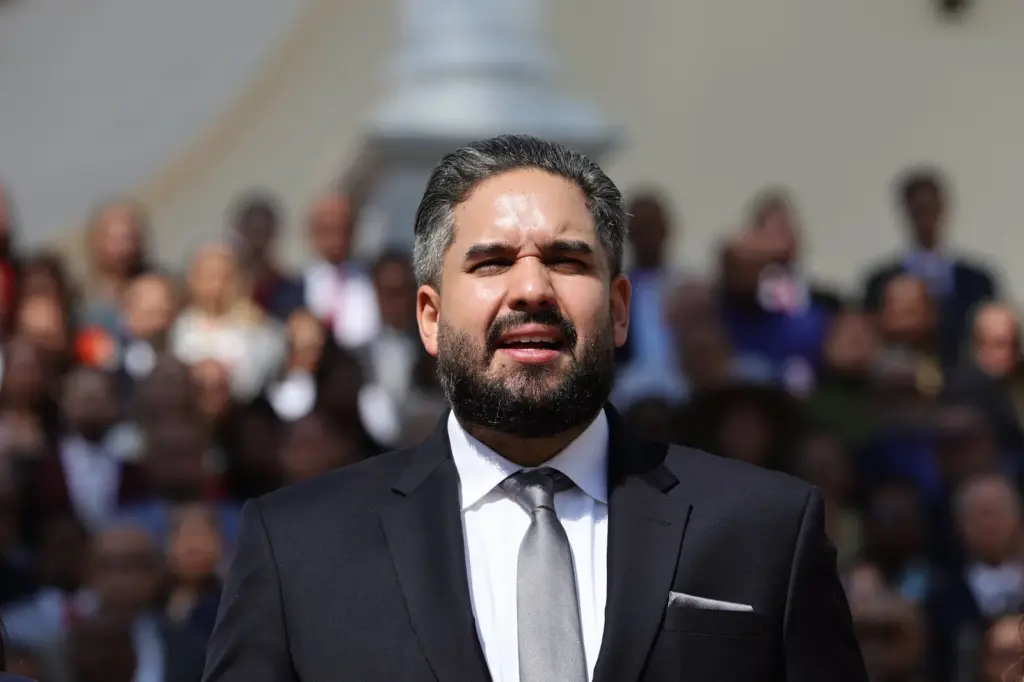
This is the first time Nicolás Ernesto Maduro Guerra —Nicolasito, as he has been called for years to differentiate him from his father— speaks publicly about January 3. It is, in fact, the first time someone close to the president gives details to a media outlet about that traumatic night when 83 people died, including soldiers and civilians. When it seems Venezuela is turning the page, Maduro’s only son, 35 years old, is one of the few in Caracas who still speaks about the autocrat in the present tense.
One month and two days after that early morning, Nicolás Maduro Guerra received a call. Things were calmer, a “new political moment” had opened, and he was in his seat in the National Assembly during one of the sessions debating the amnesty law. He was one of the children of his stepmother Cilia Flores.
—Nico. Nico, speak. Hello?
They were connecting him with his father on the other end of the line. It was the first time he heard that voice since January 3. The deputy was speechless. He got up from his seat, walked backward, and climbed the stairs behind the hemicycle. And there, away from the cameras, he cried “a little,” he says now, sitting in a conference room several times the size of the bedroom where his father was detained. Curiously, his office, located in a financial neighborhood of Caracas, is just minutes from the Marriott, the hotel where the Americans have set up their operations base to dictate Venezuela’s future without his father.
Since that day, Maduro Guerra records the calls he receives from the prison in the United States. They also record everything, and thus, both are building an audio archive that is already history.
—To accept the call, press five—, he hears every time.
Nicolás Maduro, locked up in the Metropolitan Detention Center in Brooklyn, the only federal prison in New York City, has 510 minutes per month for his conversations with the outside world.
—Hello, good night, how are you?
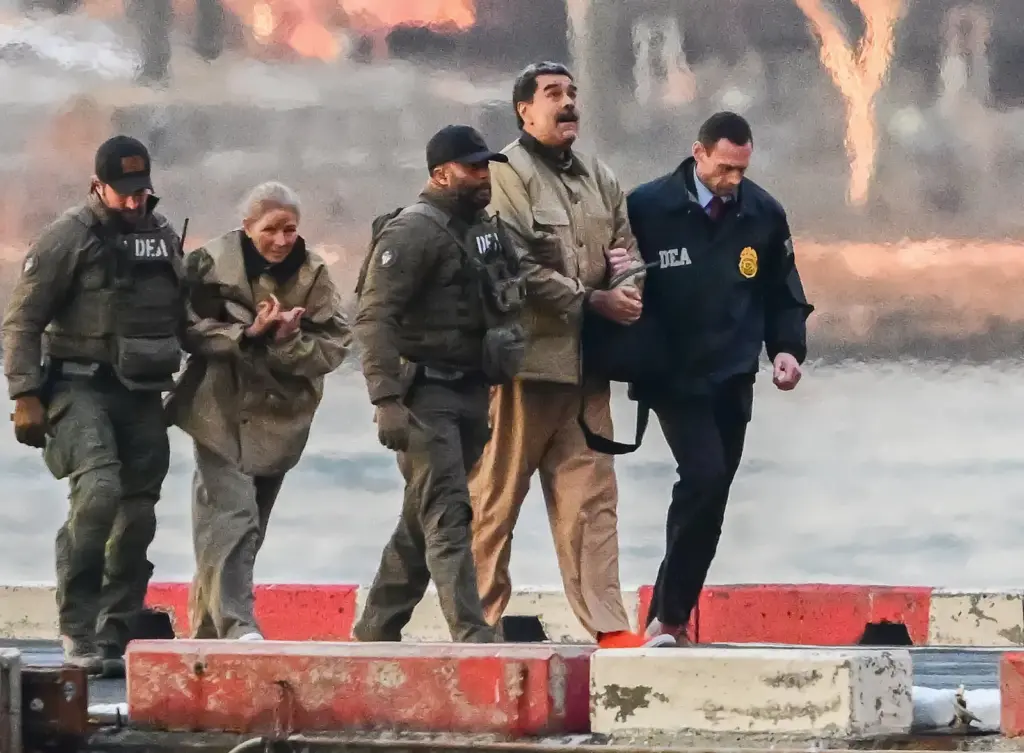
Maduro teases his son, as he teased all the guards watching him when he landed in New York after his capture. “Happy New Year,” he said with his hands handcuffed in front, wearing his gray Nike tracksuit and a wool hat covering his head.
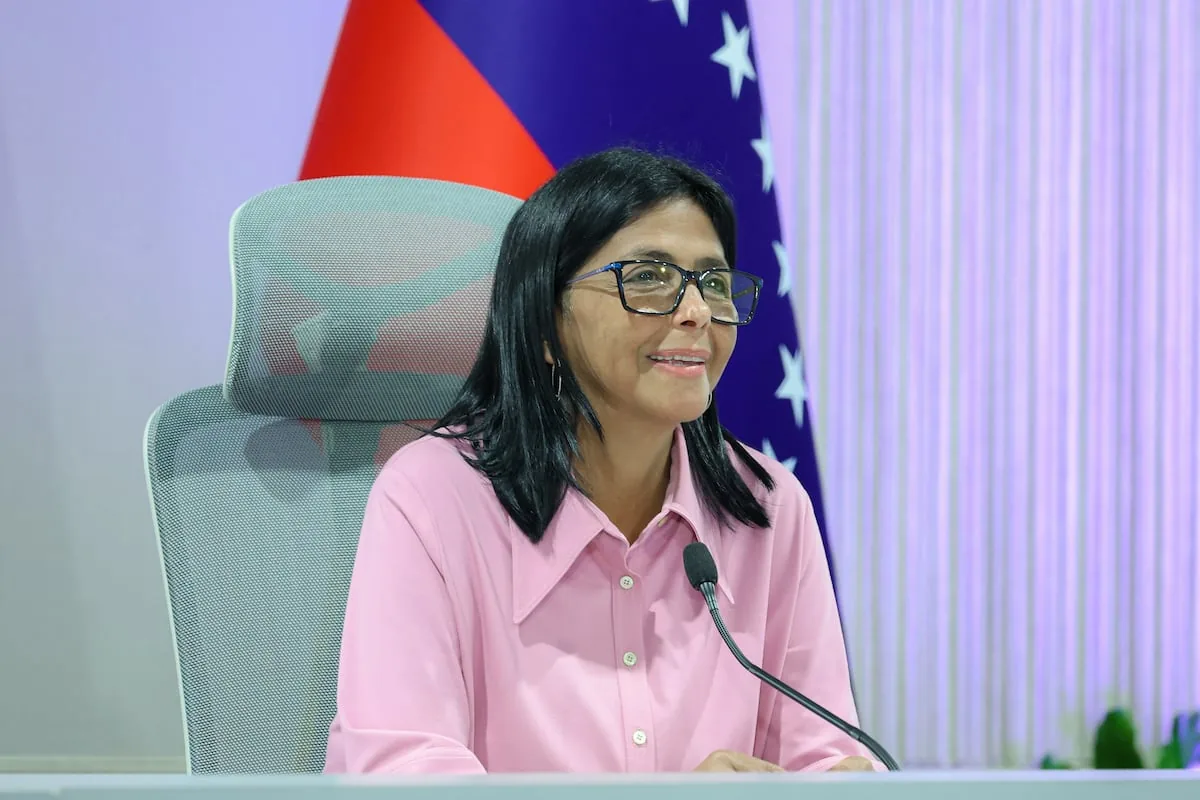
Maduro’s first months in prison have been in solitary confinement, on a narrow bed. Coffee, overly spicy food, a desk. Delcy Rodríguez’s government has negotiated with the United States to improve conditions, and according to his son, during Easter he began interacting with other inmates with whom he watches television. That’s when he met rapper Tekashi 6ix9ine, who, the first thing he did upon leaving prison, was show a handmade SpongeBob doll signed by Maduro. “He must have coincided with him for just one day. My father told me he had signed something for him, but I didn’t even know he was famous,” he recalls. “I’m a salsa fan,” he jokes.
Maduro has been reading the Bible obsessively. Every day. “He learned it. He tells us some crazy verses,” he says laughing. “My dad had never been like this, but now, during calls, sometimes he starts there: ‘You have to listen to Matthew 6:33. And Corinthians 3. And Psalm 108,” he says. Maduro used to be devoted to the Indian spiritual leader Sathya Sai Baba, but now he seems devoted to the Pope. The deputy writes down the psalms Maduro recites in a notebook. It is no coincidence that the two writings his father has published from prison —one after the first hearing on March 26, and another on Palm Sunday— are almost entirely based on verses. “More like a mass,” the son said when he read them.
Fortunately for his son, Maduro has been reading more books for some time. The first three texts he requested were Bolívar’s Angostura Address, the complete works of the liberator, and the Venezuelan Constitution. Then came biographies, books about U.S. history, Doña Bárbara by Venezuelan Rómulo Gallegos. García Márquez. The State and Revolution by Lenin. “He’s already read about 60,” estimates the son, who says he now exchanges copies with other inmates. He has also sent him metaphysics books by Conny Méndez, a Venezuelan author his grandmother used to read. And the New York penal code, so Cilia Flores, a lawyer, can study it from her cell in the women’s wing of the prison.
Maduro, the deputy, seems like a different person from his father. He does not go into details, but it is obvious they had their differences. As a teenager, Commander Hugo Chávez encouraged him to do military service, but he chose to study Music and Economics. His father only had him, but he has seven children. His father ended up leading a regime accused of corruption and crimes against humanity by the UN, with hundreds of political prisoners, torture allegations, and an unprecedented migratory exodus in Latin America, but he handles the tough questions. He even appreciates the frankness.
When asked why the economic and political opening was not done earlier if it was —as he says— his father’s plan beyond Donald Trump, he responds that the releases began in December. When told that in December the United States was already deployed in the Caribbean, he admits: “Yes. Mistakes were made on all sides.” There is one question Maduro Guerra says his father must be asking himself these months, and that he also asks himself: “What did I do or not do that could have prevented January 3?” The answer, he affirms, is not a single one. “January 3 was a sum. Of aggression, sanctions, mistakes. Of interests. Of everything.”
Today, Maduro Guerra chairs the Interior Policy Commission, which oversees constitutional guarantees and the penitentiary system. “We have seen excesses, to put it nicely.” He assumes the errors of Chavismo as his own but also distances himself: “I am a party member, my father was the president, but I am young, I did not decide.”
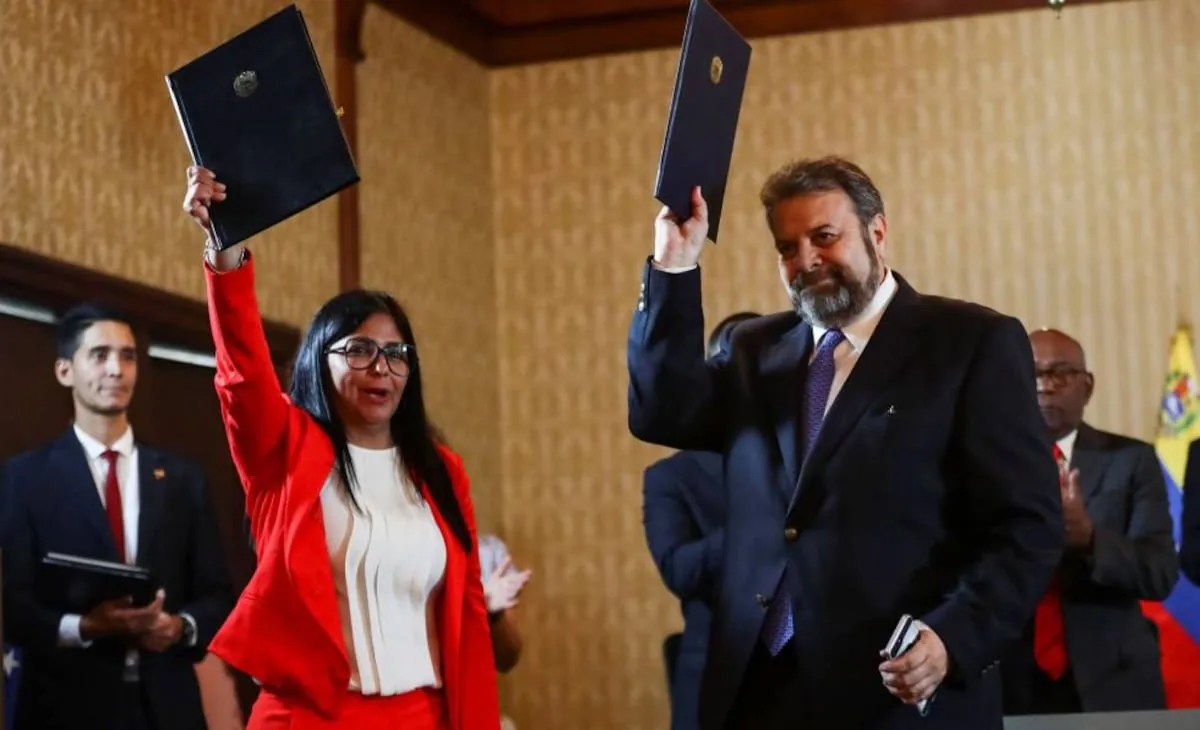
It does not seem that Maduro discusses Venezuela’s major issues with his son. It is also unclear with whom he does. Or if he does. In an interview with EL PAÍS, Jorge Rodríguez, president of the National Assembly, admitted he had not yet spoken with him. It is also not known if he communicates with his sister Delcy Rodríguez. What Maduro has done is support the acting president’s management from prison. His son’s support for the Rodríguez siblings these months has been a factor of stability in a Venezuela where traitors are still talked about.
Read more The behind the scenes of the good and bad news that EL PAÍS reports in a day
Maduro asks his son about the family, sometimes about the Assembly, about food, about football… On April 14, Barça was eliminated from the Champions League, and that was the first thing he said. He was angry. “Damn, that was a screw-up,” he lamented.
Before that “Nico, Nico, speak” on February 5, the deputy had considered his father dead for hours.
Between two and three in the early hours of that January morning, amid explosions and with several combat planes flying over the city, the son called his father insistently. But he hung up on him. “He must be taking cover,” he thought. During those critical hours, Maduro Guerra says he spoke with Delcy and Jorge Rodríguez. The siblings came to believe he was dead and refused to talk to U.S. mediators until they received proof of life. “They were told that if they had killed the president, they would not talk to murderers. I am a witness to that,” he recalls. Later Diosdado Cabello appeared. He didn’t know anything either. That’s when he told his wife: “I think they killed my dad.” He had gone too many hours without hearing from him.
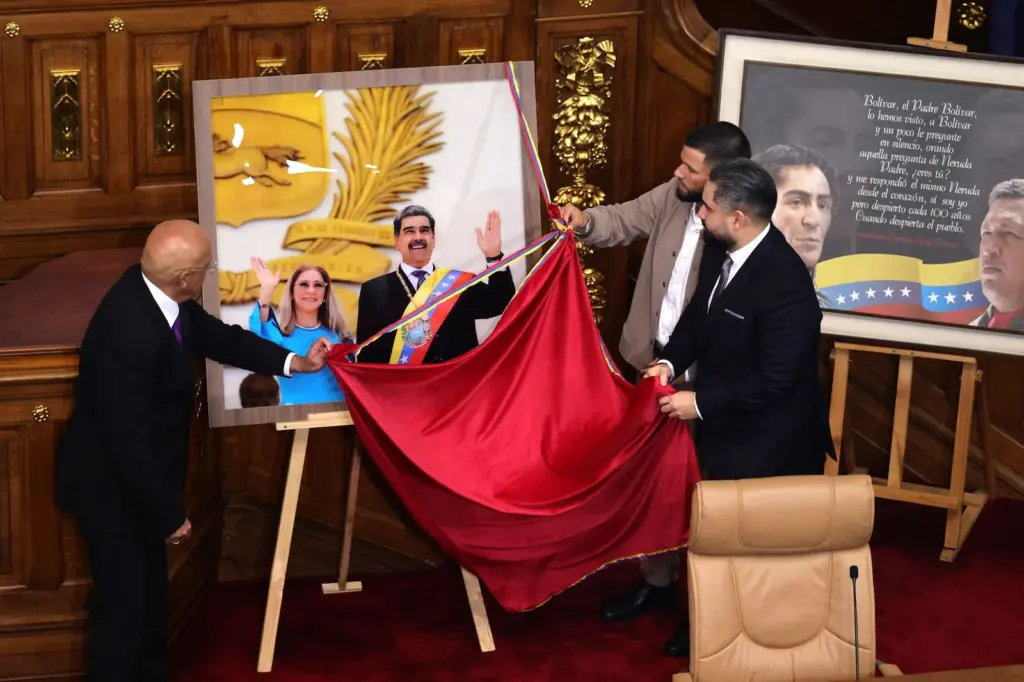
While the Chavista leadership regrouped and tried to understand what was happening, Maduro was caught in his own trap. Much has been speculated —and published— about how the then president of Venezuela ran to a safe room to avoid being caught and that it was precisely at that moment, when he was about to save himself, that he was captured. “The safe room was a wooden closet,” his son jokes. The house where his father slept that night —two floors, two rooms, unarmored glass, uncoated walls— remains a mystery to him. “We don’t even know why he was there,” he says.
All he knows is what they have told him: that his father was caught while trying to get into the closet “out of survival instinct,” that they blew the door off with a shot, that they shattered his knee with a blow, and that his wife, also deputy Cilia Flores, fainted a few seconds after hitting a piece of furniture. “Luckily, we found out Cilia was okay afterward because the pool of blood was terrible.”
Despite the warnings, Trump surprised Maduro. Several interviews by EL PAÍS with people who know firsthand the details of that early morning reveal that the Chavista underestimated the threat and also miscalculated his adversary’s intentions. “We were prepared for a ground invasion,” says one of Maduro’s loyalists. “The president was prepared to die in battle, in a bombing or whatever… It was more than clear that could happen, but not that they would take him alive,” he adds. “He wouldn’t come to reason, and when he wanted to give in, the order had already been given,” says another interlocutor.
Fear and paranoia took over the Chavista leadership after their leader’s capture. It was no less. On January 5, in a confusing episode that was never publicly clarified, a cloud of U.S. drones took over the Caracas sky. According to several sources who know this episode and spoke to EL PAÍS, hundreds of devices headed to key points in the capital where Maduro’s political heirs were located. They stopped at windows, as if scrutinizing whoever was watching them behind the glass. They even reached the Miraflores Palace, where Delcy Rodríguez was inaugurated that same day as acting president. There were shootings to shoot them down. There was panic. No one really knew what they were doing there. Maduro Guerra himself had them in front of his office. “A friend of mine who was on Ávila mountain recorded Caracas full of drones, but I saw them right here,” he recalls.
Maduro, his son assures, is well and strong despite the confinement. “He is dedicated to the country and politics. And I think he was prepared for this. I know he feels his victory is that he is still alive. He is also a very spiritual person.”
Nicolás Maduro’s fate is uncertain. He faces charges for four narcoterrorism offenses and weapons possession. But his son and his circle treat him like a hostage. “We have faith that he can return,” says Maduro Guerra. But not in the courts. “The judge seems like a good man, we will fight the legal battle, but this [his return] is part of a political agreement,” he says.
The payment for his defense, which costs millions of dollars, has been one of the disputes of his lawyers, among whom stands out American criminal lawyer Barry Pollack, who defended Julian Assange. The lawyers have managed to get the United States to lift the blockade so that Venezuela can pay for the presidential couple’s defense instead of having to leave their cases in the hands of a public defender. The decision —which has outraged many Venezuelans— facilitates, in any case, the trial to continue. Without adequate defense, his lawyers could insist on nullifying the process.
“My dad has no money, no accounts, no front men, nothing,” the son assures despite the corruption accusations against his father. “It would be absurd to say he lived poorly, but the only property my dad has is the apartment he bought when he was a deputy with Cilia in El Paraíso. And that was always their dream: to return to that apartment.”
Return. To the apartment, to Venezuela.
After an hour of conversation, EL PAÍS asks him the same question with which this interview began.
— And you, how are you?
Coldly, at first, he answered: “The automatic response is good. You have to be patient, I am coming out of the shock and one assimilates the situation.” On the second attempt, he opened up a little more: “I keep my emotions, I try to be calm, thinking about what my role should be to help the country. Now I am the pillar of my family, of my aunts who are old, of my daughters. And also of my dad.”
—You must be his greatest support…
—I don’t know, honestly I hadn’t seen it that way.