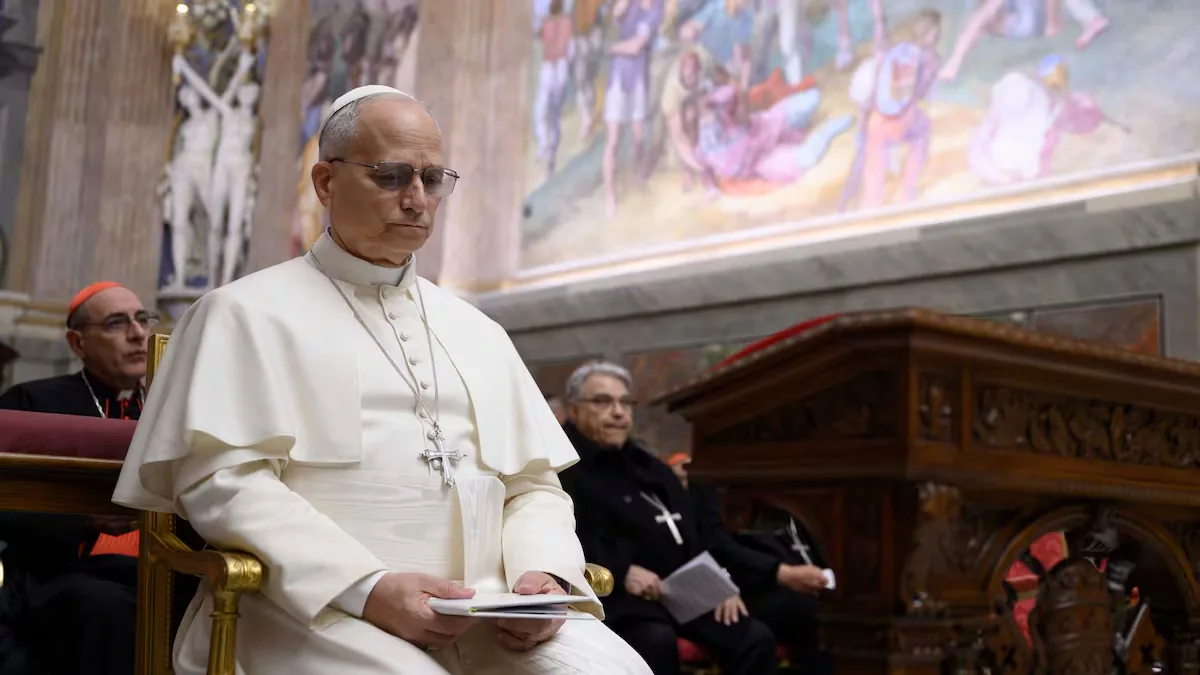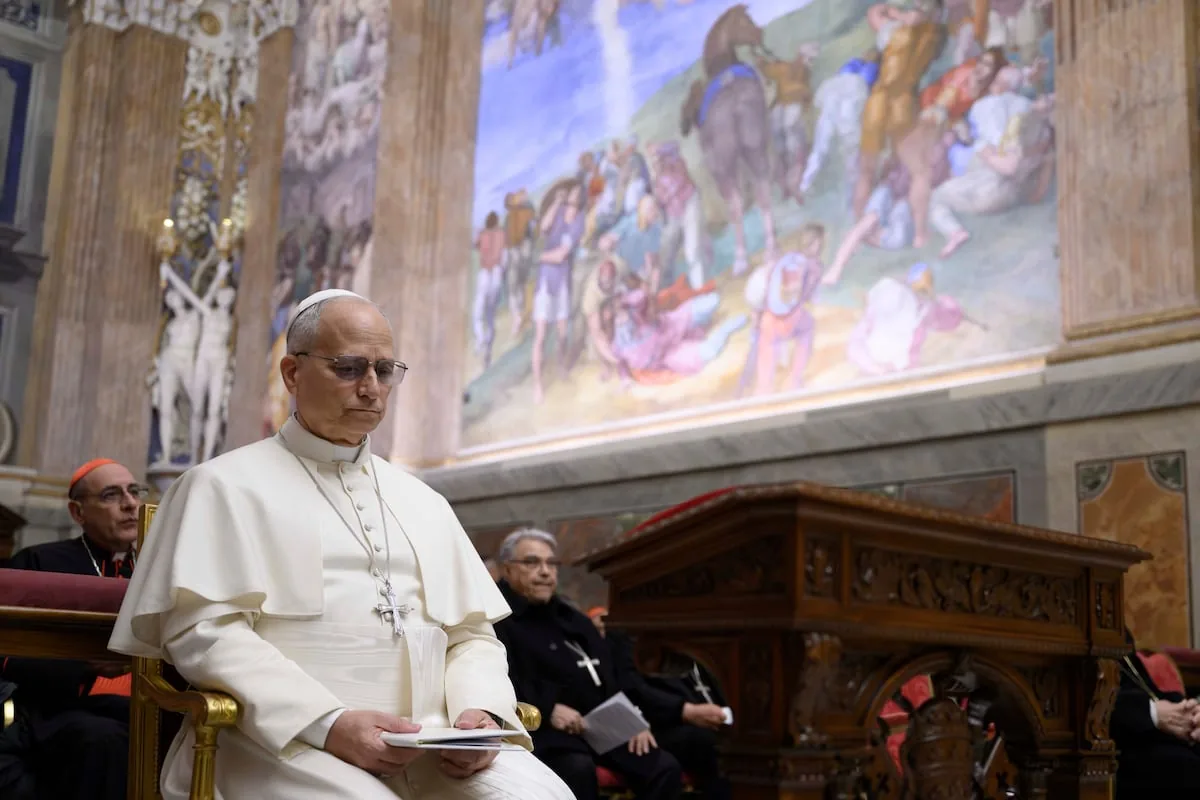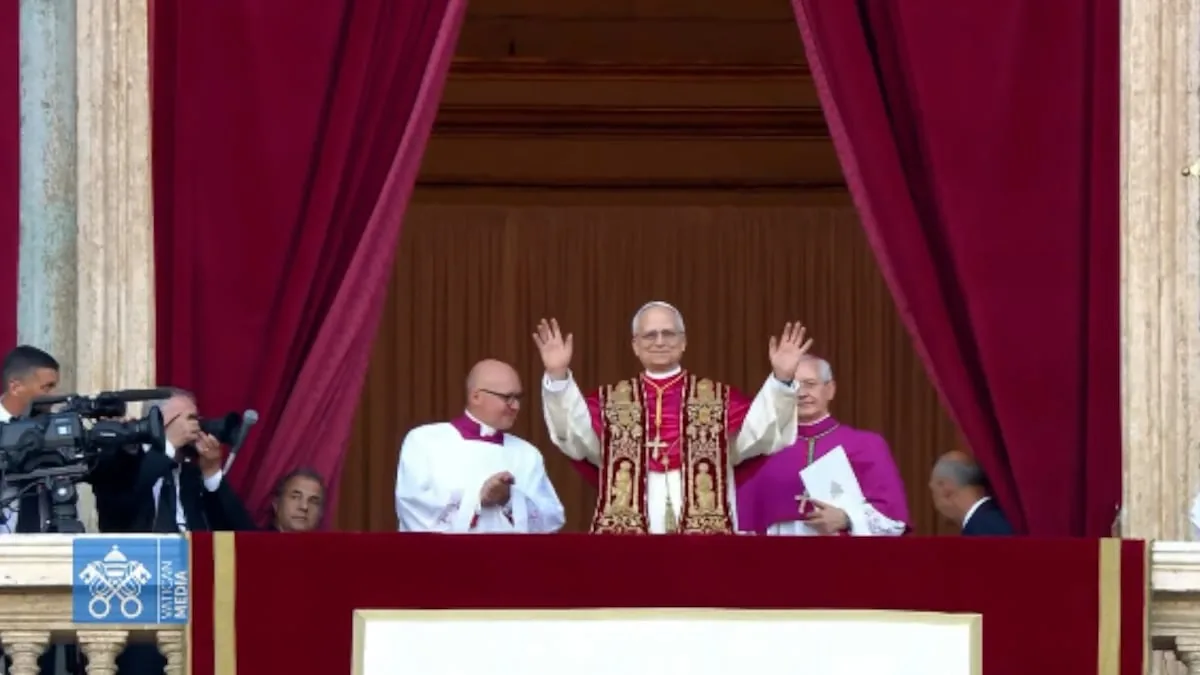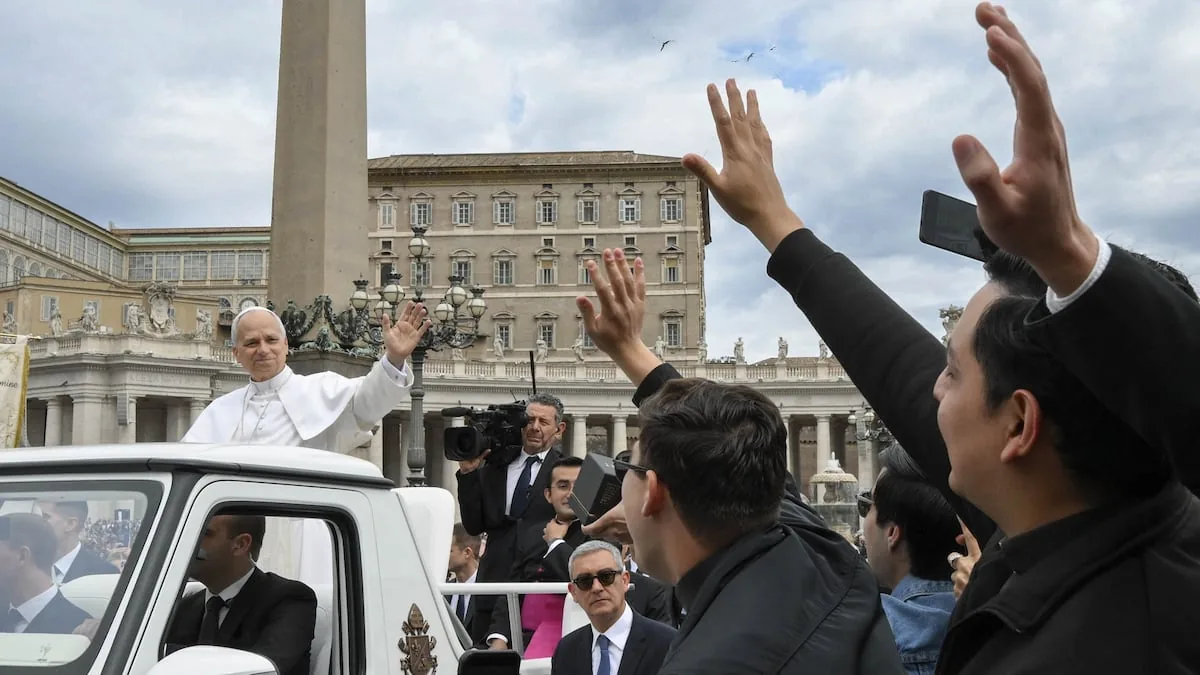
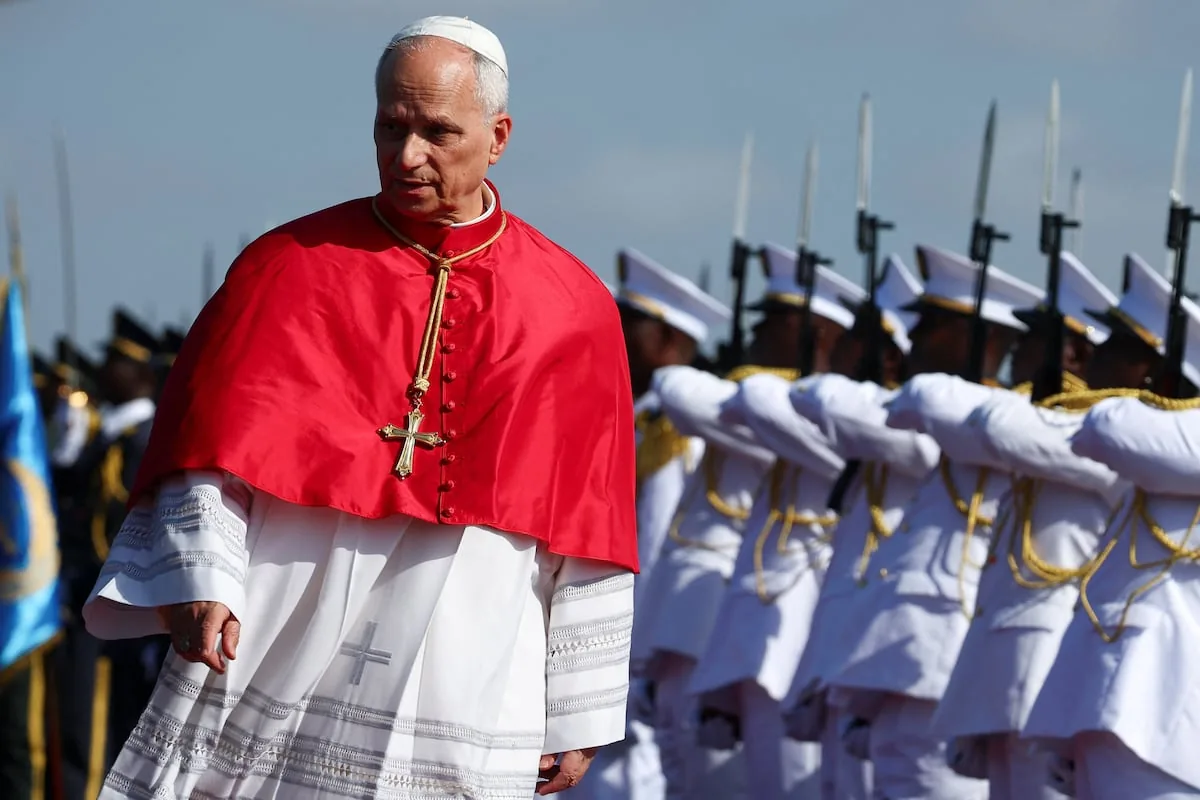
The popes of Rome traditionally navigate between denouncing injustices and maintaining a position of neutrality to preserve their capacity for mediation in global conflicts. Leo XIV has sought to maintain that balance in his first year of papacy —he was elected in early May after the death of Francis on April 21 last year—, but pressure to speak out on international disorder is growing. The Pope has begun to shed his initial caution, to speak clearly and show a more defined style in his messages.
Read more Trump becomes a toxic asset for the far-right in Europe
Leo XIV now exhibits an increasingly firm voice on the international stage, with messages against war, inequality, the tyranny of power, and the inappropriate use of religion to justify violence, while his tour of Africa further projects him as a leading global actor.
In speeches delivered this week in Algeria and Cameroon, he warned that the impulses of the world’s richest threaten peace and denounced violations of international law by powers with “neocolonial temptations.” In Cameroon, he highlighted that the world “is being devastated by a handful of tyrants,” without naming anyone in particular.
The first American Pope in history, known for carefully choosing his words, largely avoided commenting on the United States until March, when he became an outspoken critic of the war against Iran, which has led to a direct clash with President Donald Trump. The disagreement began to escalate in January after a speech by the Pope in defense of the UN and multilateralism, which led to a tense meeting between the Vatican nuncio in the United States and the Pentagon. Furthermore, the Vatican has subtly rejected the Trump Administration’s use of Christian language to justify the war as a struggle between good and evil.
Trump’s unusual disqualifications of the Pontiff, whom he has branded “weak” and “disastrous” in foreign policy, have had a boomerang effect. The Republican has been showered with criticism for his attacks both inside and outside the US. And above all, after the Pope responded that he was not afraid of him. “I will continue to speak clearly against the war. Too many innocent people have been killed. Someone must raise their voice,” concluded Robert Prevost.
Piero Schiavazzi, professor of Vatican Geopolitics at Link University in Rome, believes that Leo XIV has completed his “geopolitical training” phase after the impact of Trump’s criticisms, an episode that, according to his analysis, has helped to define his position and consolidate his international projection. “Now the lion has begun to roar,” summarizes the scholar, also a scientific advisor for the specialized magazine Limes. “To respond to the demands of the Church, a Pope is ready from the beginning, but he is also a geopolitical leader and for that, there must be a kind of training, he must learn on the go. Now Leo XIV has finished that training; the world recognizes him as a global moral leader. Trump has strengthened him,” Schiavazzi tells this newspaper.
There is bread for everyone if it is given to everyone. There is bread for everyone if it is taken not with a hand that hoards, but with a hand that gives. In this way, food abounds: it is not rationed by emergency, it is not stolen, it is not disputed, nor is it wasted by those who gorge themselves in front of those who do not…
— Pope Leo XIV (@Pontifex_es) April 17, 2026
“Initially, it was thought that Leo XIV lacked communicative charisma, a certain weakness was perceived in him in this regard, but after the controversy with Trump, in the eyes of the world, he has become a very strong figure and a great leader on the global political scene. By saying he was weak, Trump has made him very strong,” estimates Piero Schiavazzi.
According to several experts, the change in papal rhetoric reflects the Pontiff’s growing concern about the direction of world leadership. “We are witnessing a second beginning of the pontificate, because the circumstances were such that the Pope had to respond, he had to say certain things; it was impossible to remain silent, and that has shown us a different facet of Leo XIV that we had not yet seen, although he has been forced by circumstances,” notes Massimo Faggioli, historian of Catholicism and professor of theology at Trinity College Dublin.
In the expert’s opinion, the role of the pontiff transcends the strictly religious and extends to issues of global scope. “It is a voice that speaks on many topics, not only for the benefit of Catholics, but for humanity in general. There are not many organizations that do this nowadays. That is why it is relevant in that sense: it is an alternative voice that enjoys a certain freedom of expression and offers perspectives different from the dominant ones. Its strength is neither military nor that of trade treaties,” notes Faggioli.
Read more The quiet revolution of Zohran Mamdani completes 100 days
At the same time, internally, after the conclusion of the Jubilee of 2025, a holy year for the Catholic Church which already had a fixed agenda, Leo XIV has begun to align the Roman Curia with his vision.
Calmly and without major upheavals, the Pope is shaping the government of the Church with his own team, made up of names he fully trusts and figures who do not imply a rupture. This is the case of the new number three of the Vatican, the Substitute for General Affairs of the Secretariat of State, the Italian Paolo Rudelli, with key functions in internal coordination and the management of the Holy See. It is the first significant change in the Vatican hierarchy.
Rudelli has been apostolic nuncio [ambassador] in Colombia and knows the ins and outs of Vatican diplomacy well. Furthermore, this appointment suggests a generational change in the Curia’s command room, as Rudelli is 55 years old.
Almost a year after his election, Leo XIV retains Pietro Parolin as Secretary of State, or number two of the Vatican. He was appointed by Francis shortly after his election.
So far, the Pope has only changed three of his ministers: he has appointed the Spanish Augustinian Luis Marín de San Martín as prefect of the Dicastery for Charity or papal almoner, replacing Cardinal Konrad Krajewski, who was closely linked to Francis.
He has also chosen the Australian Antonio Randazzo for the Dicastery for Legislative Texts, replacing Filippo Iannone, who was appointed prefect for Bishops on September 26, a position held by Robert Prevost until his election. For now, it is a portfolio readjustment, without revolutionary connotations.
Furthermore, he has gradually surrounded himself with close collaborators such as the Nigerian Augustinian Edward Daniang Daleng, appointed vice-regent of the Pontifical Household, responsible for managing the Pope’s agenda. And his private secretary, the Peruvian priest Edgard Rimaycuna Inga, whom he transferred from Chiclayo to accompany him when the now Pope was prefect of Bishops.
“Leo XIV believes in a government based on institutions and not on personalistic or populist leadership. According to this vision, he is managing to gather more bishops and cardinals around him. To do this, he avoids commenting on issues that were central to Francis’s pontificate, such as the role of women or homosexuals, divisive topics in the Church. His silence is not due to disinterest, but to a strategy of cohesion and the search for a more unified line of government,” opines Massimo Faggioli. He adds: “He is different, in my opinion, from his predecessors Francis, Benedict XVI, and John Paul II, who, for various reasons, were somewhat like rock stars, whereas Prevost is not and does not seek to be.”