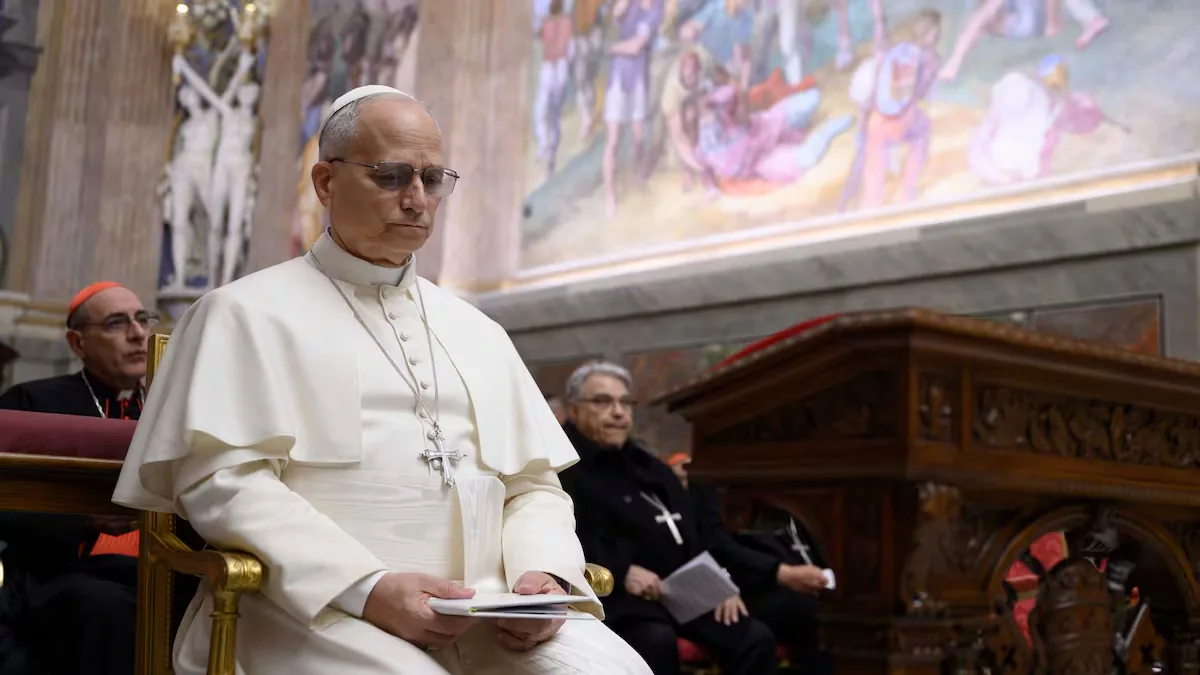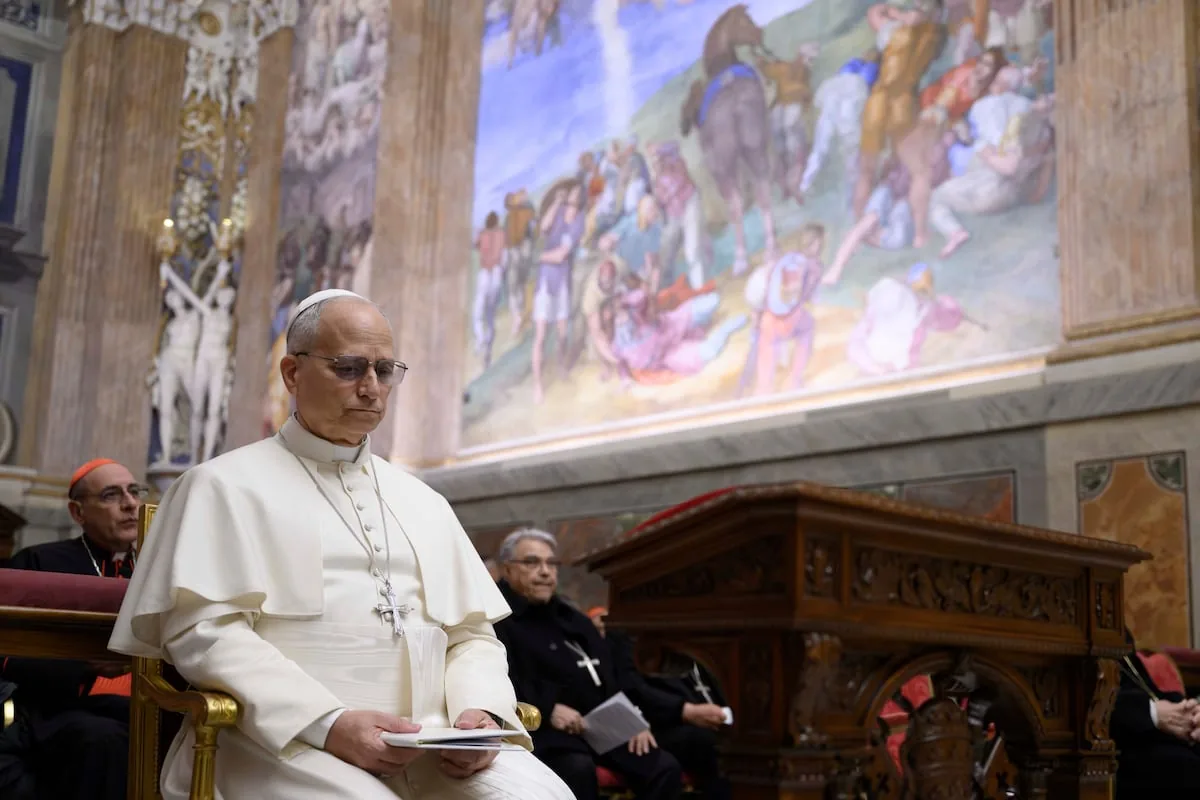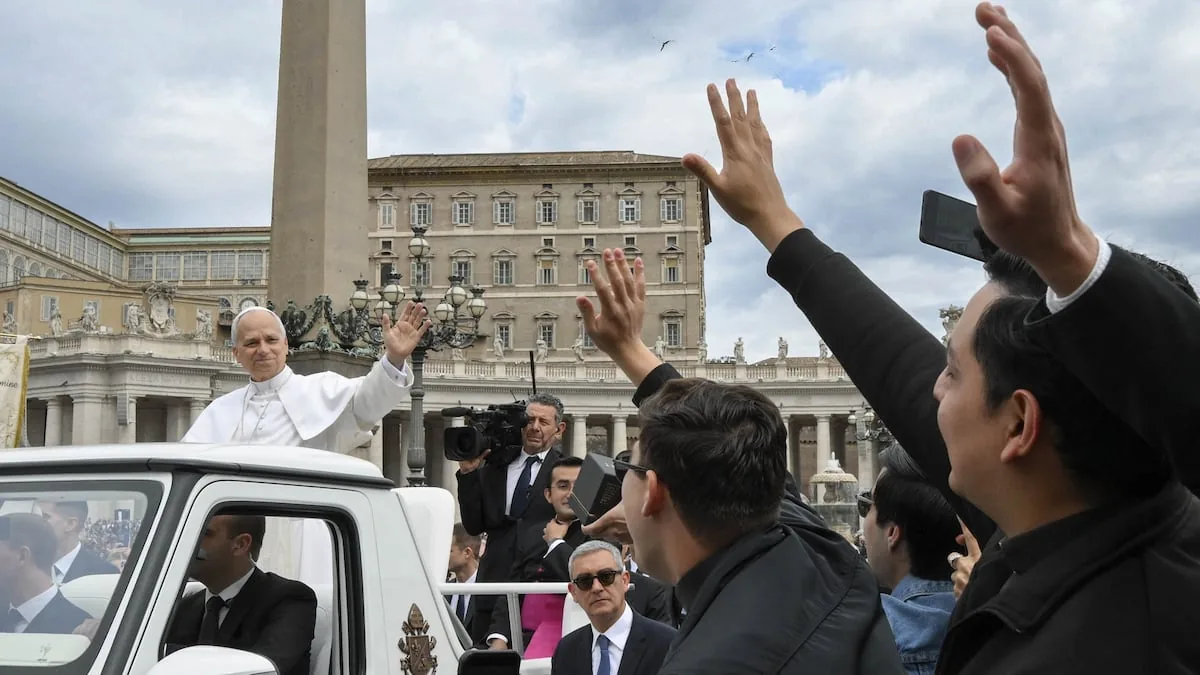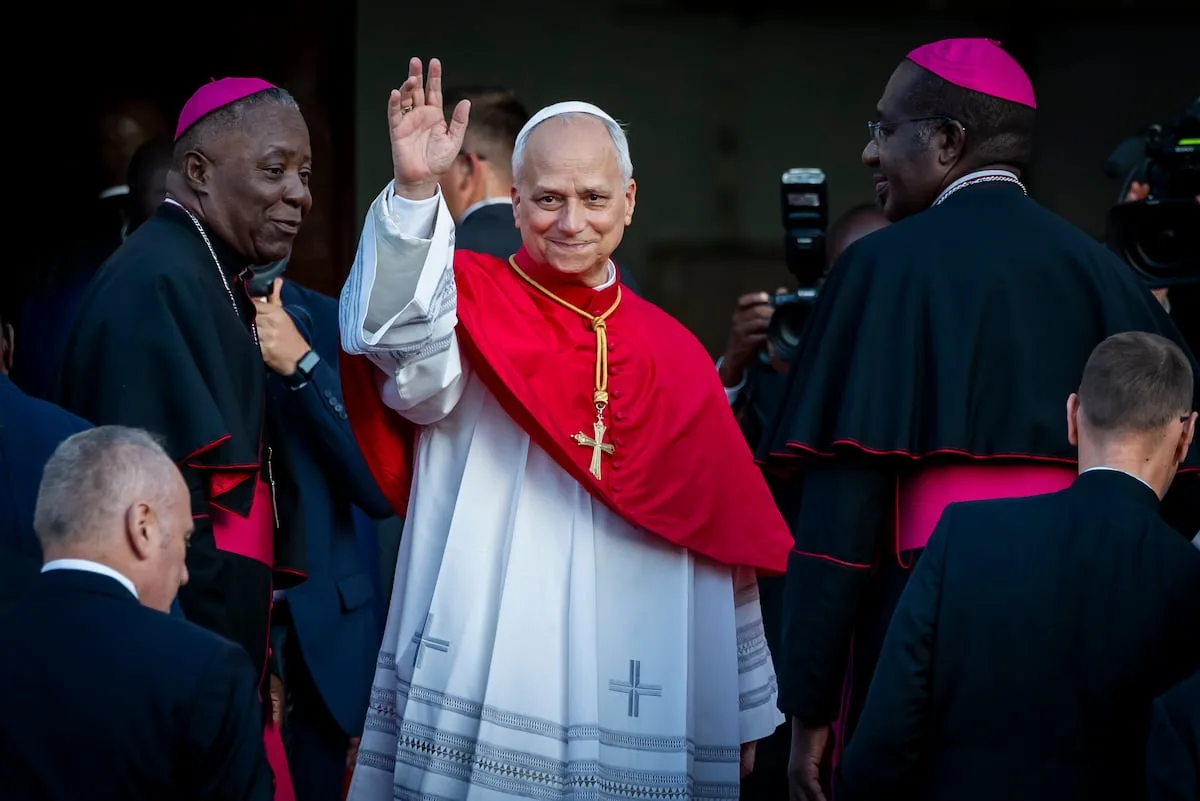



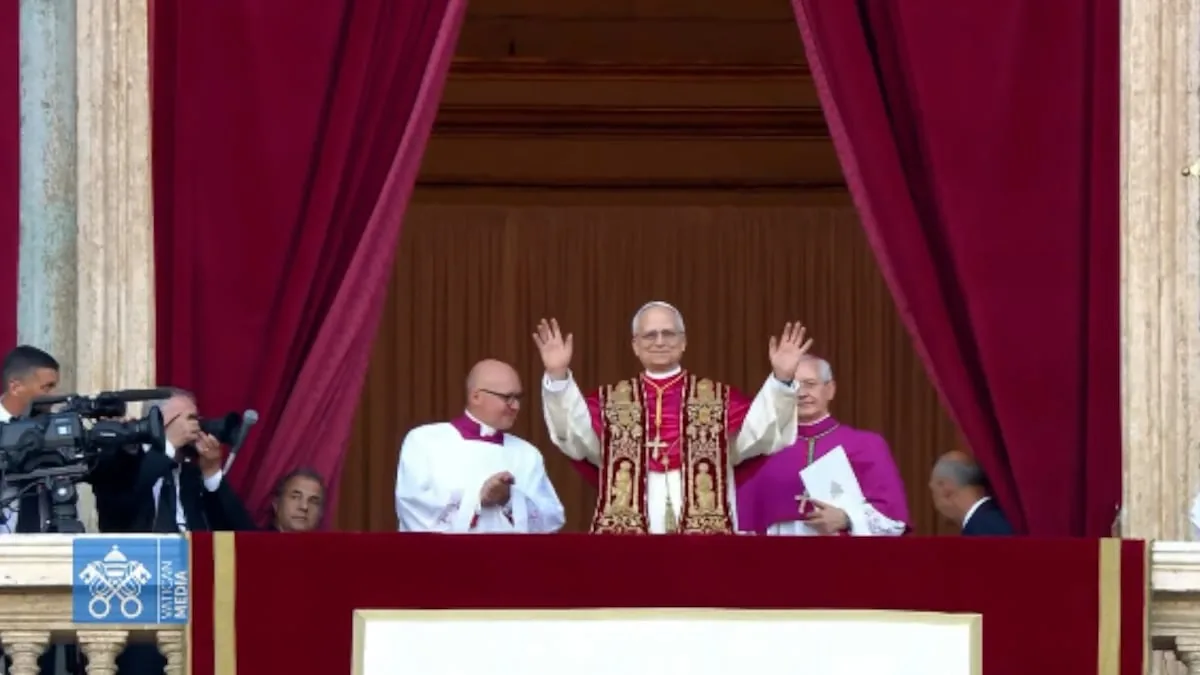
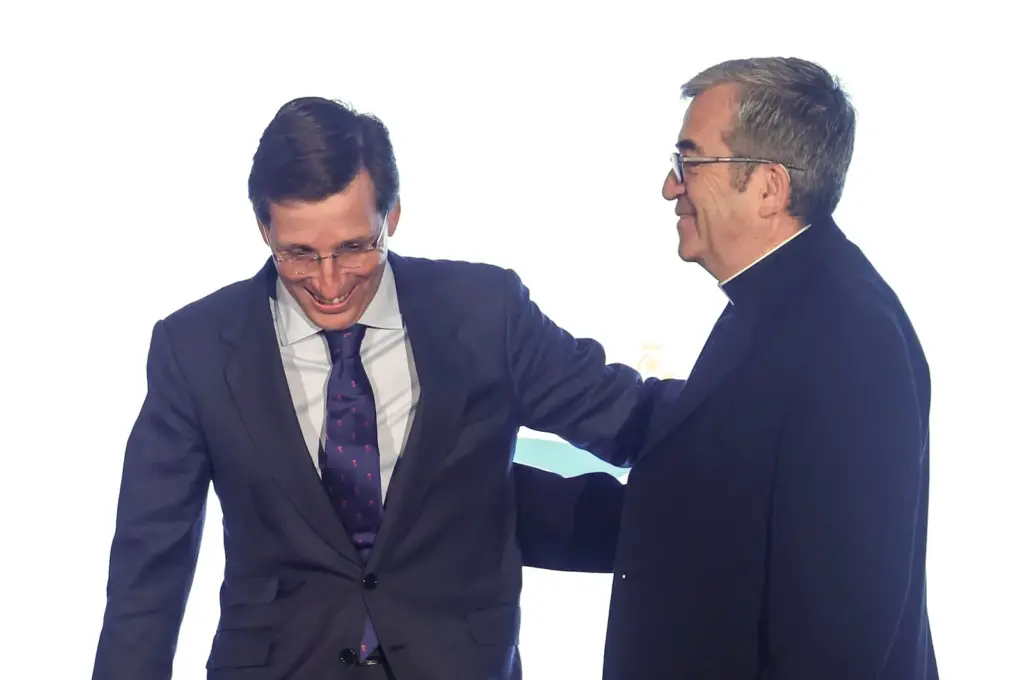
There are important distinctions. José Luis Martínez-Almeida (PP), mayor of Madrid, declares himself “devout, but not of Vox,” as fresh as if it hadn’t cost him to get up early to present a public speech by the president of the Spanish Episcopal Conference, Monsignor Luis Argüello. It happens on Tuesday, on the occasion of a conference convened for the visit of Pope Leo XIV to Madrid, between June 6 and 9. Almeida calls it “historic” while speaking in a luxury hotel that hosts him in a room with golden walls and plush carpets. That is not the only Madrid that Leo XIV will see. The Pope will also step into degraded Madrid. One, sometimes invisible, due to being a minority, but which equally lives broken by drugs, fear, and thefts. The one with neighborhood conflicts. The one with AI surveillance cameras trying to curb crimes. Because the Pope will visit the Cáritas center on Cullera Street, Lucero neighborhood (Latina), which sets the tone for a trip that will provoke a record police mobilization, according to the government delegate, Francisco Martín, in line with the millions of faithful who will follow the Pontiff’s steps.
Read more The end of the Orbán era reduces institutional paralysis in the EU
“That one of his first acts is on Cullera Street is a very important declaration of intent,” highlights a source from the Government of Spain, who has the confidence of President Pedro Sánchez. “In that street and area there are real social urgencies. And now the Pope starts his visit there, precisely,” he adds. And he opines: “He comes to defend solidarity policies.”
The flow of drug addicts has become constant on this street in Madrid. Police operations with dozens of detainees at once, too. There, the drug flats have been eroding daily life until they rot coexistence paper bag by paper bag. A Cáritas center, “Cedia 24 hours,” is at the epicenter of the colony. Its origin dates back to 1977, in the form of a van that distributed coffee. Now homeless people come and go from it. That is the place the Pope will visit, as one of the stops of his visit to the capital, which is the most unequal big city in Spain, according to a report by the Foundation for Applied Economic Studies (Fedea) from late 2025 on Personal income of Spanish municipalities and its distribution based on the Gini index, which measures inequality in the distribution of personal income.
Thus, Leo XIV’s trip has charity at its heart. The Cáritas center attended 2,534 homeless people in 2025. It has 47 sleeping places for men and 70 day places. It offers dinner and breakfast, as well as laundry, showers, dining room, and storage, also shelter and accompaniment. The center’s workers, to which a Vatican delegation already came days ago to prepare the Pope’s visit, refer to Cáritas and do not make statements. This is what auxiliary bishop Vicente Martín said, according to the Archdiocese’s website: “The Pope’s visit to Spain and to the Church of Madrid begins with an approach to the poorest, to the reality of exclusion. As soon as you enter the neighborhood, you see that these are peripheral areas, not only geographically; of great vulnerability.”
Putting a stop to the problems of Cullera Street has been a cause of recurring tensions between the Delegation of the Government of Spain, headed by Francisco Martín (PSOE), the city council of Martínez-Almeida (PP), and the Community of Madrid, led by Isabel Díaz Ayuso (PP). However, the three administrations now collaborate to organize the Pope’s visit, a challenge of biblical proportions: it is expected that the mass scheduled in Cibeles will gather more than a million faithful, that the vigil will attract 500,000, and that all this will require a police deployment never seen before, and an unparalleled effort by public transport. As the government delegate, Francisco Martín, said: “It is an important logistical challenge for Madrid.”
The magnitude of the organizational challenge posed by the entire visit leaves its heavy mark on the statements of politicians and the contracts of the different administrations. Thus, between June 6 and 7, the Cercanías network will add two million additional seats, which means about 2,000 reinforcement trains that weekend. Added to this will be 7,000 additional seats in medium-distance services and a discount program on long-distance and high-speed to facilitate travel for all people who want to come to the capital. Metro and EMT will also expand their offer, although there will be station closures. And park-and-ride lots will be organized.
Banners and fences
“It will be the largest police mobilization ever produced in our country,” Martín assured during a press conference in mid-May. A device due to the “international context, the figure of the Pope himself, and the mobilization it will bring,” according to a source familiar with its organization. “For the moment and I think because of his attitude, we are not detecting significant movements against the visit in Madrid,” he adds.
The authorities will also foster a celebration. Since EMT has fences to enclose 13 kilometers of routes, it has prepared a contract to rent thousands more in case it has to extend its network by almost a dozen more. The City Council has tendered a contract worth tens of thousands of euros in banners of Spain and the Vatican. And Telemadrid, hundreds of thousands in broadcasting every detail of a true event.
Martínez-Almeida summed it up while the Pope prepares to see the Madrid of the forgotten: “It is a historic visit. We feel deeply proud in Spain, land of Mary, to be able to receive the Holy Father and to give him the welcome he deserves, and to do so from a city, Madrid, that neither ignores nor forgets its roots, that neither ignores nor forgets its past, nor its tradition, and that therefore rests on its Christian roots, and Christian humanism, as the best way to face its future, without exclusions, but as an affirmation of our identity.”