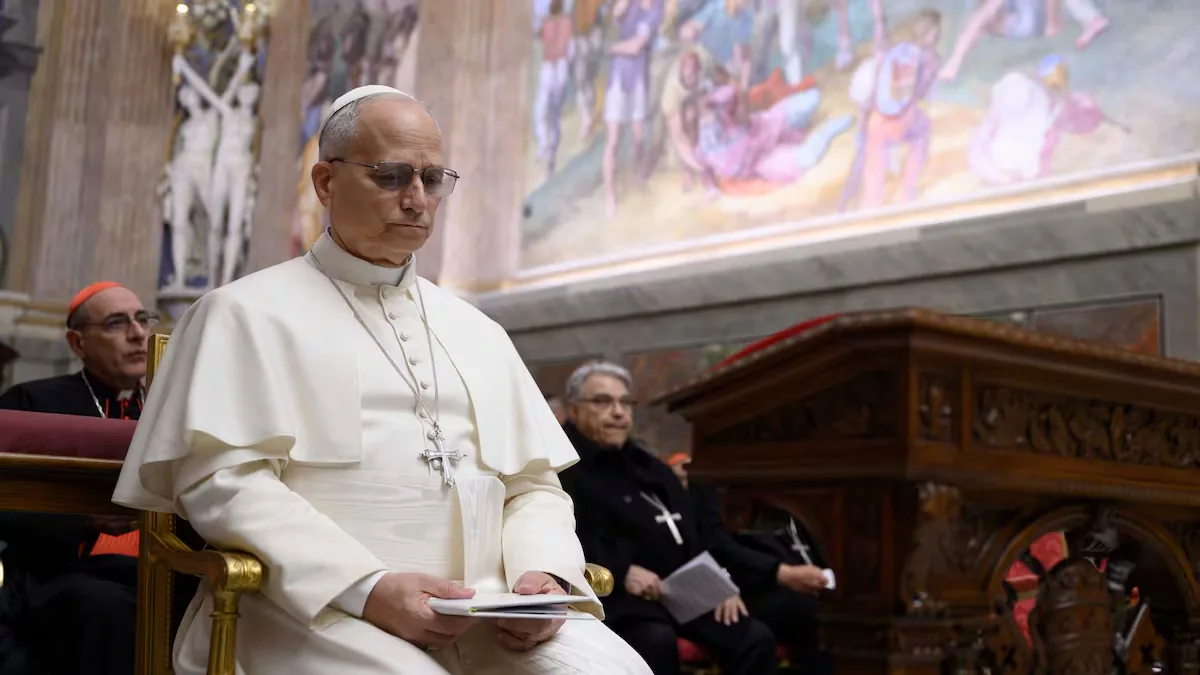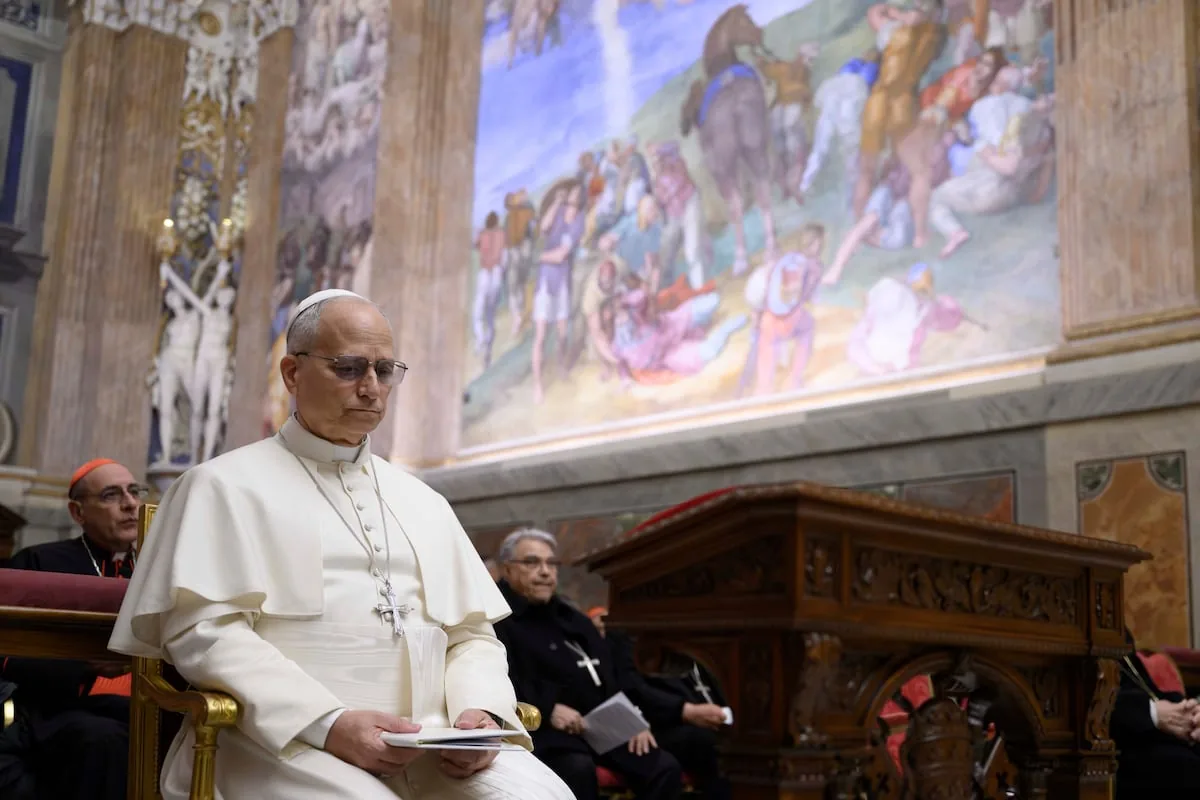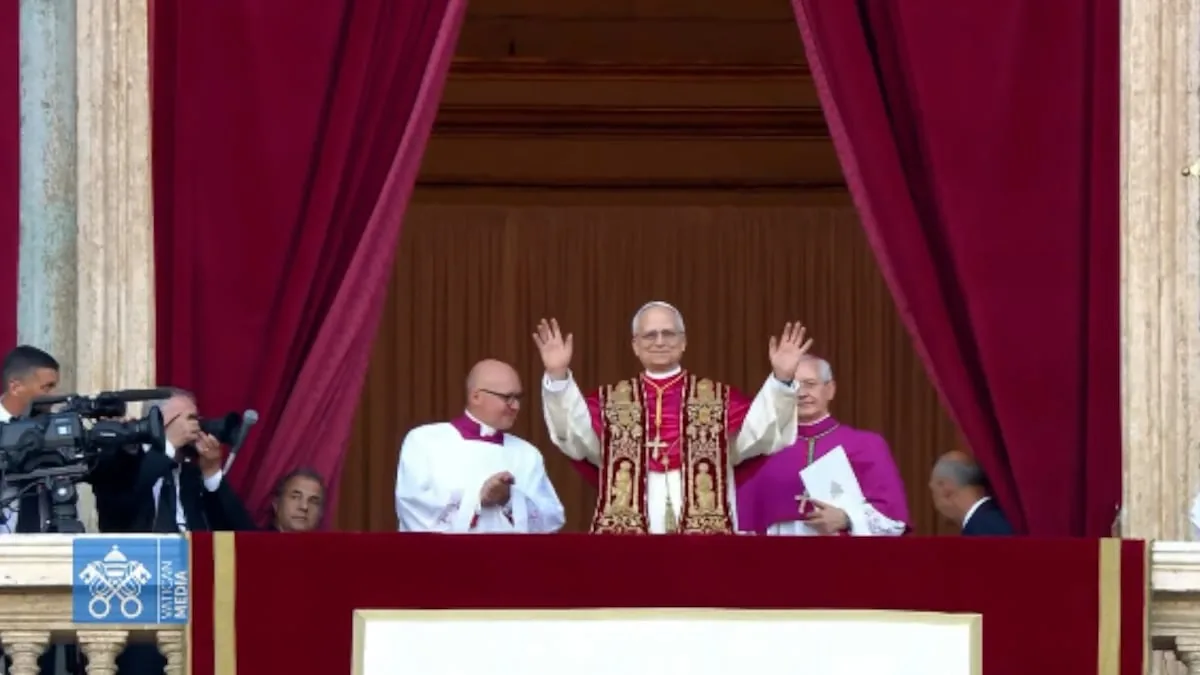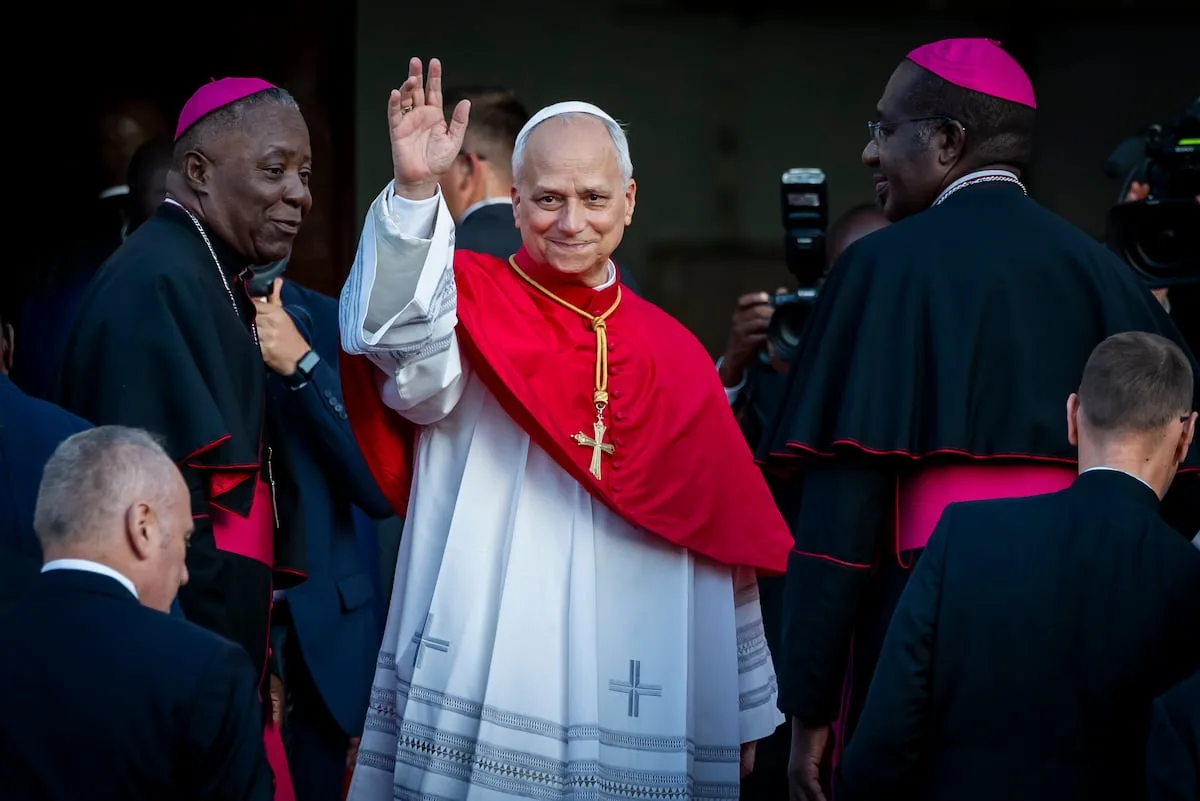



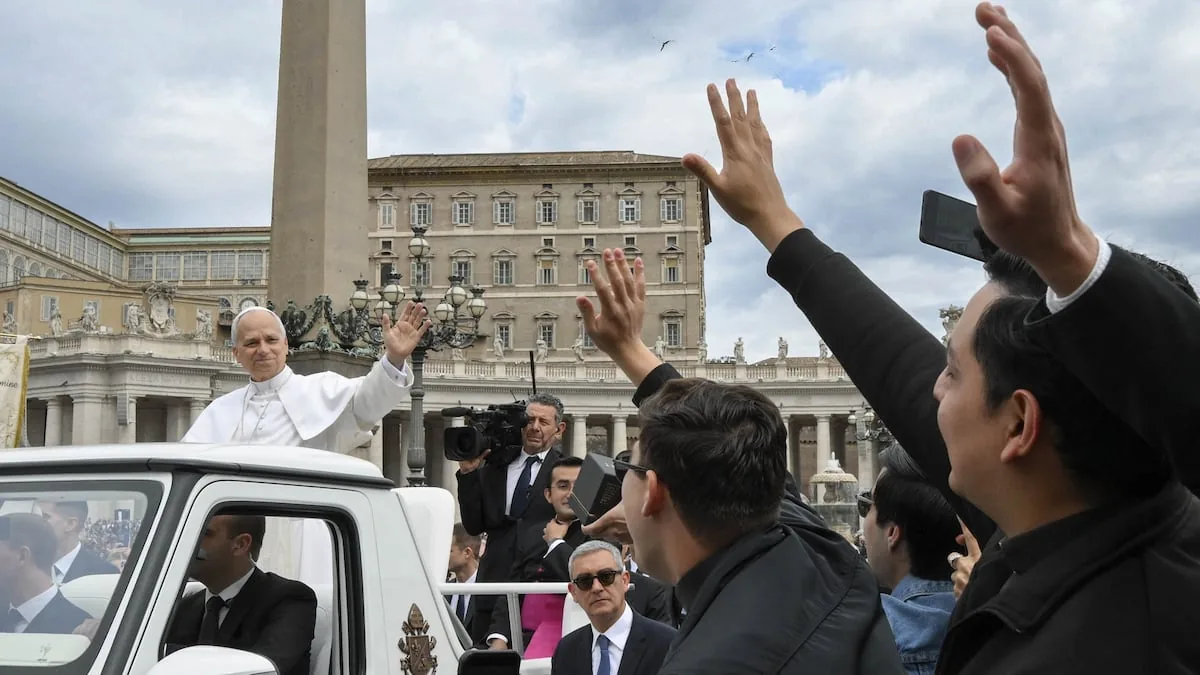
The Pope will deliver a speech in the Congress of Deputies, in a joint session with the Senate, on June 8, during his visit to Spain from the 6th to the 12th of that month, as officially confirmed by the Holy See this noon. The Vatican has finally made public the program of the visit, proposed in November by the Spanish bishops and announced in February, thus confirming this historic parliamentary session. Leo XIV is the third pope to travel to Spain, after John Paul II, who went five times between 1982 and 2003; and Benedict XVI, who did so on three occasions, the last in 2011.
Read more Cook wanted for a medieval hearth who wants to embark on a 16th-century Basque whaling ship
In any case, it is the first time a Pontiff will speak in the Spanish Cortes, and he will do so at a time of clash between the Spanish Church and Vox, following the bishops’ stance in defense of immigration. Leo XIV himself warned the Spanish episcopal leadership in November, at their first meeting in the Vatican, about “the risk of manipulation by extremisms,” according to EL PAÍS. This Monday, the Holy See considered the Government’s plan to regularize irregular immigrants “positive.”
Immigration will be a present issue during the trip, with a clear social imprint, such as closeness to the poorest and most needy. The Pope is going to the Canary Islands precisely for that reason, and there he will visit the Arguineguín dock, a symbol of the migratory drama. He will also meet with migrants at a reception center in Tenerife. Additionally, in Madrid, he will visit a home for homeless people in Carabanchel. In Barcelona, he will meet with inmates of Brians 1 prison and will also go to the parish of San Agustí in the Raval neighborhood.
However, after the program was published, another point of interest of the trip remains a mystery: there is no trace of a possible meeting with victims of clergy pedophilia, although that does not mean it will not happen, as on other occasions it has taken place even if it was not initially included in the official agenda.
Francis barely spoke about the scandal in Spain, which arose from 2018 following investigations by this newspaper, and Leo XIV has not yet done so, although he has already met with victims from other countries in the Vatican and has shown his support for journalists who have investigated these crimes in Peru. According to EL PAÍS’s database, there are currently 1,621 accused and at least 3,108 victims in Spain. The Spanish Church has never provided clear data and has denied the problem for years.
The Pope will visit Madrid, Barcelona, Las Palmas de Gran Canaria, and Tenerife. Most of the planned events had already been leaked, to the Vatican’s annoyance, as there has been great pressure in the cities and dioceses involved in the trip to force the agenda, besides the understandable expectation. However, the Spanish Church made proposals, and until the Holy See officially announced the program, nothing could be taken for granted.
The trip plan follows the forecasts. The Pontiff will meet with the Kings as soon as he arrives in Madrid, on Saturday the 6th, at the Zarzuela Palace. Then he will meet with authorities and civil society at the Royal Palace and, in the afternoon, will visit the Cedia 24 Horas shelter for homeless people in the Carabanchel neighborhood. At night, he will hold a large meeting with young people in Lima Square.
On Sunday, the 7th, he will preside over the Corpus Christi mass in Cibeles Square. In the afternoon, he will attend a large meeting with the world of culture, art, economy, and sports at the Movistar Arena pavilion. On Monday, June 8, he will first meet with the Prime Minister, Pedro Sánchez, at the nunciature, and then go to the Congress of Deputies, in a historic joint session of the Cortes. The stopover in the Spanish capital will end in the afternoon with a visit to the Almudena Cathedral and, at night, with a large meeting at the Santiago Bernabéu stadium.
On the 9th, he will travel to Barcelona and that night preside over a vigil at the Olympic stadium. The next day he will visit the inmates of Brians 1 prison (Sant Esteve Sesrovires, Barcelona) and then move to the Montserrat monastery, where he will have lunch with the Benedictine community. In the afternoon, he will go to the Sagrada Familia basilica to inaugurate the new Tower of Jesus in the temple. In the afternoon, there will be another moment of marked social character with a visit to the church of Sant Agustí, in the Raval.
On the 11th, he will fly to Las Palmas, where he will visit the Arguineguín dock, a symbol of the migratory crisis in the islands. In the afternoon, he will celebrate a large mass at the Gran Canaria stadium. On the 12th, he will be in Tenerife and will go to the Las Raíces migrant reception center. In the afternoon, he will return to Rome.
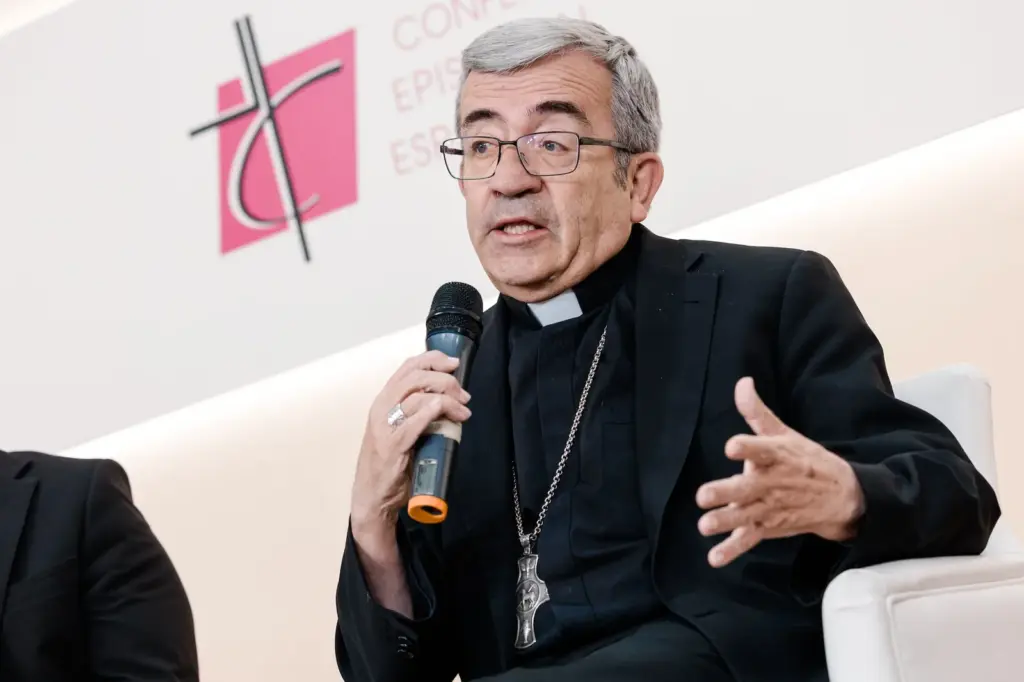
At the same time the Vatican made the program public, this noon, the Spanish bishops held a press conference to expand on the details of the visit. However, earlier, at an informational breakfast with journalists organized by the Spanish Episcopal Conference (CEE), its president, Luis Argüello, spoke about some issues, such as the Pope’s visit to Congress: “If it is confirmed, as we definitely hope, that visit to the nation’s Parliament also has great importance not only from the Spanish point of view but from the European and global point of view, as were the interventions of Benedict XVI in various parliamentary or academic forums and also some of Pope Francis, I think of his intervention in Strasbourg, for example,” reports Miguel Jiménez.
The president of the bishops explained that “the boards of Congress and Senate have unanimously requested, have invited Pope Leo” to visit the Cortes. “From there, what can happen? That a parliamentary group decides not to participate or some parliamentary group that decides to participate decides in some way to express… Well, that no longer depends on the Pope, not even on the board itself. Because in this sense, in what can be the parliamentary arc, some groups may be bothered or uncomfortable with some expressions and others, others,” he said, citing immigration and abortion as examples.
“I frankly believe that the Pope’s own words will logically promote everything related to dialogue, encounter, and not losing sight of the common good horizon. And today the common good does not only have national characteristics but also international characteristics, since we live in a global world,” he commented. “My wish is that the way our senators and congressmen and deputies position themselves is good, of those who receive hospitably someone who comes to bring a message that will undoubtedly have to do with dialogue, unity, peace.”
Argüello also assured that it is possible that the Pope will meet with victims of clergy pedophilia, although it is not on the official program: “Usually, when these meetings have taken place mainly during Pope Francis’s visits, throughout his multiple trips, this type of meeting, like others, were not meetings that were on the agenda because they have been meetings that have taken place more privately and then once they have occurred it has been made public that the meeting took place.”
The president of the CEE has been very cautious when clarifying whether that meeting will take place or not, a sign of the ambiguity with which the scandal is still managed in Spain today, and the lack of fluid communication with the Vatican on this matter: “If I say now that we have made this proposal and then it is not carried out, it would be said: well, the Pope did not want to do it. And if I say we have not proposed it, but the Pope does it, it would be said that the Pope distances himself from the bishops’ position. It makes no sense. The possibilities of various meetings of the Pope in the free times he has at his residence at the nunciature or other places, what the Pope wants to do, that depends on his own decision and the previous dialogues that may have been held, but it is not up to us to confirm or deny that the meetings will take place.”
At the CEE press conference, the archbishop of Madrid, José Cobo, implied that the meeting with victims of pedophilia is planned, although it is not yet official, reports Julio Núñez. He recalled that “the Pope has a list of private meetings,” but it will be the Vatican that “will announce it.” “The Pope will enter through the world of fragility, the world of victims and the wounded, and that will be the focus of everything,” Cobo said about the possible meeting with abuse victims, but also with poverty and war conflict victims.
Read more United States and Iran negotiate a proposal to end the war and finalize key issues in 30 days