









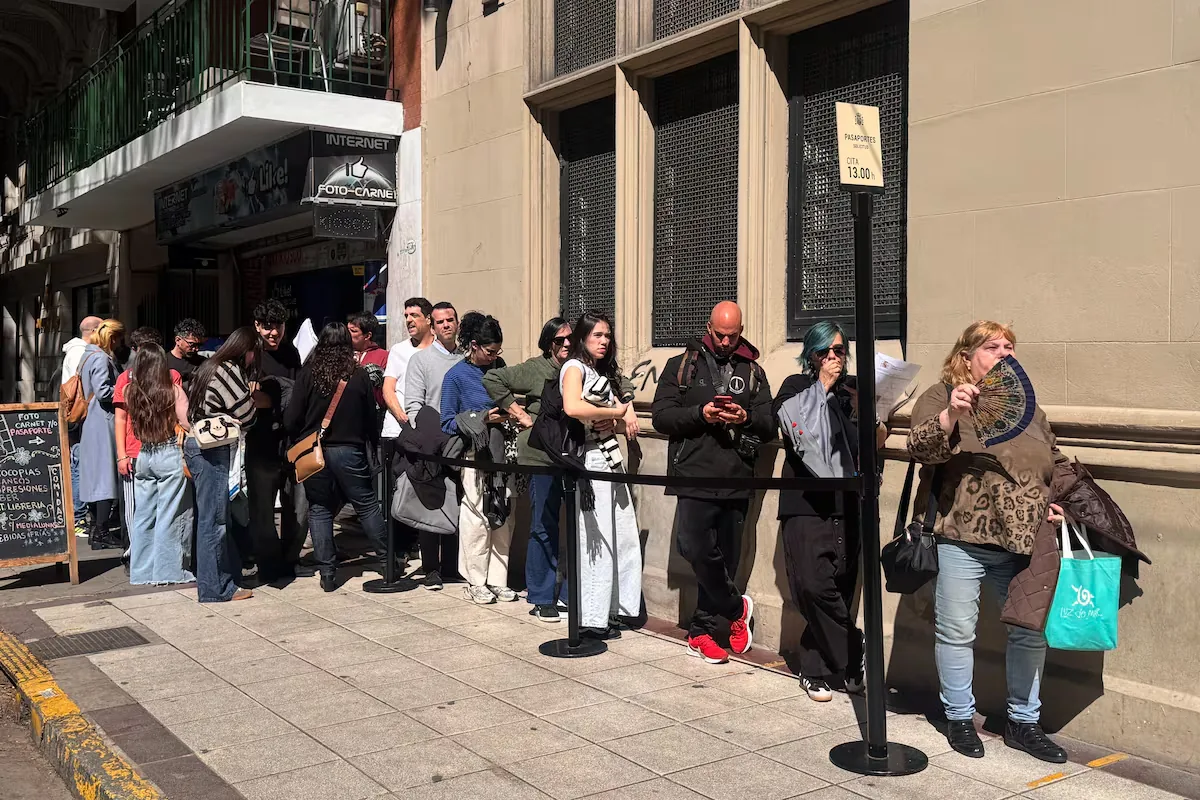
The Atlantic, which for generations separated those Spanish families who had emigrant children in America, reappears as a border. The Supreme Court injunction that halts the vote of descendants naturalized through the Democratic Memory Law has caused concern in the Spanish communities of Argentina and Chile. They question a decision that, in their view, curtails a basic right and fear it could be a first step towards other restrictions, including denying them citizenship. Many spent years gathering birth certificates, certificates, and family documents to recover a nationality they felt was part of an inherited history. Some have just become Spanish; others are still waiting for a resolution. Now they discover that the citizenship they worked so hard to recover does not guarantee, at least for now, the right to vote.
Argentina received nearly 2.1 million Spaniards between the late 19th and early 20th centuries and kept its doors open for those who wanted to escape the Civil War and Francoist Spain. The newcomers created numerous associations that functioned as meeting places, support networks, and spaces to preserve the traditions and cuisine of their places of origin. Some of those seeking answers in the face of an injunction they do not understand have turned to them.
José Manuel Besteiro, president of the Federation of Spanish Societies, believes the judicial decision breaks a long common history that has made Argentina the country with the largest community of Spaniards abroad, more than half a million, and Spain the country with the largest number of Argentine residents, nearly 400,000. “The children and grandchildren of Spaniards in Argentina were not born from a cabbage patch. Our parents and grandparents left for economic, political, social reasons… The feeling about this ruling is one of displeasure,” Besteiro says.
This lawyer, at the head of a federation that brings together 136 Spanish entities in Argentina, recognizes the authority of the Supreme Court and understands the provisional nature of an injunction but questions its consequences. “The right to vote is a basic right,” he maintains. He can understand that someone who does not reside in Spain does not participate in municipal elections, but finds it hard to accept that they are deprived of voting in higher-level elections after having legally acquired citizenship: “Either you are a citizen and can vote and be elected, or you are not a citizen. Otherwise, we go back to the time of Ancient Rome, with citizens, freedmen, and slaves, with first- and second-class citizens.”
The discontent has a symbolic component. The Democratic Memory Law, also known as the grandchildren law, approved in 2022, was for many descendants the culmination of a process of repairing the consequences of the Civil War, exile, and the Franco dictatorship. They never imagined that one day the highest Spanish court would consider granting them the citizenship of their parents and grandparents and the right to vote in Spain a “well-founded, real, and serious danger” to the “objectivity” of elections.
In the last general elections, in 2023, only 6.2% of those registered in the Electoral Census of Absent Residents (CERA) in Argentina voted, that is, 26,180 people out of 434,604 who could do so. It is a low number, but even lower if you consider that about 60% of those who obtain citizenship do not even apply for consular registration, a necessary prior step to register in CERA.
“Political reasons”
The reasons to think that new Spanish voters could manipulate the results “are political, not historical,” says the former president of the Casal de Catalunya, Ariel Vives i Bloise. He believes they have to do with the rise of anti-immigration rhetoric throughout Europe and with measures “that are like deep-sea fishing, you don’t choose who and how, but sweep everything.” Others, without identifying themselves, agree with him.
The rise in polls of a far-right that calls for closing national borders fuels the fear of those who have just obtained citizenship or have started the procedures to obtain it.
Florencia Vassallo, member of the Center of United Descendants of Spaniards (Cedeu), says the organization’s phones are flooded with inquiries. The most frequent is whether the citizenship process is halted: “There is fear that people who have not yet submitted their papers will not be able to do so, that applications in process will be denied, and even that those of us who have already obtained nationality will be stripped of it.”
In the absence of new instructions, the Consulate of Buenos Aires operates normally. It has approved just over 30,000 citizenship applications under the grandchildren law so far, but still has to review those submitted since the last quarter of 2023 and receive those from those who requested to submit documentation. This last step alone could extend, according to the planned schedule, until 2031.
“I feel frustrated,” says Vassallo, 43 years old. Her mother obtained nationality in 2023 and she in 2024. Then she registered as a Spanish citizen at the Consulate of Buenos Aires and requested her inclusion in CERA to vote in the next general elections. With the latest judicial decision, she would not be able to do so. “There are people who obtained nationality through other means who will be able to vote, but if you accessed it through the Democratic Memory Law, you won’t,” she compares.
Read more When the public feeds the private: the relationship that is transforming healthcare
These differences have created great confusion among the naturalized. Florencia Medrano obtained citizenship in 2020, emigrated in 2024, and believed she had been excluded: “I have lived in Madrid for two and a half years and government policies affect me directly, I don’t understand why I can’t vote.” When she hears that she retains the right intact, she is surprised. “I was convinced I didn’t. I will vote for those who can’t,” she replies.
An unprecedented decision
Cedeu demands that equality before the law and constitutional guarantees prevail. They recall that Spain had already approved other transitional nationality laws, such as those of 1992, 1993, and 1994, the Historical Memory Law of 2007, and the 2015 regulations for descendants of Sephardim, without those cases later questioning the inclusion of their beneficiaries in the electoral census.
Those naturalized, however, under the Democratic Memory Law, the Supreme Court asks to prove the exile of an ancestor to be able to go to the polls. In many cases, this is an insurmountable obstacle. The majority left Spain however they could and did not keep documentation explaining the reasons. Also, it is not clear what capacity consulates, already overwhelmed, have to analyze extra documentation they had not previously requested.
Diego Pérez, president of the Galician Center of La Plata, 60 kilometers from Buenos Aires, sees it reasonable to review CERA registrations but sets limits. “One thing is to review and correct possible errors and another is to generally limit the right to vote for all those who legally obtained Spanish nationality,” he says.
Pérez doubts the judicial decision will alter relations between Argentina and Spain or change participation data at a time when “there is quite a general disenchantment with politics.” What he fears is that it will disappoint those who returned to approach Spain and the link with their parents and grandparents thanks to the grandchildren law.
“Third or fourth class”
In Chile, they share the disappointment. Jaime Ferrer Mir, a 77-year-old writer and director of the Winnipeg Friends Corporation, obtained Spanish nationality as the son of an exile. His grandfather, Jaume Ferrer Carbó, was executed after the Civil War following a summary trial later declared null. His father fled Spain in 1939, passed through concentration camps in France, and finally boarded the Winnipeg bound for Chile.
Ferrer had exercised his right to vote as a Spaniard until now. That is why he received the Supreme Court decision with a feeling he sums up in two words: “loss and denial.” In his opinion, the Supreme Court reopens wounds they thought were closed by stripping them of rights again. “We are third or fourth class,” he concludes.
Cristián Jaramillo, a 49-year-old Chilean advertiser, never thought of his right to vote in Spain as a reason to obtain the nationality of his grandfather, Ángel Cereceda, who fought in the Spanish Civil War when he was barely 16 and who, after the conflict, emigrated to Chile in the 1940s.
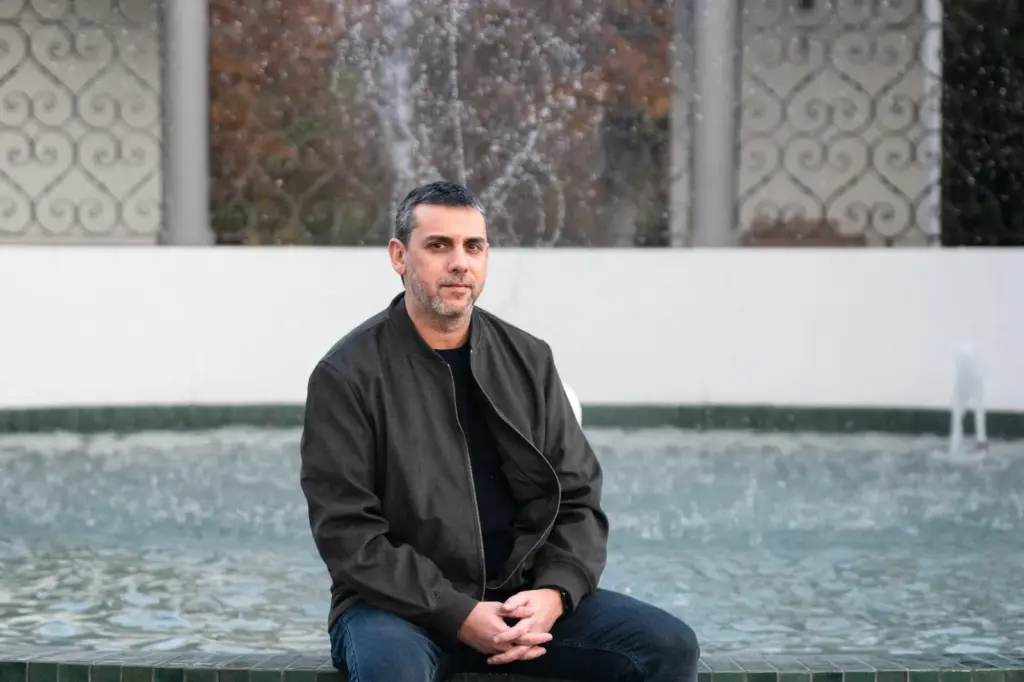
Like many descendants living abroad, Jaramillo had not even considered voting in Spain, but the controversy changed his perception: “It makes me worry more about who is behind politics in Spain, because eventually they may make decisions that end up impacting my well-being, that of my children, or our descendants. In that sense, what they are doing is making me care more about voting than I used to.”
Spanish organizations in South America are waiting for the Supreme Court to resolve the substantive issue to analyze responses. They regret, however, that a law conceived to close historical wounds and rebuild family ties with Spain has opened a new uncertainty among those who embraced it. After years of walking the path toward a citizenship they believed was full, they have discovered that a door remains ajar.
Read more Next extinction