





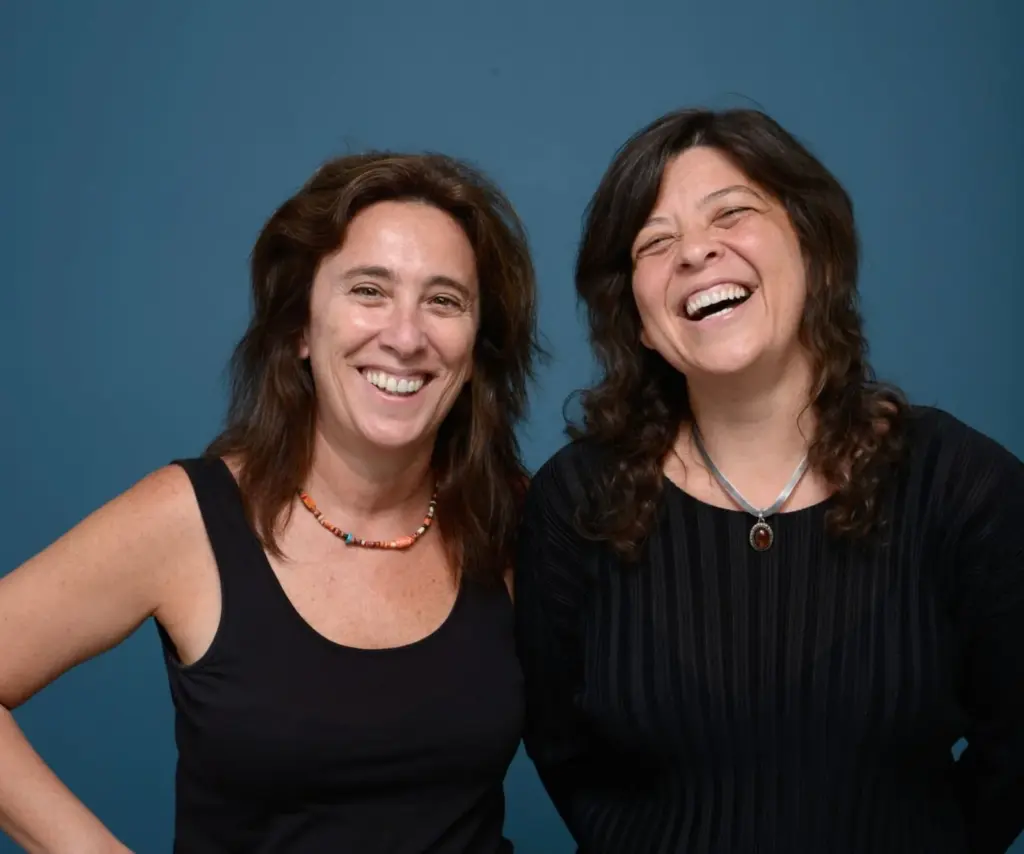
The repression with which Nicolás Maduro’s regime marked the lives of Venezuelans finds in It Is Still Night in Caracas one of its most forceful recreations to date. The new feature film by Mariana Rondón (Barquisimeto, 1966) and Marité Ugás (Lima, 1963) is part of a filmography that has made political cinema not so much a space for direct denunciation, but a device to observe how great historical fractures filter into private life. The duo, who in 2013 won the Golden Shell at San Sebastián for Bad Hair, have just premiered Zafari, a dystopia about hunger and survival, and now propose a sort of flip side to this project. “We like to see this new film as the B-side of the previous one,” the directors comment in a telephone interview with EL PAÍS.
Read more Video | Watch the interview with President Lula
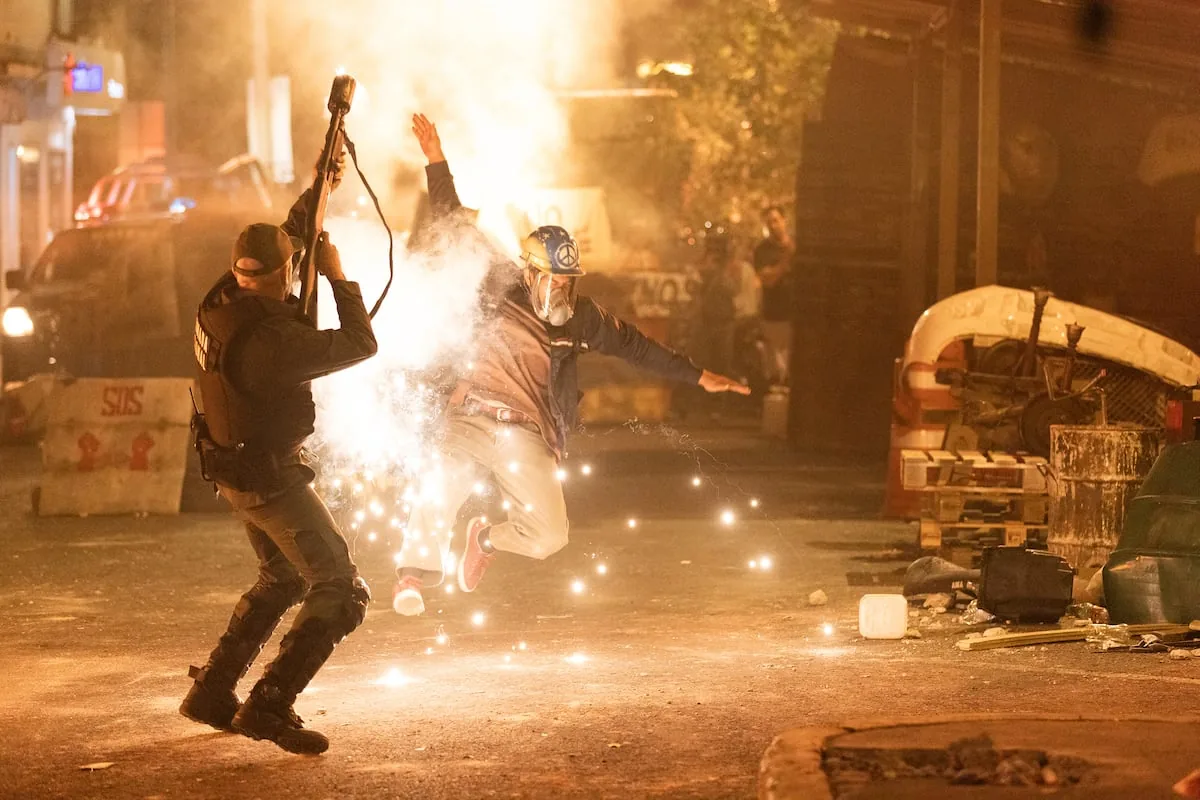
The script of the film is an adaptation of the bestseller The Daughter of the Spaniard, the novel by Venezuelan writer Karina Sainz Borgo released in 2019 and translated into more than 20 languages. The story follows Adelaida —played by Colombian actress Natalia Reyes— who desperately seeks to flee a country plunged into chaos. Both the book and the film portray the social protests experienced in Venezuela in 2017, which lasted for four months and left a toll of more than 120 dead, 5,000 arrests, and thousands injured.
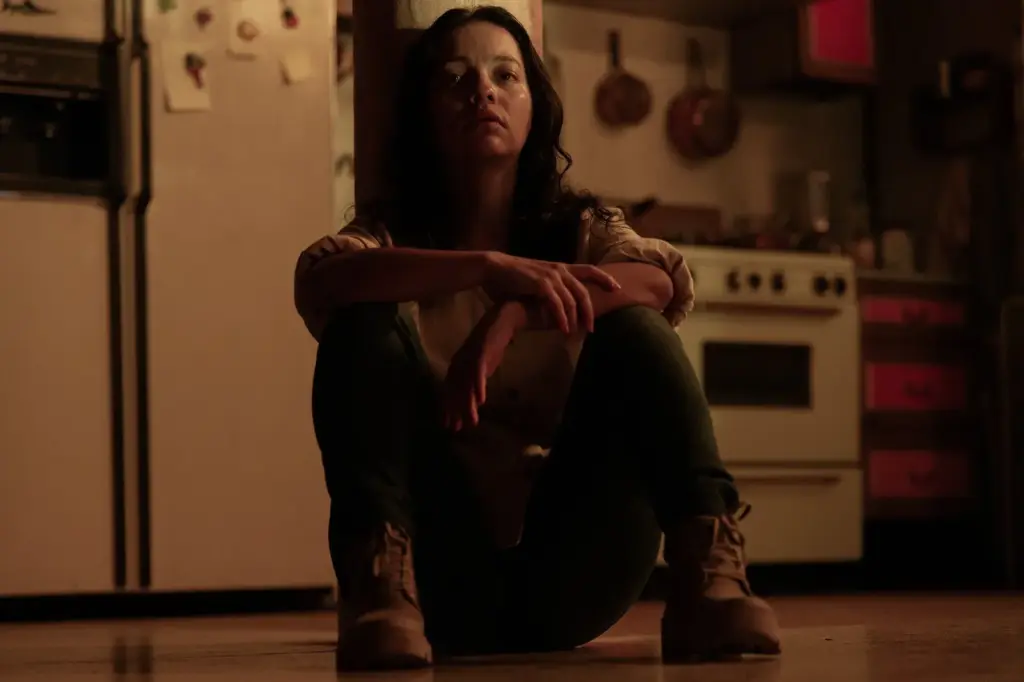
The plot gets underway with the death of the protagonist’s mother. After the funeral, she returns to her apartment and finds it occupied by a group of women loyal to the regime, who expel her without further ado. She takes refuge in the adjacent apartment but finds her neighbor dead. From this moment on, the film plunges into a nightmare that blurs the boundaries between reality and fiction. Adelaida will share her confinement with a young man she cannot trust and will be forced to change her identity to save herself.
“Although the story is told in a dystopian tone, we emphasized incorporating archival footage of the 2017 protests because we felt it was essential to document the events. We also wanted to provoke a sustained state of anxiety, so the viewer would feel firsthand what it means to be trapped in a tyrannical regime. Karina’s novel also opens to a nostalgic dimension of the lost Venezuela; that had to be left out of the film, although some touches appear,” Rondón explains.
The story could hardly arrive at a better time. After the U.S. military intervention in Venezuela on January 3 —an operation that led to the capture of Nicolás Maduro and reconfigured the country’s political landscape— the debate about the future of the South American nation has returned to the center of international conversation. In this context, It Is Still Night in Caracas premiered on Netflix —a platform that co-produces the project alongside Redrum and Venezuelan actor Edgar Ramírez— at the end of March, and within days ranked among the most-watched non-English language films in countries such as Argentina, Chile, Colombia, Peru, Uruguay, and the Dominican Republic. In Venezuela, it has remained in first place for two weeks. This is no coincidence: one of the main aspirations of the project has been to translate for the general public the magnitude of what happened.
“We have been on an international tour for several weeks and the encounter with the Venezuelan diaspora has been especially moving. The film has been received with enormous enthusiasm. But beyond Venezuelans themselves, we believe this story can help to understand how it was possible that more than eight million people were forced to leave their country, one of the largest recent migratory crises (…) We are telling a story in which evil and tyranny are not embodied in anyone in particular. If it happened now in Venezuela, other countries were affected before. The important thing is the reminder not to repeat the mistake,” the directors add.
Filmed entirely on location in Mexico City, where the middle-class Caracas apartments of the seventies and eighties were recreated, including the emblematic airport floor designed by Carlos Cruz-Diez, the film has become an uncomfortable mirror for those in power. During a panel at the Barcelona Latin American Film Festival, Venezuelan director and consul general in that city, Carlos Azpúrua, accused diaspora filmmakers —including Mariana Rondón— of being “mercenaries.” “We were in a Q&A and he asked for the floor. Immediately after, he turned his back on us to launch personal and political attacks without ever referring to the film. He presented himself as a Venezuelan state official to steal a show that did not belong to him. People left him talking alone and left the room,” the filmmaker recalls about an episode that went viral on social media.
Unlike Simón, Diego Vicentini’s feature film that portrays the detention and torture of young people during the 2017 protests —which did manage to premiere in Venezuelan theaters—, It Is Still Night in Caracas has not had the same luck. The film has been denied “nationality,” an indispensable requirement for its commercial exhibition in the country. “If there is a film that the National Center of Cinematography does not like, they simply do not grant the national approval certificate. Without that document, it cannot be screened. And this is happening even with films shot within Venezuela,” Ugás explains.
Finally, the directors of this political story about the damage caused by Chavismo are cautious when referring to Venezuela’s future after Maduro’s fall and the start of a process that still offers no clear signs of a democratic transition. “The situation remains complex and opaque. For many Venezuelans —including myself— it is urgent to free political prisoners: it is incomprehensible that so many are still imprisoned. The truth is that there is a long way to go to be optimistic. Referring to the film’s title, it is still a long way to see the dawn,” Rondón concluded.
Read more El Mencho and the R3: the family trail that connects the Cartel Jalisco bosses in California