







The general collapse of the Labour Party across the country, the biggest loser in the local and regional elections held on Thursday in the United Kingdom, has masked an effect of these elections with historical significance. For the first time, power in the three nations with autonomous governments will be in the hands of a nationalist/independence party.
The republican Sinn Féin party, which aspires to the reunification of the two Irelands, has held the position of First Minister (equivalent to prime minister) in Northern Ireland since February 2024. The independence supporters of the Scottish National Party (SNP) have renewed their leadership in this week’s regional elections and will keep alive the flame of a second secession referendum, although falling short of the absolute majority of 65 seats, it is very likely that their immediate priorities will have more to do with the economy and public services than with a new confrontation with London.
And the historic Plaid Cymru (Party of Wales) has for the first time managed to be the most voted in this territory, allowing it to form a government in coalition with other forces.
“By retaining power in Scotland, the SNP means we will have three nationalist first ministers in Northern Ireland, Wales, and Scotland. The future of the United Kingdom, in the long term, could be at risk, although right now it is a hypothesis we do not consider,” said John Tonge, Director of Politics and Communication Studies at the University of Liverpool on the BBC.
Contrary to the legend that it is the Conservative Party that suffers the most rejection in these nations with autonomous power and strong identity and anti-English sentiment, the collapse of the Labour Party, both in Scotland and especially in Wales, has been devastating.
Just two years ago, in the July 2024 Parliamentary Elections, Labour thought, with a magnificent result that allowed it to send more MPs to the House of Commons than the SNP, which had regained its traditional strength in Scottish territory, the results of this Thursday, in which it was left at a vast distance from the nationalists, have been a cold shower. “The tragedy of this campaign was that, despite trying to discuss public health, education, or the homelessness crisis, the elections focused on the general state of dissatisfaction that exists throughout the United Kingdom,” lamented Anas Sarwar, the popular leader of Scottish Labour, who was one of the first party politicians to call for Starmer’s resignation when the scandal of former minister Peter Mandelson and his turbulent relationship with Jeffrey Epstein broke out.
The collapse in Wales
For more than a century, the main left-wing party in the United Kingdom had unquestionable primacy in Wales, a territory of miners and industry where the strength of the labor movement was indisputable, and voting Labour was almost a family tradition passed from one generation to another.
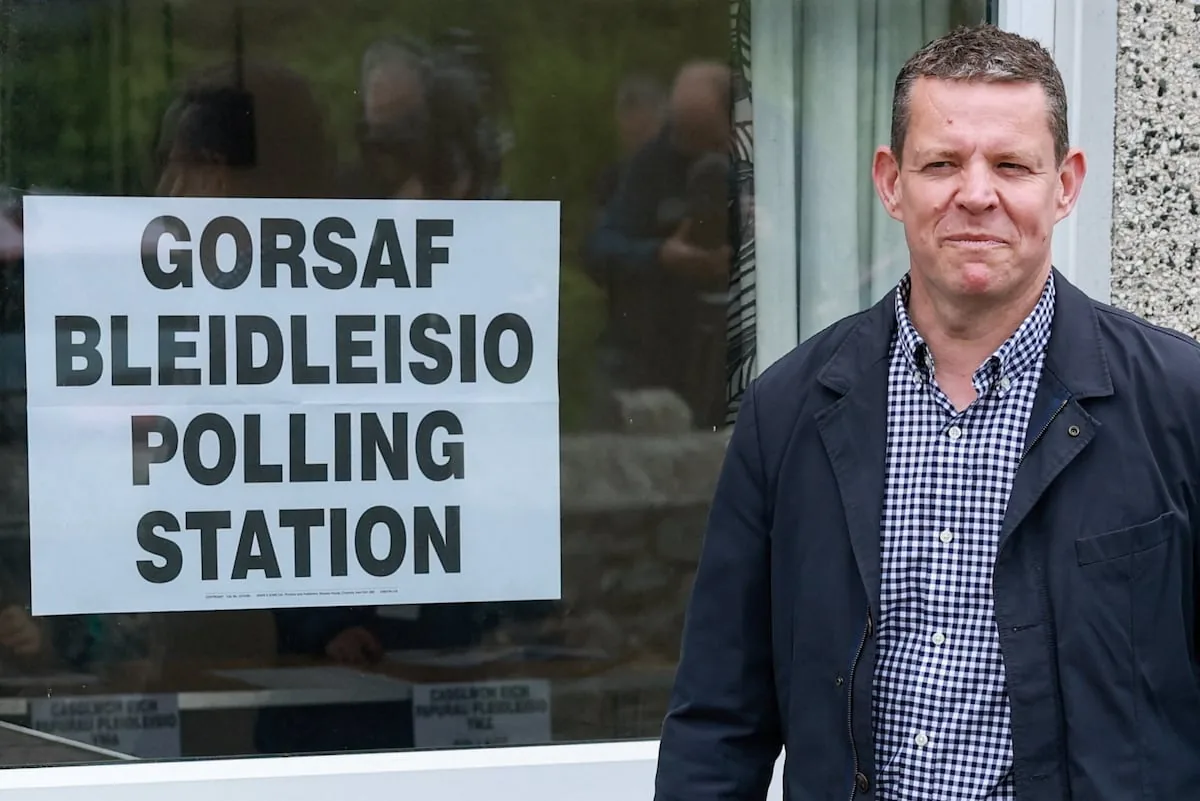
The results announced this Friday place the party in third position, far behind the two main parties that have contested leadership in Wales, Plaid Cymru, the final winner of the contest with 43 MPs (six short of an absolute majority), and Reform UK, the far-right party led by Nigel Farage, which has won 34 seats. The Labour Party has only obtained 9 representatives.
“We need to be more radical, to convey our message with much more confidence. We have ended up in a situation where we are no longer perceived as the party of the working class,” lamented Carwyn Jones, who was First Minister of Wales between 2009 and 2018.
The disaster has been of such magnitude that the person who until now had been the head of the autonomous government, Labour’s Eluned Morgan, has resigned as party leader, not even managing to retain her seat in the Senedd Parliament (as the Welsh Assembly is known).
Since this territory regained its self-government in 1999, the First Minister’s seat has always been held by a Labour politician. Although Thursday’s results are from regional elections, their national significance is indisputable. Wales sent the first Labour MP, Keir Hardie, founder of the party, to the House of Commons. Historic leaders of the party, such as Neil Kinnock, come from that area, legendary for its toughness and sense of solidarity. It was its miners who faced off to the exhausting defeat against Margaret Thatcher’s neoliberal government.
Its younger population, however, has wanted to see in the nationalists a smarter social-democratic hope more focused on the territory’s needs than what Labour offered, which they accuse of having exhausted its ideas. “Thousands of people have voted for Plaid Cymru, not only with the idea of punishing the traditional parties but with the purpose of achieving something better for this wonderful nation of Wales,” explained Delyth Jewell, the number two of the nationalist party.